AUSTRALIA

OAKLEIGH
SOUVS
GYROS
ANTIPODES
LONSDALE STREET
WOG BOY
KANGAROO SOUVLAKI
YITONIA
MELVOURNI
SIDNEÏ
CALOMBARIS
LAMB
KEFI
KINISI
ACROPOLIS NOW
OAKLEIGH SOUVS GYROS ANTIPODES LONSDALE STREET WOG BOY KANGAROO SOUVLAKI YITONIA MELVOURNI SIDNEÏ CALOMBARIS LAMB KEFI KINISI ACROPOLIS NOW
GREEK FOOD IN MELBOURNE & SYDNEY
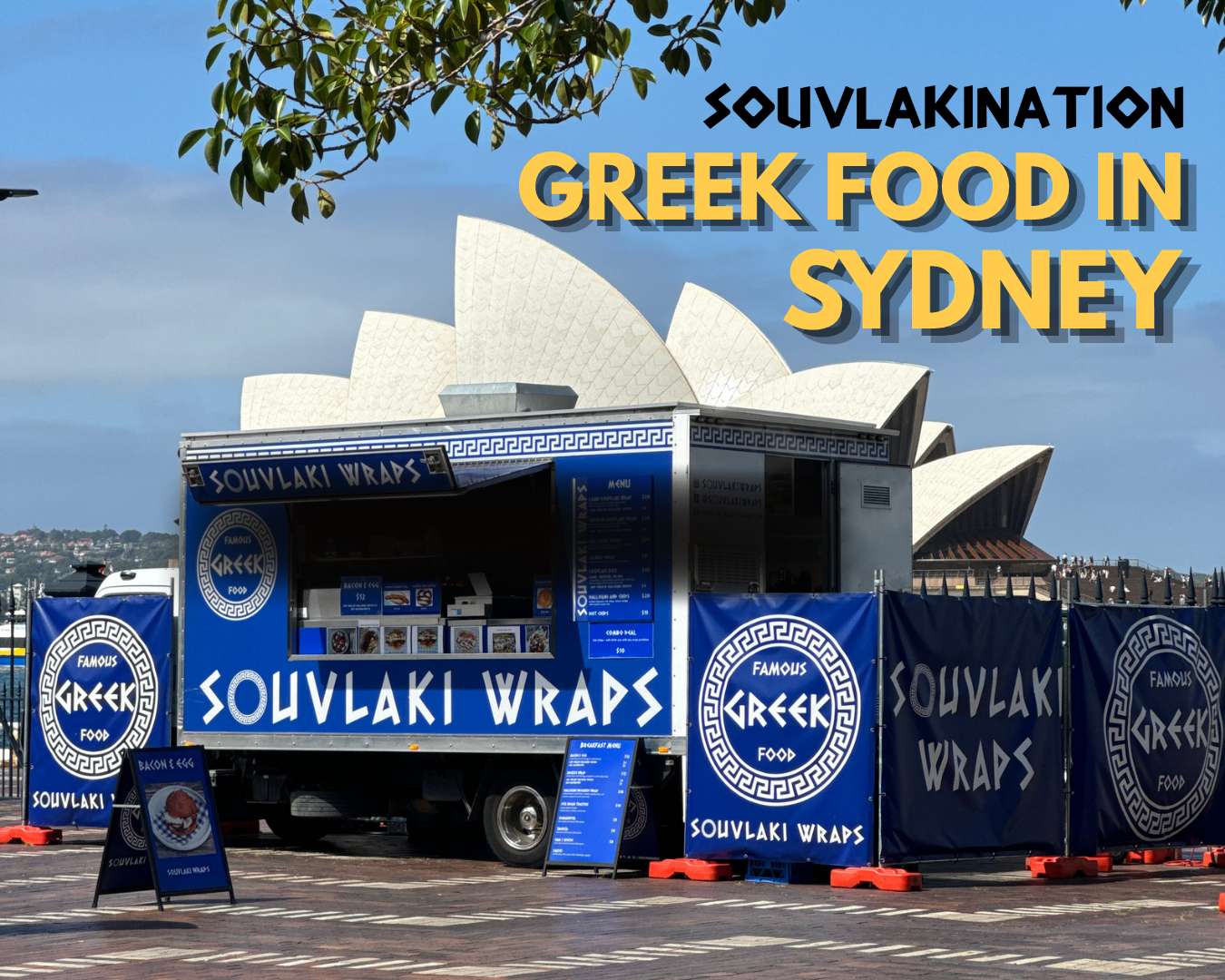
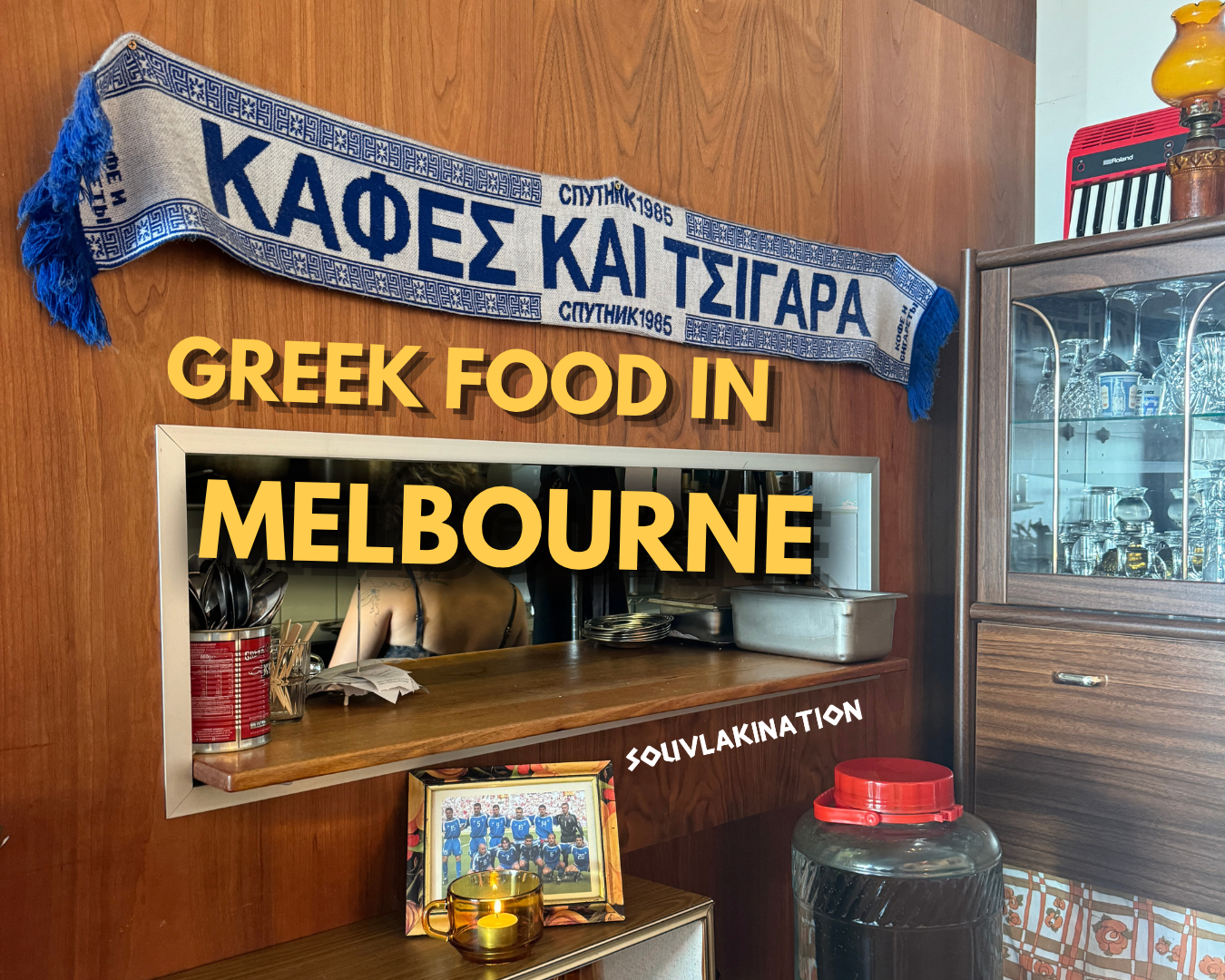
Greek Food
in Australia
Australia and the largest Greek populations in the diaspora
Every story about good food is a story about people and their traditions: their identity and ancestral wisdom about how to best survive and thrive on earth as a human being. In this case, our story is about a group of people who — like so many of our parents or (great) grandparents — left a difficult life for a vast continent of natural beauty and opportunity halfway across the world.
Today, Australia is home to some of the largest Greek populations on earth. In particular, Melbourne is often considered to hold the largest Greek population outside of Greece and Cyprus, with some individuals claiming that it might only be second to those of Athens and Thessaloniki (although Nicosia’s, Limassol’s, and Patra’s might be on par or higher). Either way, Australia’s cities contain a notably pronounced concentration of Greeks and a degree of Hellenism that is hard to find anywhere else in the diaspora.
Greek Australians are authentically Greek. And their love for their πατρίδα has created the incredible scenario in which you find Greece and Cyprus in Australia too. Their ancestors were the means by which Hellenism took root in Australia and is now flourishing in its truest form, with all its philosophy and customs applied: concepts like filoxenia, filotimo and community, real food that is good for our health and our planet, and its foundations in sustainable, local, de facto organic agriculture.
Our focus begins in Melbourne & Sydney.
Above are the full food guides, but read below for more about Australia’s Greek community.
Greek food in Australia
Australia’s geographic remoteness and subsequent dependency on domestic produce means that it's actually very easy to find Greek cuisine in its most fundamental form: high-quality, locally-sourced produce, cooked with patience and few ingredients. Australia’s remoteness perhaps also encouraged Greek Australians to recreate their culinary traditions in their truest, most authentic forms, while also adapting recipes to whatever ingredients they had at their disposal (like making more use of Australia’s abundance of lamb). However, factor 21st-century supply chains into the equation, and Australia now also has access to authentic, bona fide produce from Greece and Cyprus, with projects like Niko’s Garden even offering Greek herbs and greens. The combination of the first generations of Greek Australians’ best efforts to protect their culture together with modern-day access to authentic ingredients means that Australia’s Greek food scene is in great shape. It’s incredibly easy to find good and authentic Greek food in Australia – much, much easier than it is in London, for example.
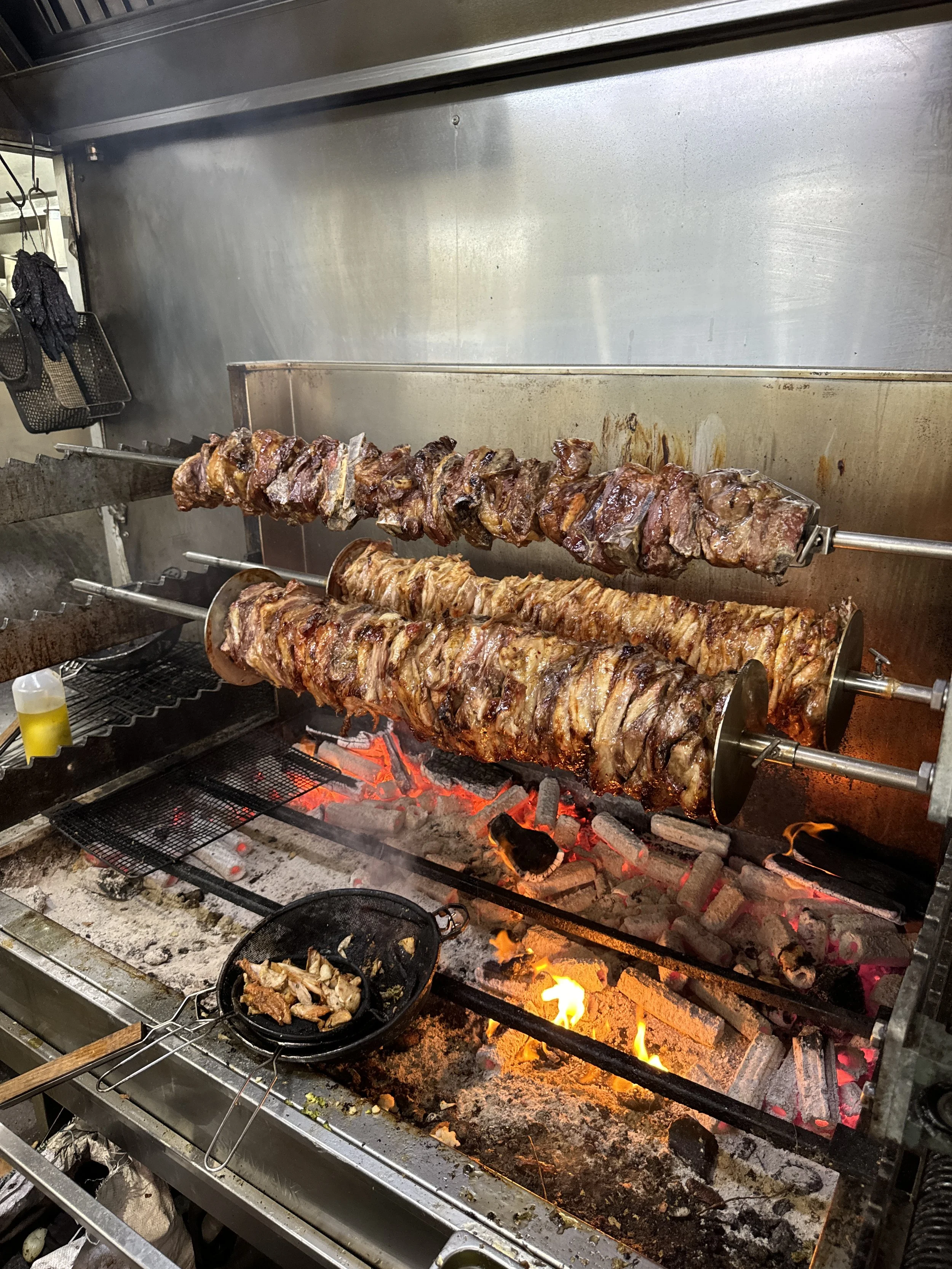
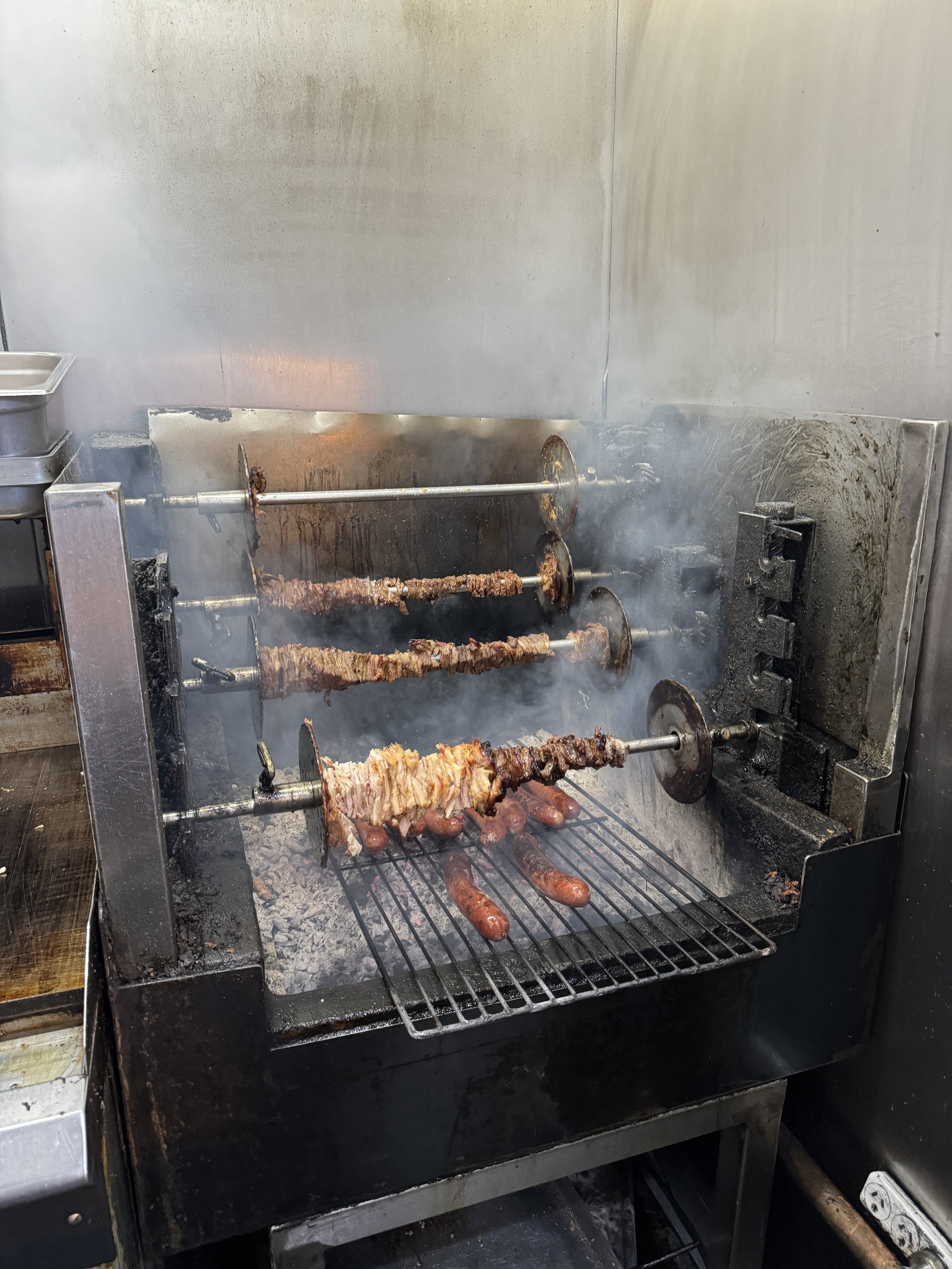
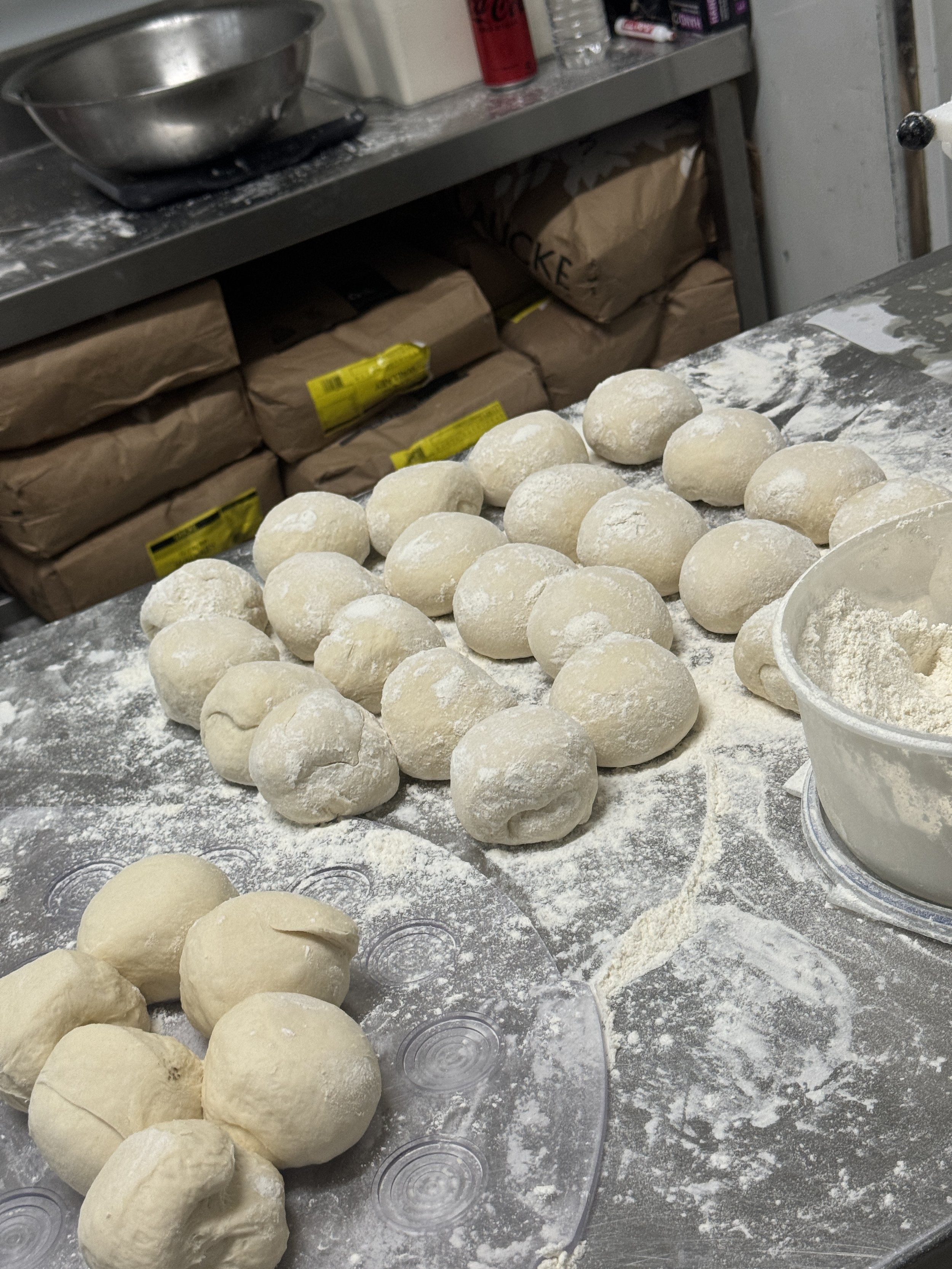
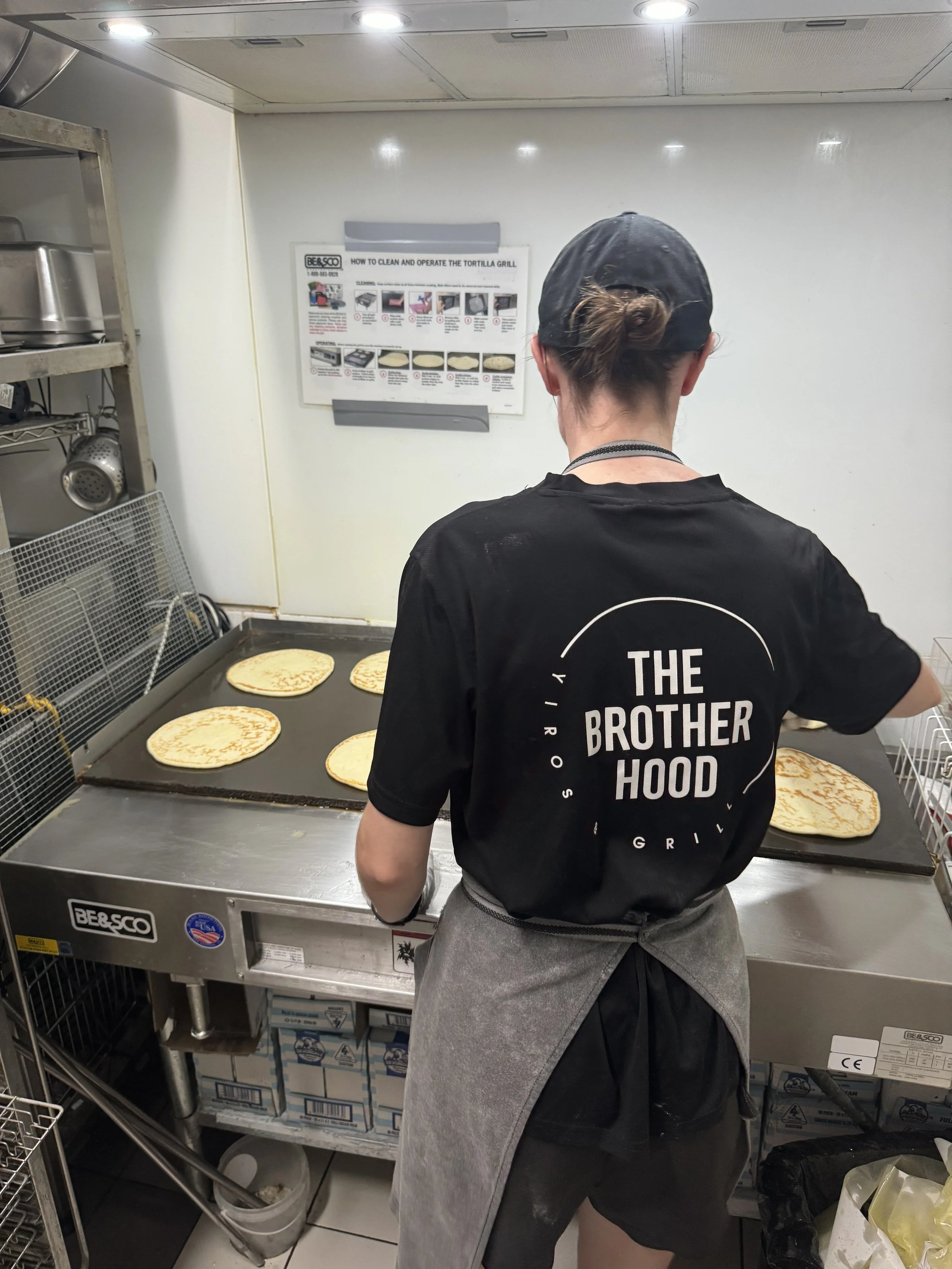
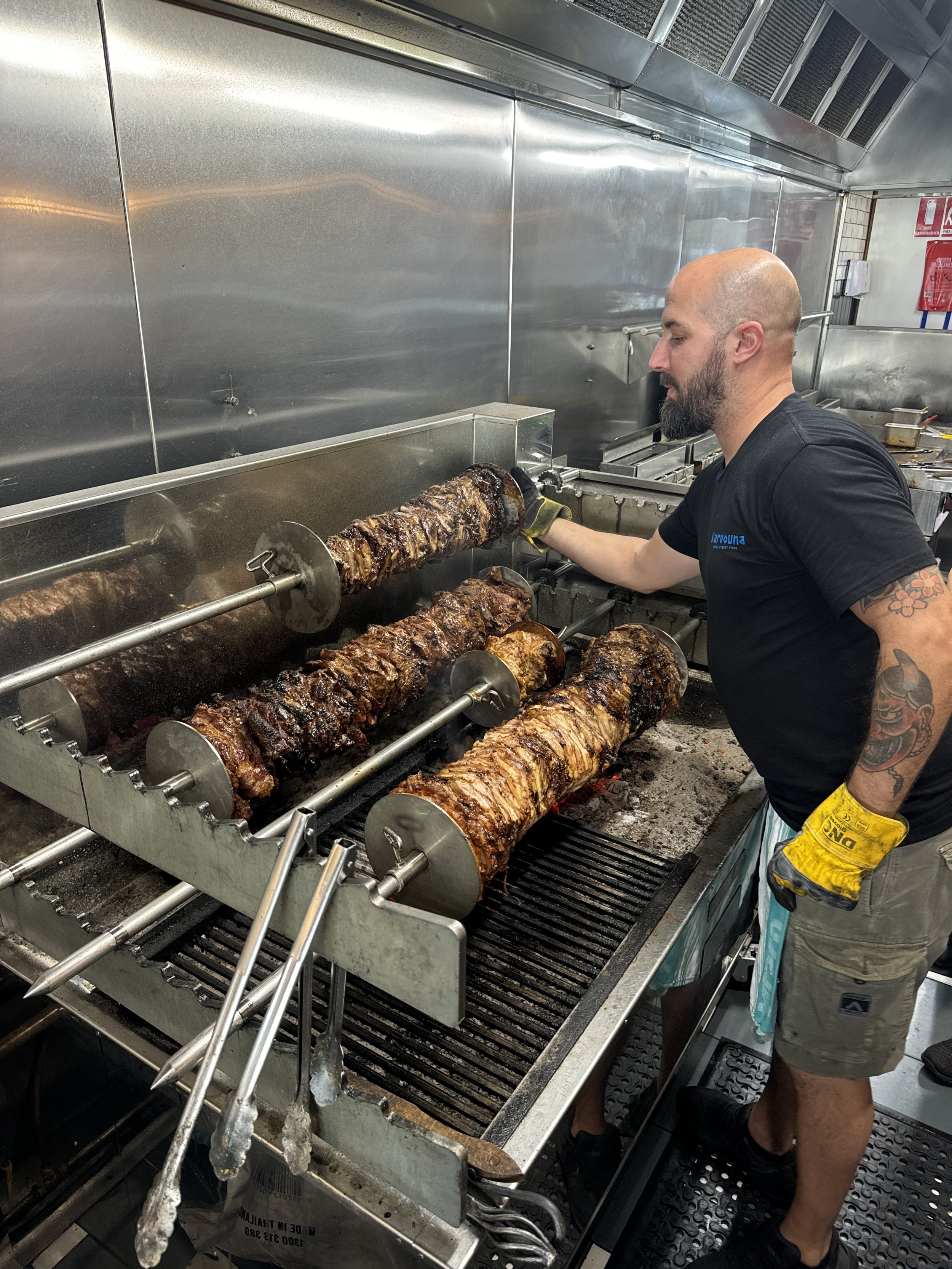
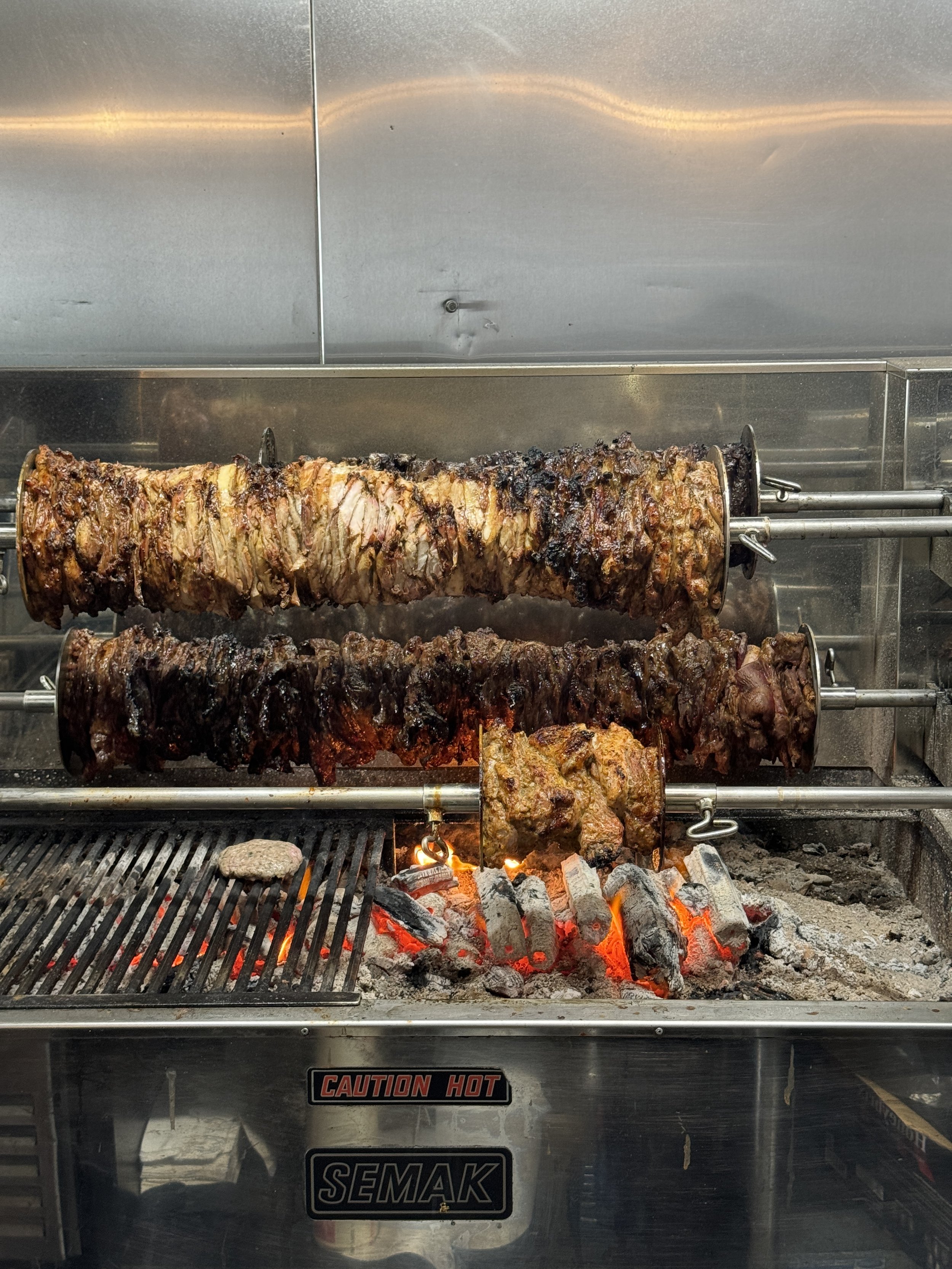
In fact, some Greek products are arguably more authentic in Australia than they are in Greece nowadays. Australia’s Greek yoghurt is more sour and closer to the traditional sheep’s milk yoghurt of our grandparents’ generation than the creamier, milder-flavoured yoghurt that is most popular in Europe today. While in Greece and much of Europe, the alarmingly homogenising trend of factory-prepared gyros and souvlakia is slowly outstripping in-house processes, handmade gyros and souvlakia are the defaults in Australia. The quality can vary, but it’s hard to go wrong with fresh, handmade gyros cooked over charcoal (charcoal-grilled gyros being another thing you don’t actually see that often in Greece). Likewise, there are as many souvlatzidika and gyradika in this guide that make their own pita breads in-house as I have ever found across Greece and Europe.
Whereas a soberingly large number of Europe’s Greek bakeries also fall into the commercial trap of sourcing frozen, pre-made pites (pies) from factories and wholesalers, it’s hard to find a Greek bakery or restaurant in Australia that doesn’t make its own spanakopites or tyropites. Overall, the same is true of most of Australia’s Greek food, but in cases where you do want those authentic Greek imports, all the main authentic pantry goods and alcoholic beverages are available through companies like The Greek Providore. Plus, with its world-renowned coffee scene, freddo espresso/cappuccino, frappe and Greek coffee are all highly dependable in most Greek coffee shops and bakeries. Newer Greek-Australian coffee brands like Melvourni also offer more quality options on the market in addition to Greek-Australian pulverised coffee brand Oasis. The only thing you don’t find as often yet is the thinner freddo straw, although there are some coffee shops that use it.
Souvlaki and Gyros in Australia
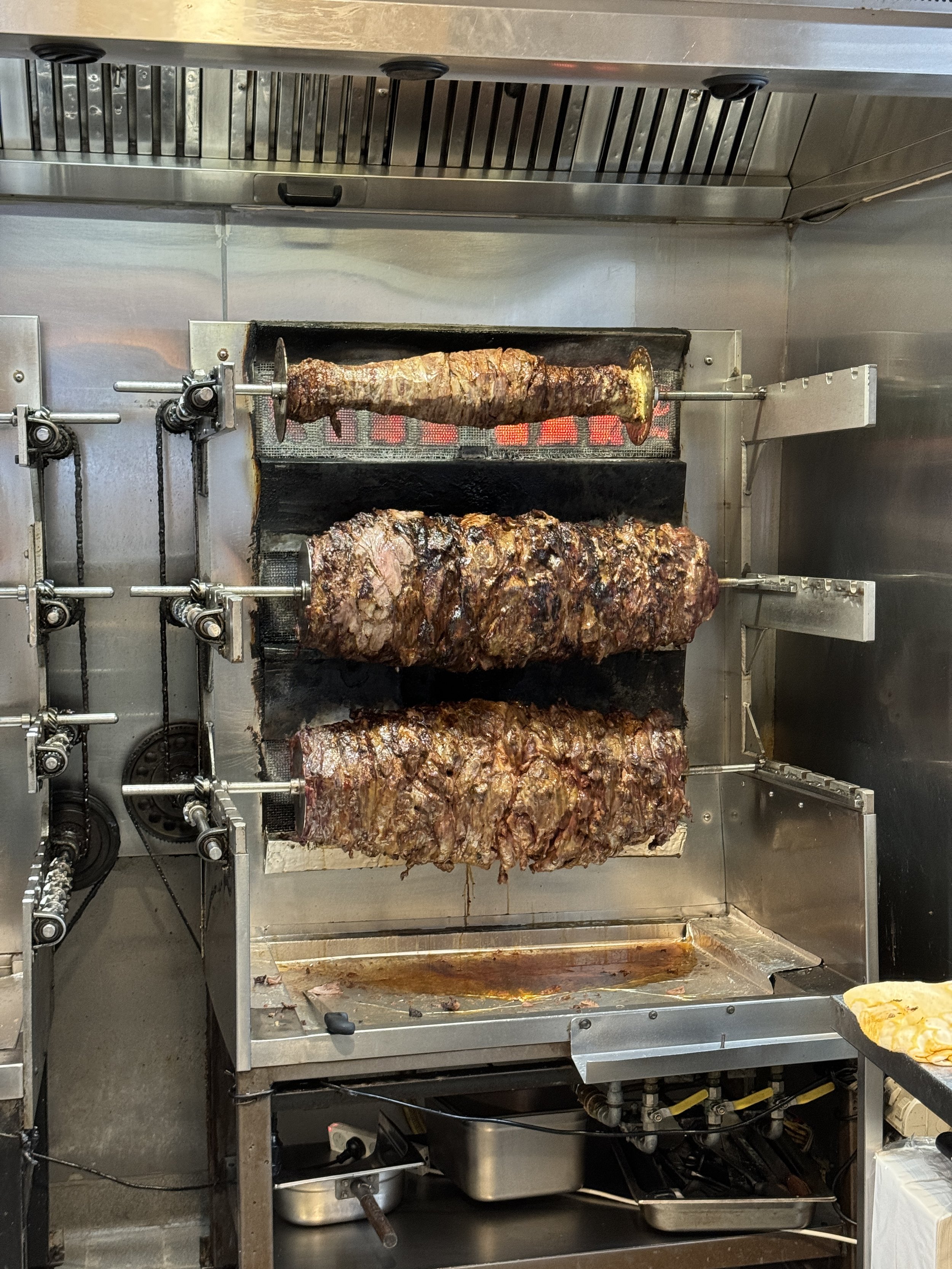
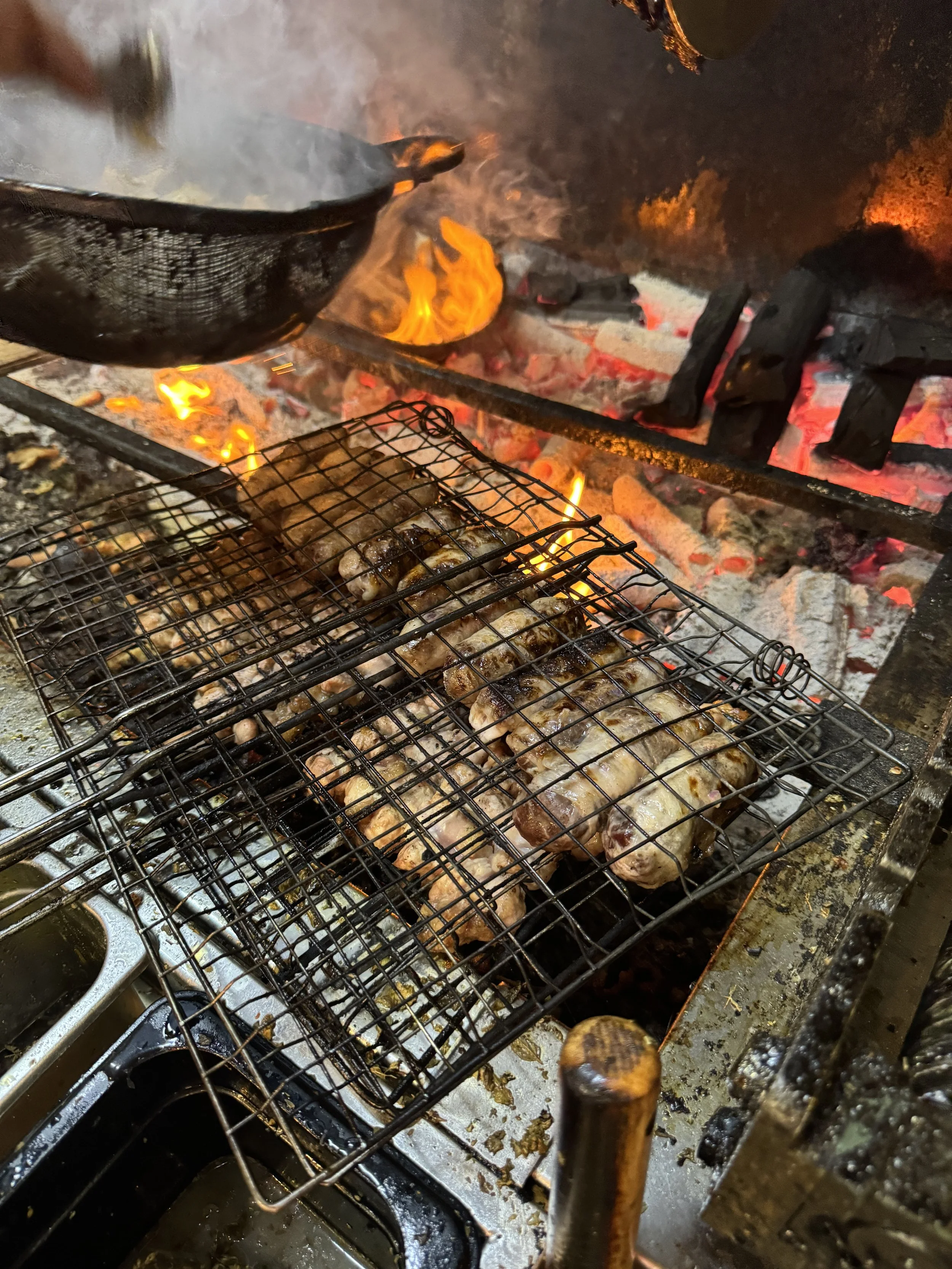
Gyros is more popular than souvlaki skewers (aka kalamakia) in Australia. It’s most commonly prepared by hand and cooked horizontally over charcoal, and souvlatzides will typically cut it by hand using a knife. Sometimes, you see slightly thicker cuts which might resemble kontosouvli, but it works well. The main difference is that lamb and chicken are the main two options for gyros in Australia, with pork being the default in Greece and chicken the alternative. Of course, this guide also includes spots where you can find traditional pork gyros in Melbourne and Sydney (not all use charcoal either, which is fine, ceteris paribus).
One thing you can’t find as easily in Australia yet is proper, traditional pork kalamakia/souvlakia. Especially not the traditional, thin, rectangular kalamakia that epitomised Greek souvlakia in the 20th Century, and that older generations still nostalgically reminisce over as the best they ate. It’s another tradition that is also fast fading in Greece – not because it can’t be done, but because the Australian market is more attuned to lamb and chicken. That said, here you can see the pork souvlakia I made with the Yitonia crew in Kangaroo Valley one night (it’s possible). (We also made kangaroo souvlaki here.)
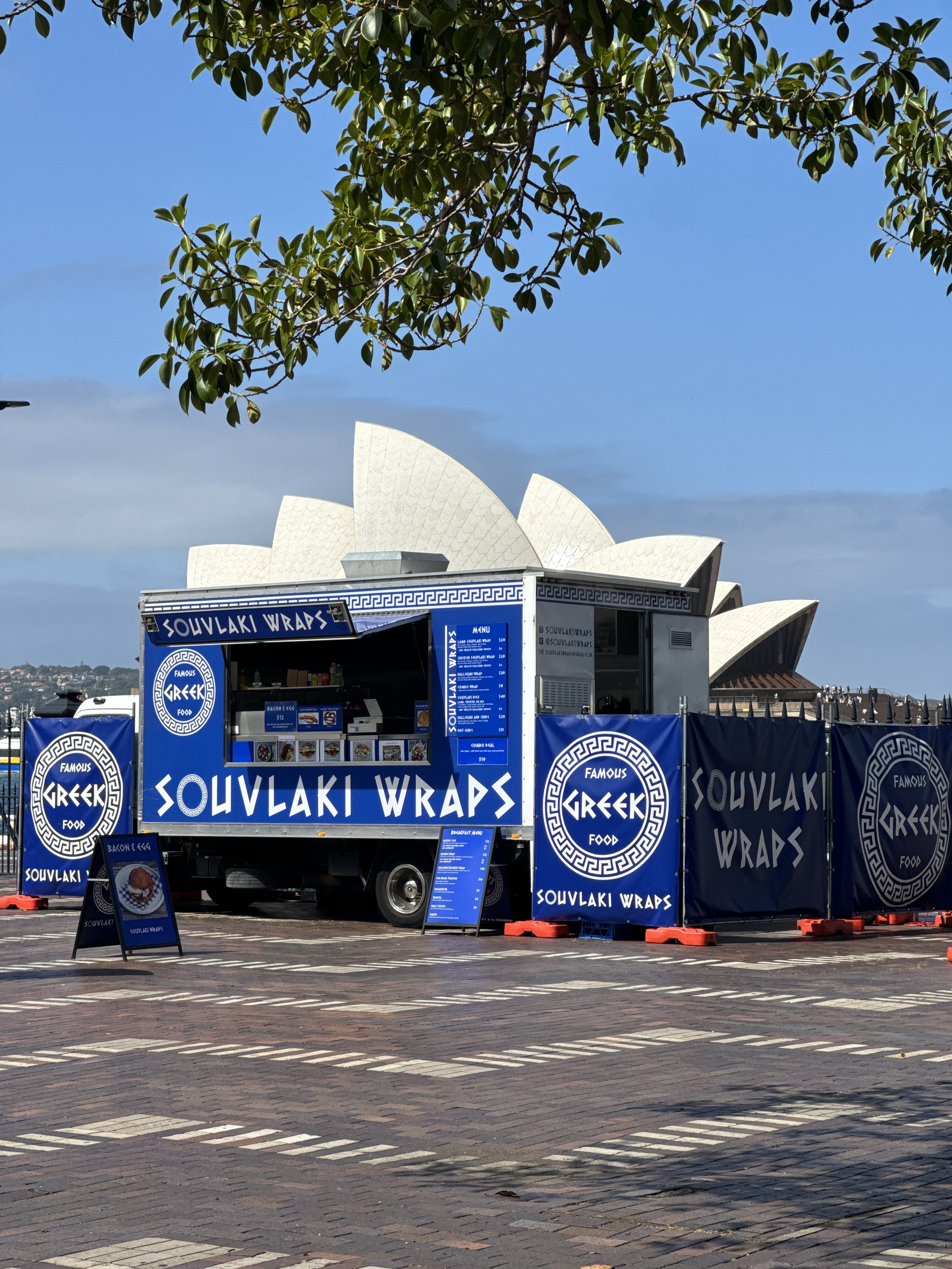
Although most Australian pites might not precisely resemble the traditional Athenian or average Greek pita souvlaki, by and large, Australians usually adhere to the Athenian terminology: they refer to the pita as a whole as ‘souvlaki’, which is often shortened to ‘souv’ or ‘souva’ (regardless of whether it’s filled with gyros, souvlaki or other meats like bifteki). Occasionally, you’ll hear the pita of gyros being referred to simply as ‘gyros’ too.
The average Australian pita wrap is usually longer, with the volume of a pita gyros as you’ll find it in Thessaloniki, but with the thinner, conical shape of its relatively smaller Athenian counterparts. Many Australian gyradika commonly add lettuce too – a quintessentially Greek-Australian quirk, which you only occasionally see with chicken gyros pites in more modern gyradika in Greece. While the first pitogyro or gyros wrap (‘souvs’) that appeared in Australia in the 20th Century were made using a thinner pita bread that is closer to a Lebanese flatbread or even the ‘ladopita’ used on islands like Rhodes, good-quality, handmade pites feature often throughout Australia’s Greek hospitality scene, in all their forms.
Before you take a look at the guides below, I’ll leave you with my lasting impression after a month in Australia: meraki, kefi and filotimo sum up everything Greek Australians do, and there's an overwhelming theme of competence and care for the final product here amongst restaurant owners and their entire teams, Greek or non-Greek. The Greek spots in this guide below reflect that.
A brief history of Greek migration to Australia
Although many Greeks came to Australia around the 1960s – most on the famous ‘Patris’ liner – the history of Greeks in Australia goes back to the 19th Century, when Greek convicts and sailors began to arrive amidst news of a gold rush. The first Greek Orthodox Church in Australia appeared in 1989, and the first Greek newspaper in 1913. Another wave of Greek migration followed in the 1920s, during which many Greeks were thought to have come from Asia Minor after having been displaced by the 1922-23 population exchange.
The next wave of Greek migration began in the postwar period, when the Australian government offered migration schemes to tens of thousands of Greeks who were looking to leave economic instability in mid-20th Century Greece. Now, as per the 2021 census, more than 400,000 Australians identify as Greek, and 40,000 as Cypriot – although Greek-Australian publication, Neos Kosmos, estimates the total Greek and Cypriot population to be 600,000 - 700,000. That would put Australia above Germany and second only to the US in terms of total Greek population in diaspora countries.
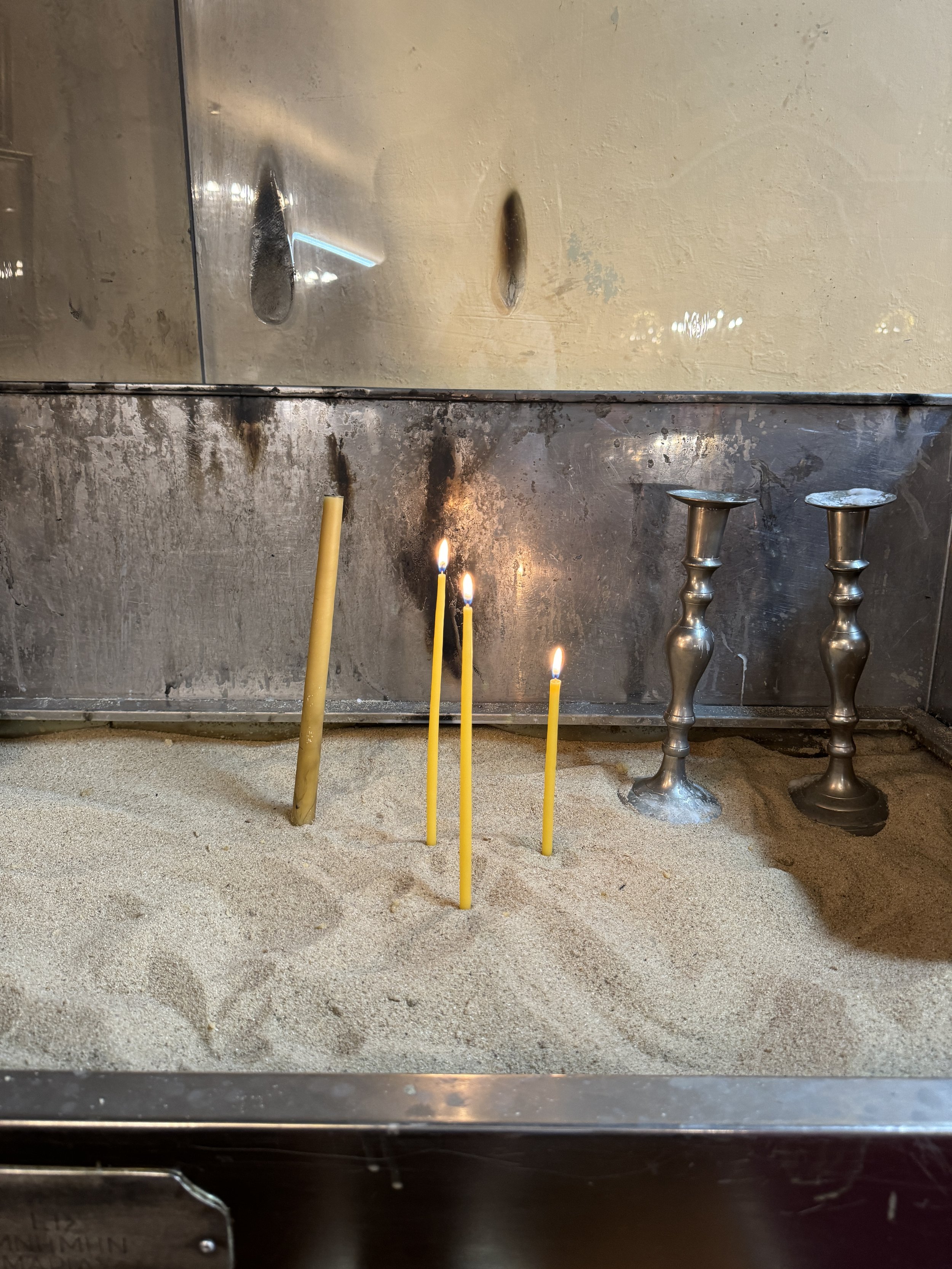
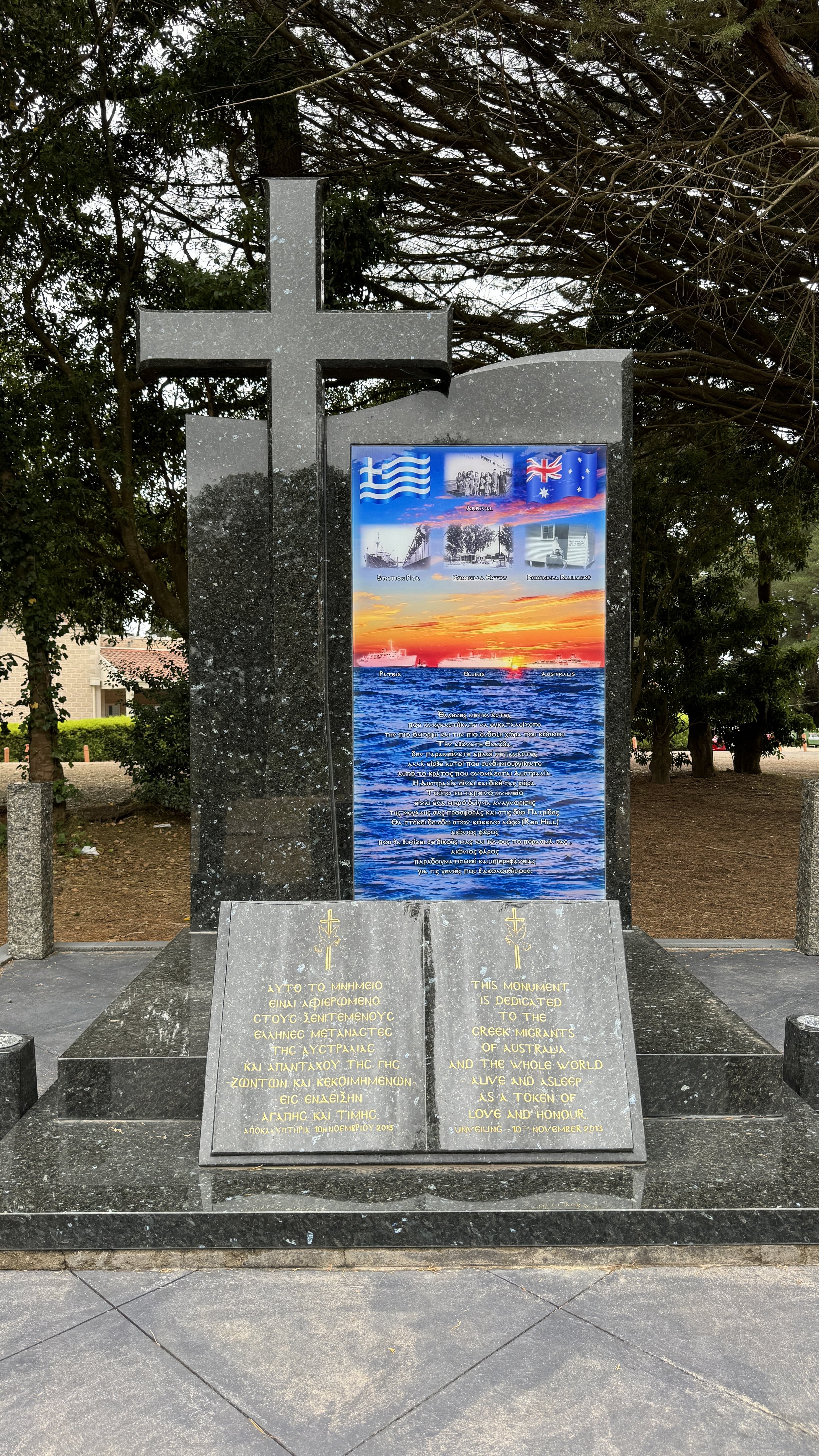
Our trip began with a visit to the Holy Monastery of Panagia Kamariani in Red Hill, near Melbourne, where this memorial helped remind us where the whole story begins. The memorial reads:
“Greek immigrants that had to abandon
the most beautiful and most glorious country of the world
eternal Greece,
You didn’t remain mere immigrants
but you are those who co-created
this state that is named Australia.
Australia is also your country.
This humble memorial
is a small display of recognition
of your big contribution to both fatherlands.
It will stand here on Red Hill
Eternal beacon
that will remind our own and foreigners of your passing
Eternal beacon
of exemplification and pride
for the generations that follow.”
Leaving wasn’t as much a desire as it was a necessity for Greeks. Leaving didn’t mean rejecting their past or forgetting their fatherland. So much so, that, ironically, a love for their heritage became their contribution. A contribution so immense that it became part of the very foundations of their new home.
Hellenism in Australia
To move halfway across the world and build a country from the ground up takes sacrifice, determination, faith, work ethic, and initiative, hence it’s perhaps no coincidence that those brave Greeks have given birth to new generations of Greek Australians who are now some of the most honourable ambassadors of Hellenism and Greek and Cypriot traditions in the world.
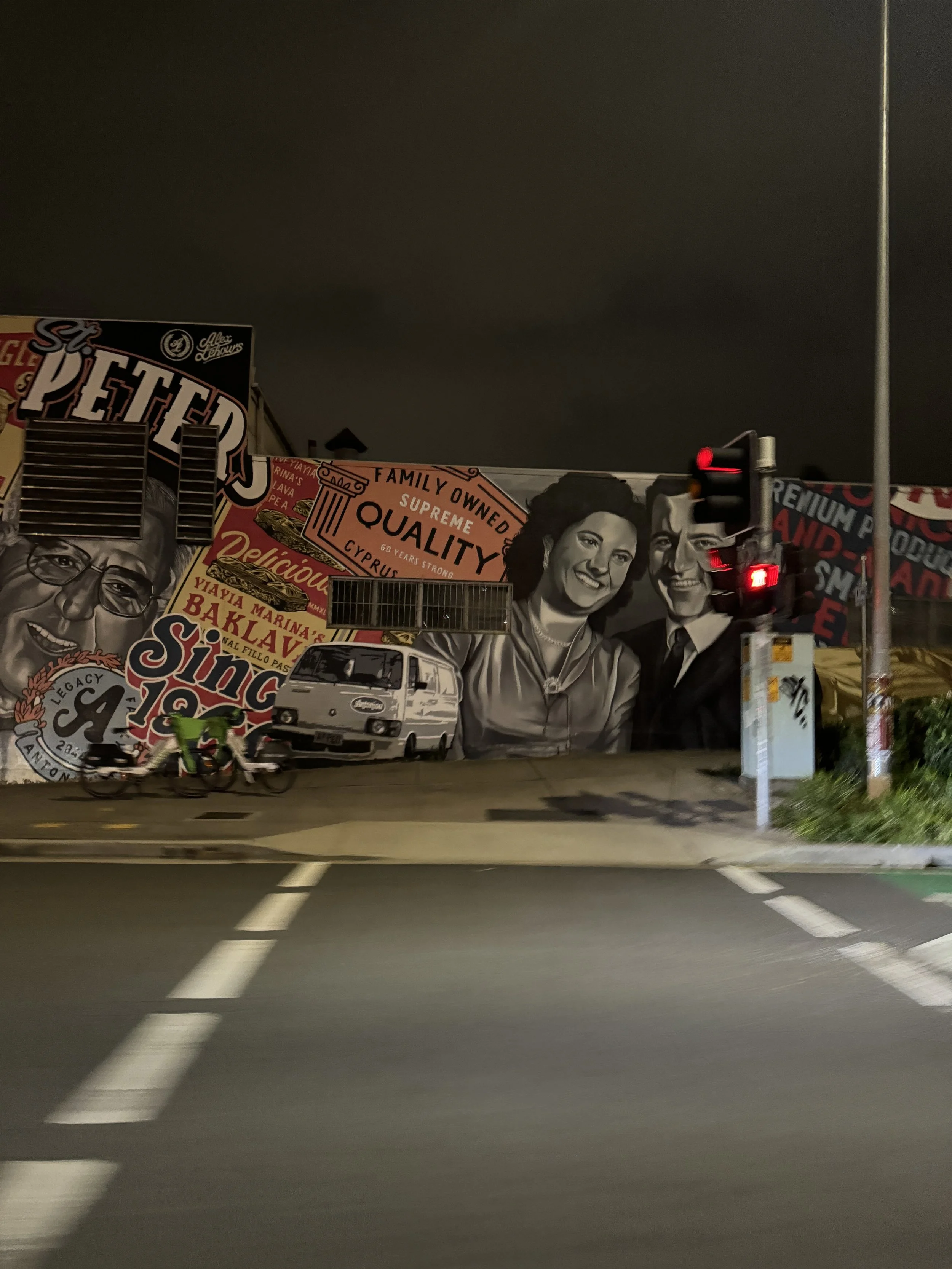
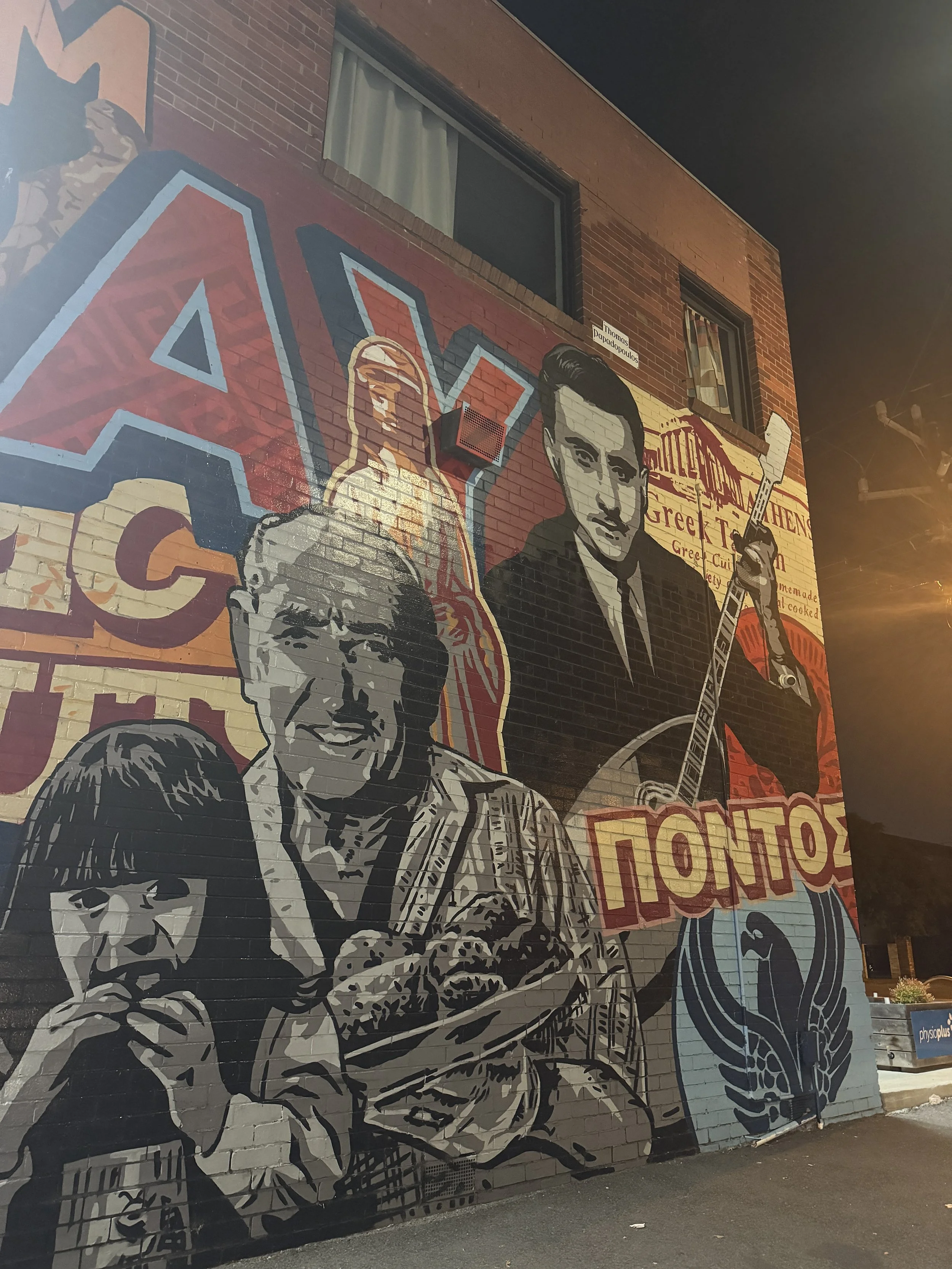
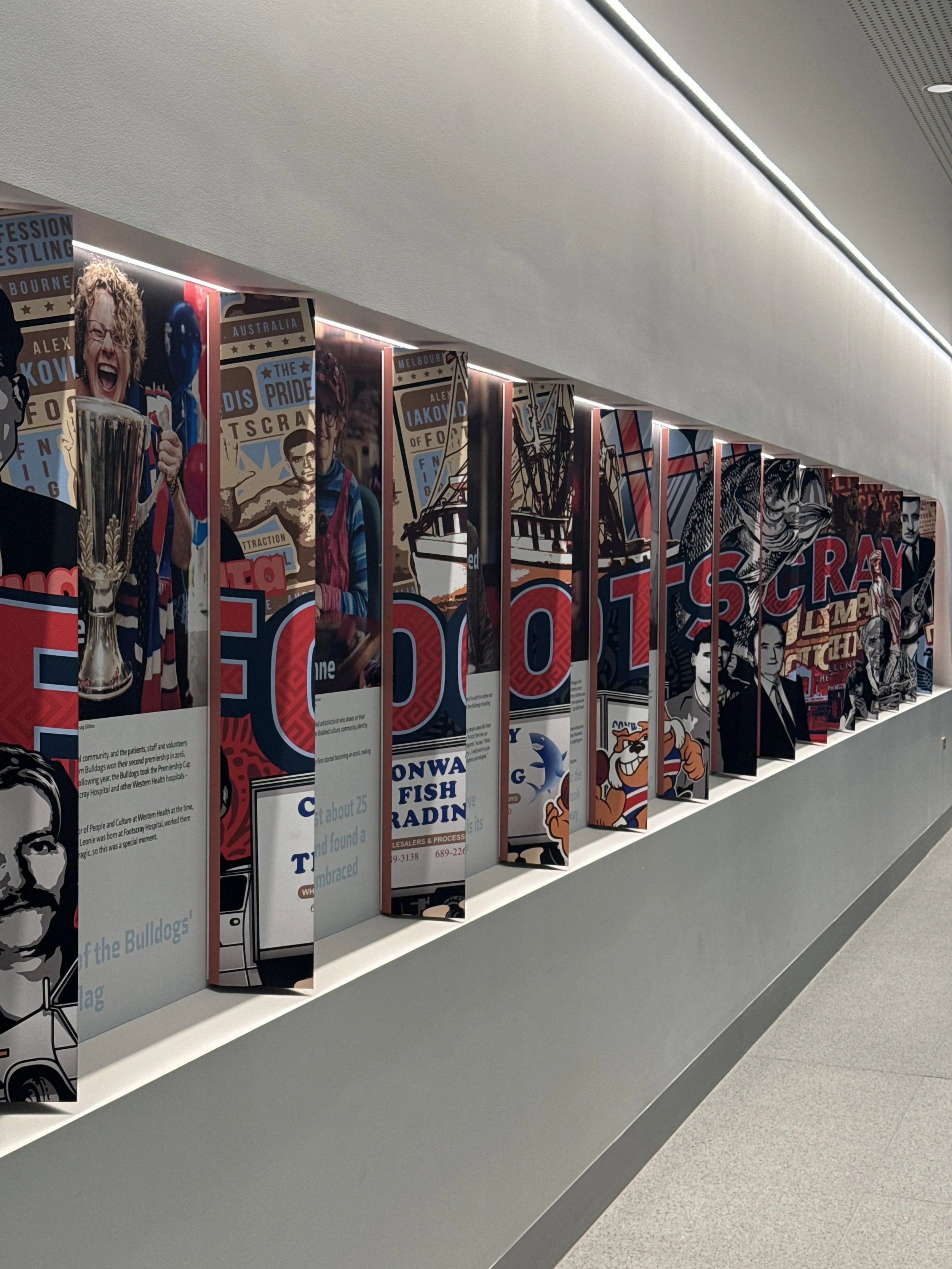
They have embedded signs and trails of Hellenism throughout Australia’s cities, whether it’s an inescapable abundance of Greek businesses, Hellenic symbolism and iconography in Melbourne’s CBD, or ouzo and P.D.O. Cypriot halloumi for sale in small towns hours from Melbourne and Sydney. You find Hellenism absolutely everywhere in Australia – even in the form of a mural depicting the neighbourhood’s “Hidden Hellenism” at the new Footscray Hospital. (At one point, we even found a Greek who offered us a kolokithopita on a hiking trail through Sherbrooke Falls, where we only encountered about 5 people.)
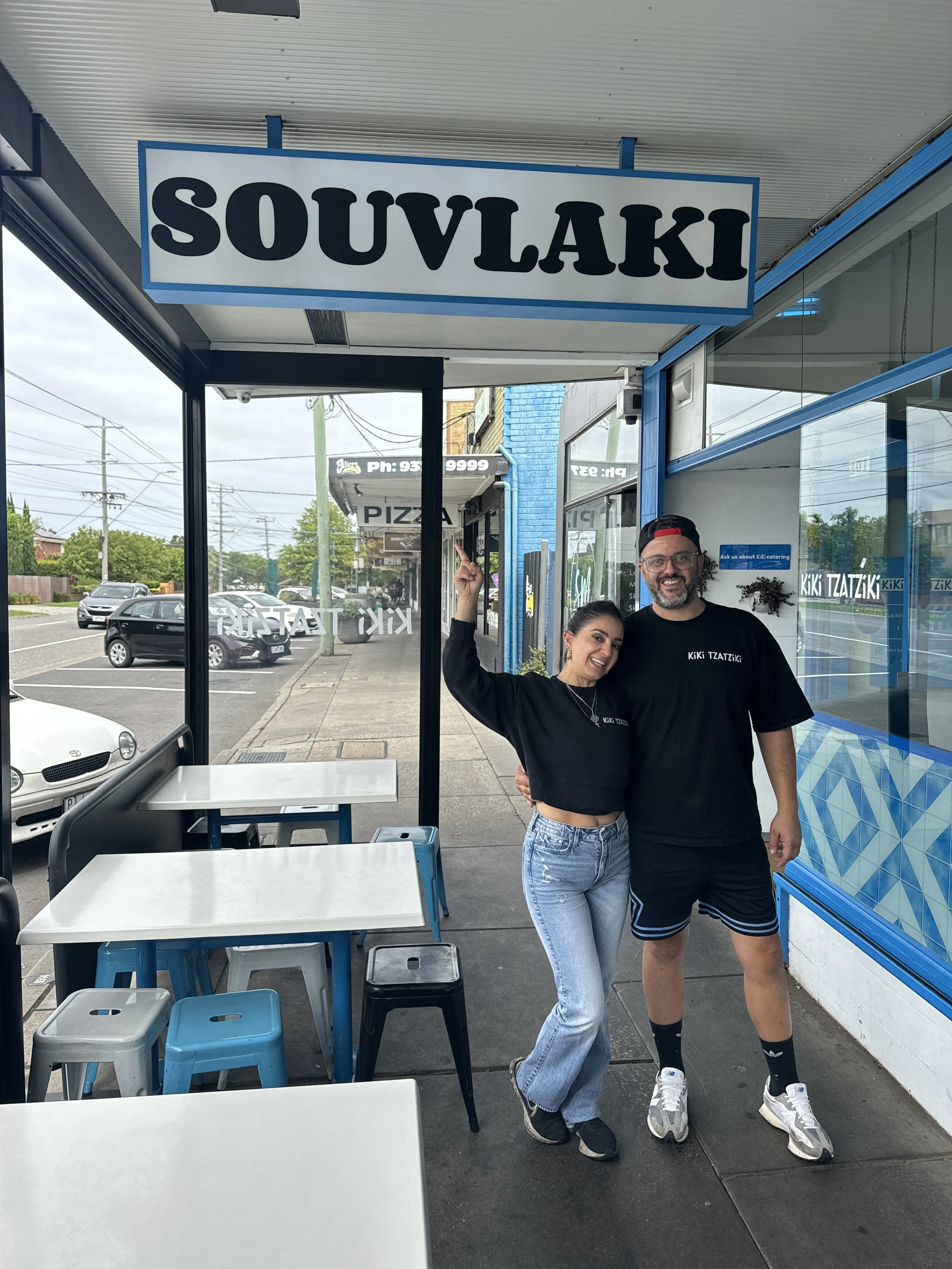
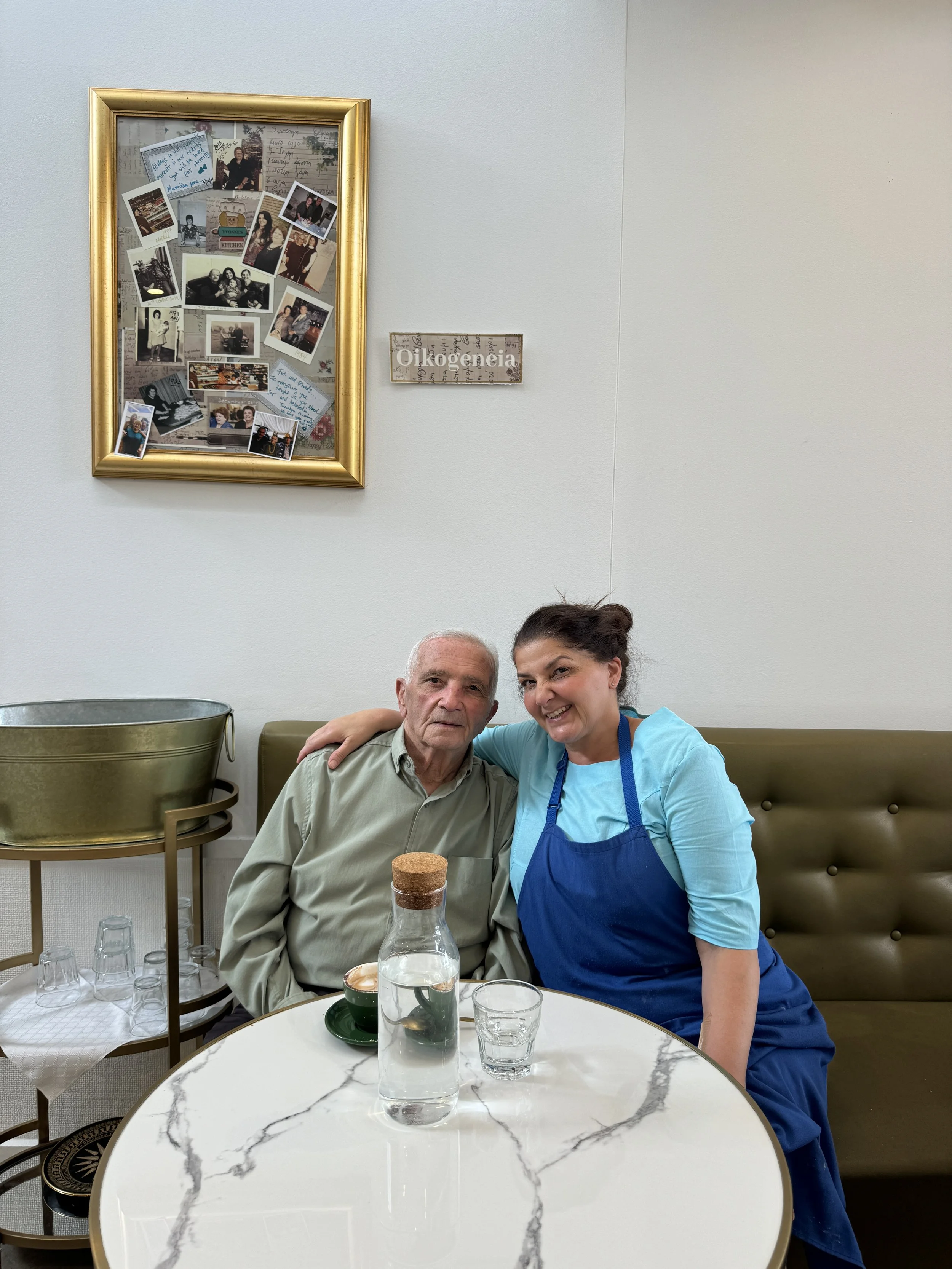
In Melbourne’s overwhelmingly Greek neighbourhoods like Oakleigh, and in its Greek kafeneia and restaurants, it’s often quite difficult to comprehend that you’re not actually in Greece. By chance, you’ll frequently encounter Greeks working in businesses (milk bars, fish and chips shops, etc.) who tell stories of how the businesses in their area were “all Greek” in the final decades of the 20th Century (Kyrios Apostolis’ story here mirrors lots of accounts of Greeks in Melbourne and Sydney).
Oakleigh
Oakleigh is probably the most Greek neighbourhood anywhere in the diaspora – in terms of both the volume and the proportion of Greek businesses. 20% of its population is said to be Greek, but its main streets are pretty much exclusively occupied by Greek businesses – so much so that some Greek Australians call it Little Athens. I’ve highlighted my favourite spots in Oakleigh below in this guide.
Lonsdale Street, the Greek Precinct & Antipodes Festival
While Oakleigh might now house the highest concentration of Greek businesses per square kilometre in Australia (if not in all of the diaspora), Melbourne’s Lonsdale Street was once the navel of the Greek community and the majority of its businesses, housing Melbourne’s Greek Precinct.
Although many of its Greek businesses have since closed, Lonsdale Street is still home to famous Melbourne hospitality institution, Stalactites Restaurant, as well as the Greek Centre diagonally opposite. In its heyday, Greek Australians of the ‘90s could ‘bar hop’ along Lonsdale Street’s row of Greek clubs, like Apokalipsi, and the night would often end with a souvlaki or pitogyro at Stalactites, which would operate 24 hours a day.
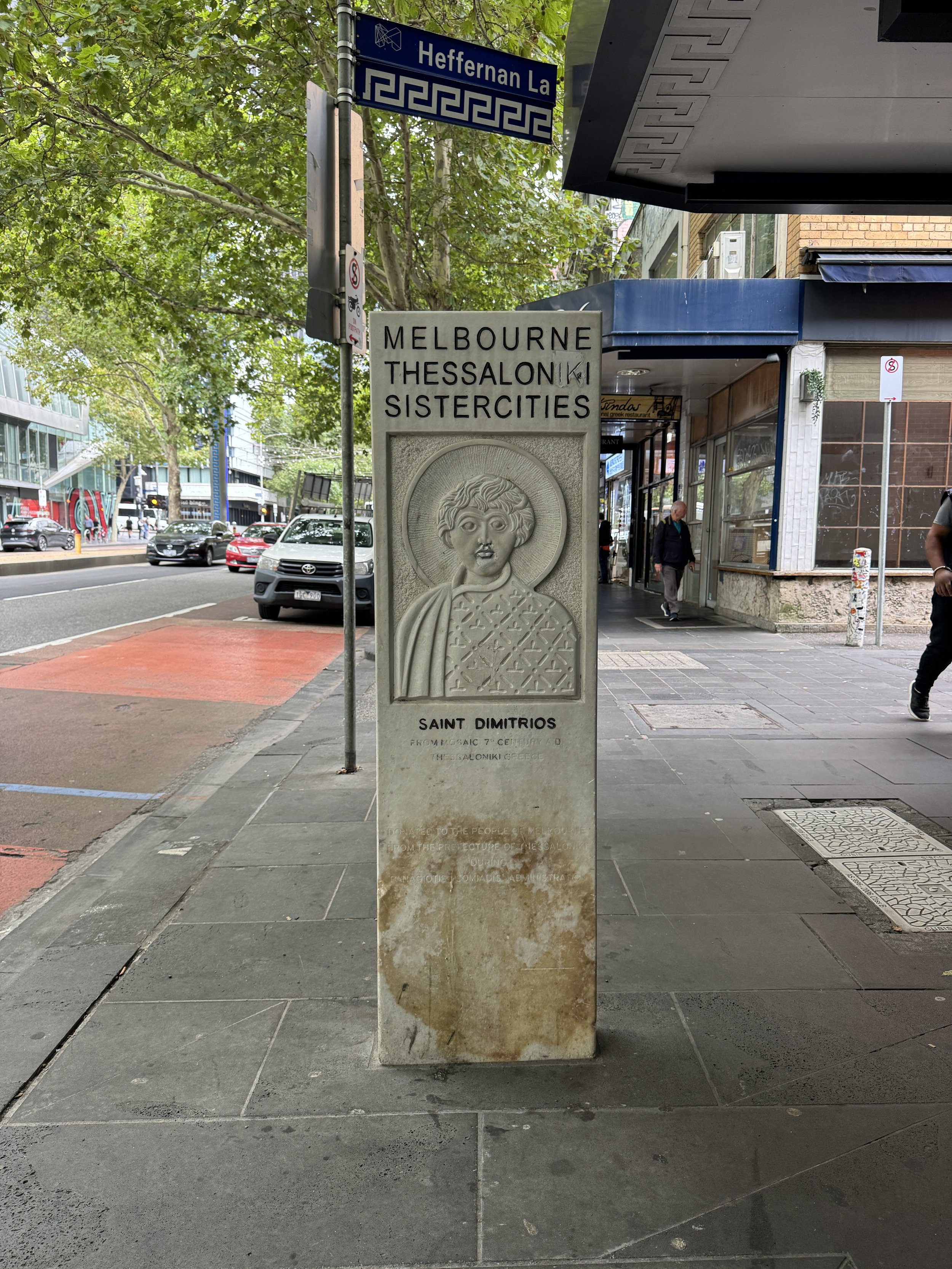
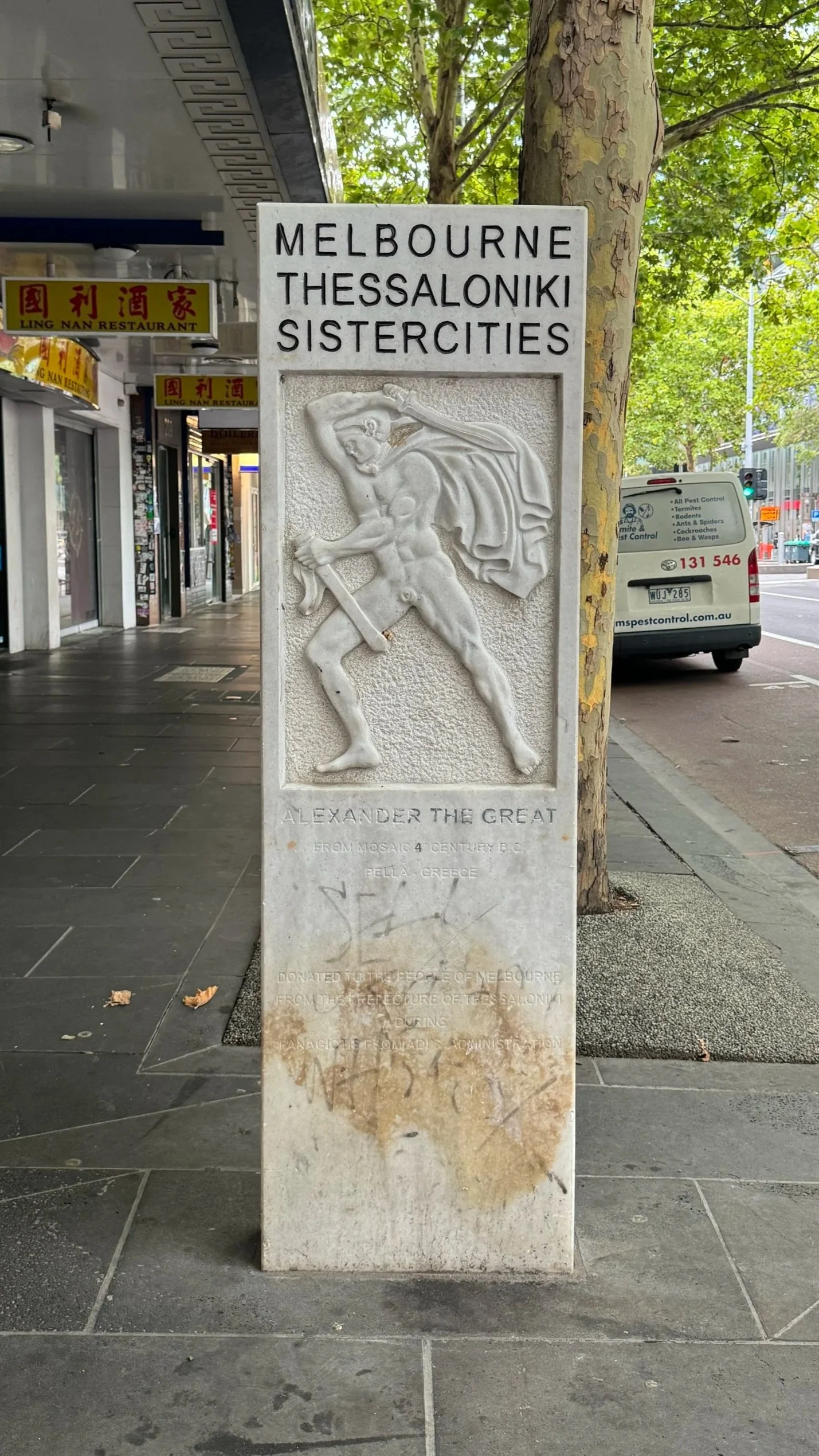
A few steps from Stalactites is a marble stele that the Prefecture of Thessaloniki donated to Melbourne in 2008, recognising Melbourne and Thessaloniki as sister cities, with an icon of St. Dimitrios and Alexander The Great on the other side. Thessaloniki and Melbourne formalised their affiliation in 1984.
Every year, Lonsdale Street closes as it hosts Antipodes Festival, which – with a regular turnout of over 100,000 Greeks – is possibly the largest Greek festival on earth (estimates had attendance at up to 150,000 in total in 2026 when I went, making it possibly the largest on record).
Australia’s Greek (food) culture
The authenticity and accuracy with which Greek culture and traditions are mirrored in Australia is equally observable in Australia’s Greek hospitality scene. In a sentence: Greek Australians represent Greek food and traditions in an incredibly informed and authentic way, They do so to an incredibly high standard, and while retaining its genuineness, openness, and community-oriented nature. You can’t help but resort to the same cliches: meraki, kefi, filoxenia, filotimo. Words that you can’t define as well as you feel them in reality.
As a result, Melbourne and Sydney are both home to a high concentration of good-quality Greek hospitality businesses, both cities holding at least 20-30 that are genuinely worth discussing on a global level as accurate and high-quality representations of Greek cuisine and Greek culture. Even in the most high-end, busy, and seemingly ‘commercial’ spots, you still encounter restaurant owners in their restaurants, the overwhelming majority of which surprise you with the warmth of their welcome and the interest that they show in every customer, regardless of background or status. That in itself is a running theme throughout Australia’s hospitality scene, just as iconic Melbourne hospitality institutions like Italian espresso bar, Pellegrini’s, attest to.
A real Yitonia
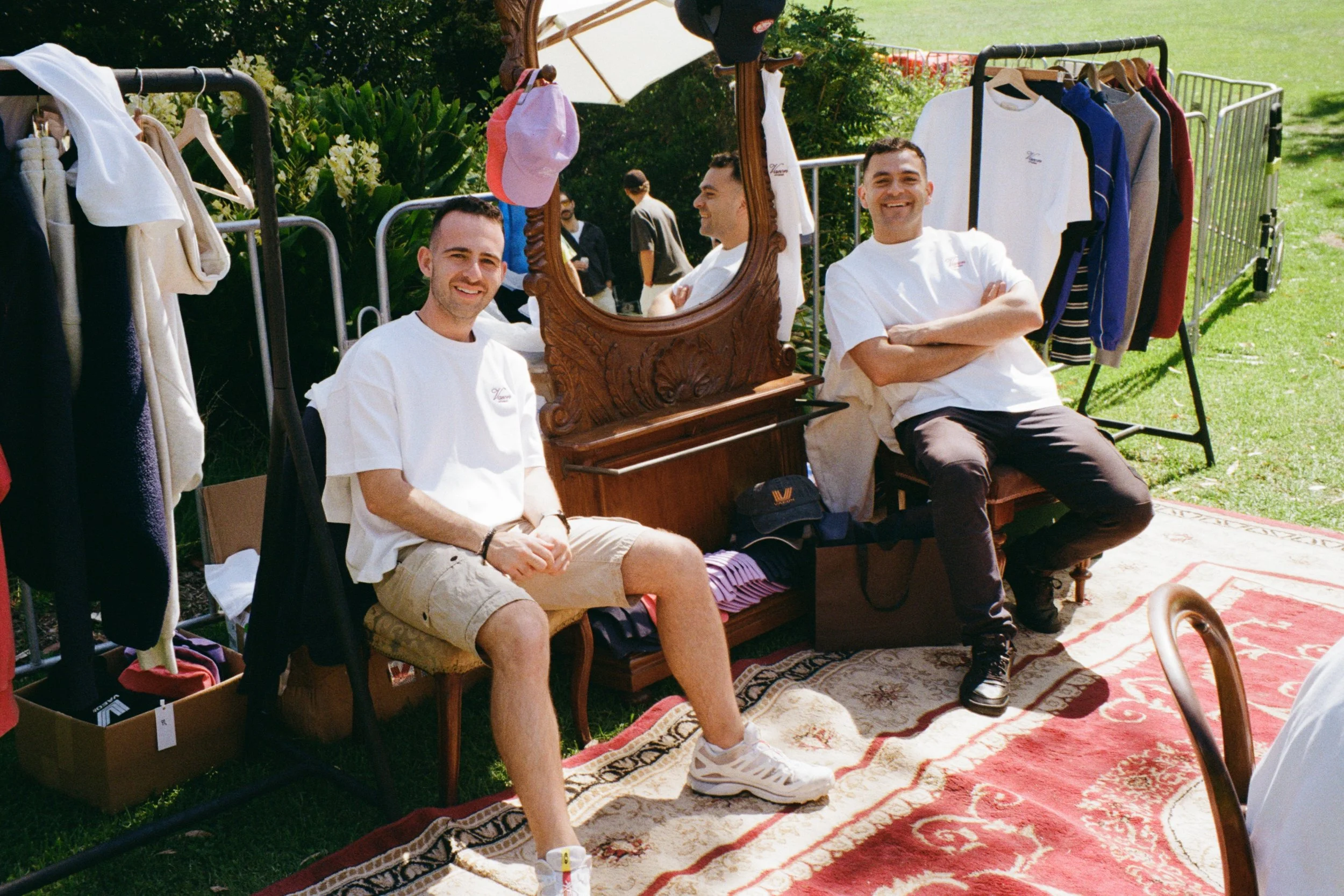
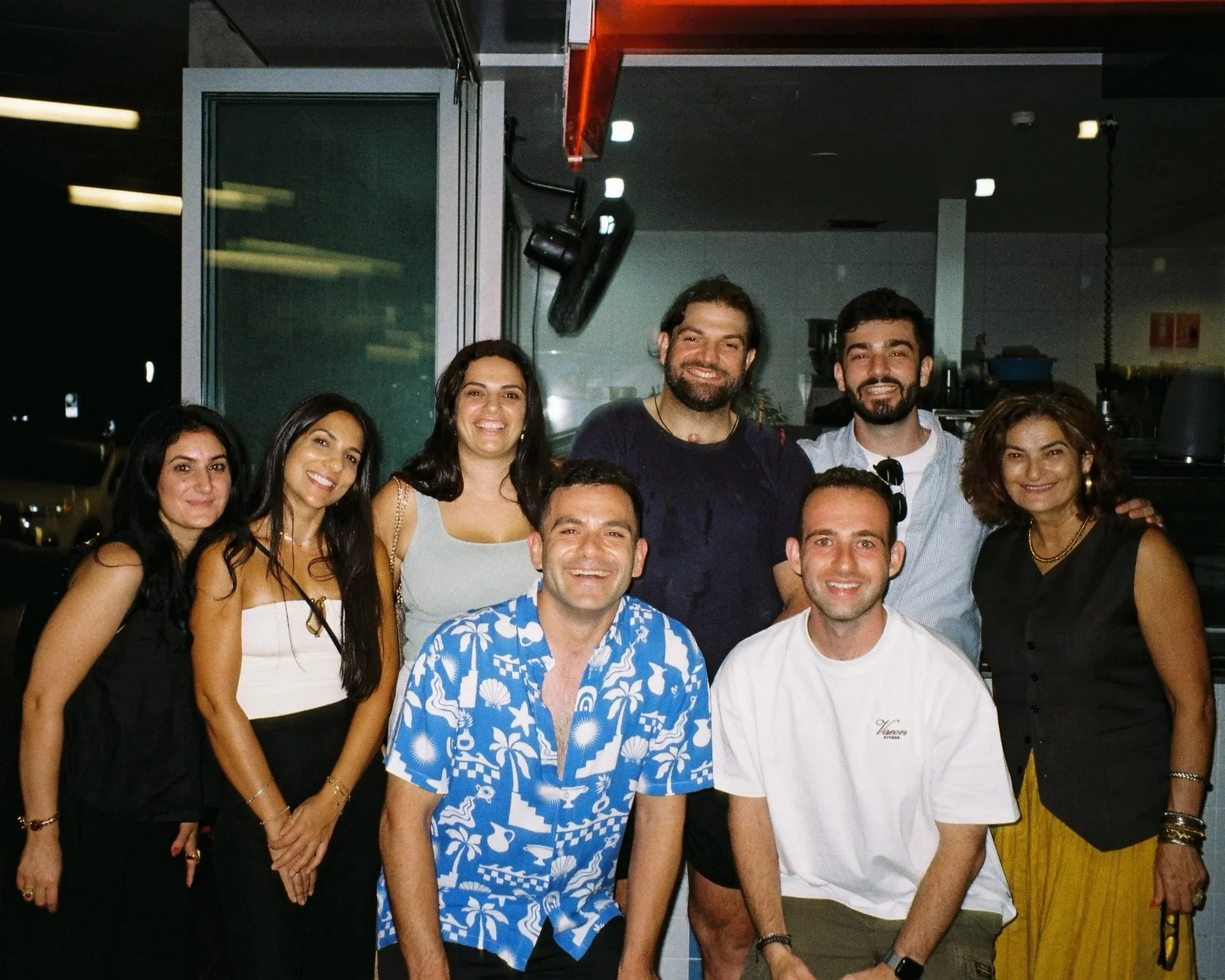
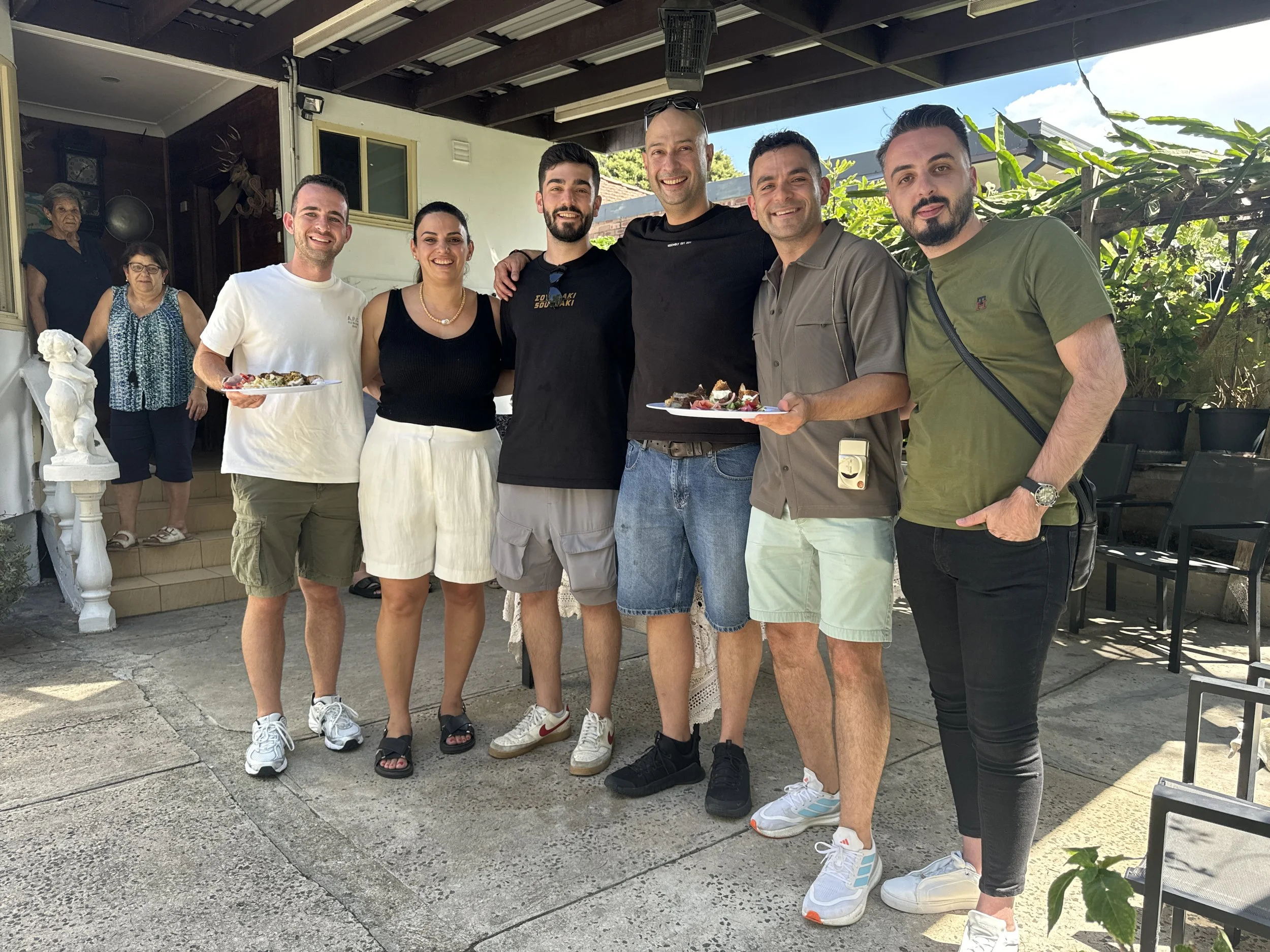
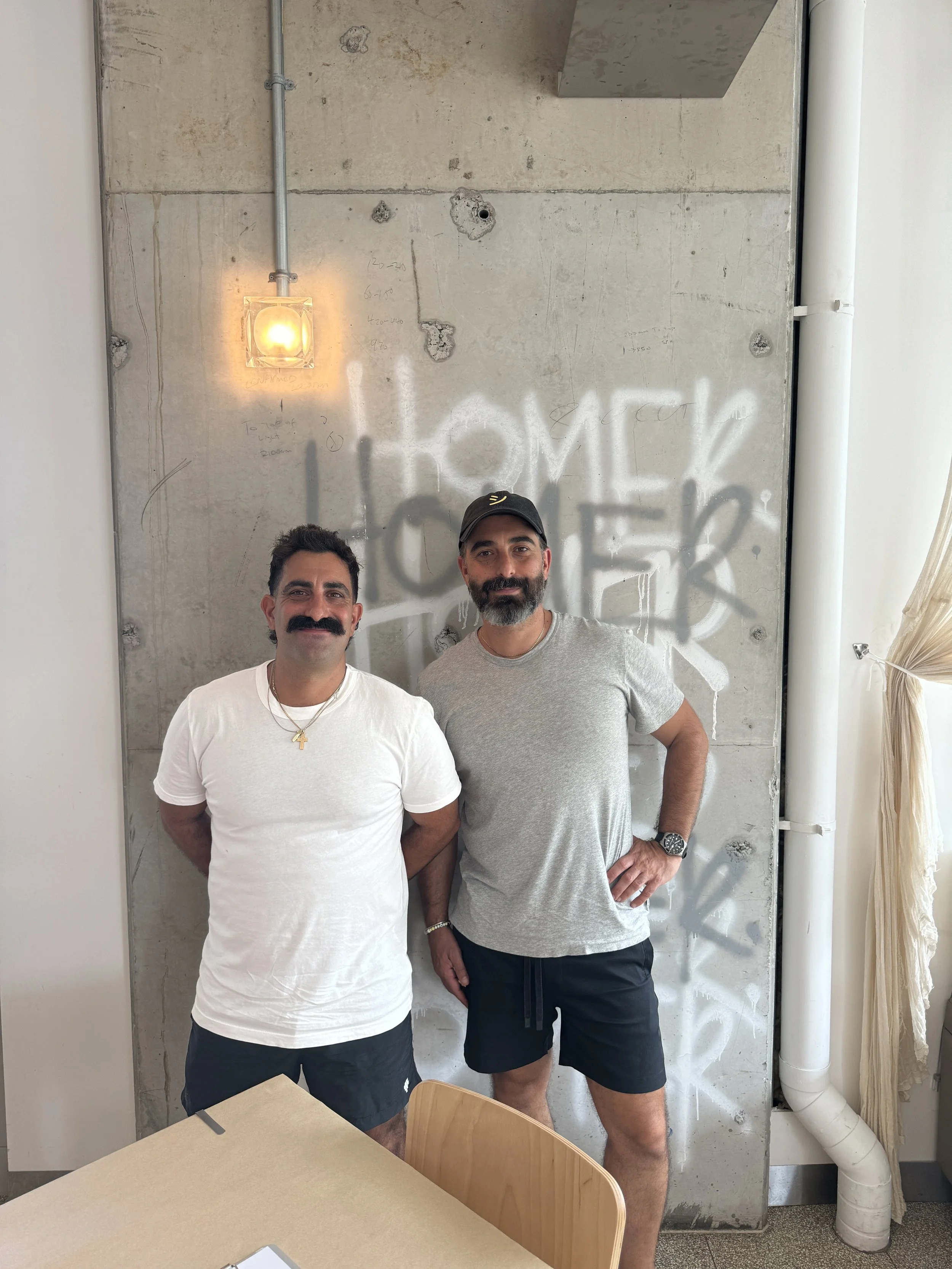
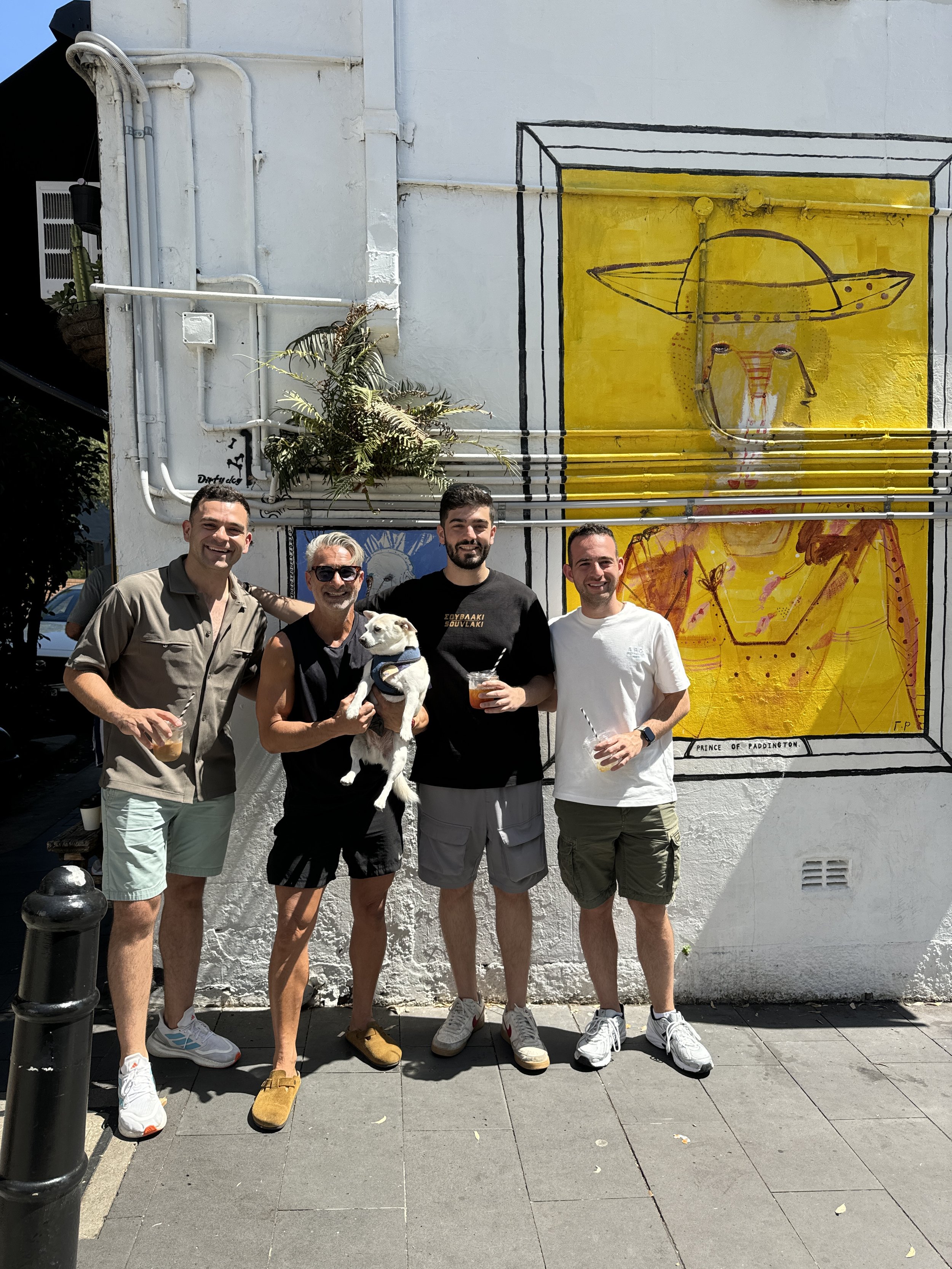
Such a culture has also helped give birth to a plethora of interconnected, collaborative, community-oriented projects such as Yitonia – which literally translates to ‘neighbourhood’ – and without whom this guide wouldn’t have happened yet. Not only for that reason, but because of their honourable efforts to bring so many people together and foster community, a special thank you has to go to Yitonia (Peter Giasoumi & Dean Kotsianis).
Credit: yitonia.
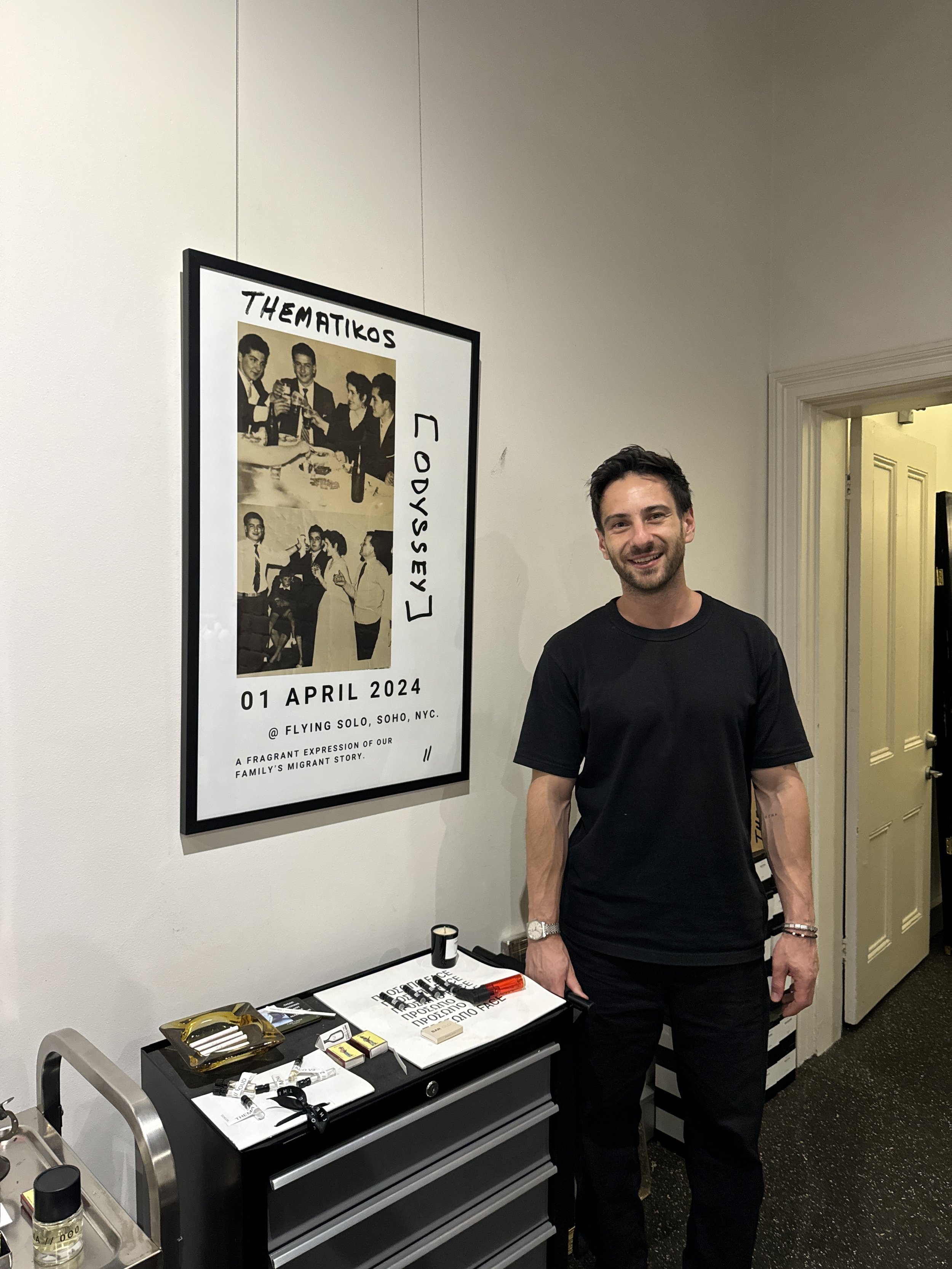
You will also find value in so many more Greek-Australian projects that are mentioned throughout this guide. The Ouzo Talk Podcast sets a high intellectual standard of discourse for all of the Anglophonic Greek diaspora and prolifically gives a voice to a range of talent in the community and beyond. Content creators Greek Plateia and ‘Are You Even Greek?’ equally deserve a special mention for their consistent efforts to collaborate with Greek businesses and support the community, and Project Klironomia is revisiting the legacy that Greek Australians’ ancestors have bequeathed to them. Greek Australians’ informed pride for their heritage is also evident in a range of other creative projects, including but not limited to: Thematikos’ mission to reinvoke memory and nostalgia through fragrance, George Raftopoulos’ acclaimed contemporary art, Anthony Tartaglia’s Hellenic-inspired paintings, and DJ Adriana Lazaridis’ ability to weave Despina Vandi into a non-Greek set.
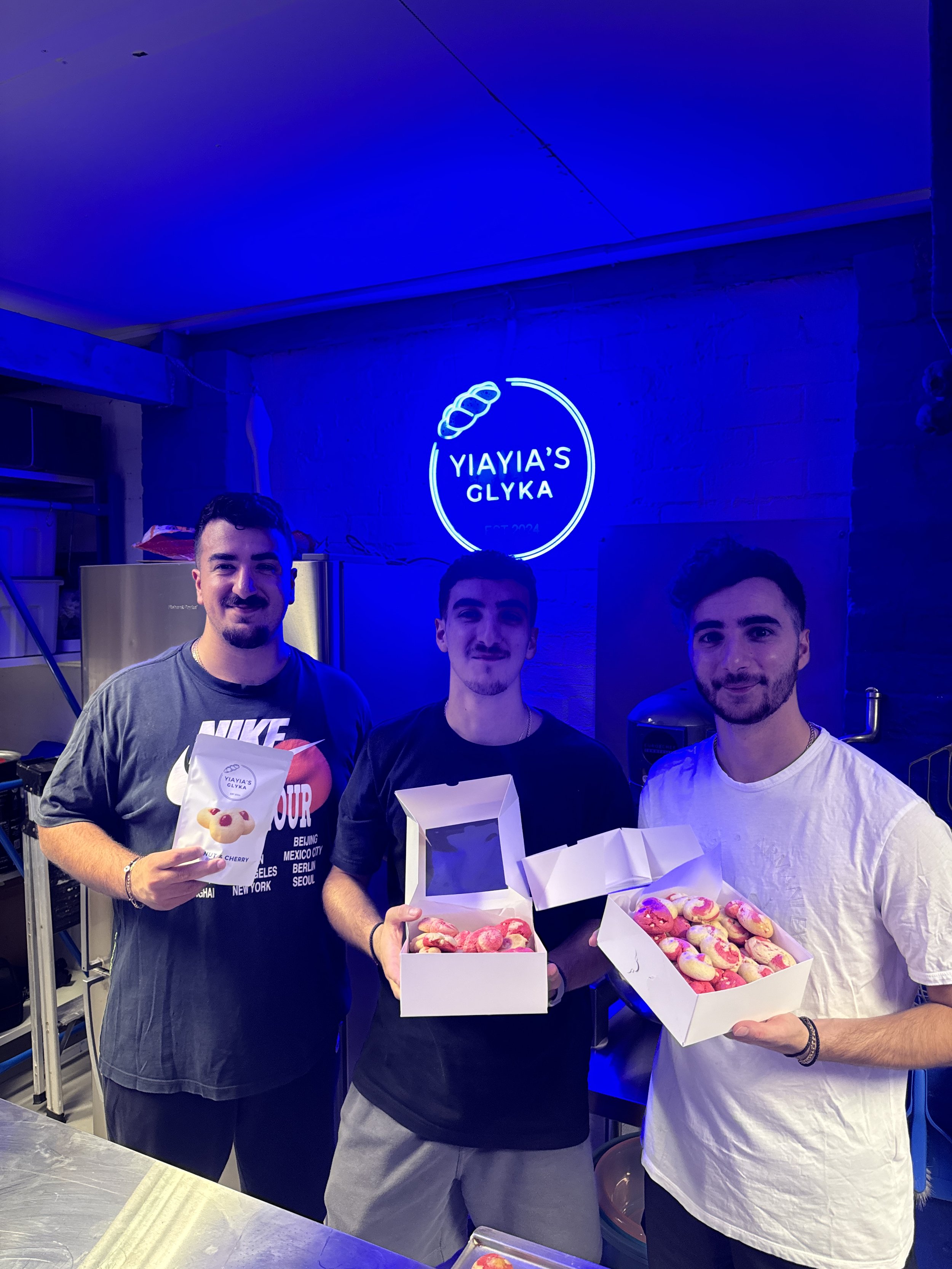
Food content creators ‘Mary’s Kouzina’ and ‘The Traditional Plate’ lead the way in documenting and preserving traditional Greek and Cypriot family recipes respectively, for a wider, global audience of all ages, just as Melbourne’s Samothrakitis brothers are recreating their grandmother’s sweet biscuit recipes with their project ‘Yiayia’s Glyka’. ‘Yiayia’s Greek Kitchen’ is another worthwhile Instagram follow, and is mother to successful Sydney restaurateur Con Dedes. More notable projects are mentioned below. Likewise, household-name chef George Calombaris continues to lead a worthy example through his endeavours to push the boundaries of Greek cuisine in a highly-informed and respectable manner, as well as his efforts to support others in his community and industry.
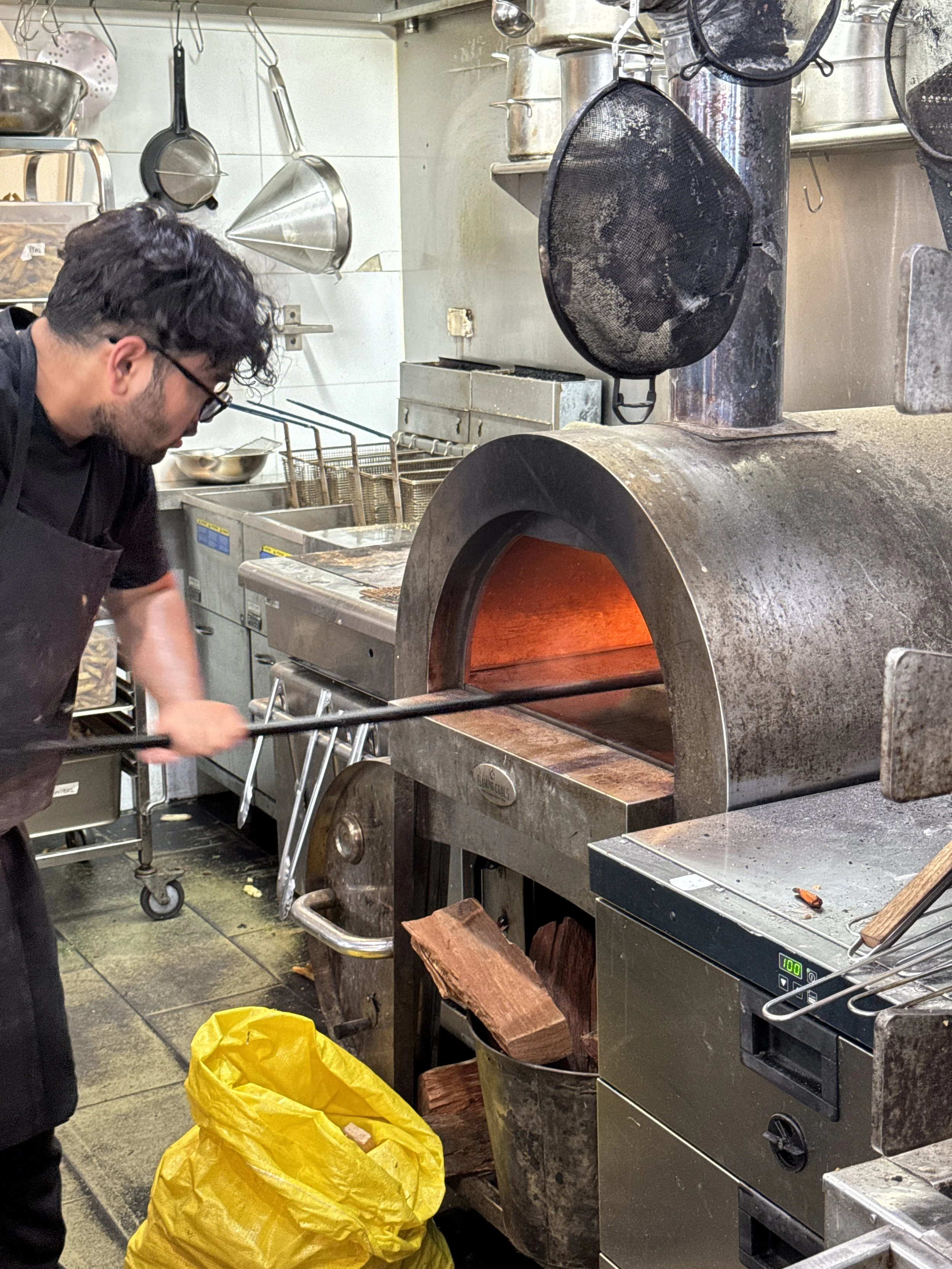
Calombaris is one of many Greeks chefs in Australia who set an objectively high benchmark for the standard of Greek cuisine. Ioannis Kasidokostas was once the first to make traditional Athenian souvlakia in Australia with his former project, and is now the genius culinary mind behind what is probably the most impressive and well-executed refined take on traditional Greek cuisine anywhere in the world – as you’ll see in the Melbourne part of this guide below. Timothy Cassimatis also leads by example at his Sydney grill, Olympic Meats, where he makes everything from the vinegar to the loukanika and pita breads from scratch. And Con Christopoulos is another notable Greek success story in Melbourne’s hospitality industry, lending his wisdom to two of Melbourne’s most worthy Greek restaurants (also noted in the guide below).