

Baklava Recipe with Souvlakination’s secret Chios mastiha ice cream combination
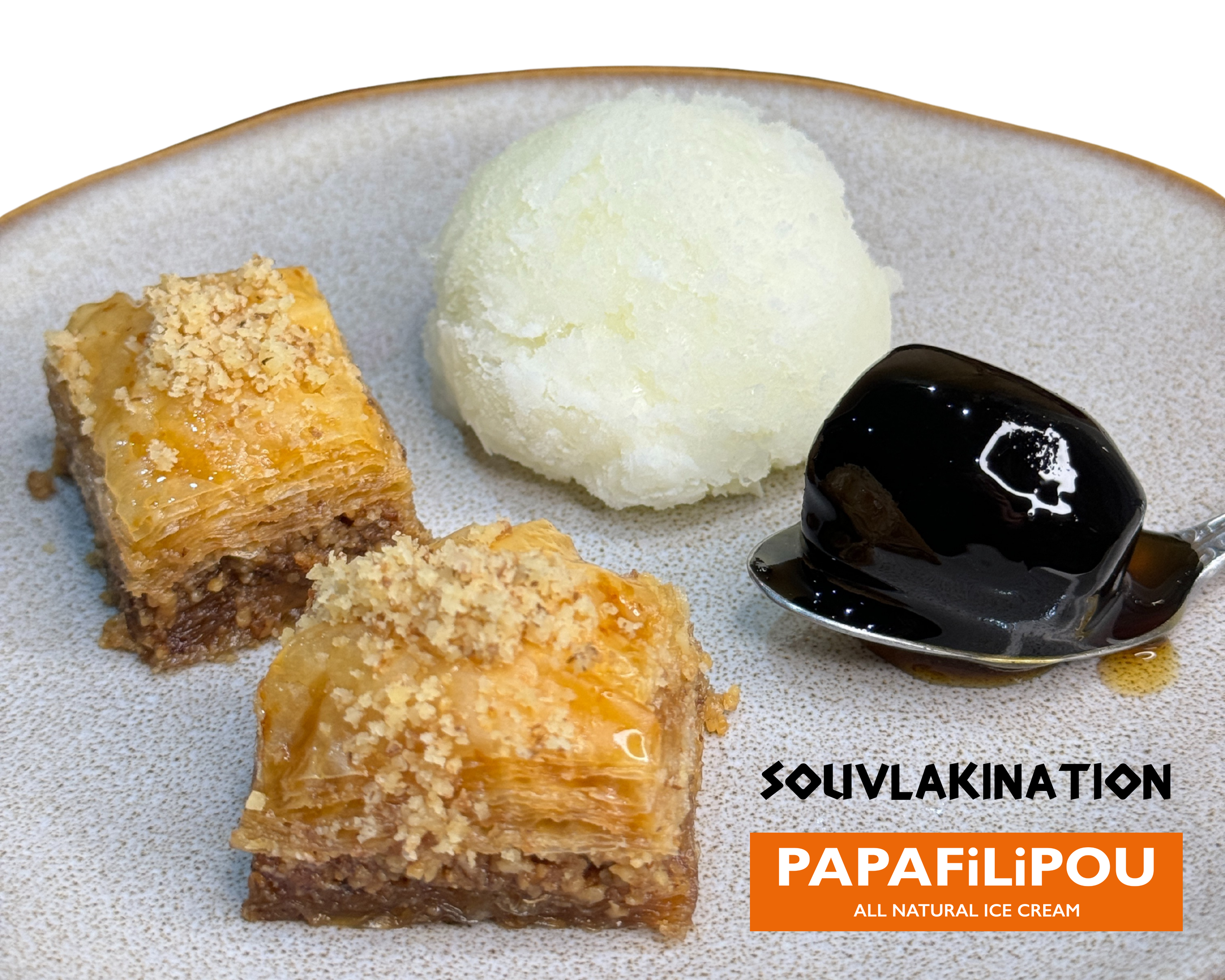
A good, easy baklava recipe, with a signature Souvlakination serving suggestion below, together with PAPAFiLiPOU®
Baklava with mastiha: a time-tested combo
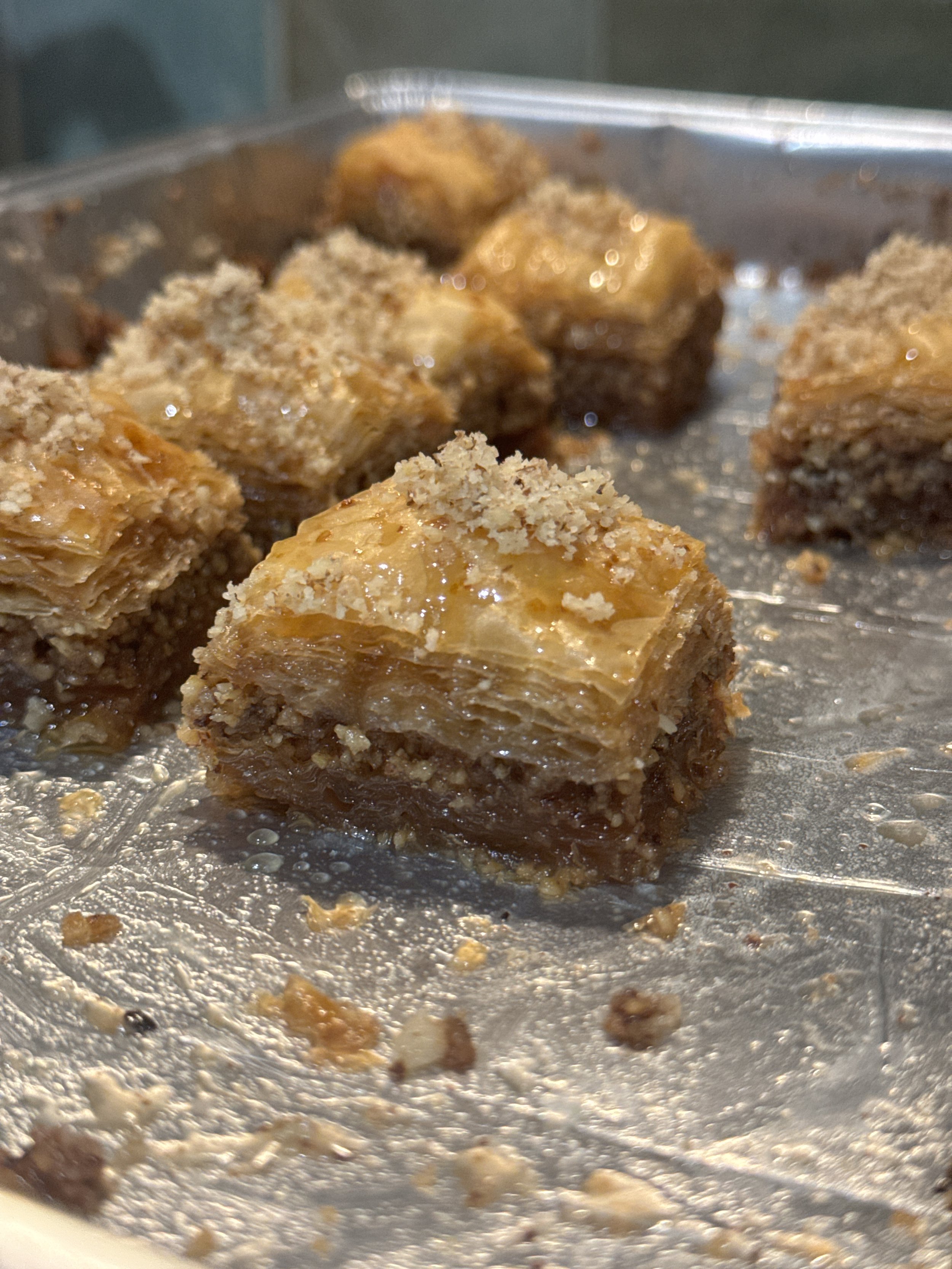
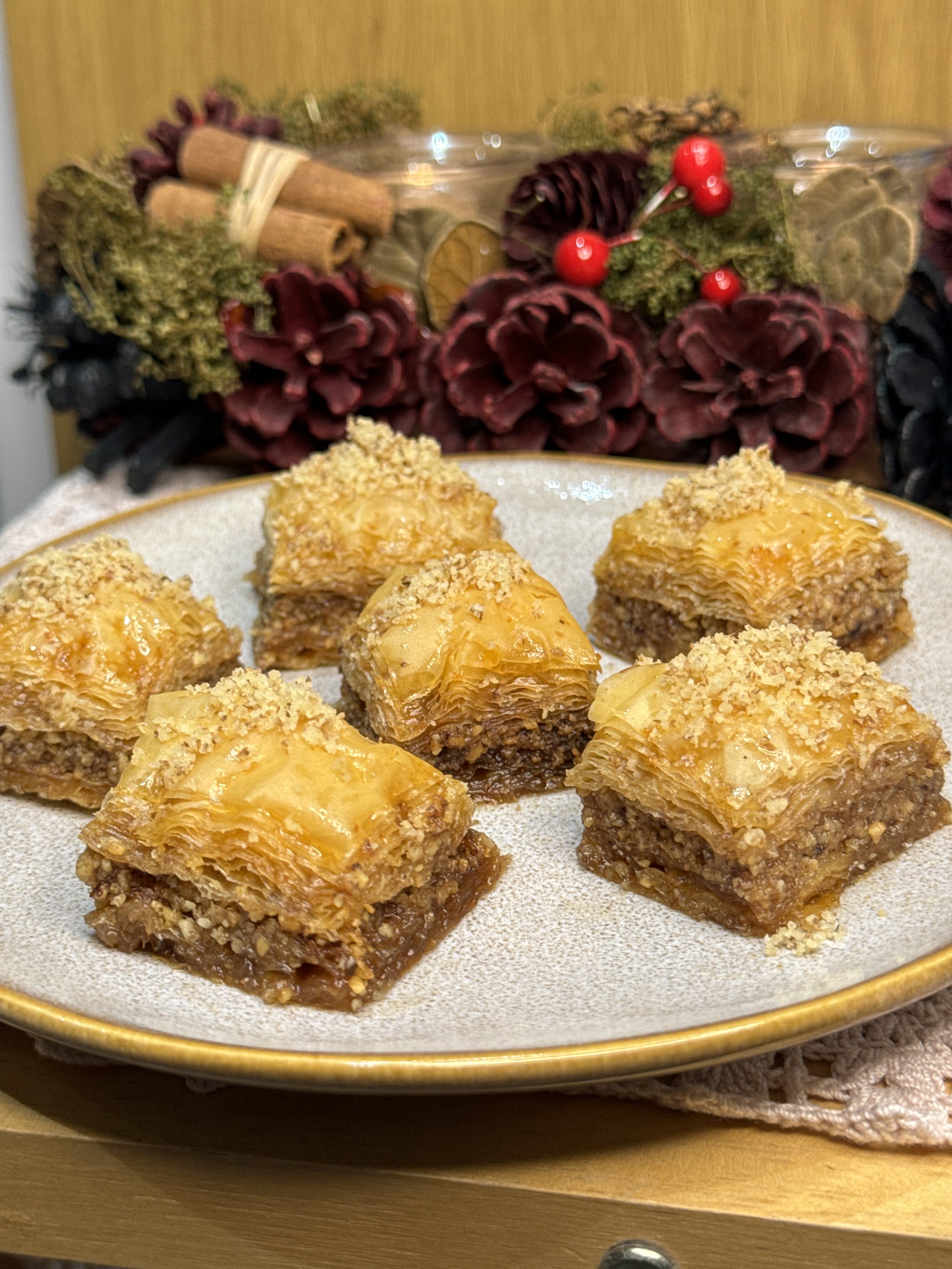
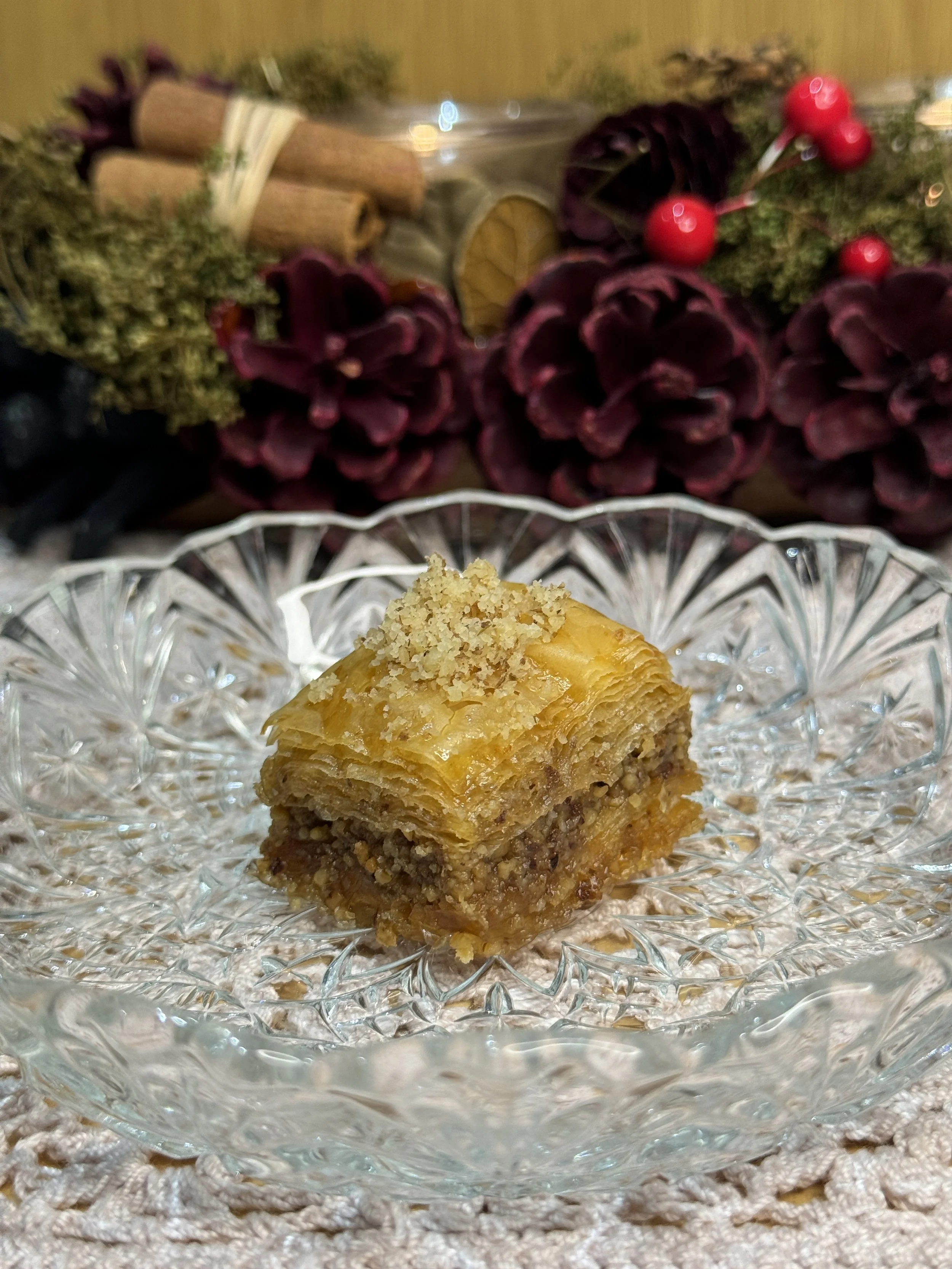
With its roots in ancient Greece, in the form of a dish called gastrin, baklava needs no introduction. Likewise, baklava and mastic or mastiha is a time-tested combination. Here’s a recipe for making buttery, crispy baklava at home that beats the dry store-bought versions any day, and an original Souvlakinaton™ serving suggestion that takes the whole thing to the next level.
As common as the baklava-mastiha combination is, I’ve added a twist to the Chios mastiha ice cream in the recipe that makes this a really memorable dessert. Follow the recipe and I promise you this is the best dessert combination you’ll try this year. Check out the full serving suggestion together with the recipe below.
Thank you to PAPAFiLiPOU and our friends at the Greek Cypriot Brotherhood in North London for supporting this.
Add your email below
Be the first to hear about new Souvlakination recipes.

What is mastiha?
We need good quality mastic ice cream for this recipe. Mastiha or mastic is a ‘tear’-shaped tree resin commonly used in Greek and Cypriot cuisine. Originally cultivated on the Greek island of Chios, mastiha stems back to ancient Greece, with Hippocrates and Herodotus – the fathers of modern medicine and history respectively – having written about its medicinal properties. It also bequeathed to us a modern invention that multi-billionaire investor Warren Buffet considers one of his safest bets: chewing gum.

Souvlakination’s choice is PAPAFiLiPOU ice cream
If you’re wondering where to find mastiha ice cream, PAPAFiLiPOU is my (genuine) recommendation if you live in Cyprus or London, and was already my choice before this partnership.
PAPAFiLiPOU’s Chios Mastiha ice cream is approved by the Chios Mastic Producers’ Association and has won a Superior Taste Award from the International Taste Institute in Brussels. It’s completely ‘clean label’, made with fresh milk, natural Chios mastic gum and mastic oil. It’s also gluten-free and suitable for vegetarians.
Even if you don’t like mastiha and want to go for alternative flavours (like Agros rose sherbet or the pistachio ice cream), the best choice really is PAPAFiLiPOU. Not only are PAPAFiLiPOU’s products one of the few (and good) options on the market for these classic Greek and Cypriot flavour combinations, but they are also the best quality.
Why PAPAFiLiPOU?
Importantly, PAPAFiLiPOU only uses natural ingredients, with no preservatives or artificial flavours (clean label). It’s a family-run Cypriot business with a 60-year history and a strong reputation on the island – you’ll see the logo throughout Cyprus’ wealth of ice cream parlours too.
As well as a wide range of flavours, with the Greek and Cypriot classics like rose sherbet and Chios mastiha, PAPAFiLiPOU is also pioneering the genius idea that is natural lemon juice sachets. PAPAFiLiPOU squeezes fresh lemons from Cypriot farmers on-site, with the sachets proving the perfect innovation for Greek and Cypriot home-cooking, as well as for Cypriot bakeries serving koupes (traditional Cypriot snack commonly served with lemon). The pure lemon juice is also useful when making the syrup for baklava.

Baklava History
Back to baklava, a dish enjoyed across the eastern Mediterranean for centuries. The word might be of Ottoman origin, but the dish stems back to the ancient Greek gastrin, made of nuts, honey and filo. In Byzantium, its name became koptin and, given its longevity in the region, people across the eastern Mediterranean, Anatolia and the Middle East know, make and love baklava. Nowadays, we all commonly use butter and syrup when making baklava.
You don’t have to make your own filo today
If you’ve read the Souvlakination traditional spanakopita recipe with homemade filo pastry, you’ll know that I’d usually advocate for homemade filo pastry, given how easy it is. In some cases, however, we have to be realistic with ourselves and our expectations of ordinary people who just want to make baklava. The reality is that you need at least 30 sheets of filo to make baklava, which takes at least 3 hours to make as it is. To make this recipe more accessible and realistic, in this case I recommend using pre-rolled filo pastry, or filo kroustas as Greeks know it. And that’s okay. (If you do want to add an extra hour and make your own filo, let me know and I can post a recipe for that. You’ll need to make 500-600g of dough and roll the filo out in stacks.)
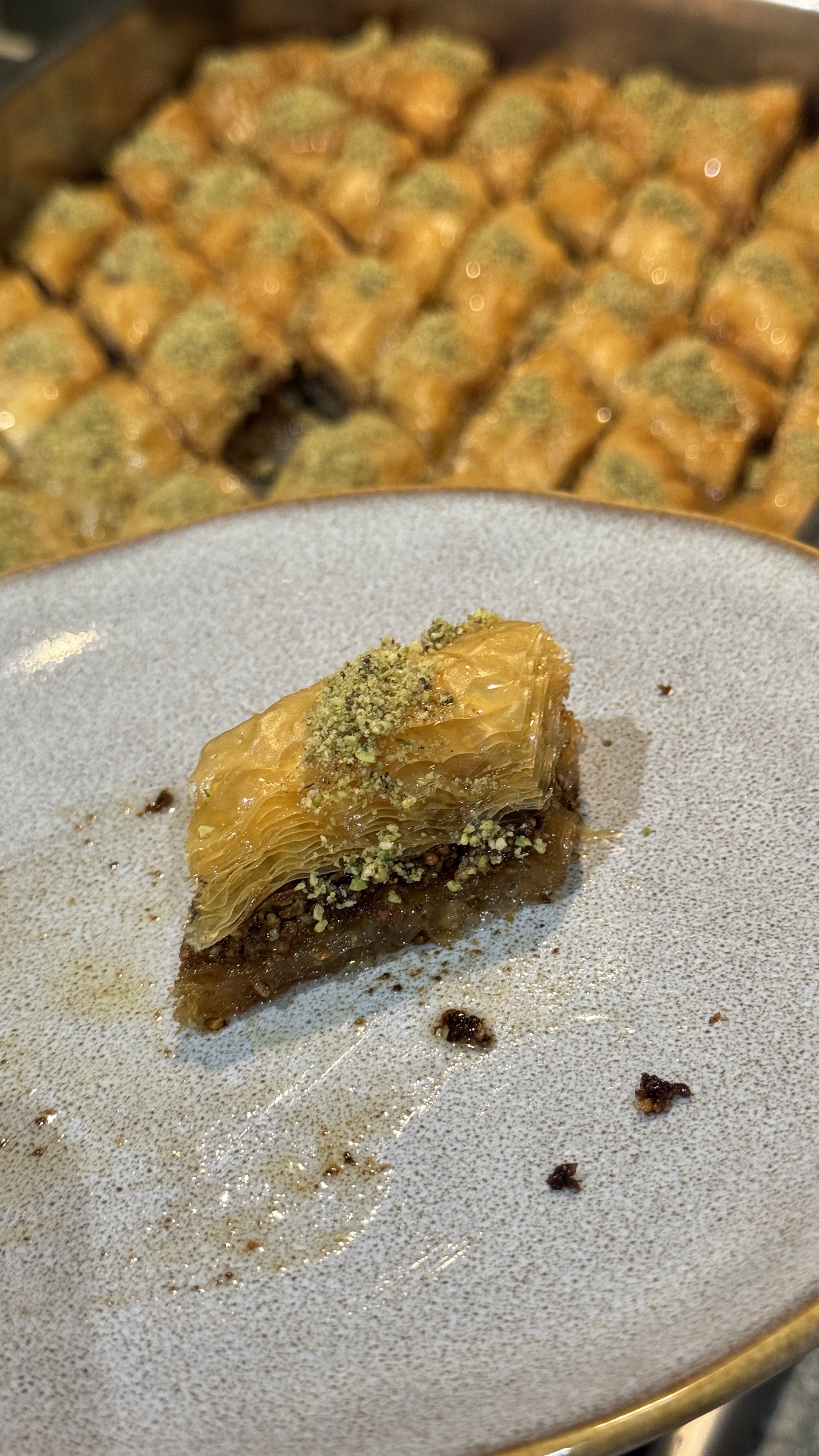
Making syrup for baklava
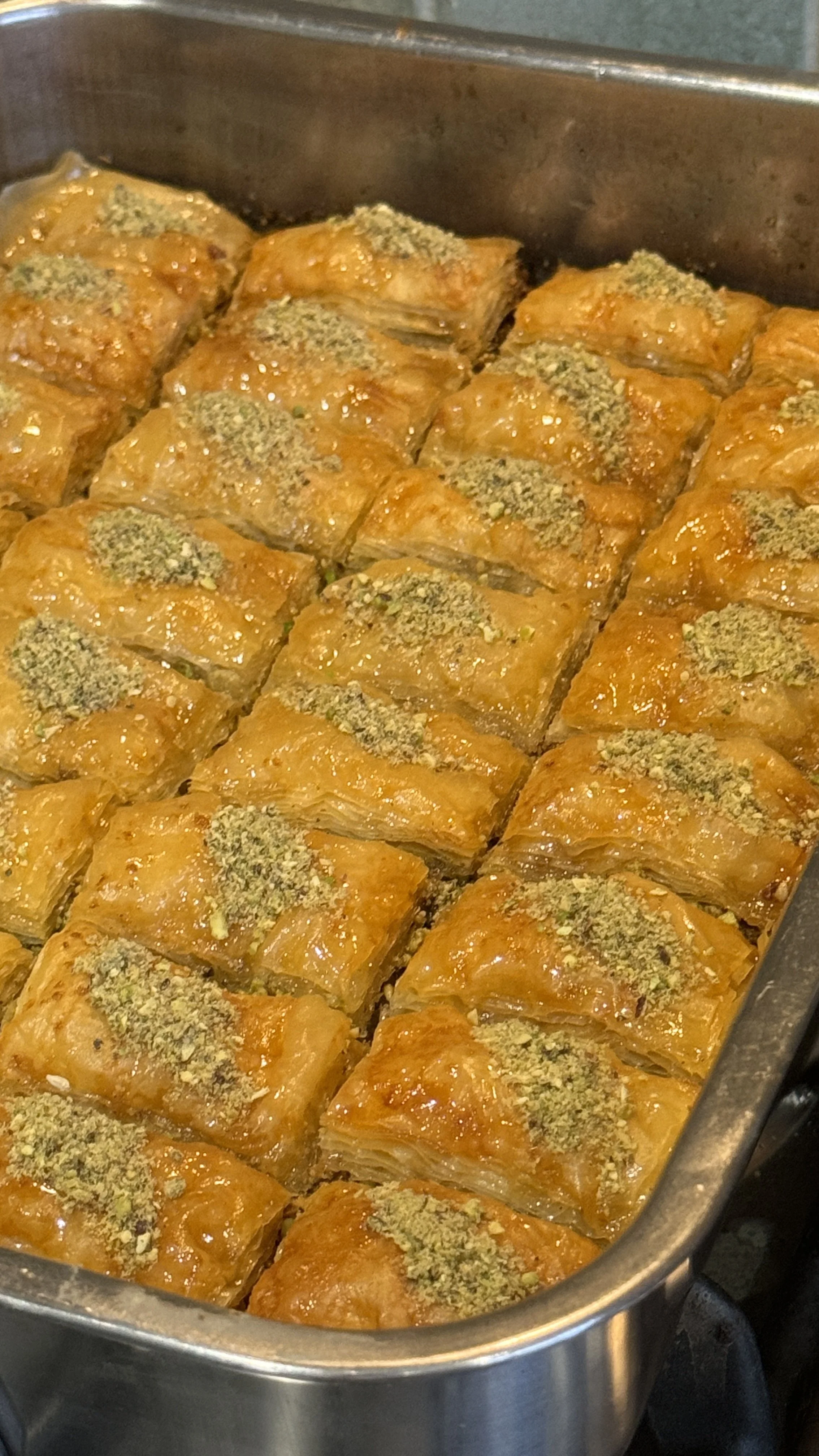
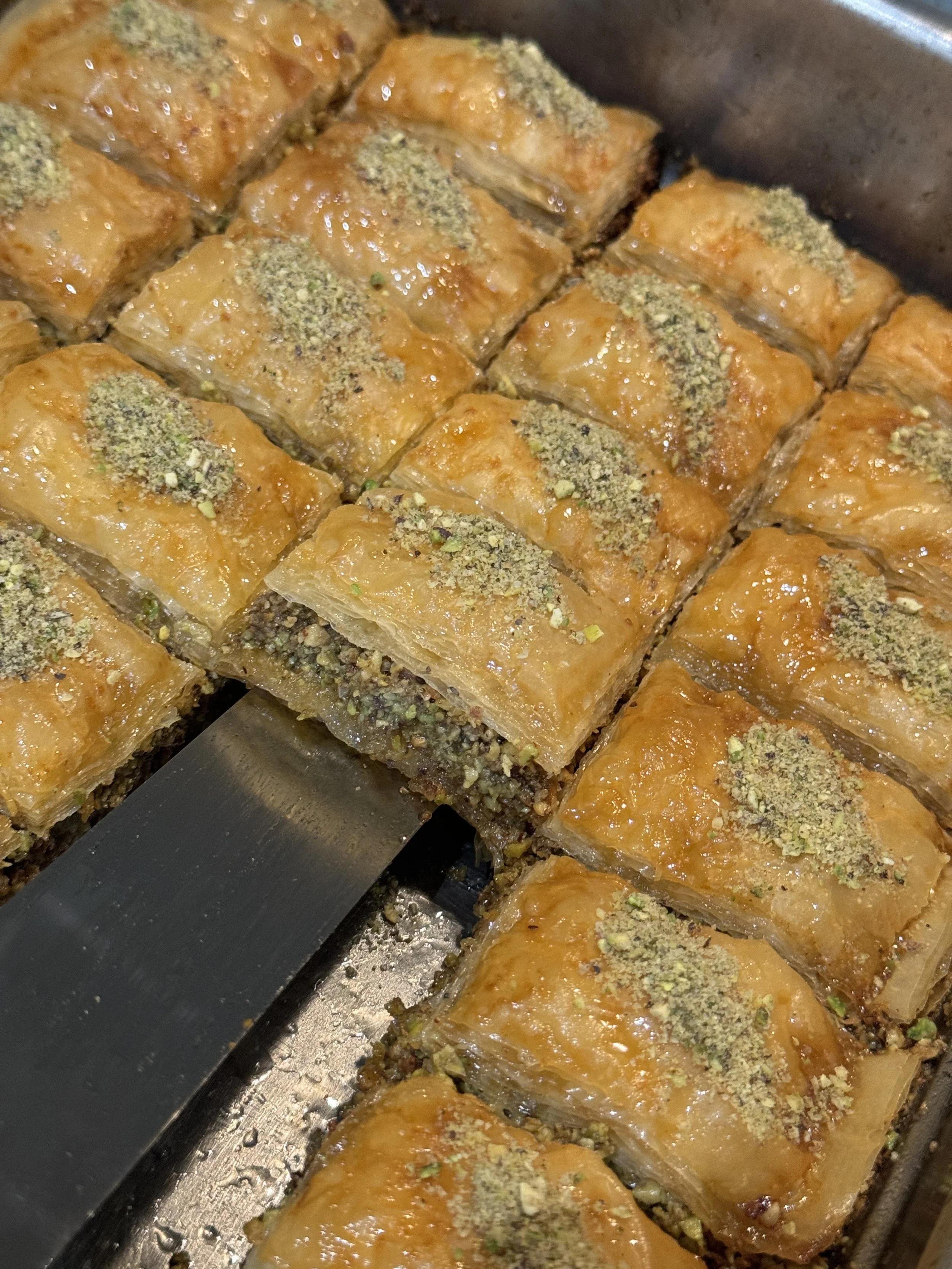
The syrup is the secret to making the baklava aromatic, so think about what spices you want to use. Cinnamon and cloves are definitely common, but you can play around with other flavours like star anise, citrus peel, rose or orange blossom water, cardamom, vanilla pods, or anything relevant that you can think of.
The most satisfying part of making baklava (before the first crunch and the first bite) is perhaps the ‘crash’ that comes from pouring hot syrup over hot-out-of-the-oven baklava (lots of recipe writers recommend cold baklava and hot syrup, or vice versa, but professional baklava makers pour hot syrup over hot baklava, contrary to popular belief). Make sure to time making the syrup so it’s ready at the same time as the baklava to maximise this effect.
And if you ever find mastiha ice cream with tahini, carob honey, extra virgin olive oil, sea salt and walnuts, now you know where they got the idea from.
Souvlakination Baklava Recipe

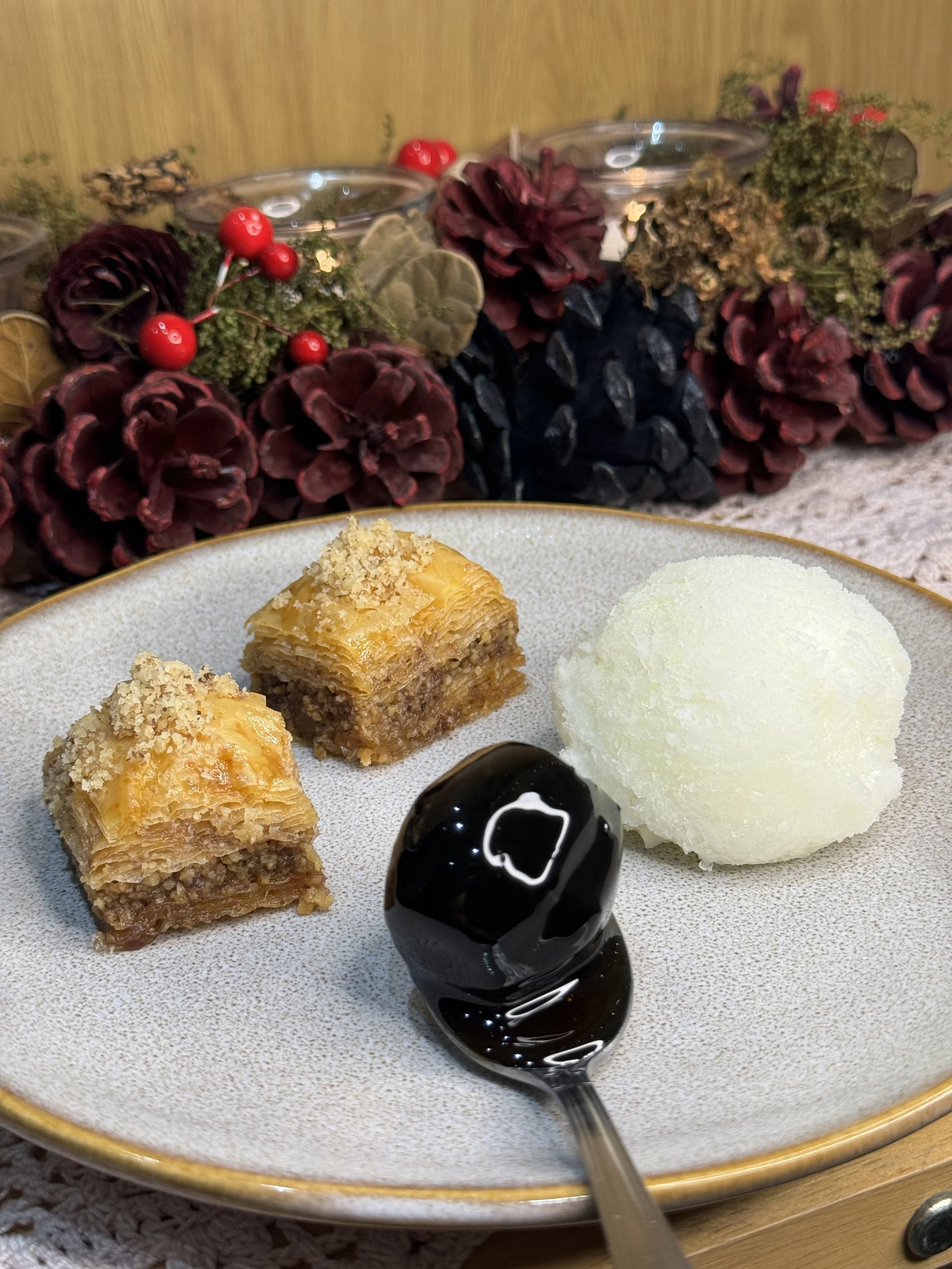
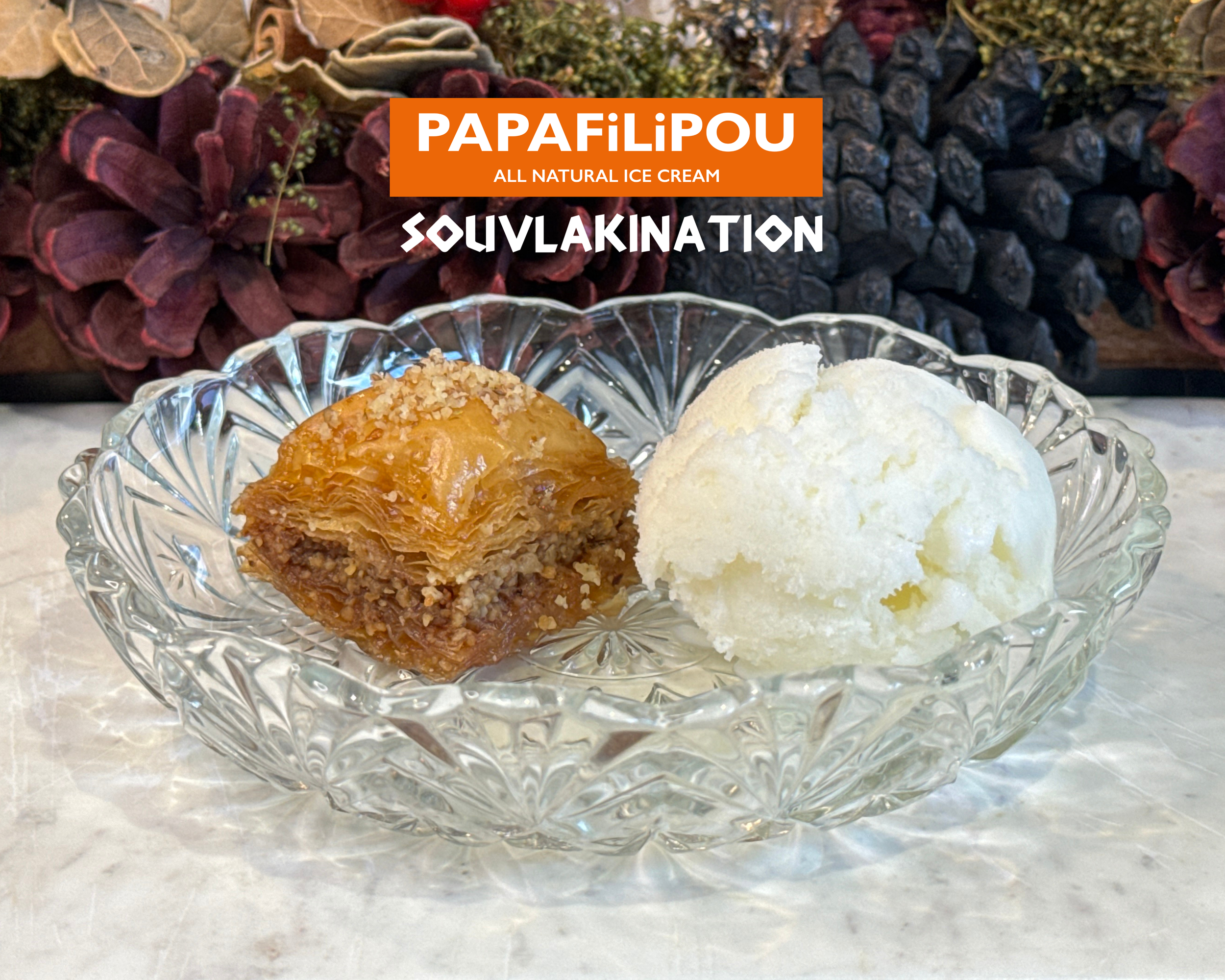
Souvlakination Baklava: Homemade baklava with PAPAFiLiPOU Chios mastic ice cream, pure tahini, carob honey, extra virgin olive oil, sea salt, walnut, and traditional walnut preserve spoon sweet.
Ingredients for baklava:
For a regular baking tray (33cm long, rectangular) = 25-35 pieces.
To serve:
1 tub PAPAFiLiPOU Chios mastic ice cream
Good, pure tahini (should be runny and not hard)
Carob honey
Extra virgin olive oil
Sea salt flakes
Some chopped walnuts
Traditional walnut spoon sweet (whole walnuts preserved in syrup)
For the baklava:
30-40 sheets of filo pastry that fit the size of the tray (500g-600g)
300g butter (or ghee/clarified butter)
350g pistachio or walnuts (shelled weight)
2 tbsp granulated sugar
2 tsps cinnamon
For the baklava syrup:
200g granulated sugar
150ml water
Optional: 100g honey
1 small cinnamon stick
2 cloves
1/2 unwaxed lemon and its peel or 1x25g sachet of PAPAFiLiPOU pure lemon juice
Optional: 1 small star anise
Optional: 1tsp rose water or orange blossom water
Method: how to make baklava

Preparing the baklava:
Open your filo pastry, lay the sheets out flat on a clean surface and place the tray on top, then cut around the edges to ensure the filo sheets are the size of the tray. You need at least 30 whole sheets in total. (To minimise waste, you can also fit in the excess filo cuts for a few extra layers.)
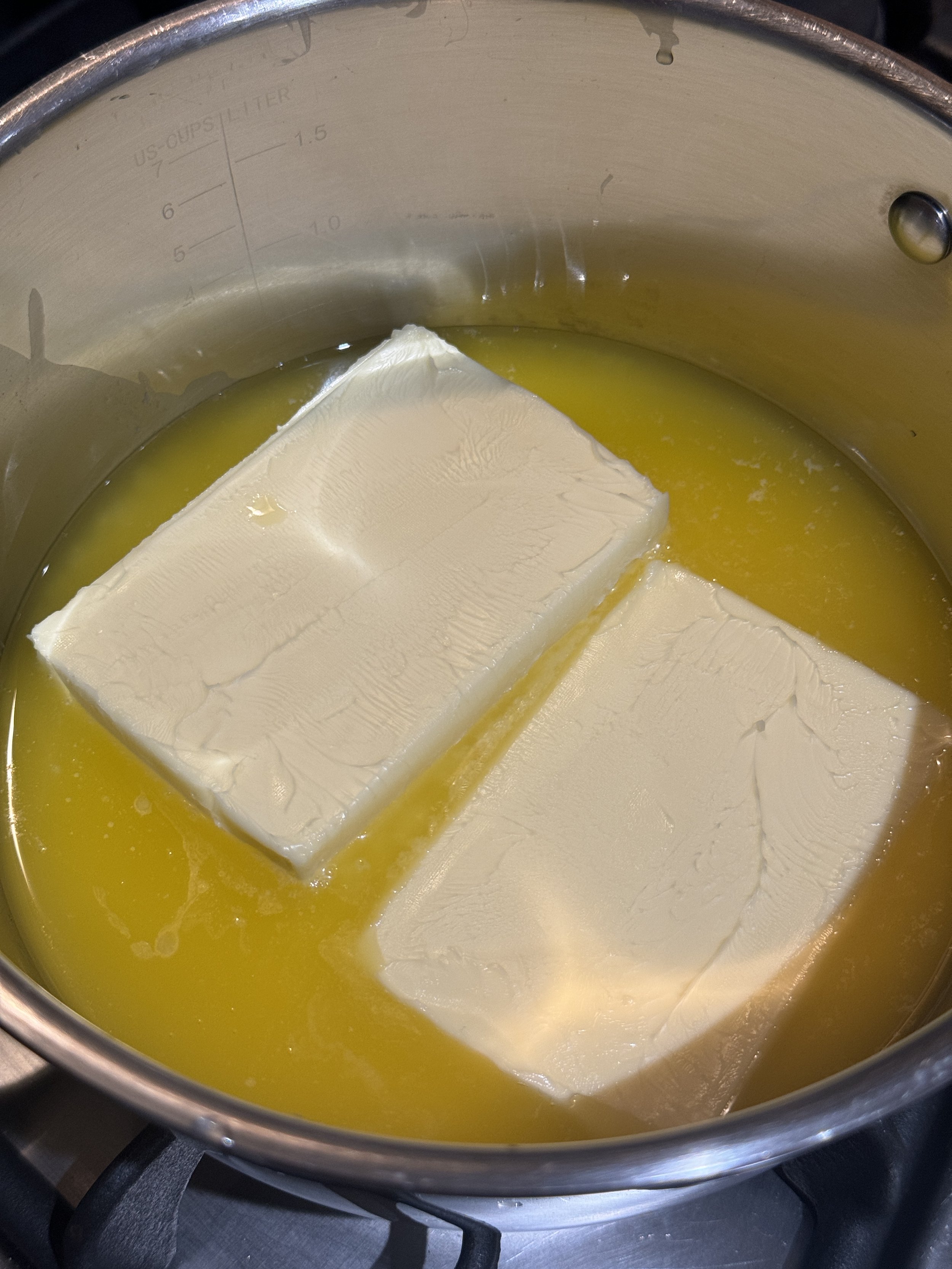
Clarify your butter. Melt on a low heat without disturbing until completely melted, and the butter should separate into translucent, silky clarified liquid, with white fatty solids at the bottom. (If any solids float to the top, skim them off with a slotted spoon or small sieve.)
Now, carefully pour the clarified butter into a bowl, leaving the fatty solids to remain at the bottom of the saucepan. (You can also pour it through a strainer or muslin if you have any.)
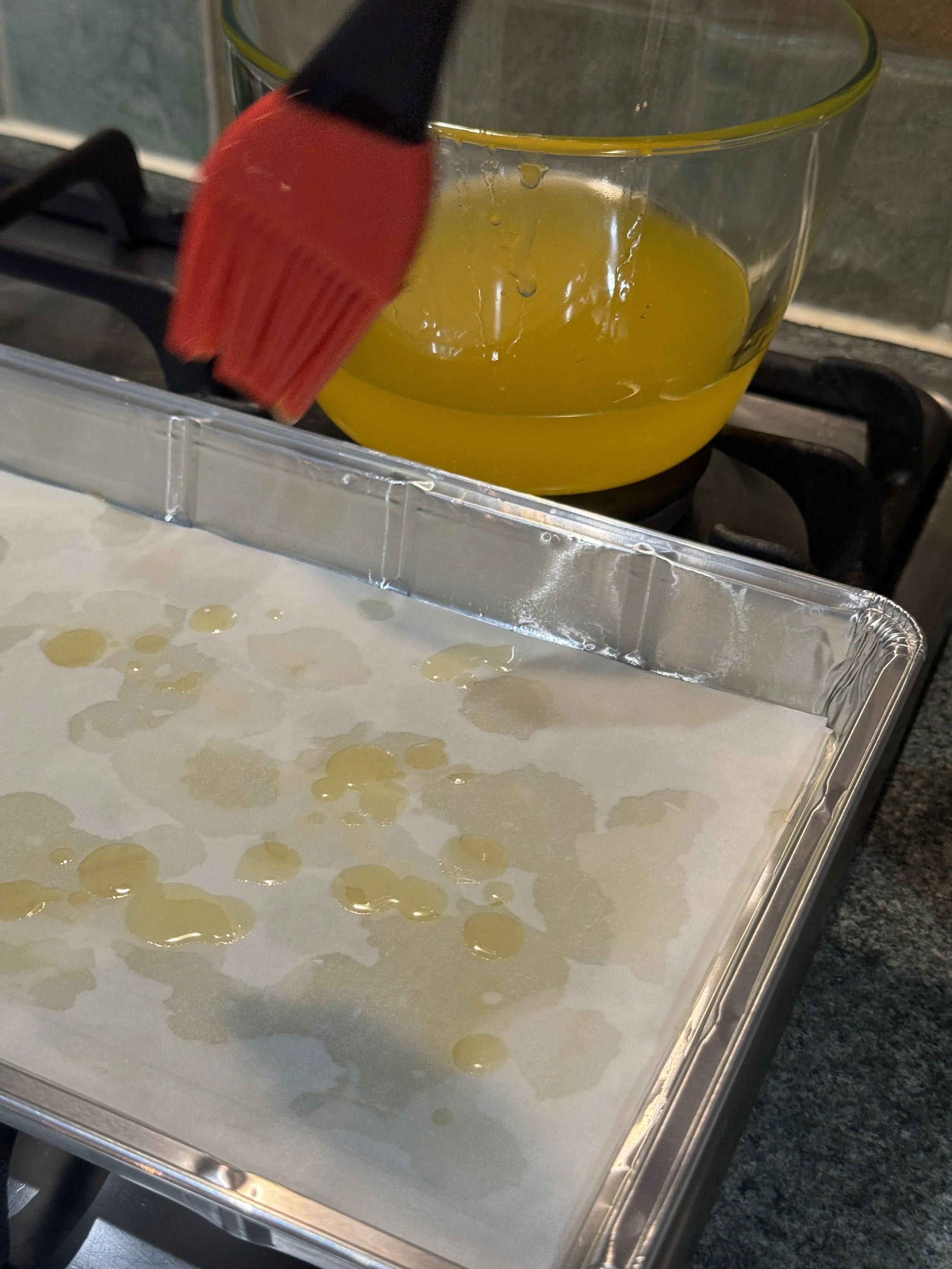
With the now-clarified butter, brush the bottom of the baking tray so it’s coated all over. Carefully add in the first sheet of filo.
With the brush or a sauce whisk, very lightly sprinkle the first layer of filo with the butter. Avoid puddles or large blobs of butter forming in sections, as we want the baklava to be airy and crispy, rather than soggy. Using a brush or spoon whisk to sprinkle the filo helps avoid this and keeps the butter evenly distributed in small droplets without any soggy clumps forming. Don’t brush the butter on the filo.
Repeat with the remainder of half the filo sheets (at least 15 in total) to complete the base, ensuring to sprinkle with butter with each layer.
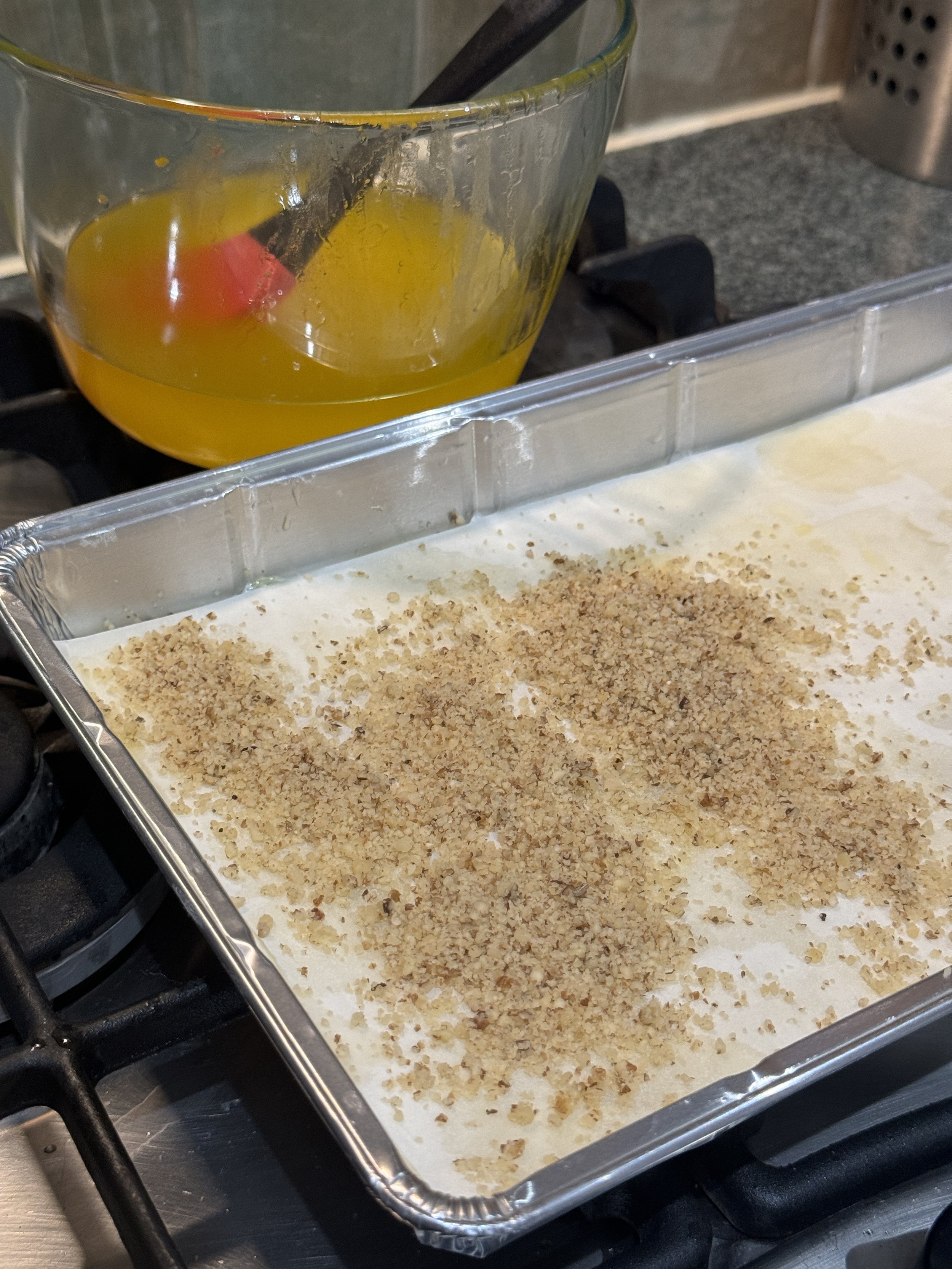
Now, blitz the shelled nuts, 2 tbsp of sugar and cinnamon together in a food processor until finely ground. Sprinkle most onto the filo base, reserving about 10% of the mixture for topping at the end.
Ensure the nut mixture is evenly spread over the filo base, then drizzle with some of the butter.
Layer the remainder of the filo pastry on top of the nut mixture, again lightly sprinkling each layer with butter. You should have a fair bit of butter left, which you’ll need shortly.
Place in the fridge for half an hour.
Cooking the baklava:
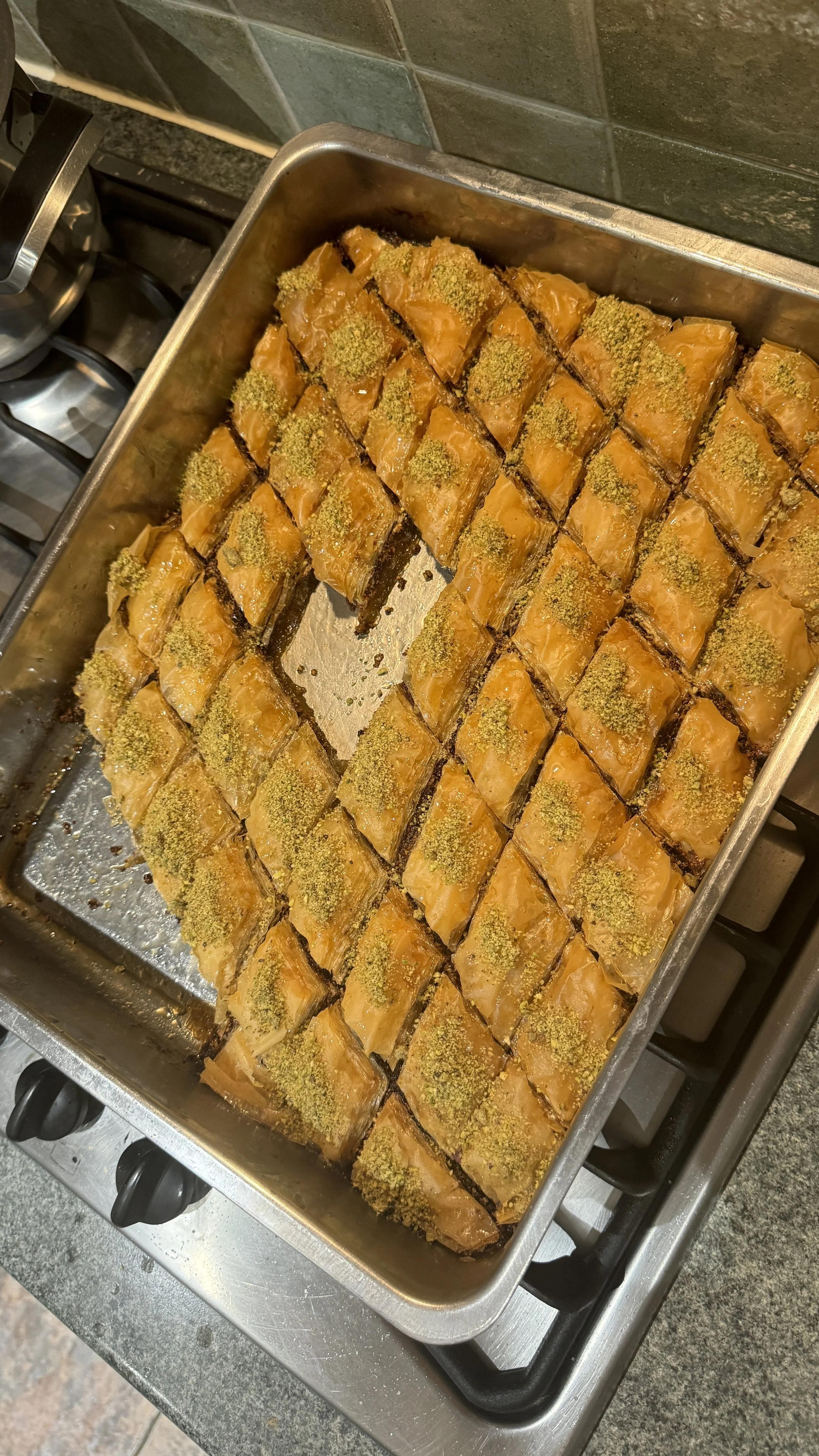
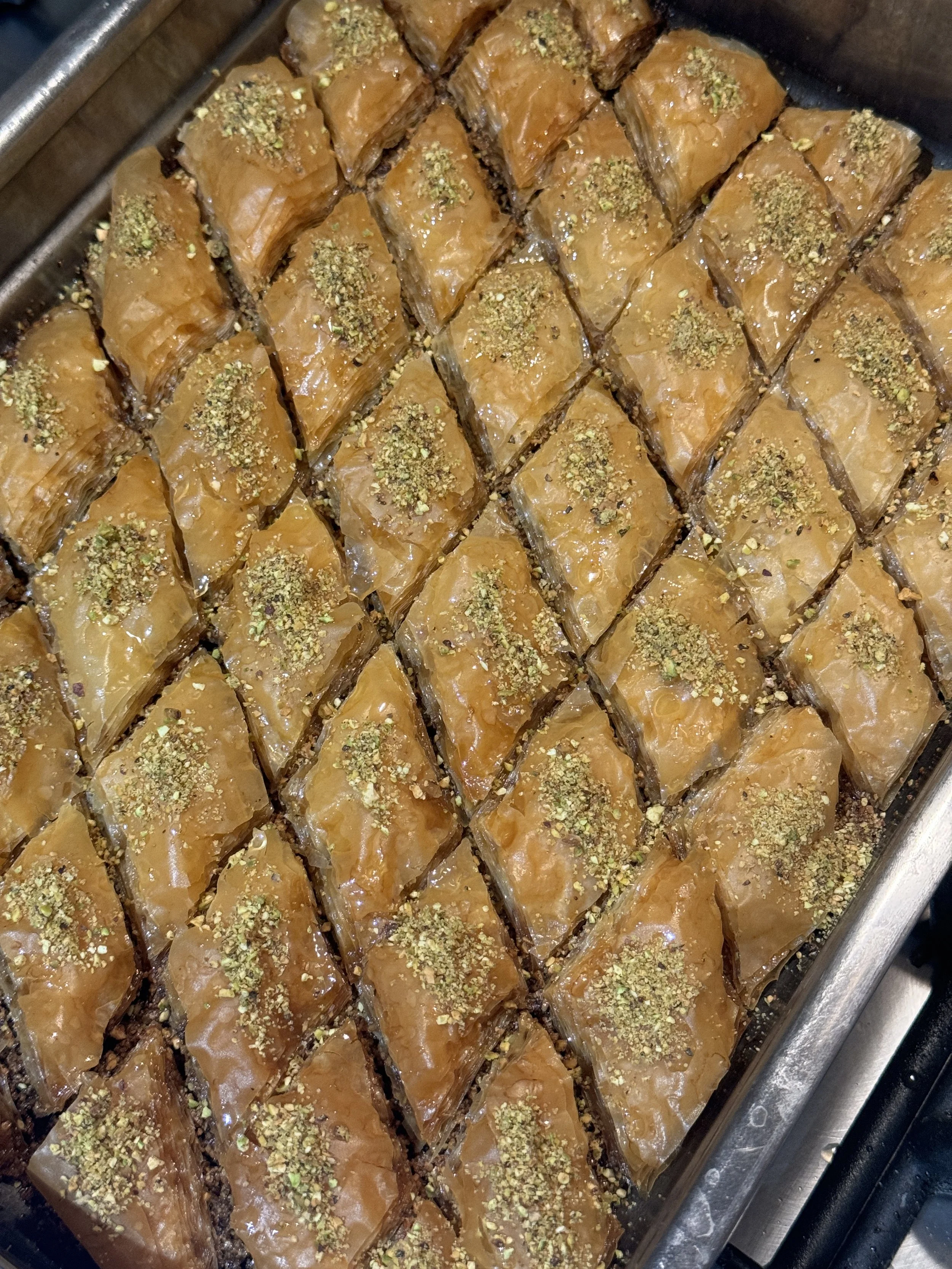
Pre-heat your oven to 150 degrees celsius (fan)/170 degrees and remove the baklava from the fridge. The baklava will be easier to cut now it’s cold. Cut into squares, rectangles, triangles, rhombus shapes (baklavotá) or diamonds.
Once you have cut the baklava, pour the remainder of the butter evenly across the tray and tilt to ensure the butter has gone into all of the crevices and is evenly distributed across the tray.
Sprinkle the surface with water and place in the oven for 90 minutes, turning halfway through to ensure it’s evenly cooked all over. After 75-80 minutes you’ll begin preparing the syrup.
Making the syrup:
10 minutes before the baklava is ready, combine the sugar and water (and honey) together in a saucepan. Add the spices (plus the rosewater/orange blossom water and lemon peel if you’re using). Stir regularly and bring to the boil.
Once the syrup is boiling, let it bubble away for 5 minutes.
After 5 minutes, squeeze in a few drops of the lemon juice to stop the syrup from crystallising, turn off the heat, and remove the baklava from the oven.
Adding the syrup to the baklava:
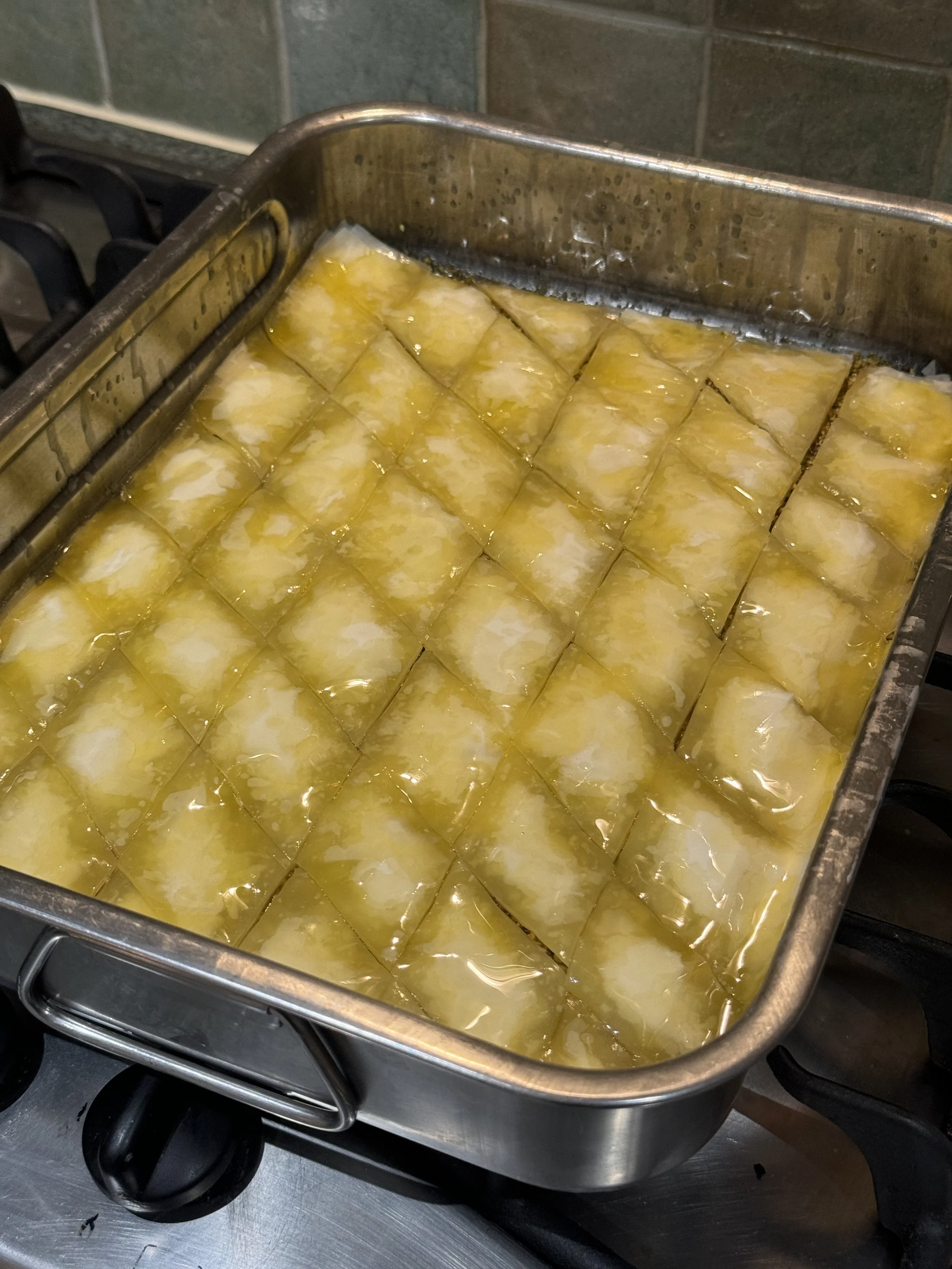
As soon as you remove the baklava from the oven and the syrup is ready, immediately pour the hot syrup all over the hot baklava. You should see it sizzle and bubble all over. It’s important that both the baklava and the syrup are hot so that the sizzling and steaming helps to crisp up the base of the baklava and aerate the layers as they ‘dance’. Using cold syrup or baklava misses this step.
Top with a pinch of the nut mixture (you can use the tip of a teaspoon), and allow to cool for a few hours, ideally overnight.
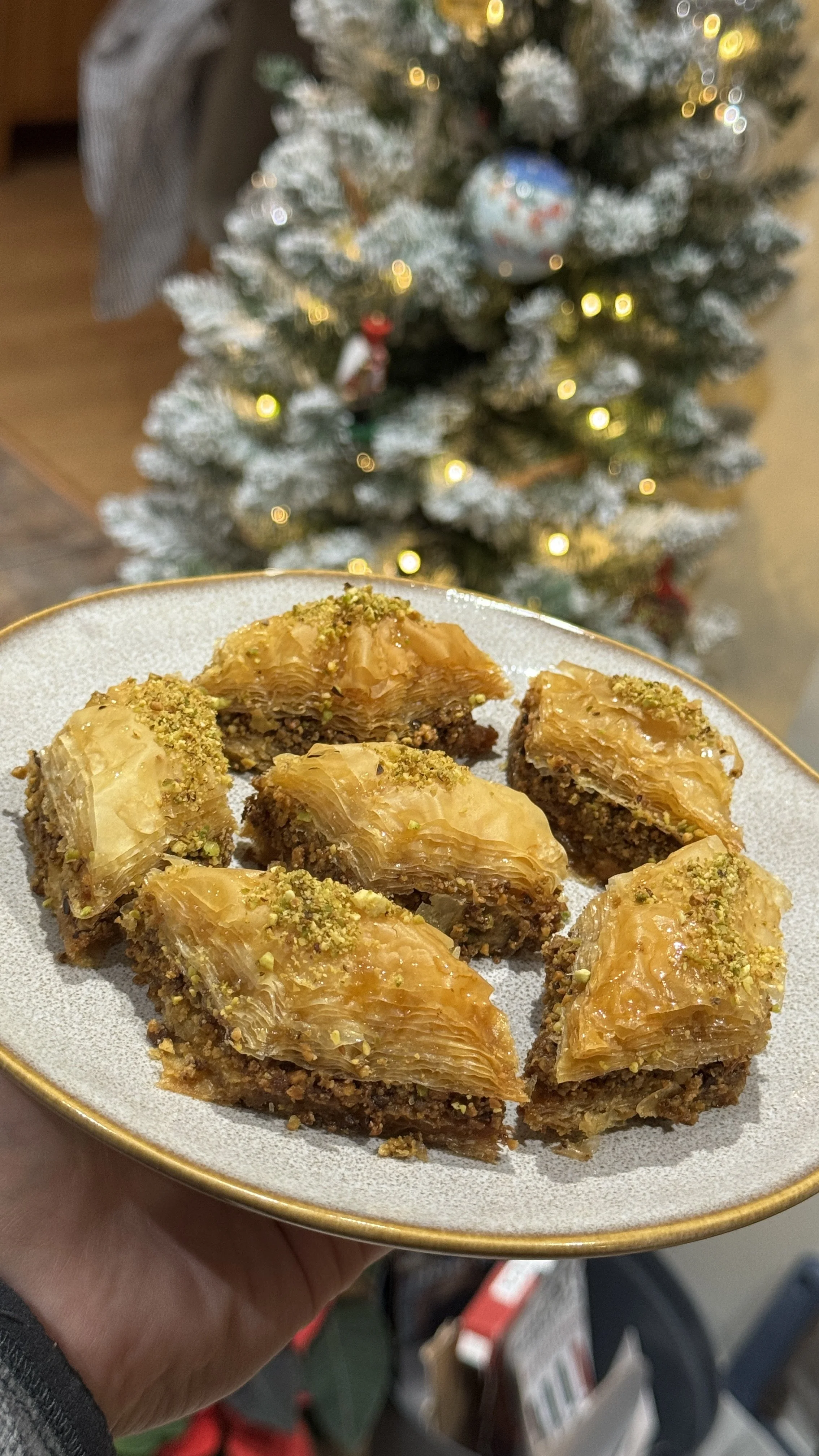
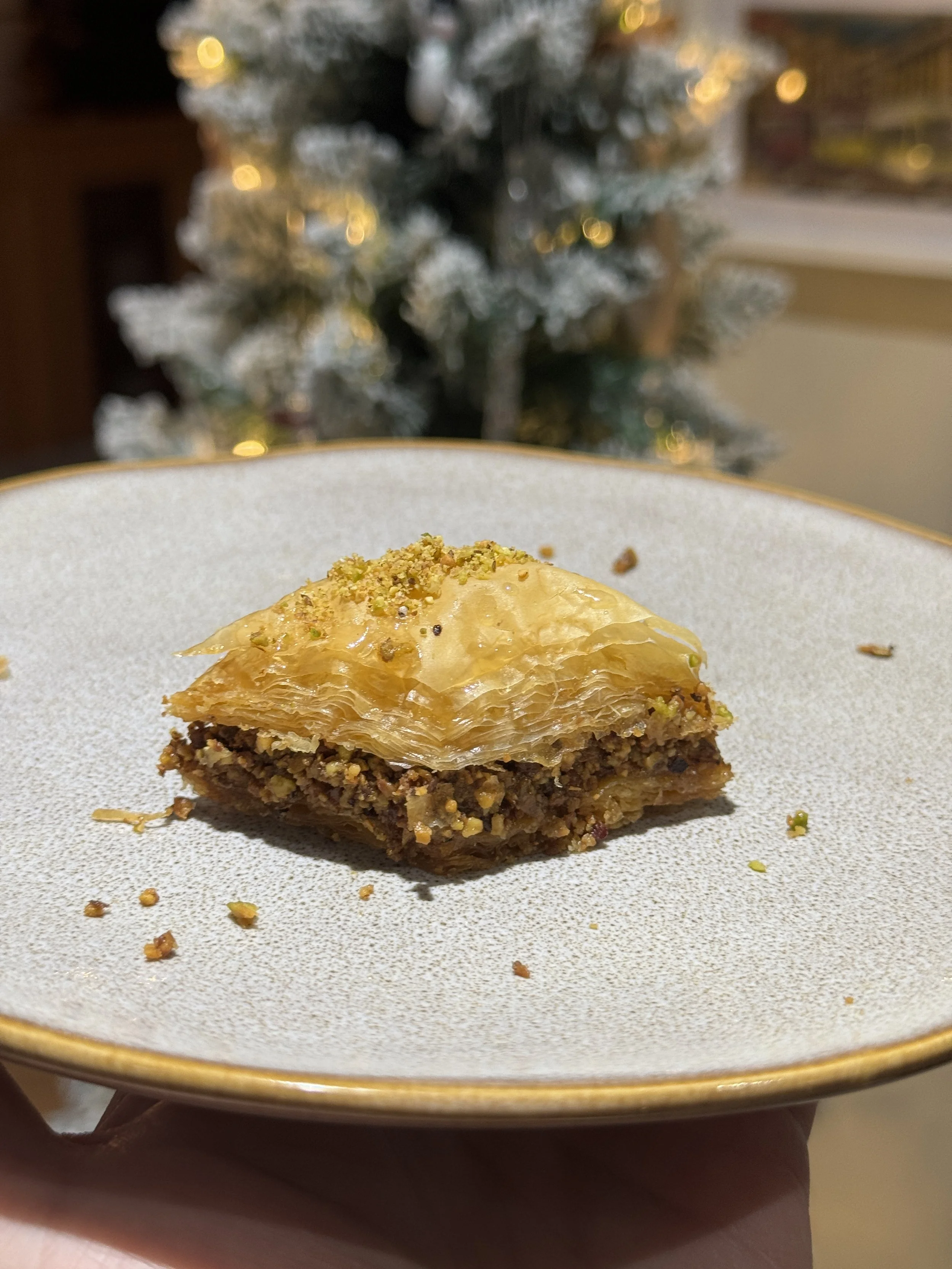
In reality, you’ll probably only last an hour before trying a piece. Do it without regret and give thanks to God, before letting the rest to cool properly and fully absorb the syrup. The next day it will be syrupy but still crunchy.
Serving the baklava:
This is the big part. Take your PAPAFiLiPOU Chios mastic ice cream out of the fridge a few minutes before serving.
Place a large scoop next to your baklava and your spoon sweet. Or, if you’re feeling creative, you can take off the top layer of baklava filo and place it all inside to make a sandwich.
Drizzle the PAPAFiLiPOU Chios Mastiha ice cream with a 1sp of tahini, 1 tsp of carob honey, a light drizzle of extra virgin olive oil, a little pinch of the sea salt flakes, and a pinch of the chopped walnut.
You’re welcome. That is Souvlakination baklava – remember that you heard it here first.
Thank you to PAPAFiLiPOU for supporting this recipe. To learn about where you can find PAPAFiLiPOU’s products in the UK, you can follow PAPAFiLiPOU’s UK news over on Instagram here. Read more about PAPAFiLiPOU on www.papafilipou.com.

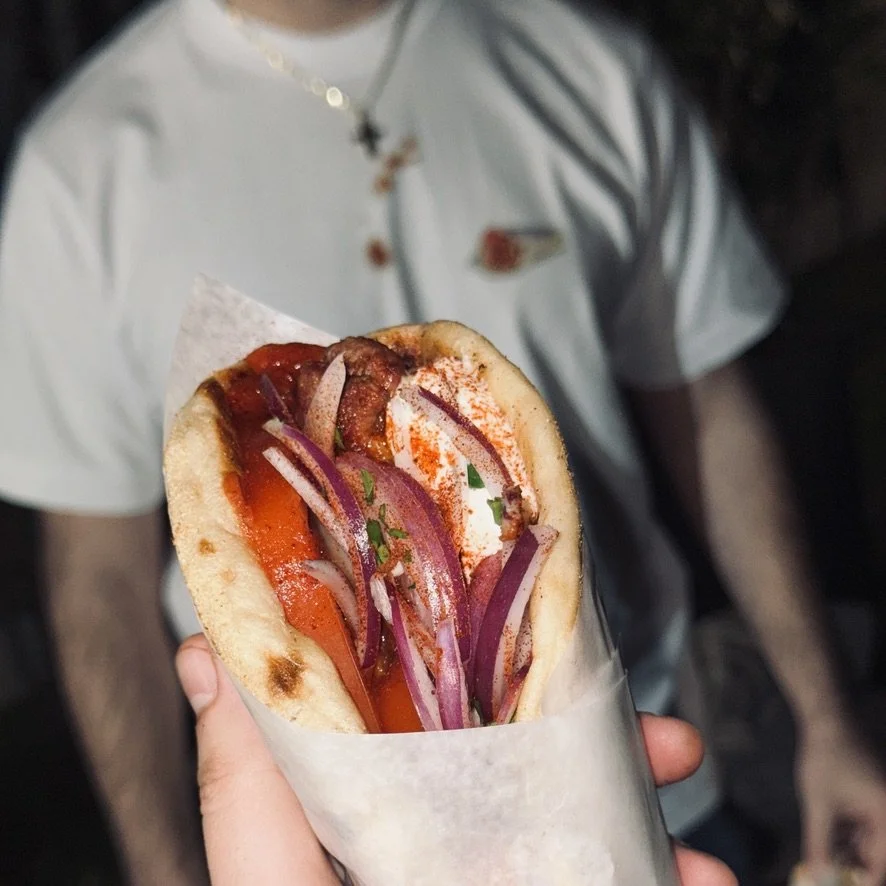
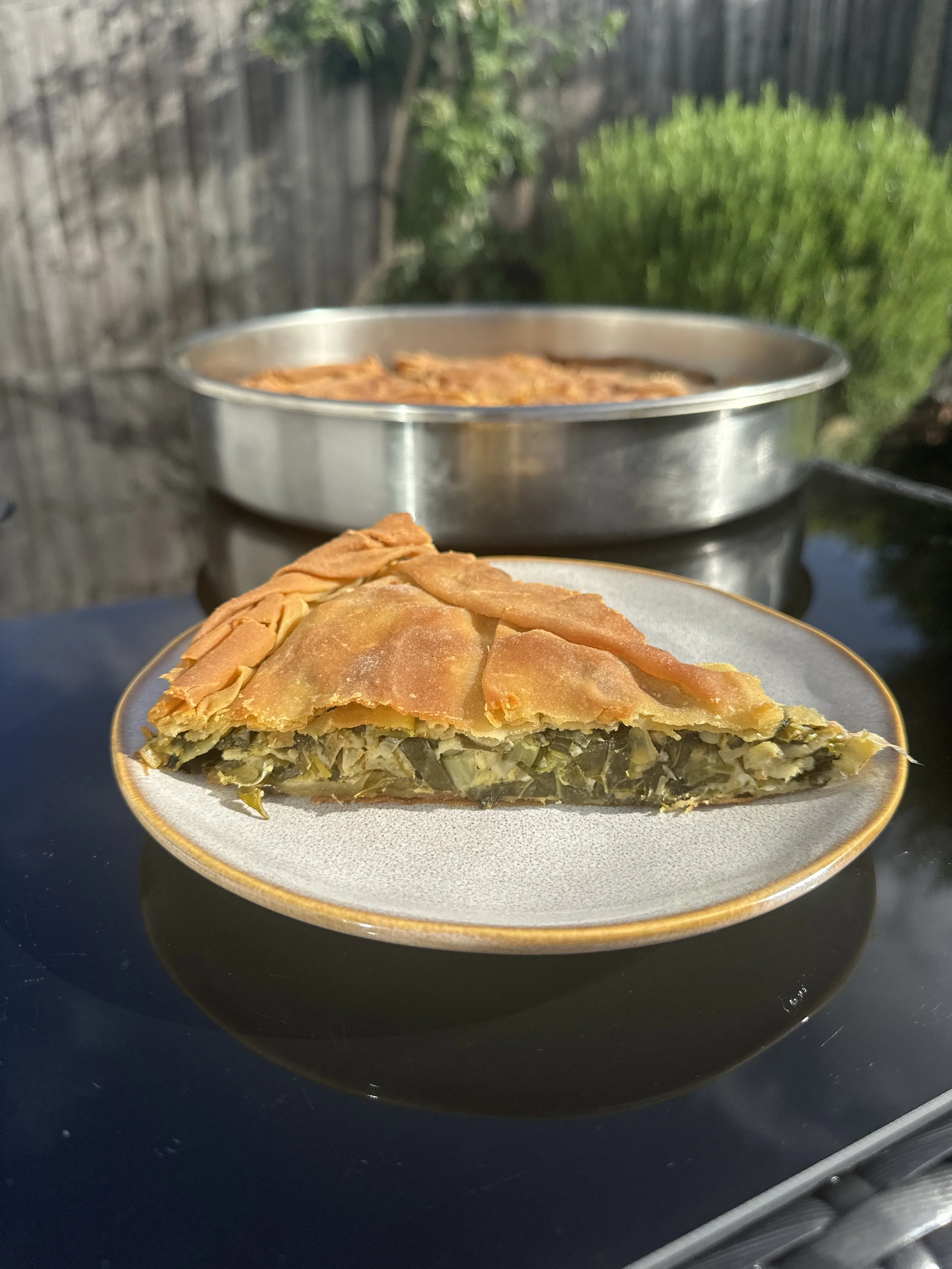
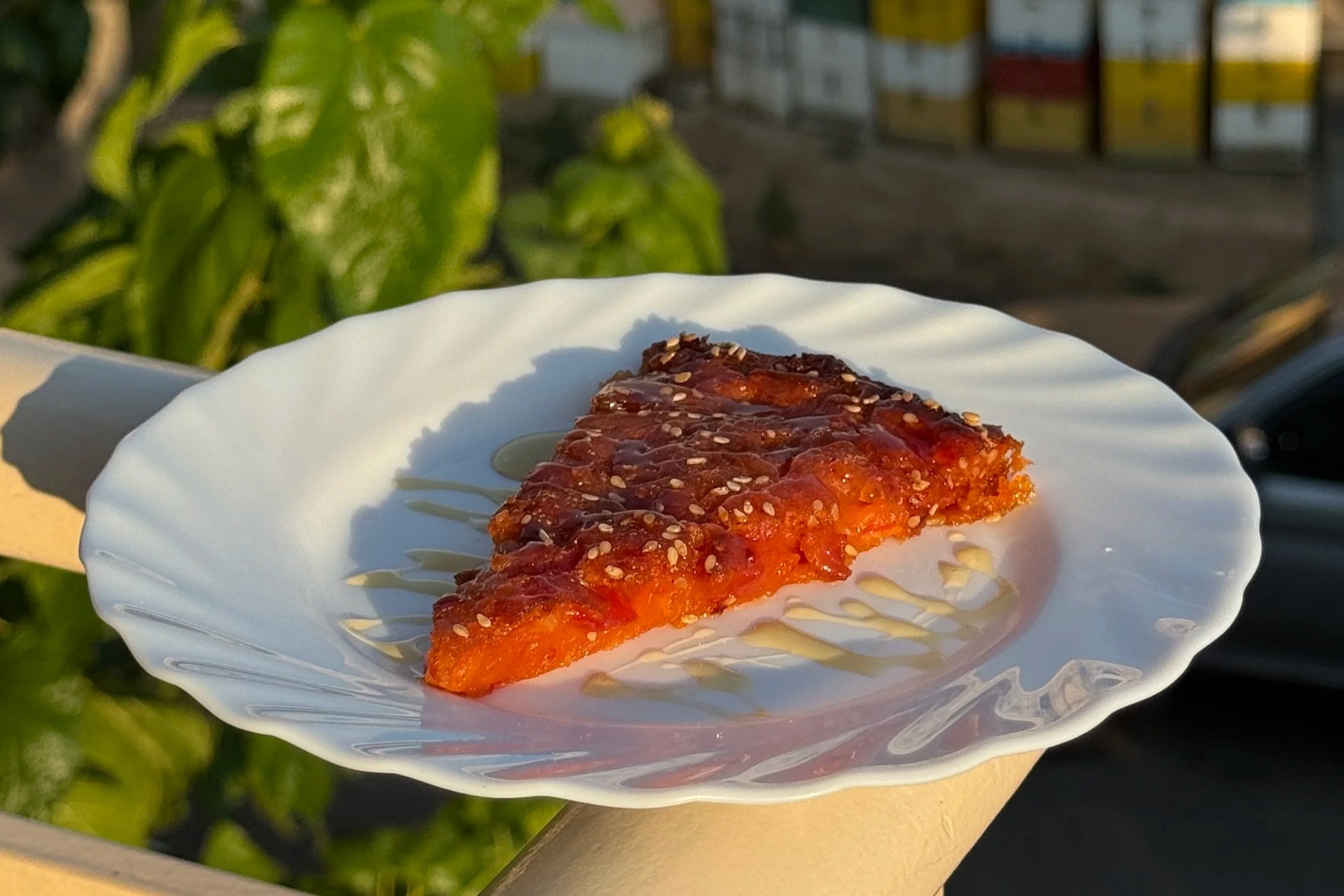
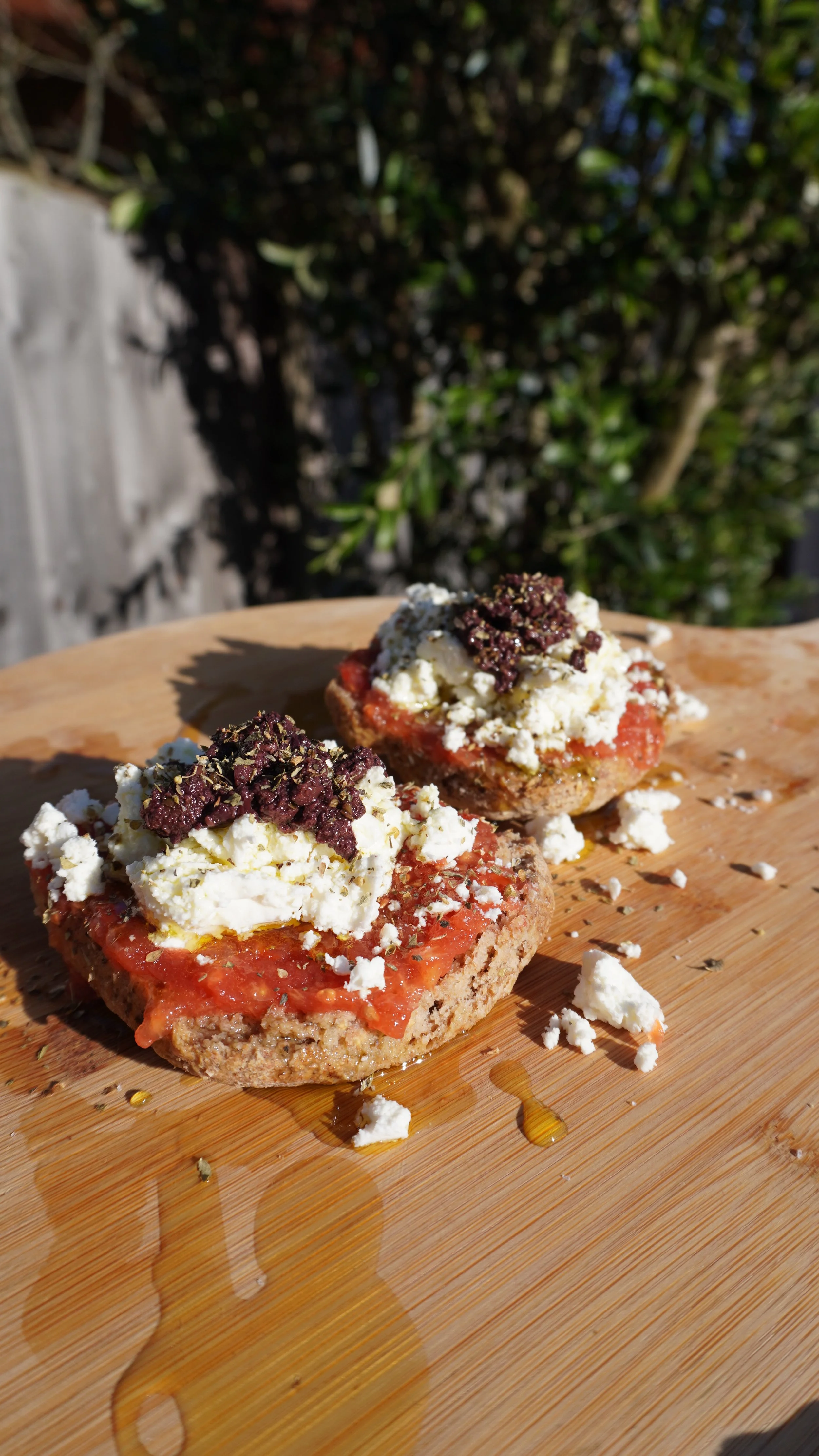
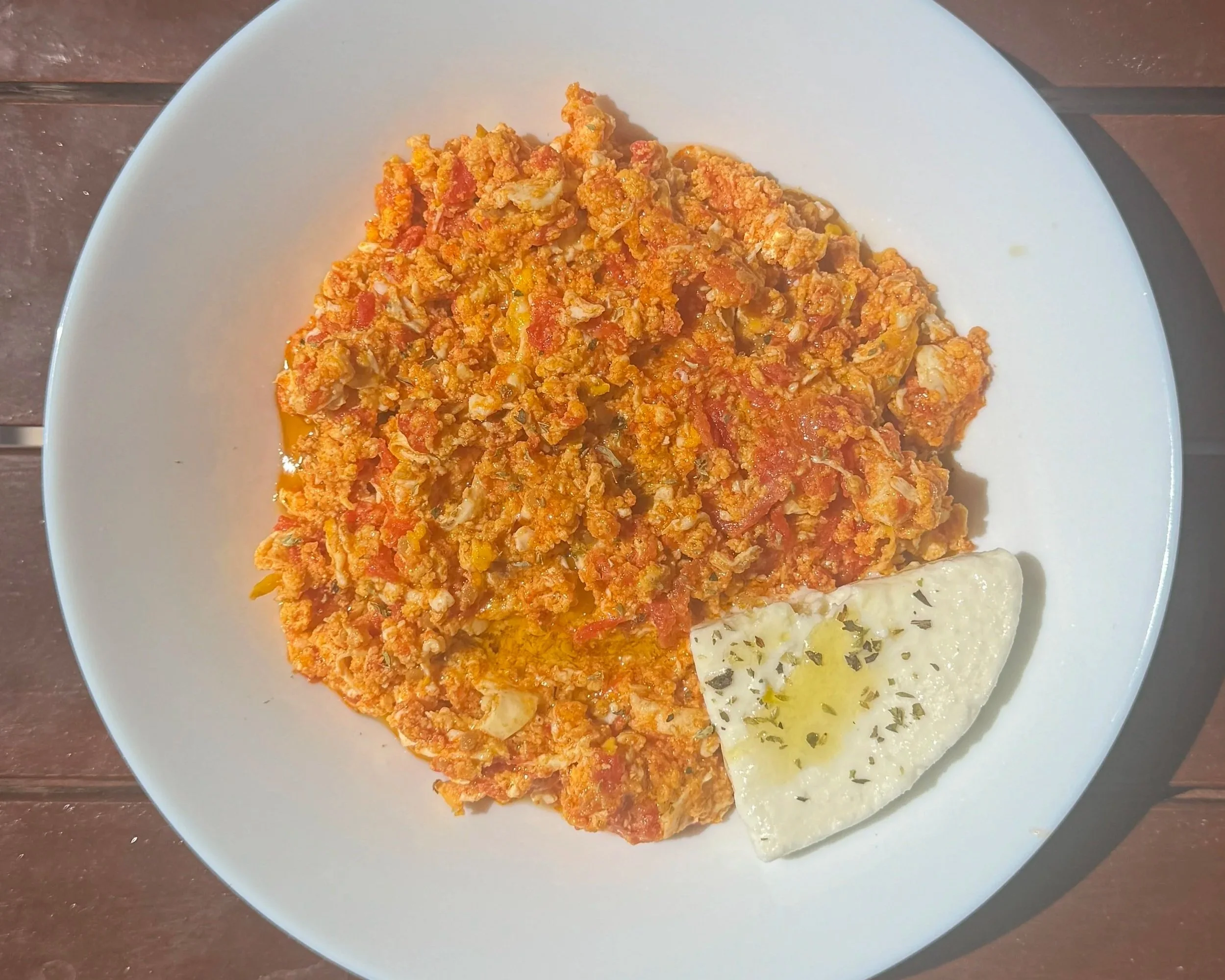
One of the simplest ways to make an Athenian-style tylichto or ‘souvlaki’, in one of its earliest traditional forms. Plus, a basic tomato sauce recipe for souvlakia.