

Karpouzopita Recipe: Aegean watermelon pie
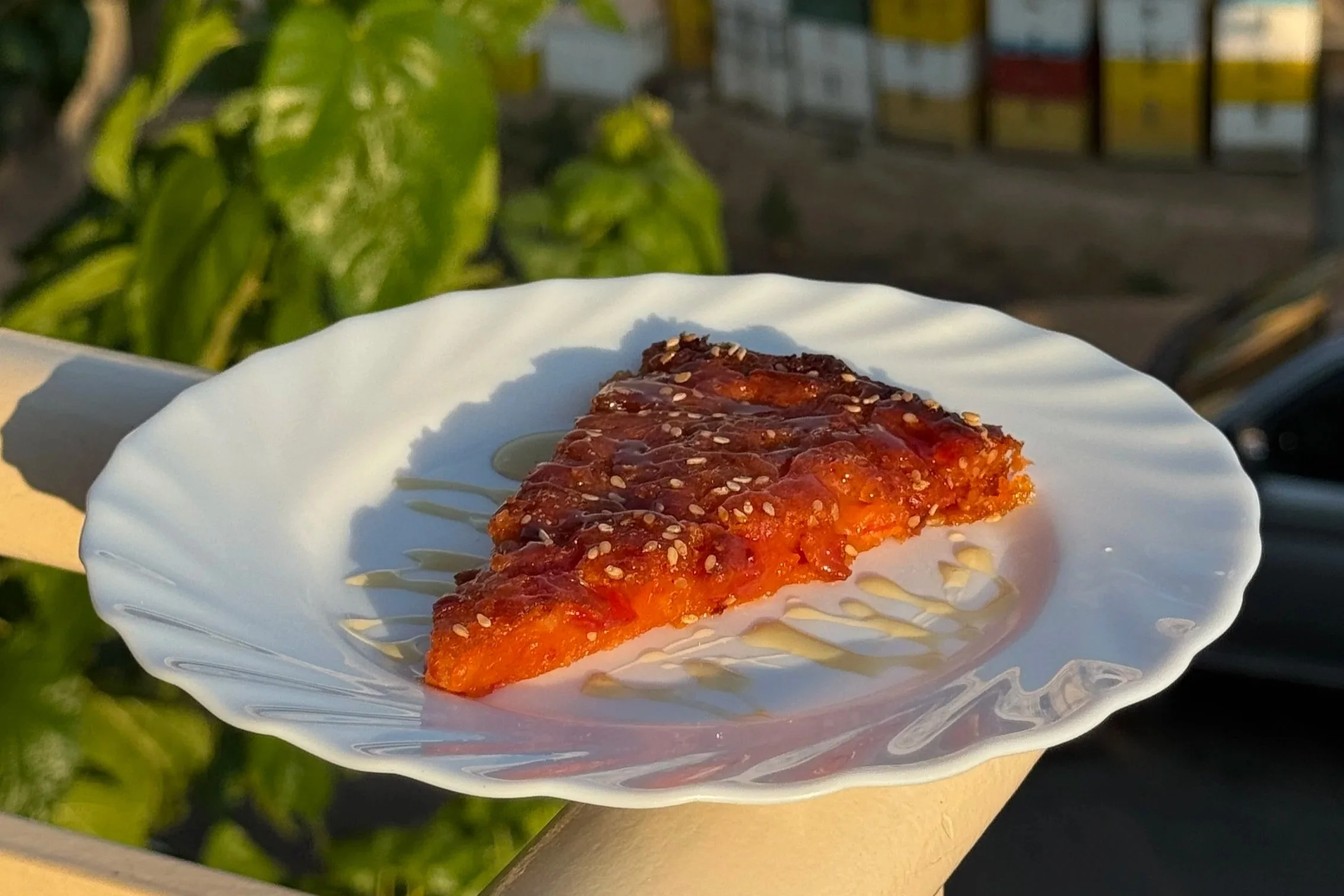
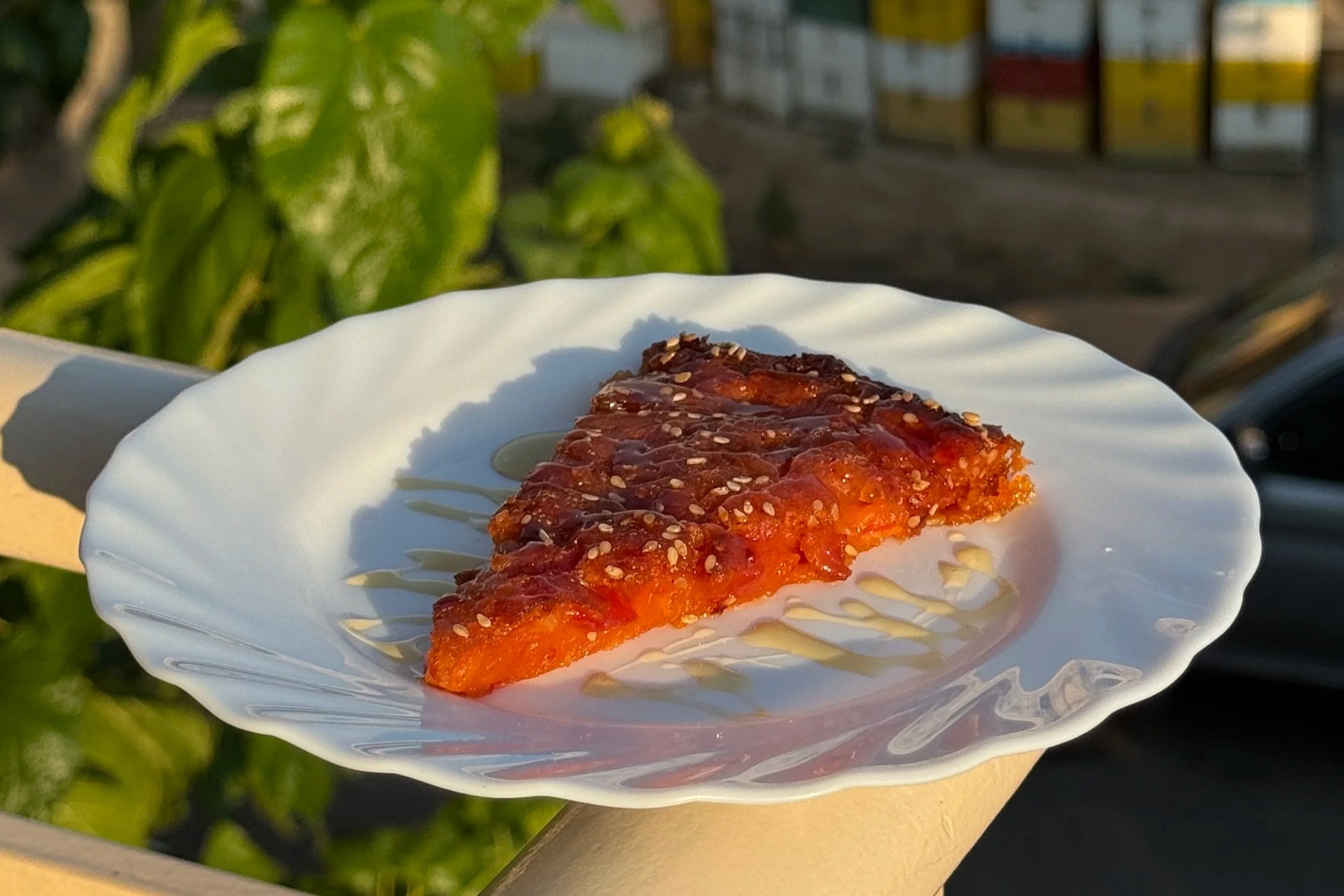
An ideal summer dessert. Karpouzopita (καρπουζόπιτα), as crazy as it sounds, can be found around the Cyclades and the Aegean generally, where it’s sometimes also known as karpouzénia (καρπουζένια) .
If you’ve been to Greece in the summer you would have likely noticed an excess of watermelon, with greengrocers, shops and street vendors stocking bottomless mountains of them, and complimentary platters following meals at many restaurants. Here’s a great use of the abundance of watermelon if you want to try something a little less known.
Add your email below
Be the first to hear about new Souvlakination recipes.
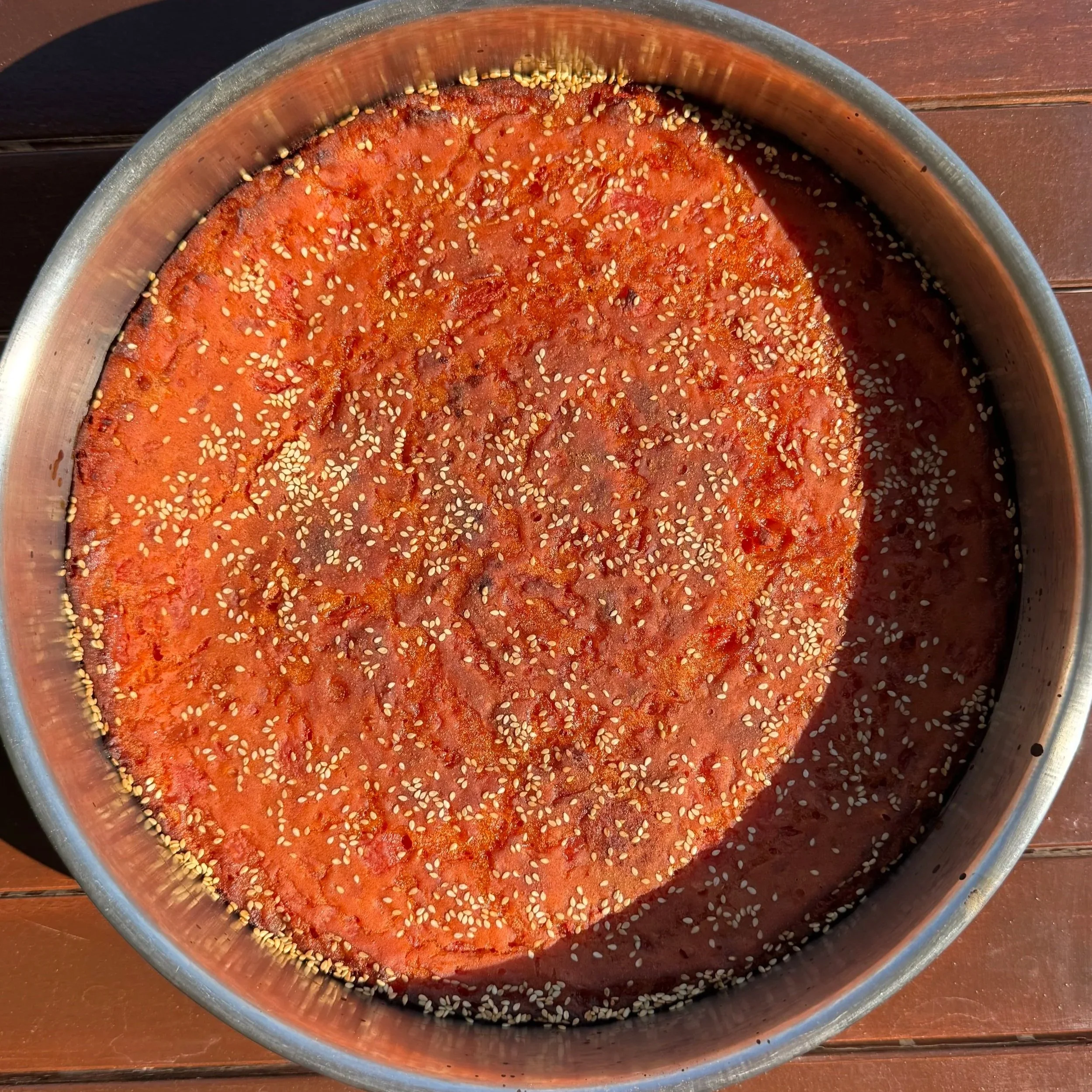
Whatever the recipe, it’s fundamentally watermelon, cleared of its pips and reduced to a pulp, combined with flour and honey, topped with sesame and cooked in the oven for about an hour.
It’s important that the watermelon is ripe and crisp – not soft, mushy and overripe, otherwise the pie will lack structure, and you want to be able to taste some watermelon pieces too.
How to make Karpouzopita
Ingredients:
For a large baking dish:
½ a watermelon for 1kg or watermelon flesh
200g plain flour
200ml honey
Sesame seeds
Ground cinnamon
Olive oil
Method:
Pre-heat the oven to 180 degrees Celsius (fan).
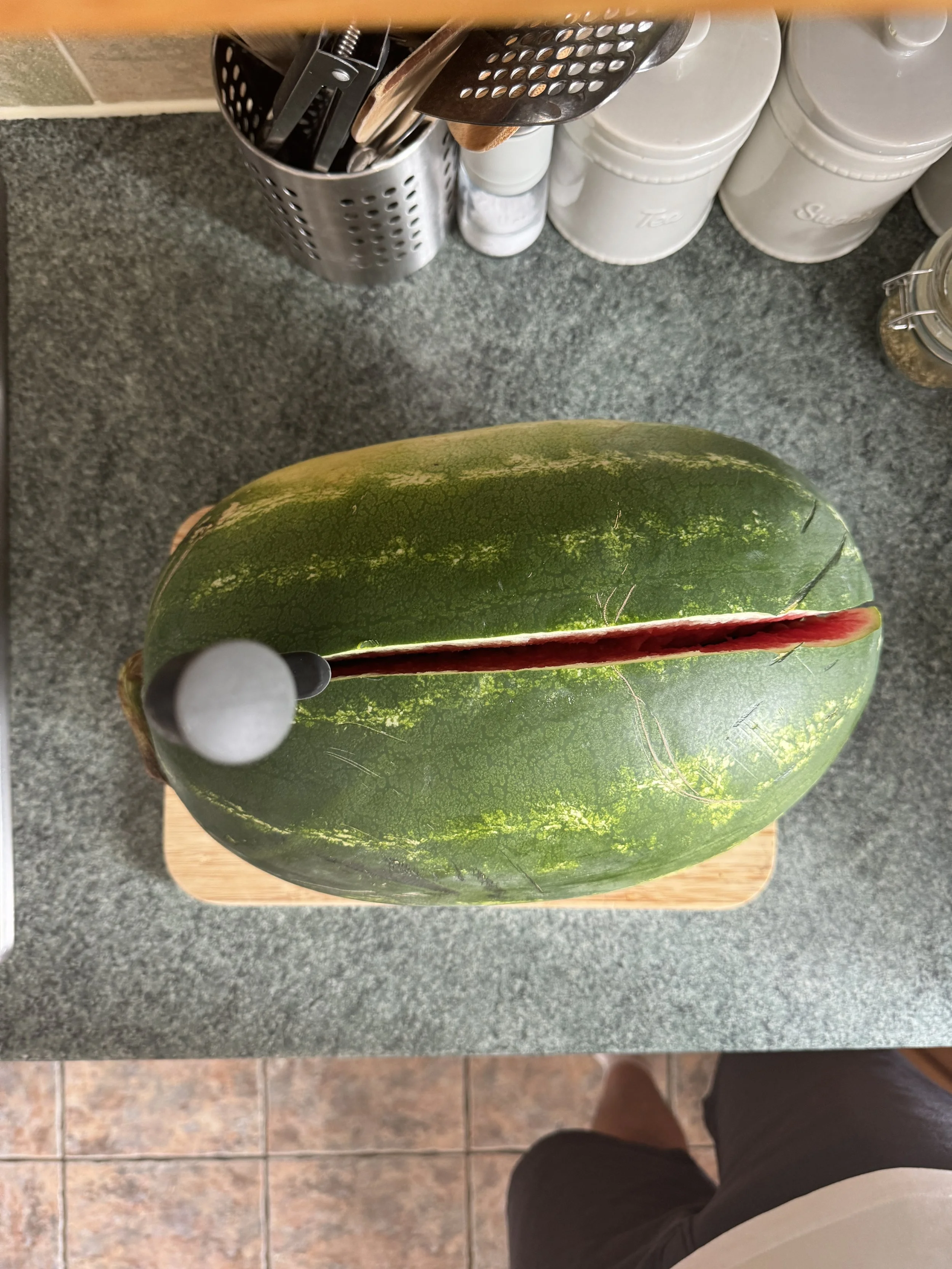
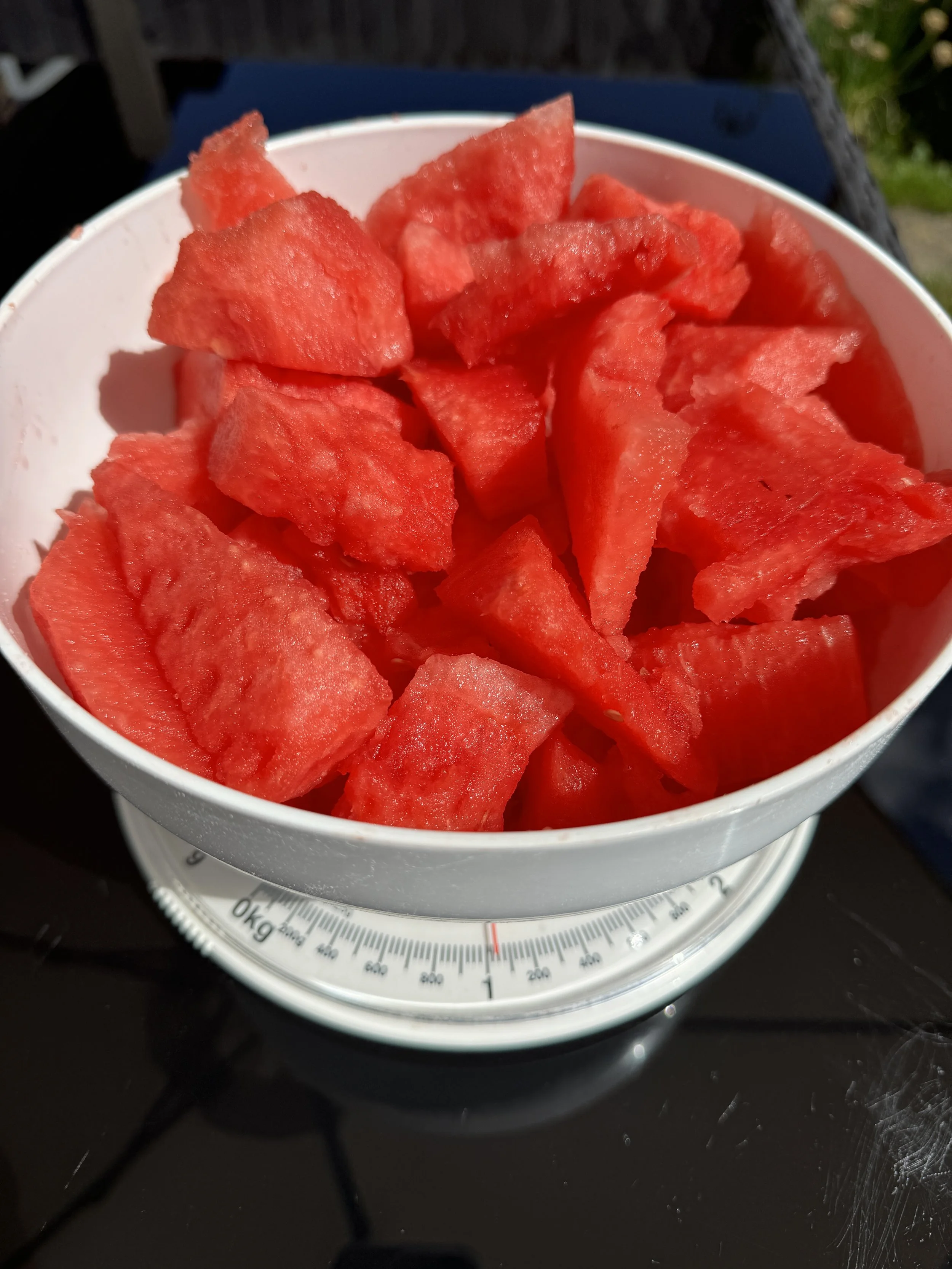
Cut half the large watermelon into small pieces so you can easily pop out the pips, and discard the rind. Remove all of the pips and place the cleared watermelon flesh into a bowl on a scale until you have 1kg in weight. (If you’re under 1kg, use some of the other half. Or, if you have any pieces left over… you can eat them.)
Once you have 1kg of flesh on the scale, use your hands to crush the watermelon pieces into a rough liquid pulp, with some small (≤1cm) pieces still in there.
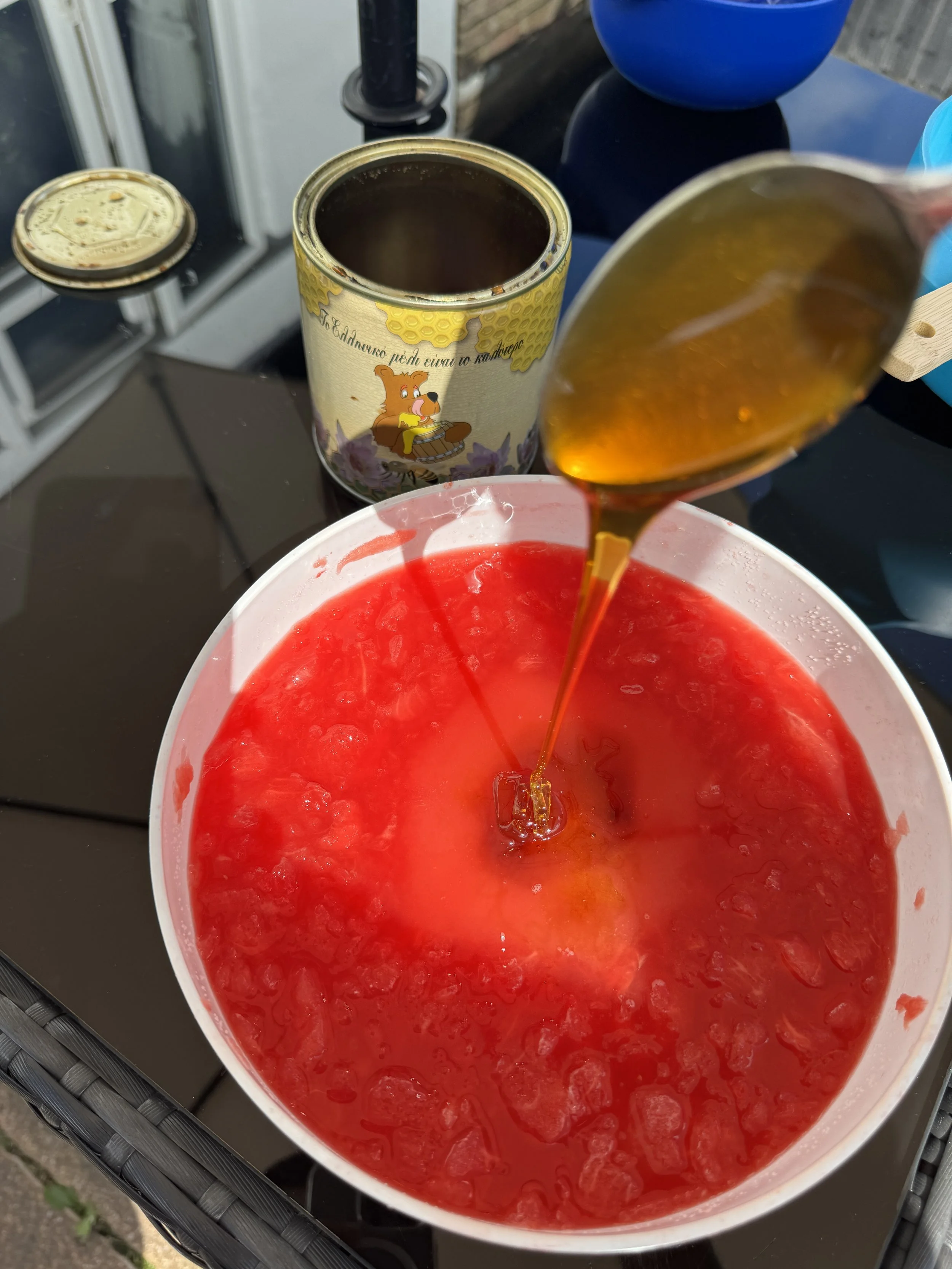
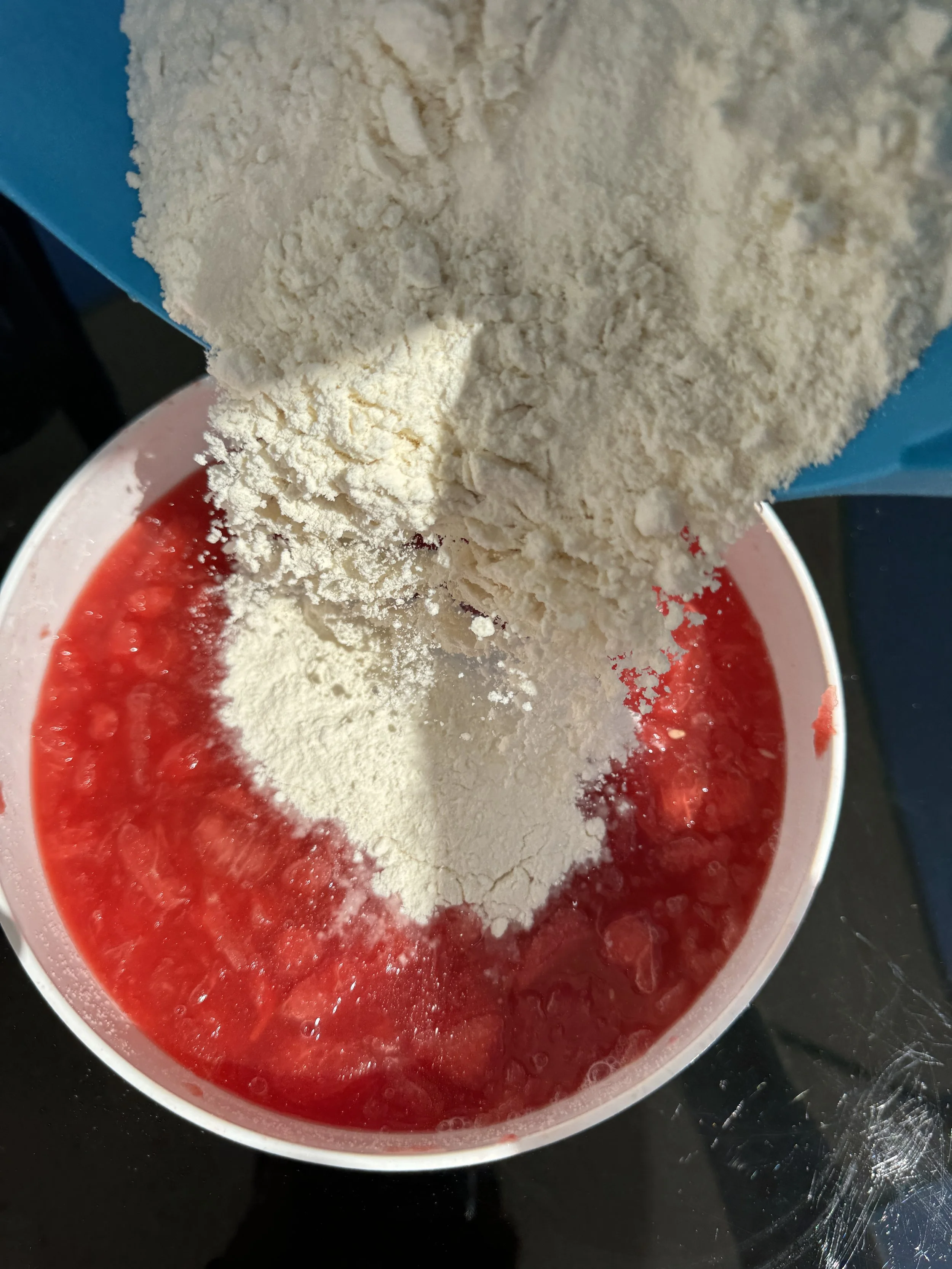
Remove any extra pips that you might see have found their way into the watermelon mixture, drizzle in the honey and stir well to incorporate as much as possible. After that, gradually sieve the flour into the watermelon mixture.
Lightly oil the baking dish all over with some olive oil and sprinkle all over with cinnamon and sesame seeds. This adds a layer of flavour and also helps the pita to develop somewhat of a crust and not stick to the bottom of the tray.
Slowly pour the mixture into the baking dish, being careful not to disturb the sesame seeds and cinnamon on the base too much.
Lightly drizzle with more of the oil on top and sprinkle with sesame seeds and cinnamon.
Place in the oven for about 70 minutes, until golden-brown and crisp on the outside. You’ll notice that the karpouzopita will begin to rise after 30 minutes or so – and you’ll know when it’s ready when it’s also risen all over and is fairly bouncy to touch in the middle.
Remove from the oven and allow to cool and set for at least 30 minutes before cutting into pieces. The pita should sink a little as it sets. You can then cut it into squares, triangles, or rhombus shapes (μπακλαβωτά κομμάτια).
You can serve it warm and gooey after 30 minutes, once it has cooled, or straight out of the fridge. Serve on a plate with a good drizzle of honey on top.

Greek food recipes
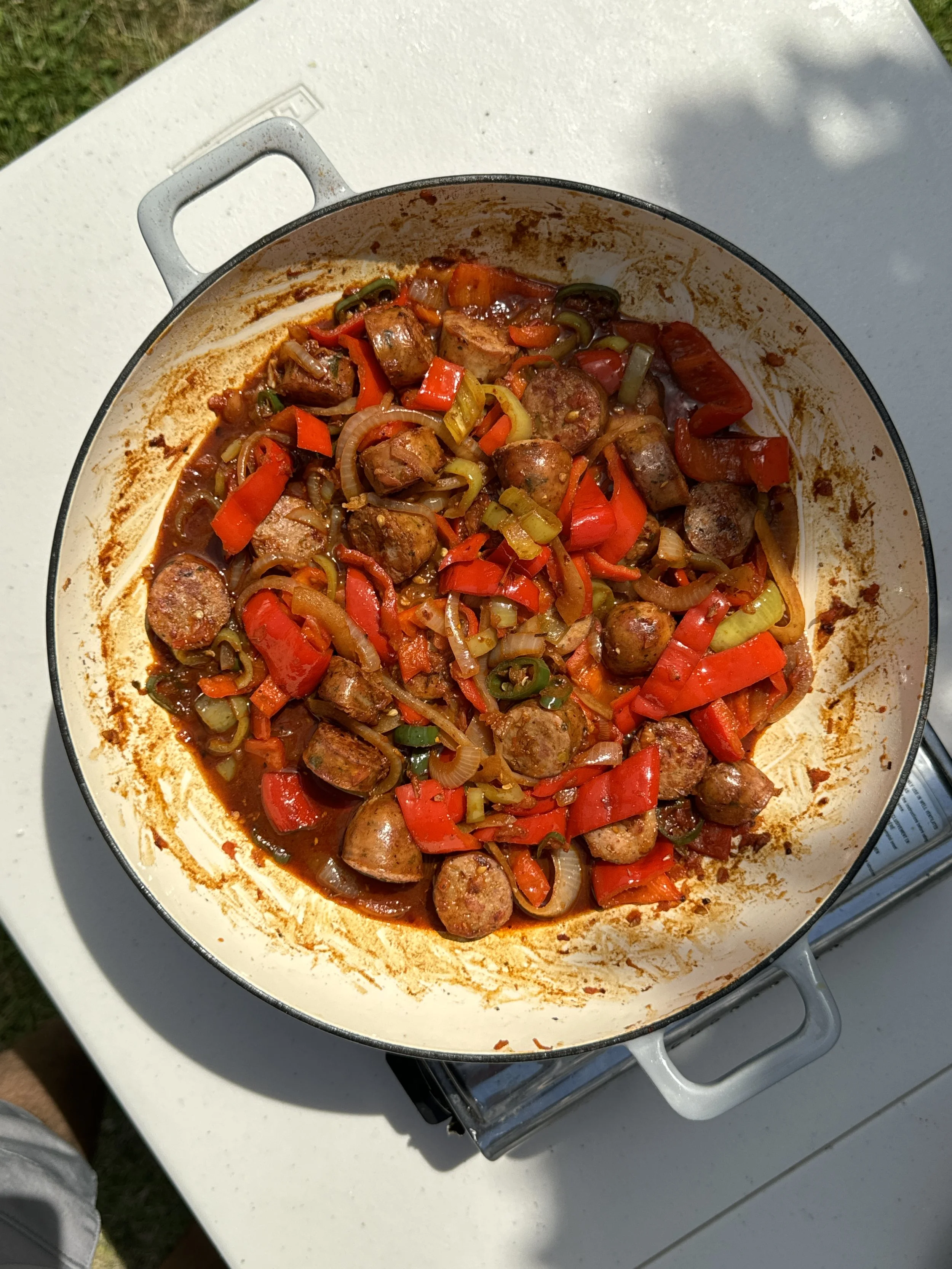
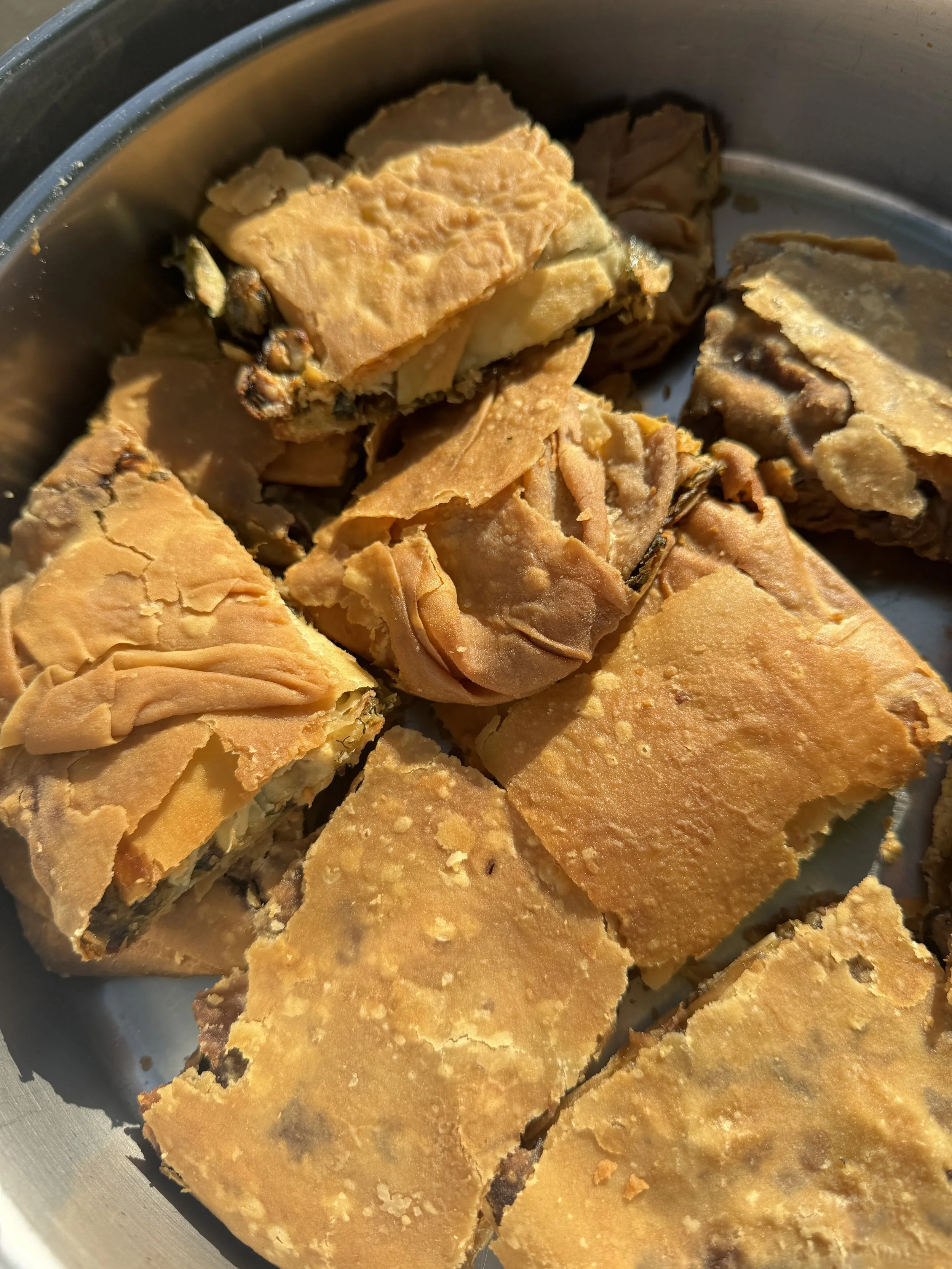
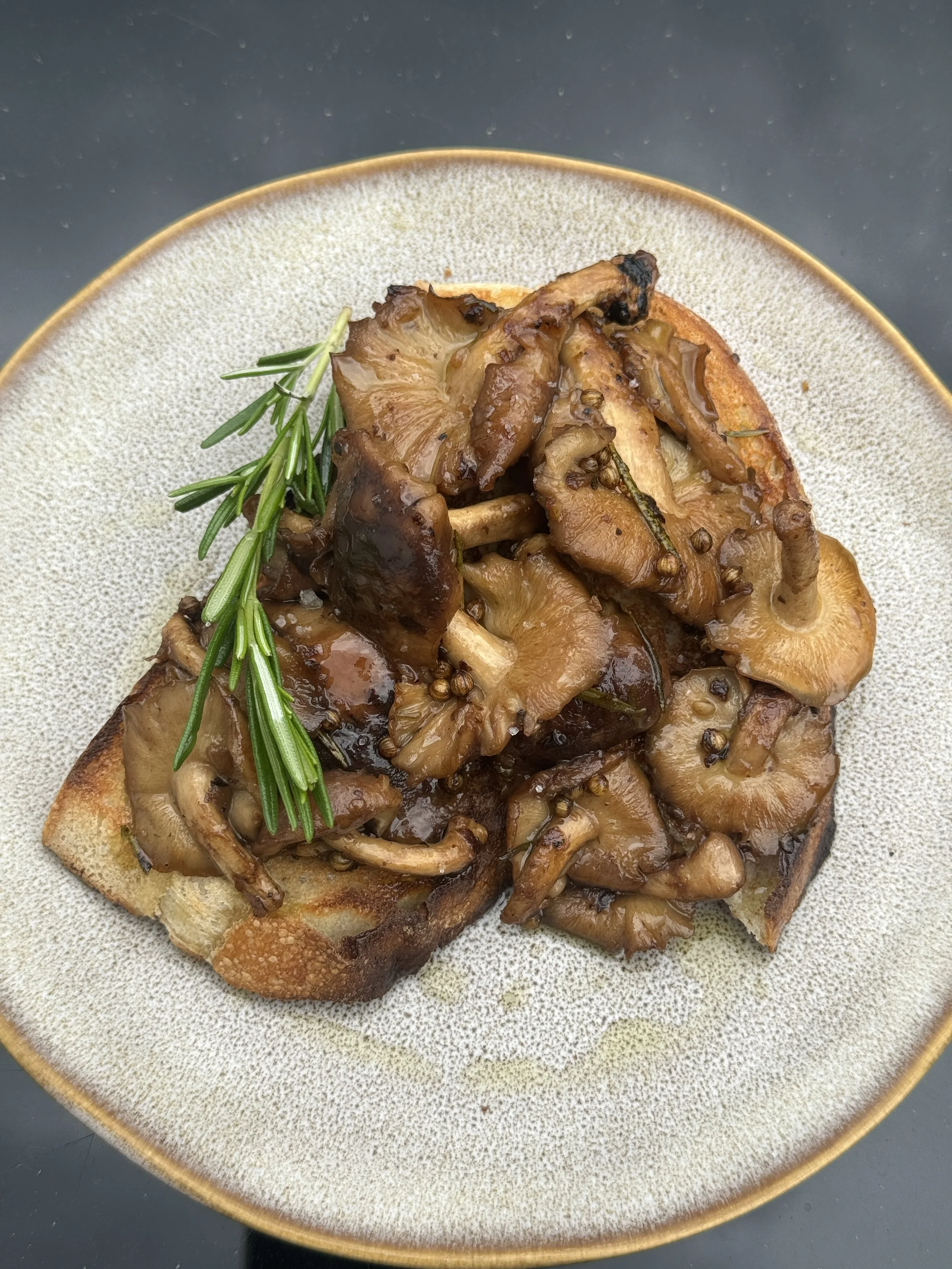
The vegetable stew that you’ll find in almost every household and restaurant in Ikaria, and in every season.