

Koupepia Recipe: Cypriot dolmadakia with minced meat, tomatoes, mint and cinnamon

«Εάν αποσυνθέσεις την Ελλάδα, στο τέλος θα δεις να σου απομένουν μια ελιά, ένα αμπέλι κι ένα καράβι. Που σημαίνει, με άλλα τόσα την ξαναφτιάχνεις.» - Οδυσσέας Ελύτης, 1985
“If you deconstruct Greece, in the end you’ll see that you’ll be left with an olive tree, a vine and a boat. Which means that, with just as much, you can reconstruct it.” - Odysseas Elytis, 1985
Greek cuisine and the vine
The vine, together with its fruit (grapes) and its leaves, forms one of the most fundamental pillars of Greek cuisine since ancient times. As well as vine leaves, Greeks have also been using the stems of the vine for cooking and fermentation for centuries.
Perhaps the most common use of vine leaves is to wrap ingredients (whether it’s fish like sardines or something with a mixed filling) and, of course, the best-known example of the latter in both Greek and Cypriot cuisine is dolmadakia, otherwise known as dolmades, sarmadakia or, in Cyprus, koupepia.
Klimata and ampelia (κλήμα, αμπέλι) are what Greeks call the grapevine, while klimatofylla and ampelofylla (κληματόφυλλα, αμπελόφυλλα) mean vine leaves. You can pick, blanche and cook with the leaves right away, although, nowadays, many collect the leaves at once and freeze batches to use throughout the year. Vine leaves are widely available during the month of May, after grape producers and winemakers trim back their vines ahead of the summer months to increase sun exposure to the grapes.
But vine leaves aren’t the only leaves used for dishes of this kind. Lahanodolmades (cabbage) and seskoulodolmades (chard) also popular in Greece, where you’ll also commonly see an avgolemono sauce drizzled over lahanodolmades and sometimes dolmadakia too. Of course, you’ll also commonly see vegetables stuffed with a similar rice-based filling, known as gemista (peppers, tomatoes, courgettes, aubergines), and stuffed courgette flowers, which are known as anthoi or kolokithoanthoi.
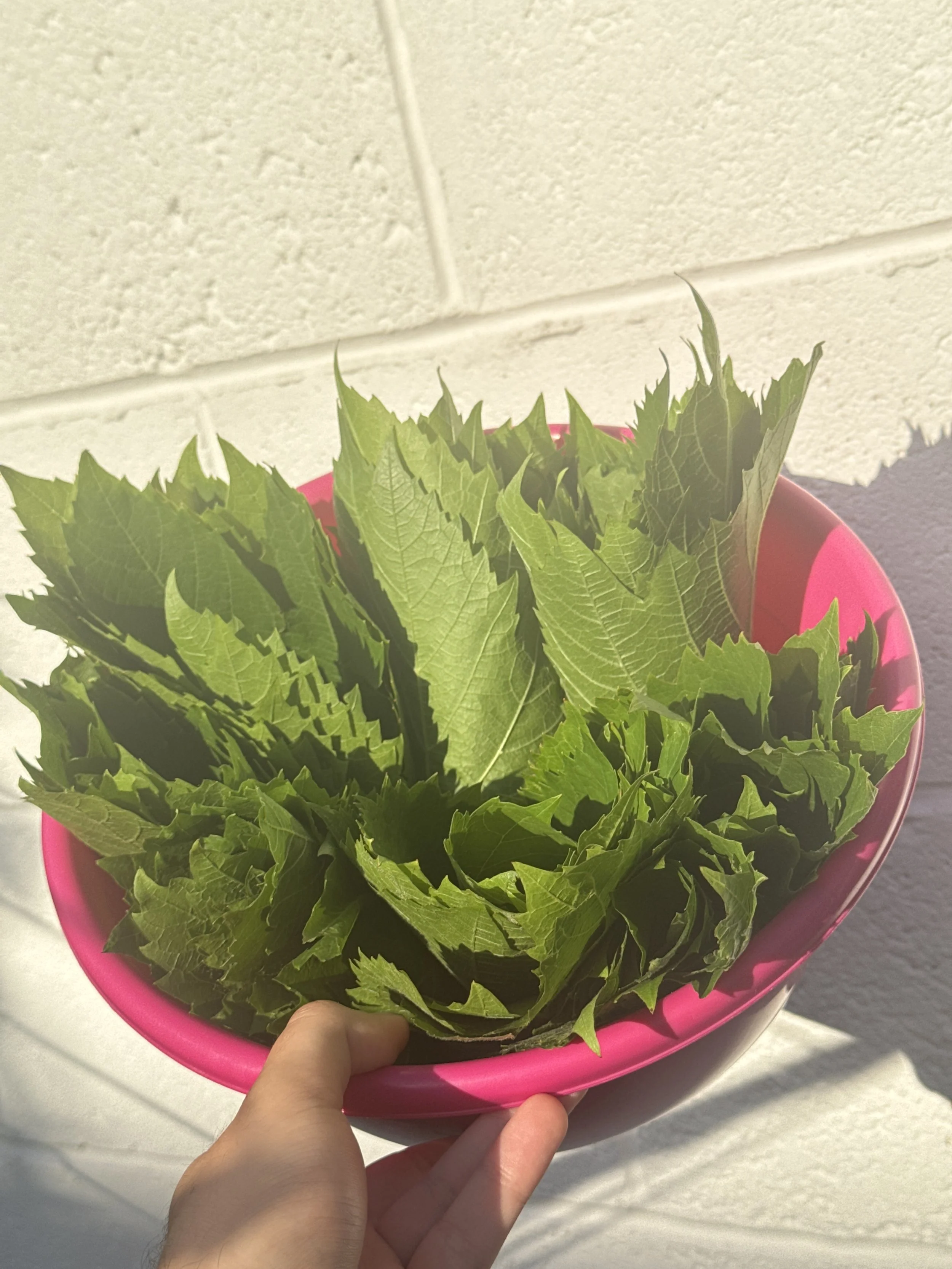
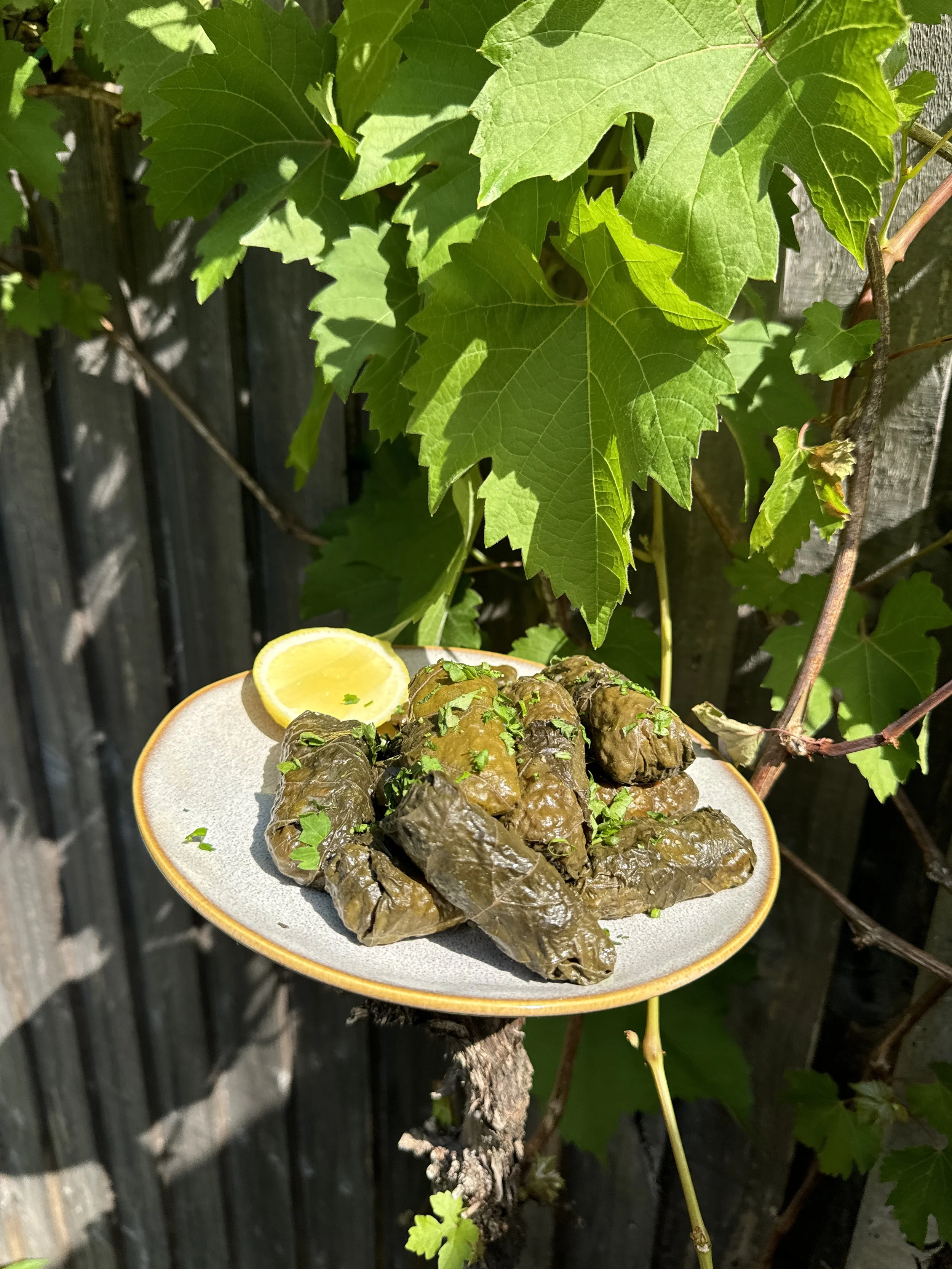
What’s the difference between Greek dolmadakia and Cypriot koupepia? And what are dolmadakia gialantzi?
This recipe much more closely resembles koupepia in Cyprus, where minced meat and tomatoes typically feature, while dolmadakia in Greece don’t include meat as often, and are less likely to include tomatoes. Whereas in Greece, parsley, dill and mint are the herbs that most typically feature in dolmadakia, Cypriot koupepia are characterised by the use of parsley, mint and cinnamon too.
Gialintzi, which means ‘fake’ in Turkish, is the term that Greeks use to refer to the meat-less dolmadakia. Some Greeks from Asia Minor also add raisins or chopped dates. Having experimented with various combinations and, as much as I love dill in dolmadakia gialantzi, my favourite way to eat koupepia or dolmadakia remains the way that I grew up eating them: the Cypriot way, with pork mince, tomatoes, mint and cinnamon. If you want to use dill instead, I suggest that you don’t use the cinnamon. But the beauty of Cypriot koupepia is that the flavours all complement each other perfectly, with pork mince a much better pairing with cinnamon and mint. Occasionally Cypriots might mix the pork mince with beef too.
For me, tomatoes are also non-negotiable. They another layer of moisture and a touch of tanginess and umami to the palette. The colour is also hard to part ways with once you start using tomatoes for koupepia, and if you also want it running through the exterior of the koupepia, you can grate an extra tomato and add into the saucepan with the rolled dolmades before you cook them. For the filling, you can grate the tomatoes or blend them, as I have, to keep the goodness and texture of the skin in there. Or just finely chop them if you prefer.
Which type of minced meat should you use for koupepia or dolmadakia?
Everyone also has their own spin. My aunt Sofia’s koupepia in Cyprus always stand out because of her signature touch of cumin. I’ve also tested it, but it requires a rebalancing of the ingredients that only she can seem to get right, and so I’ll leave it to her. Acclaimed Cypriot chef, Christoforos Peskias, typically adds his own spins to traditional Cypriot recipes and uses lamb or beef in one recipe instead of the usual pork mince that Cypriots will most typically use. Greeks, on the other hand, may occasionally use minced meat in dolmadakia too, but will be more likely to use lamb or beef than Cypriots when they do so. My mum also typically makes koupepia with turkey mince nowadays, and it works. The main thing is that you get good quality, organic ingredients from smaller producers, and I imagine many of you will have access to home-grown vine leaves too. Otherwise, you can buy the vine lives in jars or tins.
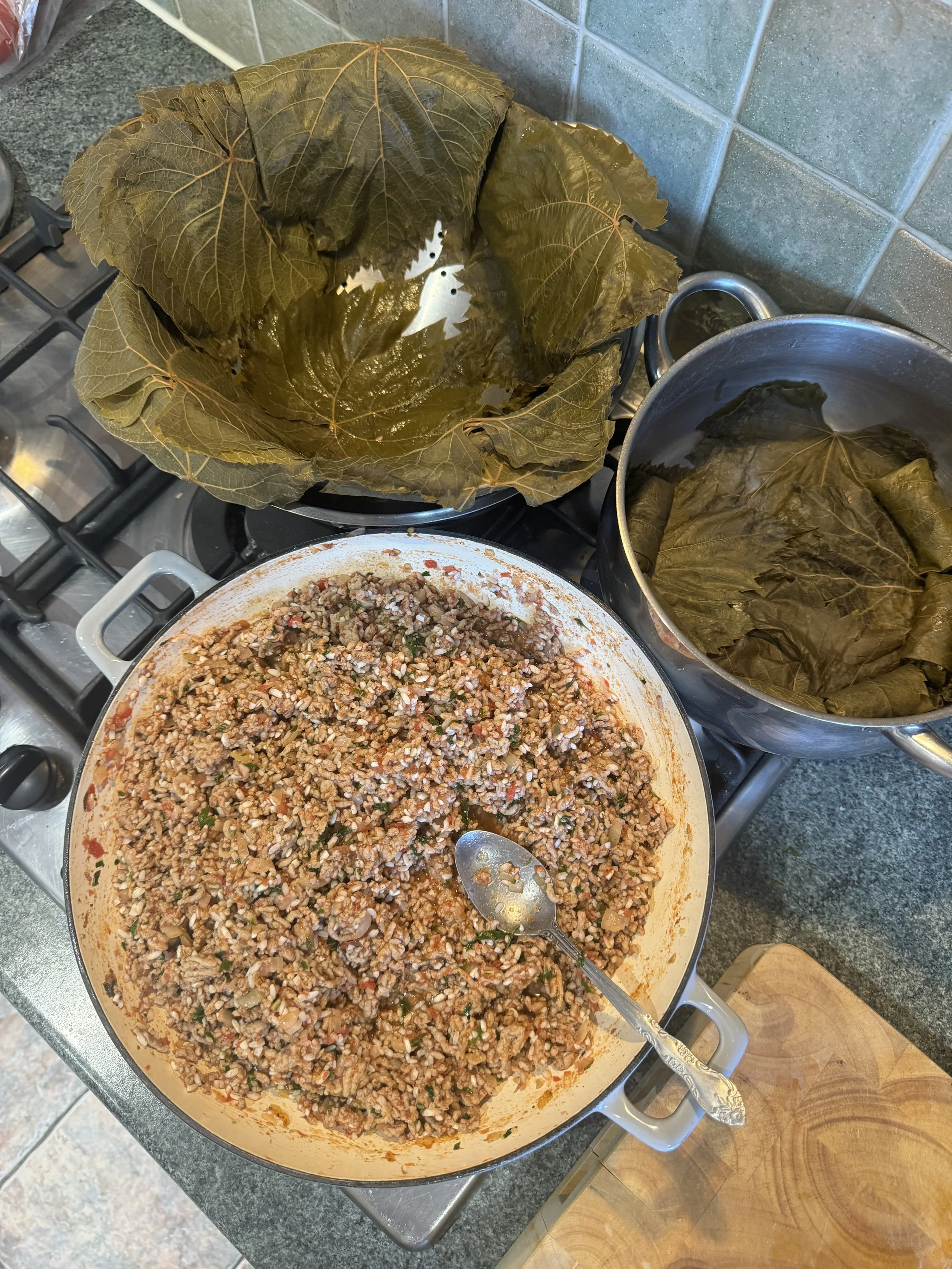
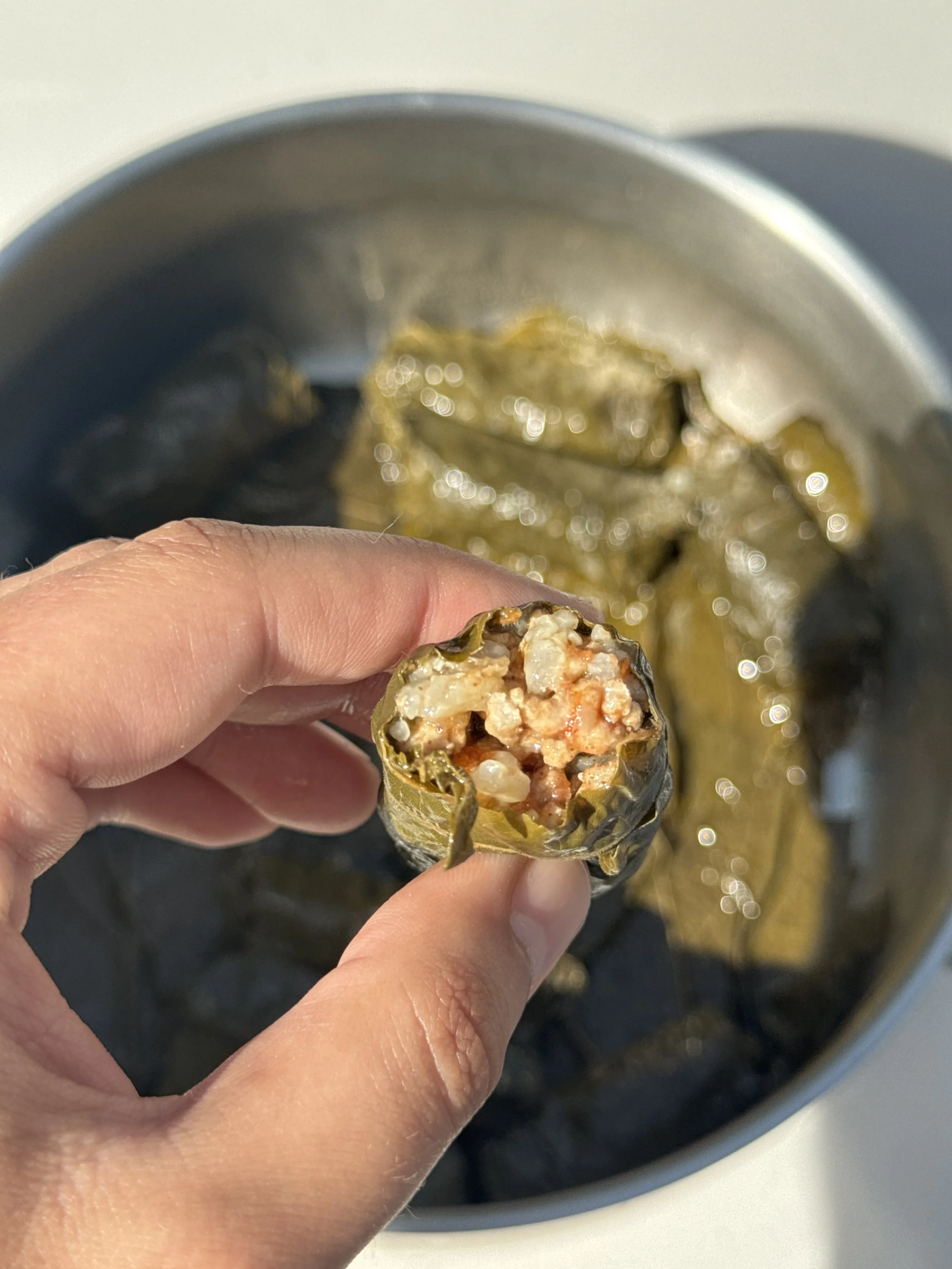
Many won’t cook the filling first, but I much prefer to do so as it makes the filling much tastier: cooking down the onions releases some sweetness and softens them, while the minced meat is much tastier after a bit of frying. Plus, cooking the filling means you can taste it and adjust the seasoning, which is the best way to make koupepia/dolmadakia taste good.
However you’re making the dolmadakia or koupepia, they’re certainly not complete without a good squeeze of lemon, in the filling and on the koupepia themselves. With this recipe you’ll definitely have some excess filling, which you can also use for gemista (1. stuff a couple of peppers and tomatoes with the filling, 2. blend the cores of the tomatoes to add to the baking dish with the stuffed vegetables and a couple of chopped potatoes, and 3. cook in the oven at 180 degrees Celsius for an hour).
Add your email
Subscribe below to hear more about traditional Greek & Cypriot food recipes.
How to make Koupepia: Cypriot-style Dolmadakia
Ingredients:
50-60 fresh vine leaves (stalks removed)
1kg pork pince
300g (1.5 cups) of Carolina rice
1 large onion
A bunch of chopped fresh parsley
1 sprig of fresh mint leaves, finely chopped (1tbsp chopped)
1 tbsp cinnamon
1 tbsp tomato puree
4 tomatoes, stalks removed, blended
1 large lemon
Method:
Wash and drain the rice. Remove the stalks from the tomatoes and blend them to a coarse pulp.
Bring a saucepan of salted water to the boil, and blanche the vine leaves a bunch at a time for 2-3 minutes to soften them. Remove with a slotted spoon and place them around the edge of a colander to strain.
Heat a deep frying pan on a medium heat and add couple of tablespoons of extra virgin olive oil. Finely chop and cook the onion until soft and lightly golden, then add in the minced meat, season, and cook until it’s sealed.
Stir in your cinnamon and herbs, then stir in the tomato puree. Turn off the heat and pour in the tomato pulp. Stir in the rice and the juice of half the lemon.
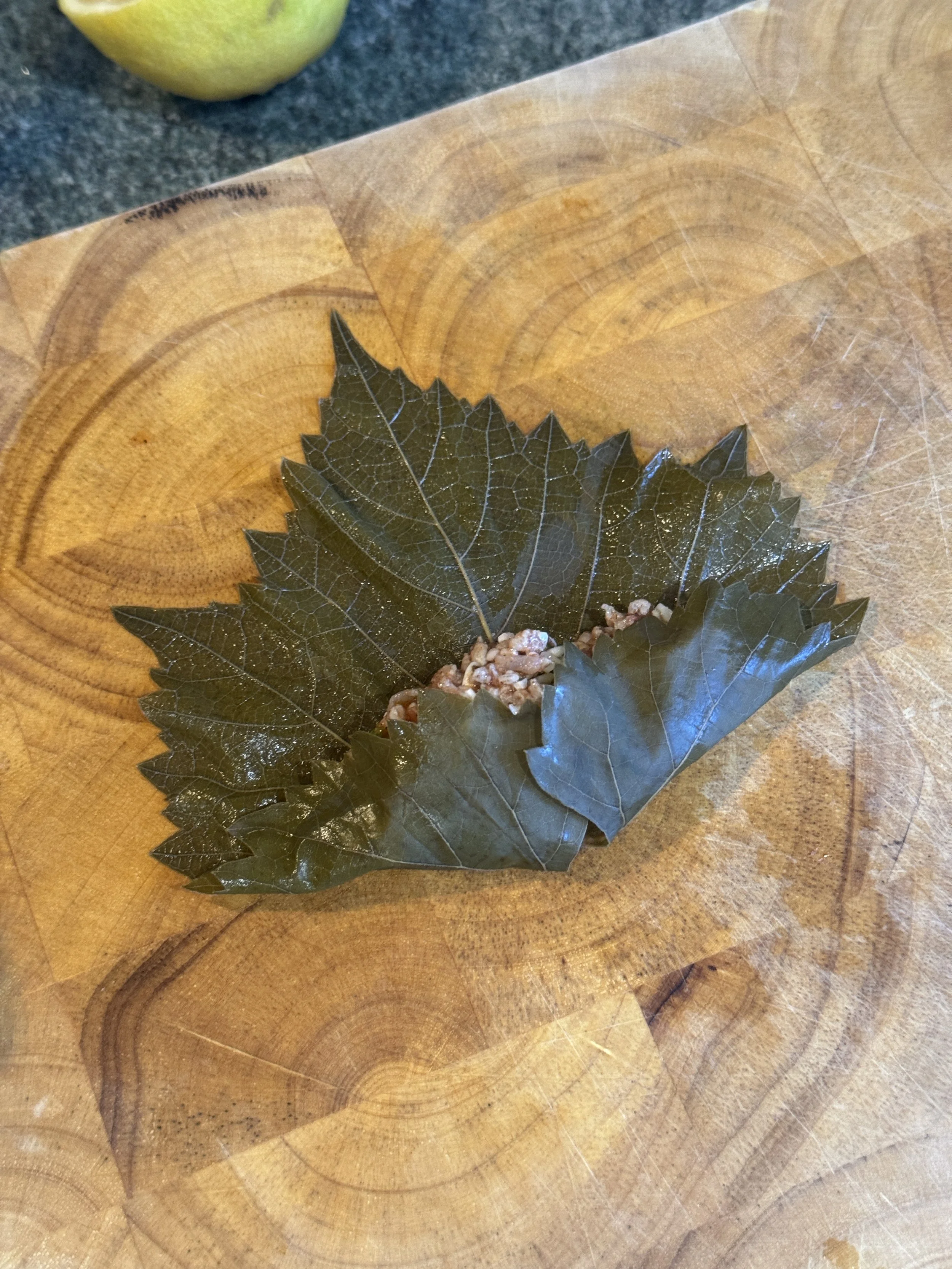
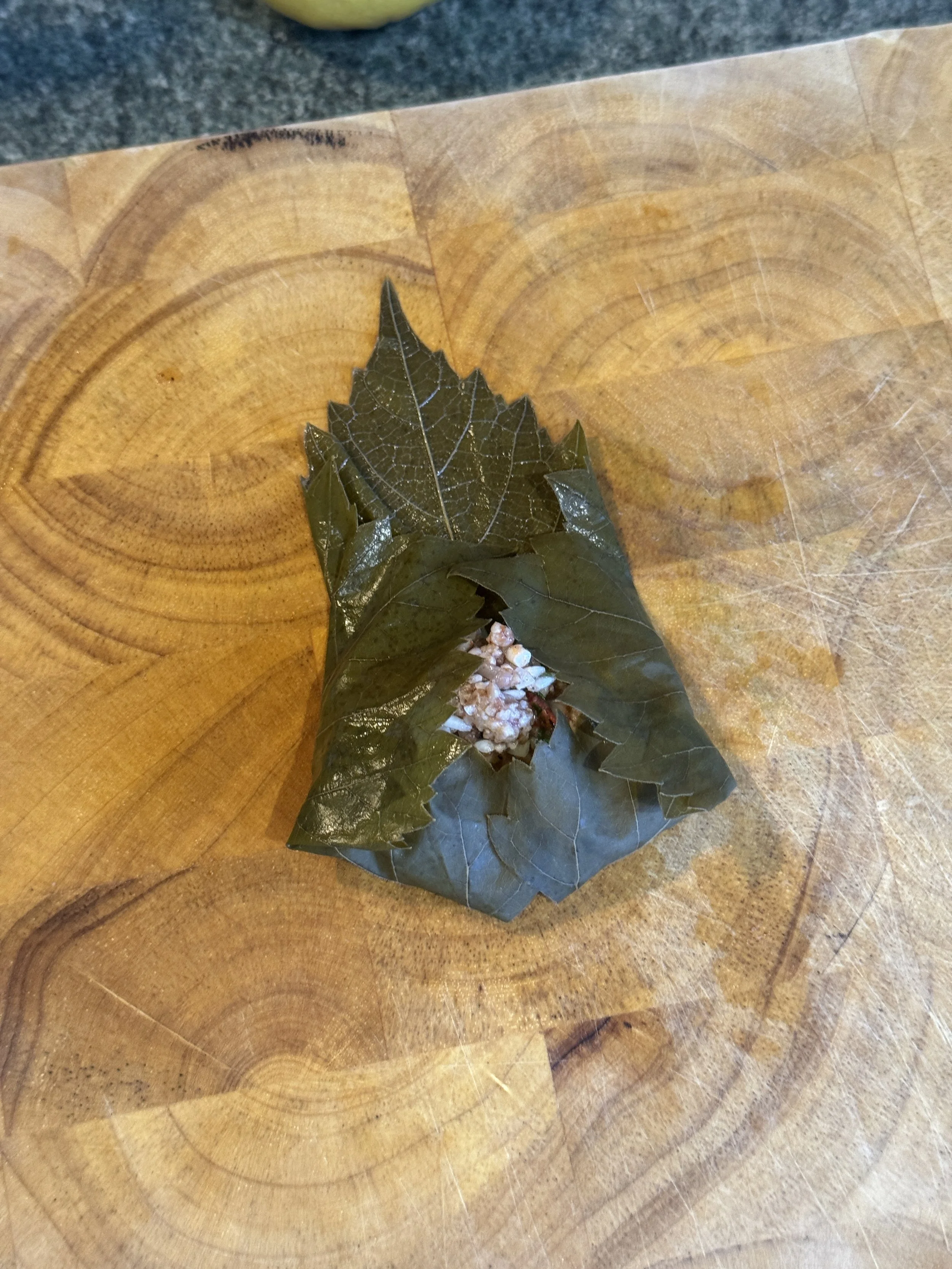
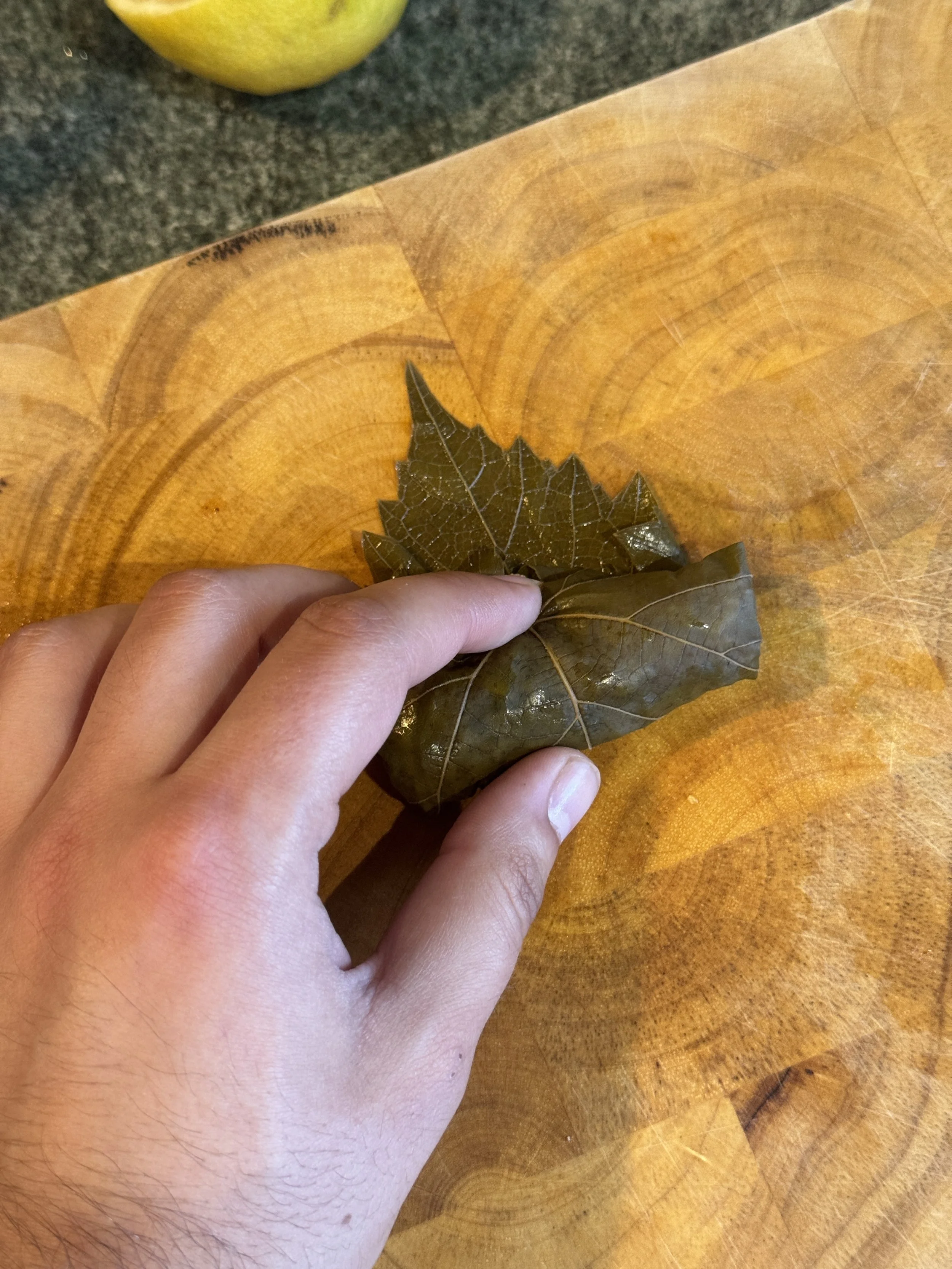
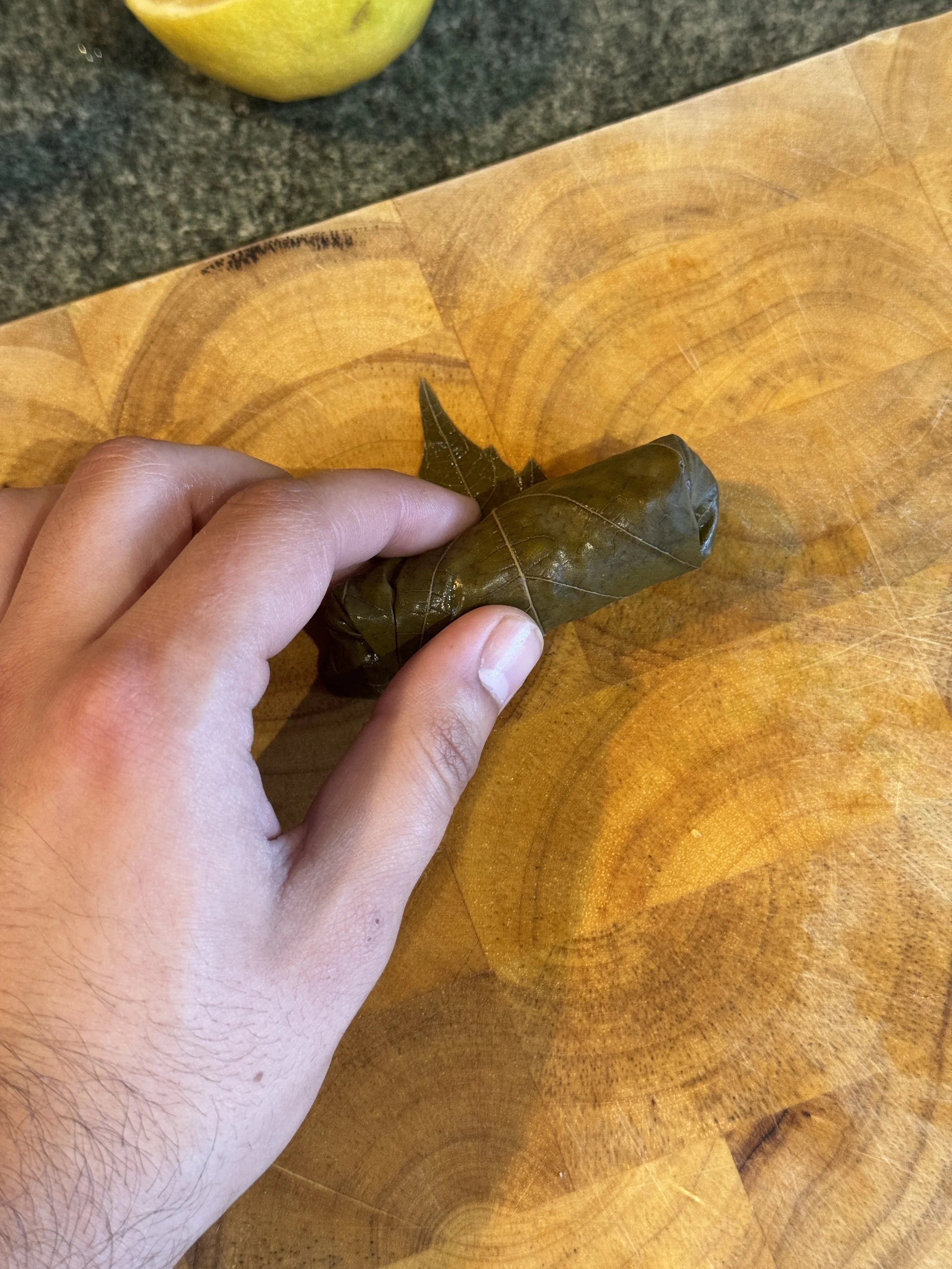
To stuff and roll the dolmadakia, place a vine leaf smooth side-down, with its base closest to you (where the stalk would have been). Add one tablespoon of the filling across the base of the vine leaf. Fold up the protruding parts of the bottom of the vine leaf, then fold in the left and right sides, at a slight angle so that the vine leaf is wider at its base than at the tip. Roll forward into a compact cylindrical shape, but not too tightly (as the rice will expand as it cooks).
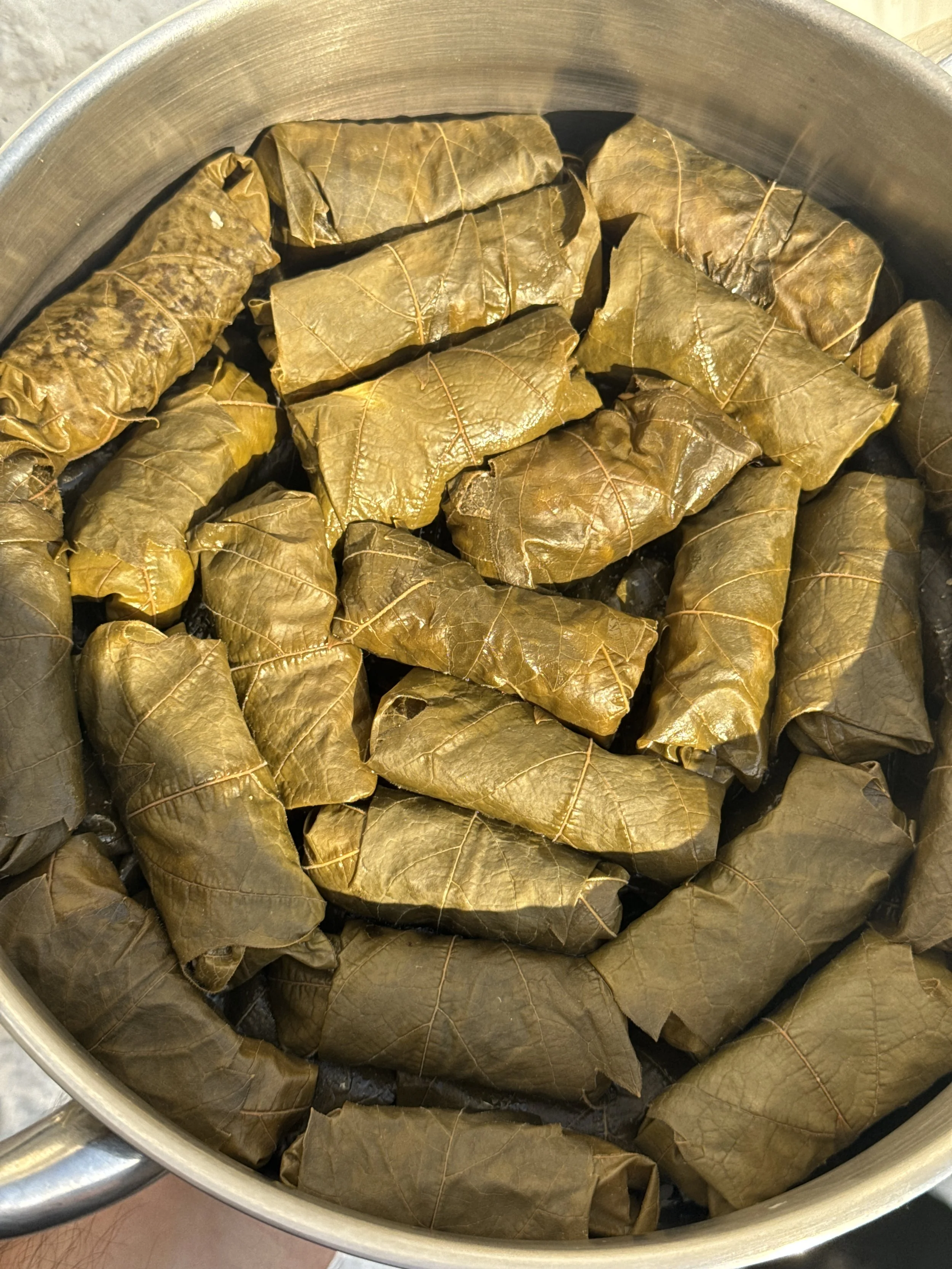
In a large saucepan, add 3-4 broken or torn vine leaves to cover the base, then compactly pack in the stuffed vine leaves in a circular formation, starting from the outside and completing inwards.
Once you have your first layer, drizzle with extra virgin olive oil some more of the lemon, and season with salt and pepper. Repeat until you have two complete layers.
Cover the final layer with any 3-4 extra vine leaves, cover with boiled water, then place a plate upside down on top of the vine leaves and press down slightly. The water should reach about halfway up the plate.
Bring to the boil, cover with the lid, then turn down the heat and allow the stuffed vine leaves to gently simmer for 35-40 minutes until softened. Be careful not to overcook the vine leaves, as the koupepia will fall apart and the rice will be overcooked. It’s normal for there to be a little liquid left in the pot, but if you turn the heat off and see there’s still quite a lot of water, use a utensil to hold the plate in place while you drain.
Remove the plate from the saucepan, put its lid back on, and leave the vine leaves and koupepia to rest for 15-20 minutes.
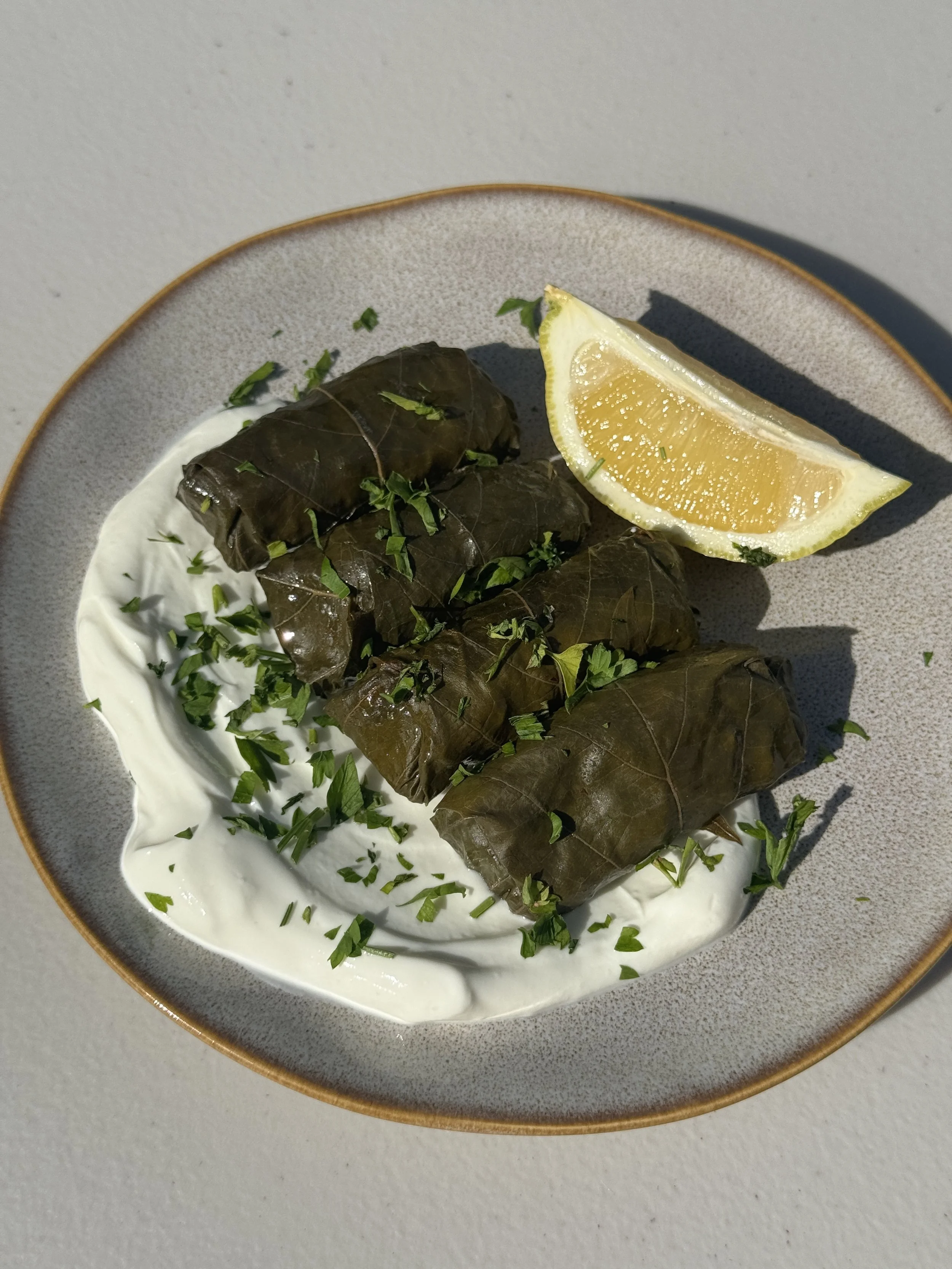
Remove the top-layer of vine leaves and serve the koupepia warm or cold with traditional sheep’s yoghurt, and garnish with some parsley and lemon juice.
My grandmother’s recipe for traditional village olive breads, the way her mother would make them in mid-20th Century Cyprus.