

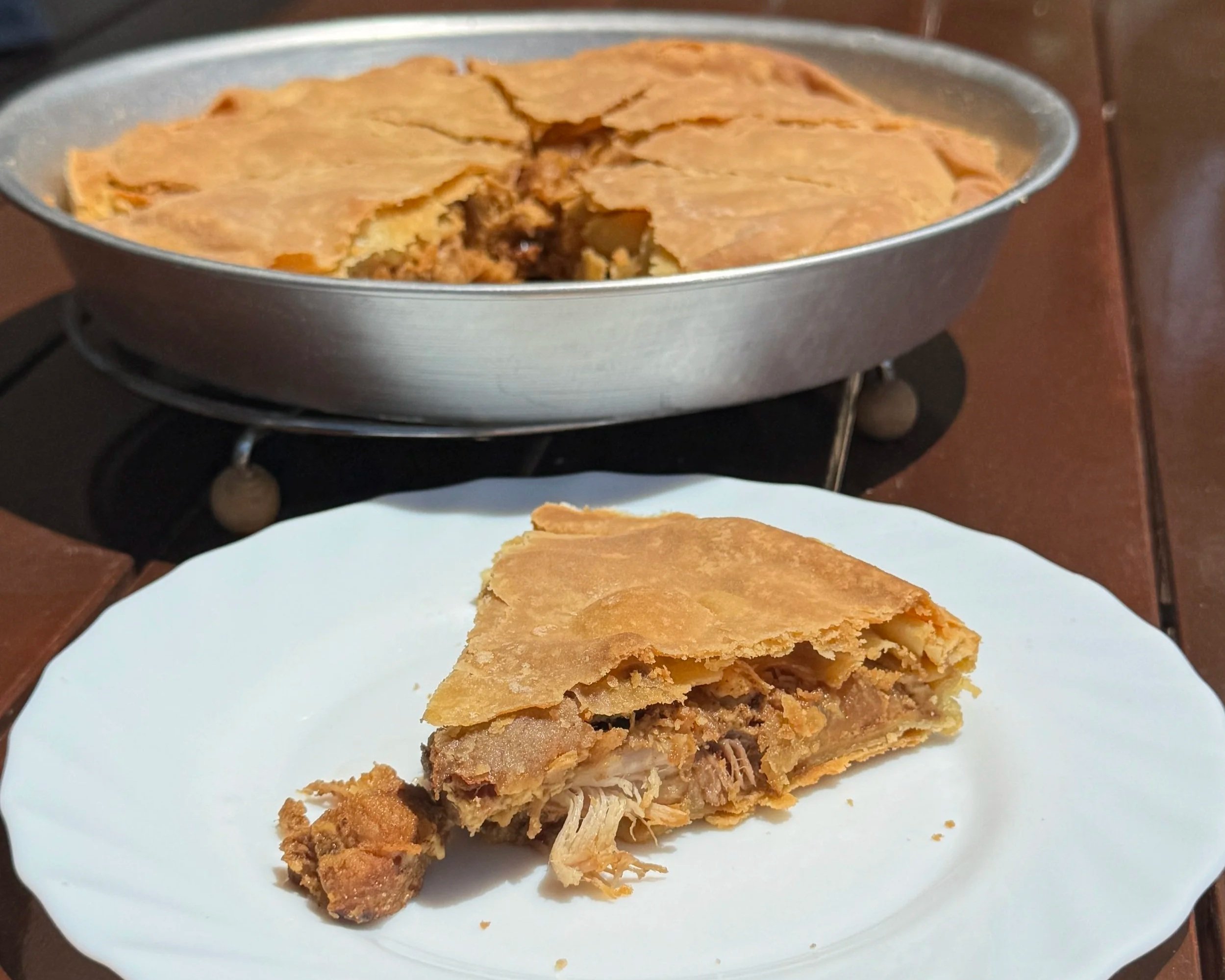
Traditional kreatopita with pork: Greek meat pie recipe

I’m proud of this recipe for a few reasons: it’s my own, simple kreatopita recipe, inspired by kreatopita in one of its traditional forms, which I first learned from my grandfather who is from Aitoloakarnania. Most importantly, all of my cousins and friends in Greece who have tried it have said that it’s the best kreatopita they’ve ever had (and, believe me, they usually give honest feedback). Thanks to the braising technique, the meat is tender, but the pie sturdy. As always, the recipe includes handmade filo pastry.
About kreatopita
Kreatopita is another common traditional Greek pita, which you’ll most typically see in a few different forms, most popularly in Kefalonia and in Epirus. Kimadopita – minced meat pita – is slightly different, as is Kotopita – chicken pie – which will typically also contain peppers.
This recipe is much closer to the way you’ll typically see kreatopita in and around Epirus and Aitoloakarnania, inspired by the way my grandfather makes it – very simple, with pork and onions. You can see my Pappou’s kreatopita recipe here, the way he learned to make it in his village in Aitoloakarnania.
In Kefalonia, on the other hand, you’ll typically see kreatopita made with a mixture of meats, together with rice. If you want to try a good kreatopita in Kefalonia, make sure you’ve added your email below so you can learn when I upload our Kefalonia guide this year.
Add your email
Subscribe to the Souvlakination newsletter for exclusive restaurant recommendations and more recipes.
Kreatopita using leftover souvla/kontosouvli/souvlakia
How to make kreatopita – traditional Greek meat pie
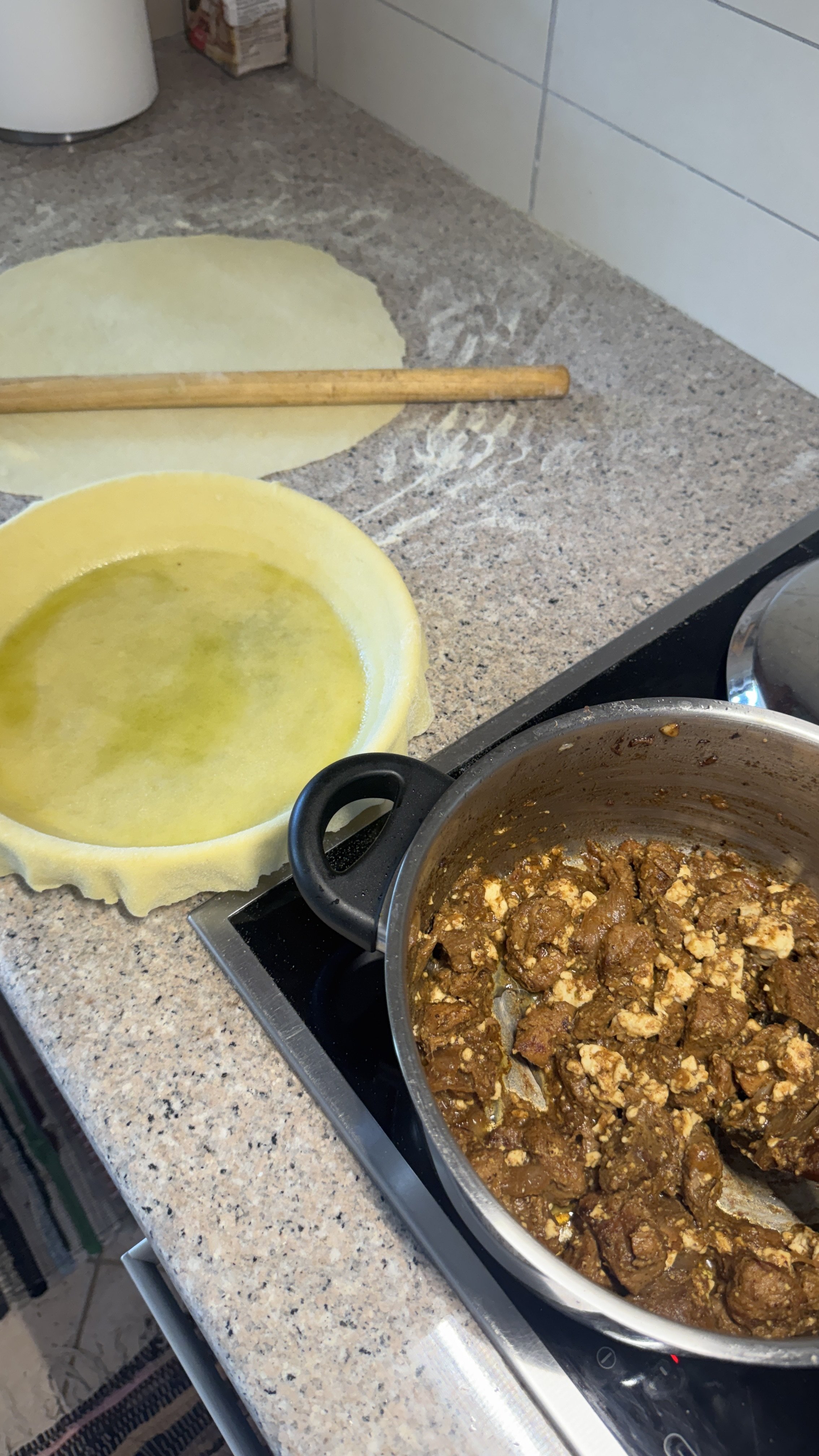
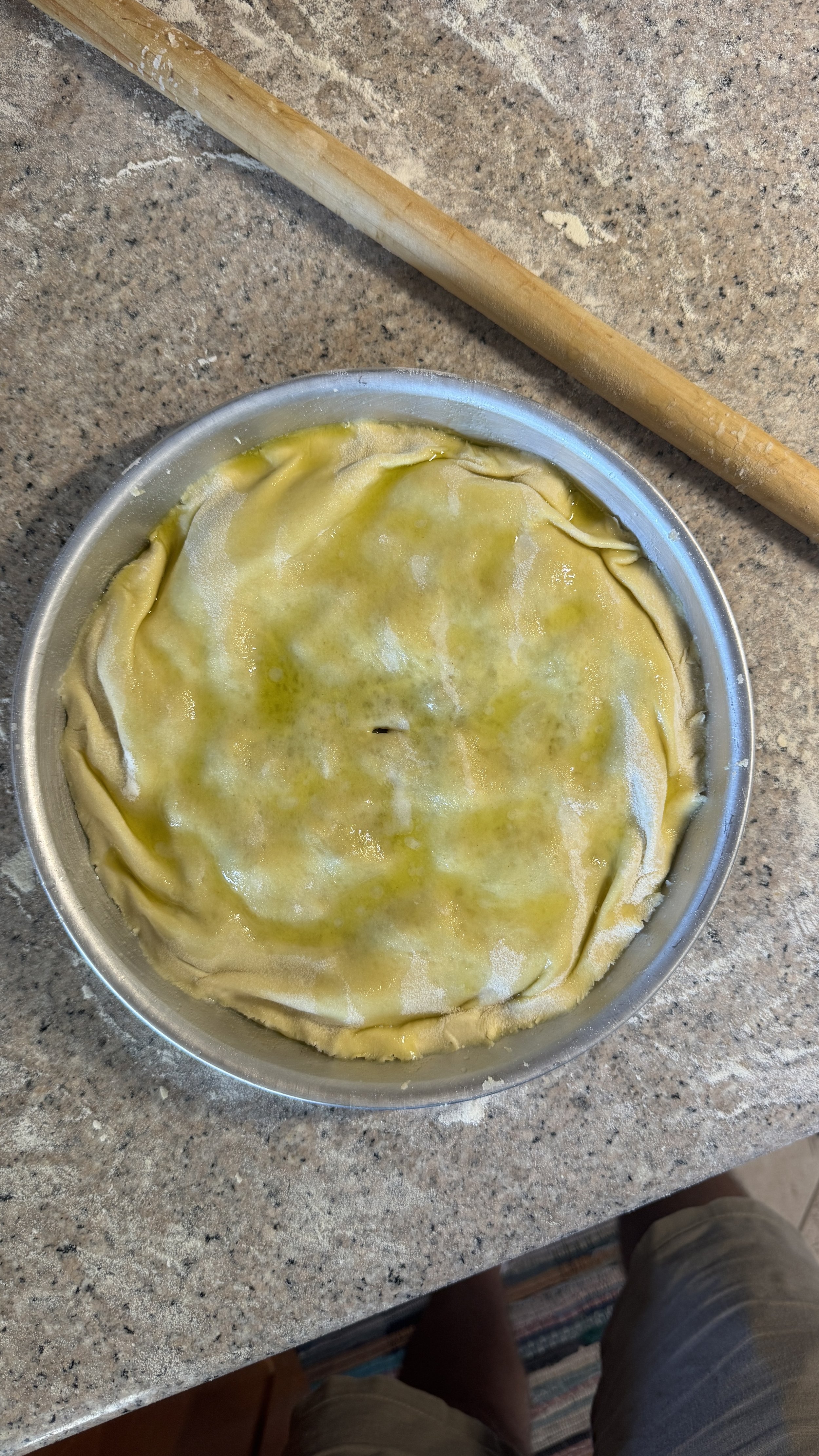
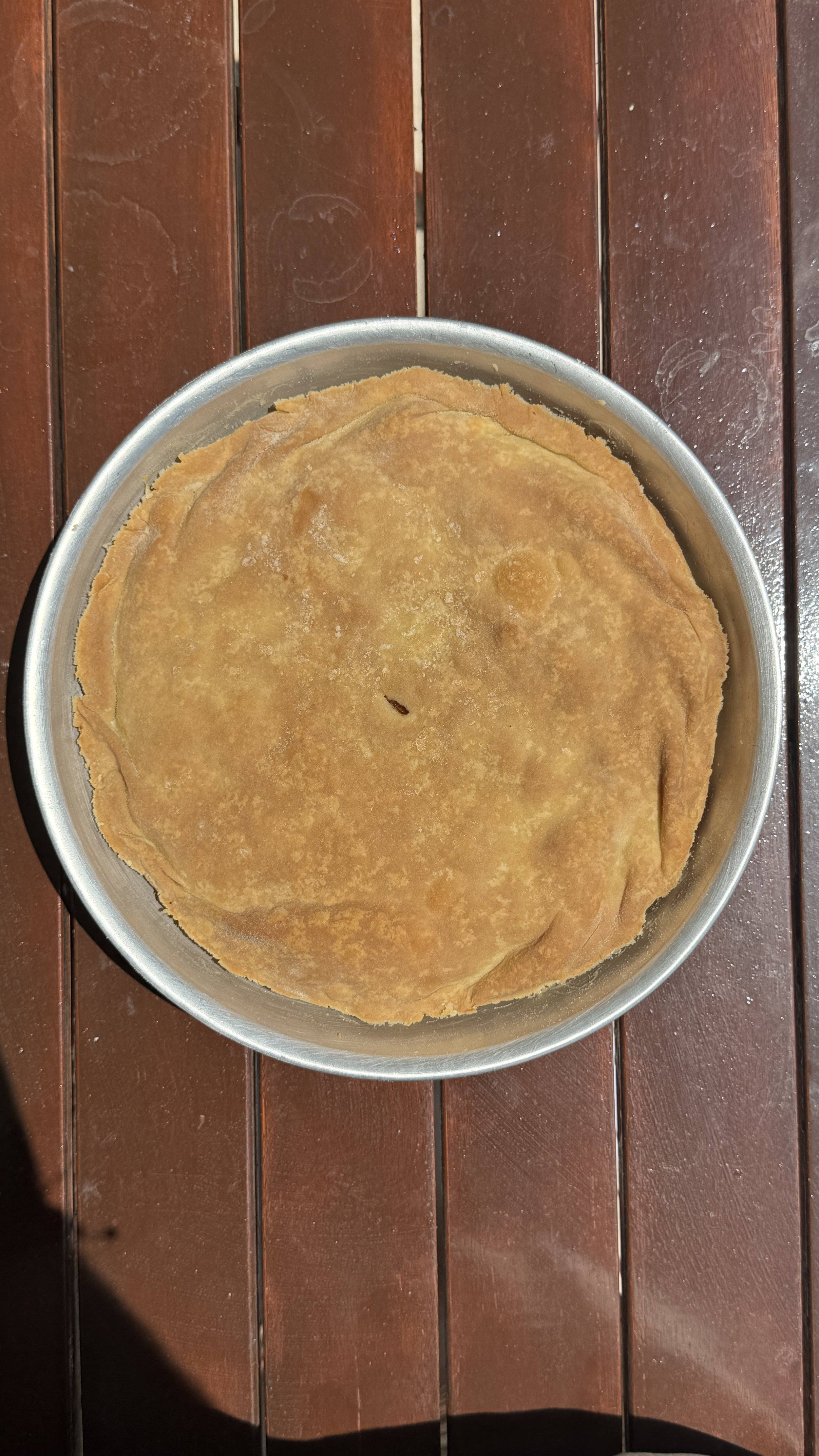
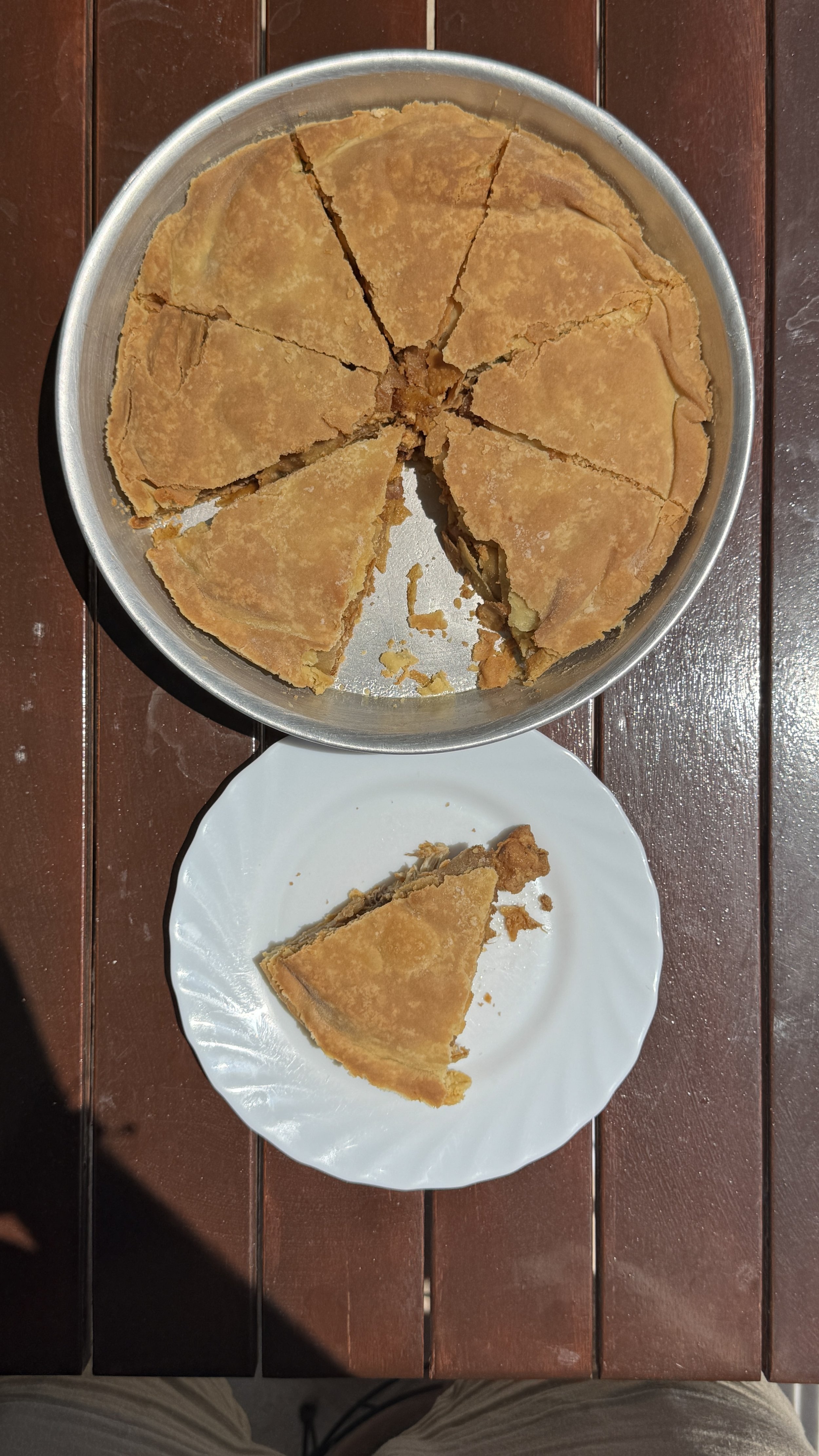
Ingredients:
For 1 medium baking dish
For the filo:
250g flour
150ml lukewarm water
2tbsp extra virgin olive oil
1tsp vinegar or ouzo or tsipouro
For the filling:
500g pork neck or shoulder, cut into 1-2cm chunks
3 onions
1-2 garlic cloves
Oregano
1 egg
100g feta
Olive oil
75ml wine
Method:
Preparing the kreatopita filling:
Add the diced meat into a deep frying pan, season and cover with cold water. Place on a medium-high heat and bring to the boil.
Simmer until the water has just evaporated (about 30 minutes). Once the meat starts to sizzle, sauté for a couple of minutes, stirring regularly to prevent it from catching too much. It should start to turn golden brown quickly as it sizzles in the fat it has released.
Add in a couple of tablespoons of olive oil, then chop the onions into wedges (eights), add into the pan and lightly season. Stir well and sauté for a couple of minutes.
Crush or grate in the garlic and continue sautéing for a couple more minutes.
Deglaze with the wine and let the alcohol simmer for a couple of minutes more while you put the kettle on.
Pour in some boiled water, just enough to reach the top of the meat. Sprinkle in the oregano, stir well, and bring to the boil.
Cover with the lid and lower the heat to a medium-low heat. Simmer gently for 20-30 minutes, stirring occasionally and adding in a splash of water if the mixture begins to look dry, and until the meat breaks apart fairly easily. The mixture should be juicy, with a slightly thick gravy consistency, but not too watery.
Remove from the heat and allow to cool while you prepare your phyllo.
Making the filo dough:
Sieve the flour into a large bowl. Make a well in the centre and add the salt, extra virgin olive oil, and vinegar.
Gradually add the water, combining well as you go, until the dough is smooth. Combine fully before assessing whether you need to add any more water or flour. The dough should be elastic and smooth but not completely sticking to the bowl or your hands once it’s ready.
Cover with a tea towel and leave to rest for at least 30 minutes.
Making the kreatopita:
If you haven’t made filo before, here’s a more detailed guide in the spanakopita recipe.
Once the meat has cooled and the dough is ready, finish off the filling before rolling out your filo. Crumble in the feta, then season to taste. Beat and stir in the egg and a drizzle of extra virgin olive oil. The filling should have a silkier consistency and is now ready – if it’s still thin and water, you can sprinkle in a handful of trahanas or semolina (typical traditional village pita hack).
Pre heat your oven to 170 degrees Celsius (fan).
Onto the phyllo. Divide your filo pastry into four balls, 2 slightly bigger than the others.
Oil the bottom of a medium baking dish all over with extra virgin olive oil. Roll out the largest ball of filo and cover the base, leaving any excess to hang over the edge of the dish.
Brush with extra virgin olive oil and drizzle with some excess juices from the meat filling (or a sprinkle of cold water if there’s not enough).
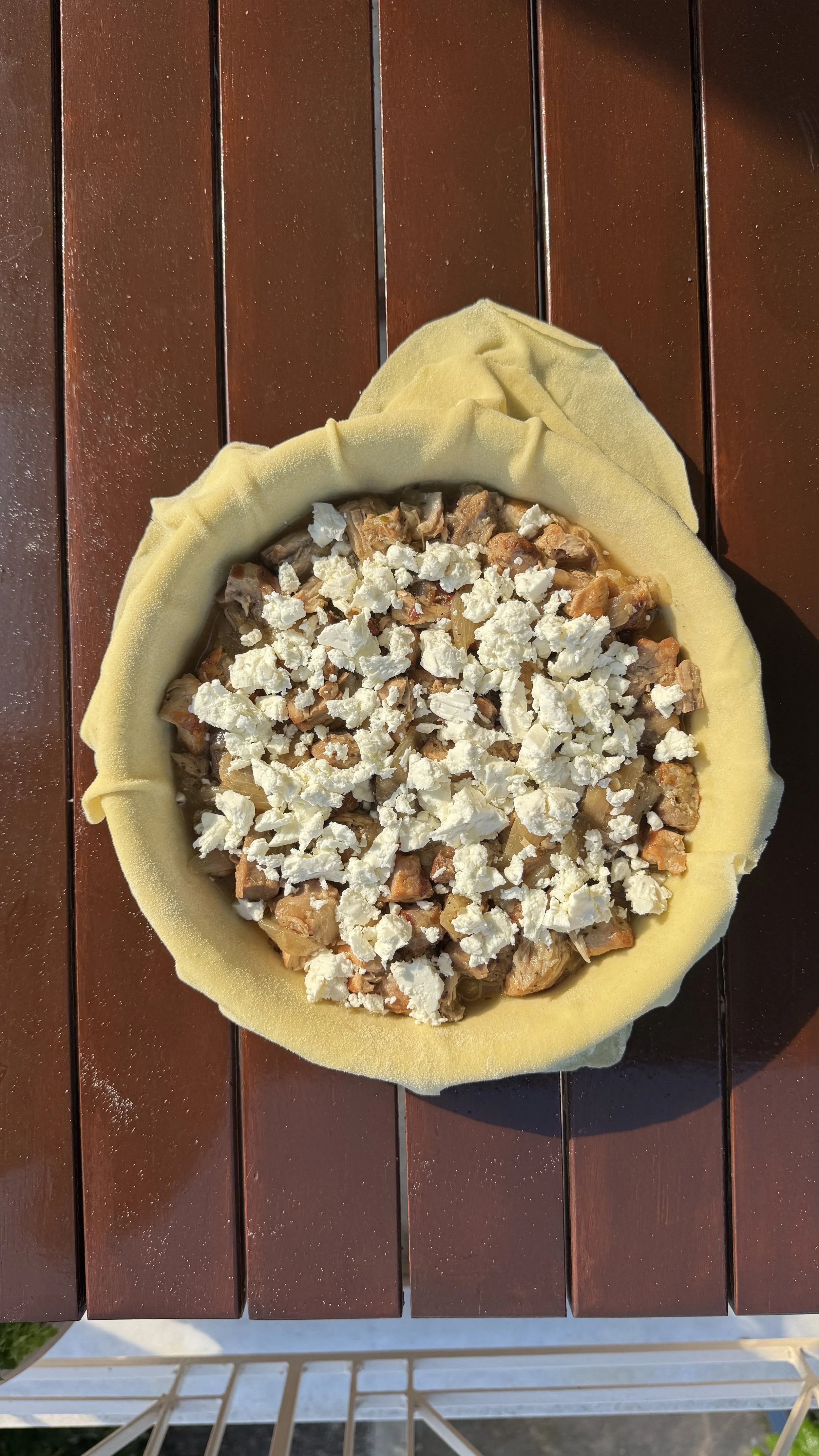
Repeat with the second largest filo, then add in all of the filling.
Roll out the 3rd largest filo and cover the filling, If it’s overhanging, you can crumple it so that the filo is creased and fits right, or tuck in the excess into the edges.
Brush with extra virgin olive oil, sprinkle some cold water, and repeat with the final phyllo.
Now, cut off some of the overhanging phyllo around the outside of the tray, then roll and pinch in the remainder to create a thin crust. Drizzle with olive oil and a splash of water, and make a small incision with a knife in the centre to allow the pita to release any excess steam.
Cook the pita in the pre-heated oven for about 70 minutes at 170 degrees. Once it’s cooked, cut immediately and serve warm or at room temperature.
The vegetable stew that you’ll find in almost every household and restaurant in Ikaria, and in every season.