

Cypriot Koubes: Yiayia’s Recipe

What are koubes?
Koubes (kouba in the singular; κούπα/κούπες) form one of the most popular traditional snacks in Cypriot cuisine, and underline Cyprus’ dynamic and diverse culinary heritage.
Also popular in various forms in neighbouring Lebanon, Syria and beyond, Cypriot koubes are ovular or ’torpedo-shaped’, bulgar wheat shells filled with minced meat and deep fried. Pork tends to be the most popular meat filling in Cyprus, although mushroom koupes are also a common vegetarian/fasting alternative. Cypriot koubes are distinct for their longer, ovular or cylindrical shape, which marks an iteration from the Arabic ‘kibbeh’, which itself means ‘ball’.
When did koubes first arrive in Cyprus?
Koubes are said to have originally reached Cyprus in Larnaka (then Kition) as far back as during Phoenician rule (9th Century BC - 4th Century BC) – the Phoenicians themselves hailing from modern-day Lebanon – although Ottoman rule (16th Century - 19th Century) no doubt further reinforced culinary exchanges between Cyprus and the Levant. In the 20th Century, koubes became a popular street food and were commonly offered after church on Sundays, and at religious festivals. My grandparents also recall mobile vendors on mopeds travelling from village to village and at beaches (like vomves and loukoumas) selling koubes in the 1950s and 1960s. A few housewives then began to take orders for koubes and, nowadays, koubes are a common sight in many bakeries and mini markets, as well as in most Cypriot homes.
Koubes in different cultures
Koubes sit in the middle of centuries of cultural exchange between the Levant and Cyprus. Levatine koubes typically contain minced lamb or beef (as opposed to pork) and may also include pine nuts and more spices, while Turkish ıçli köfte also incorporates tomato paste. Yotam Ottolenghi also notes the use of cinnamon and allspice in the versions he grew up eating in Jerusalem, exactly as my grandmother uses on this occasion – except she often also uses ground cloves, and others may also add cumin. Otherwise, Cypriot koubes will also usually be characterised by the classic mint-cinnamon combination that also sets Cypriot koubebia apart from Greek dolmades or Middle-Eastern and Anatolian equivalents. (Interestingly, while ‘koubebi’ refers to dolma in Cyprus, ‘kobebah’ is another typical spelling for kouba in Egypt, as is ‘kubba’ in Iraq and other countries.)

Making Cypriot koubes: Tips
This is my Cypriot grandmother’s recipe. Yiayia Tetta was born in the village of Agia Marina Skyllouras, near Lefkosia, to a Maronite Cypriot family. She moved to England in her late teens, where she still lives and cooks the same food she and my grandfather grew up eating in mid-20th Century Cyprus. Here are some of her tips.
Don’t skip the step of soaking the bulgur wheat. This helps to soften it, which is crucial when it comes to shaping the koupes and ensuring that the shell holds together without cracking. Frying the onions and meat is equally crucial, not just in terms of ensuring that the koubes are cooked through and the onions softened, but in terms of the flavour that the sautéing imparts. Make sure you fry the koubes as soon as possible after shaping to avoid them drying out and cracking, and at a moderate heat so that the koubes don’t brown too quickly.
If you’d like to make the vegetarian version, simply replace the minced meat with the same weight of finely chopped mushrooms.
Add your email
Subscribe to the Souvlakination Newsletter to hear about more recipes and opt in to exclusive content.
How to make Cypriot koubes (kibbeh)

Makes 20-25 koubes
Ingredients:
For the shell:
500g fine bulgur wheat
1 tbsp salt
Freshly ground black pepper
1 chicken stock cube
900ml lukewarm water
3 tbsps extra virgin olive oil
75g plain flour
2 eggs
2 litres sunflower oil for frying
For the filling:
5 tbsp extra virgin olive oil
1 onion
500g finely minced pork
1 tsp cinnamon
1 tsp allspice
1 heaped tsp mint
Small bunch of parsley
To serve:
Plenty of lemon (for the filling, not the shell[!])
Method:
In a large bowl, season the bulgur wheat with salt and a good pinch pepper. Dissolve the chicken stock in the 900ml of lukewarm water, and add into the bulgur wheat with the olive oil. Mix well, cover with a tea towel and set aside for at least 2 hours (or overnight).
In the meantime, prepare the minced meat filling for the koubes. Put a frying pan on a medium-high heat and heat the extra virgin olive oil. Finely chop and add in the onion and sauté for 3-4 minutes until softened. Crumble in the pork mince and season well. Brown it off, breaking it up as you go. Stir in the spices and mint, turn the heat down to a medium and fry for 5 minutes. Finely chop the parsley and stir it in well, then remove from the heat and allow to cool.
After the 2 hours have passed, sieve the flour into the bulgur wheat mixture. Gently beat 2 eggs with a fork and add them in too. Mix well and knead the mixture thoroughly for 10-15 minutes until it forms a relatively smooth and malleable dough that you can shape into balls.
To shape the koubes, have a small bowl of olive oil to hand. Dip your fingers in the oil to brush the palm of your ‘holding hand’, and again dip your fingers with the hand you’ll use to shape the kouba. Take a golf-sized chunk of the bulgur wheat mixture and roll it into a smooth sphere. Poke a hole with your oiled index finger, about 3/4 of the way into the ball, and pinch the sides with your thumb on the outside and finger on the inside, rotating as you to to open the ball out into a cup shape. Continue until the shell is about 1/2cm thick. Fill with 2-3 teaspoons of the minced meat filling.
To close the kouba, oil your palm and fingers some more and pinch the open edges inwards so that they converge into a single point and mirror the base of the kouba. With both your palms, gently roll the kouba into a long, ovular shape, turning over halfway so that you get a slightly-pointed end on each side, and symmetrical koubes. Repeat until the bulgur wheat mixture has finished, and place the shaped koubes on a tray, ready for frying.
Heat the sunflower oil in a large, deep saucepan. In batches, deep fry the koubes on a medium heat until golden brown all over, occasionally giving them a gentle poke so that they cook evenly. If your oil is too hot, the shell will brown too quickly on the outside and remain gooey within, so cook with patience to achieve the trademark crust. Strain and leave to cool on a wire rack with a tray beneath.
Eat fresh and squeeze a generous amount of fresh lemon juice onto the minced meat after your first bite.
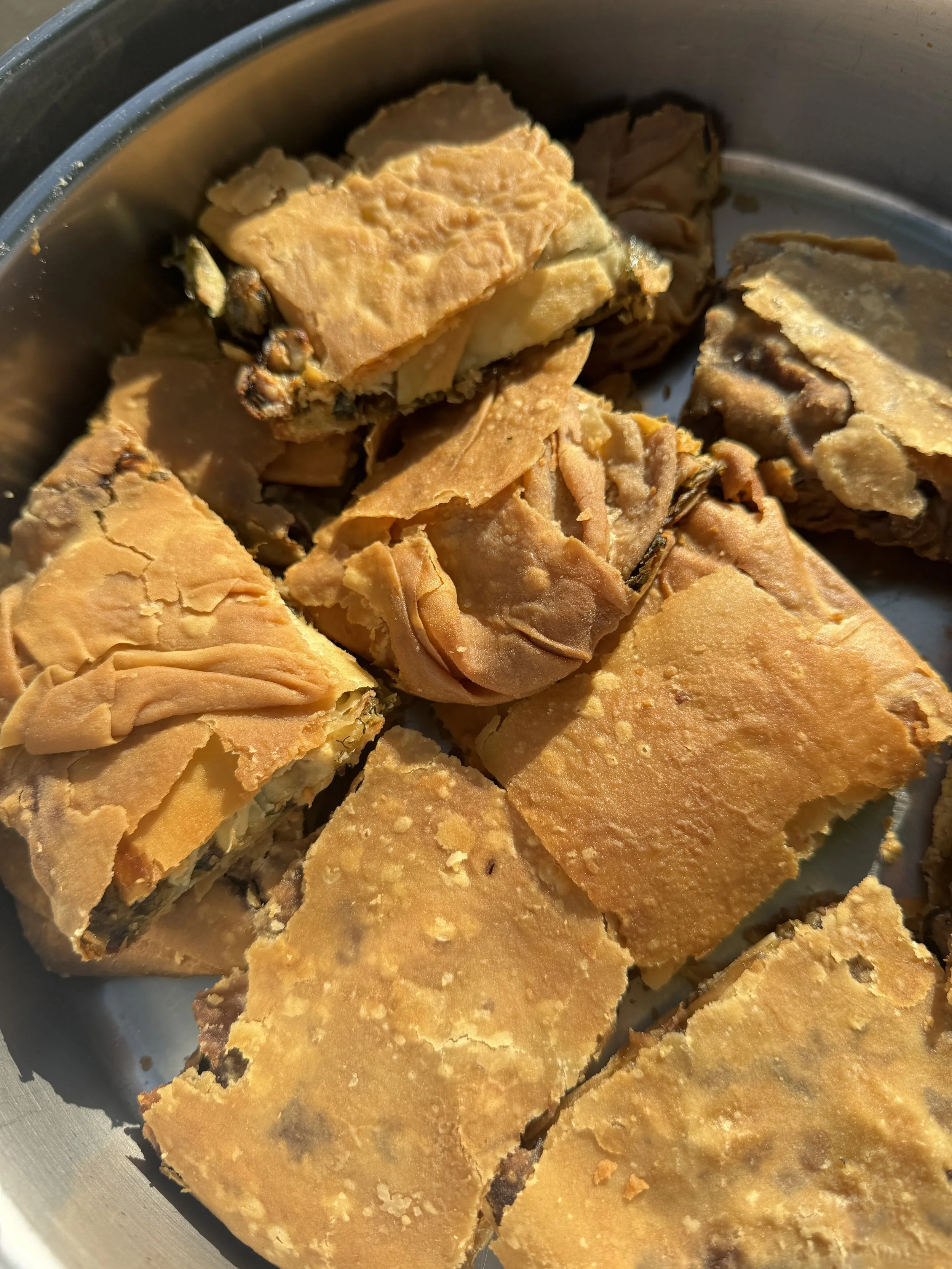
My grandmother’s recipe for traditional Cypriot koubes: fried bulgar-wheat shells, filled with minced meat. Just as you’ll find them in Cyprus.