


This recipe is part of a series in which we cover how you can accurately and authentically make traditional, souvlatzidiko-standard souvlakia and tylichta at home, informed by real life examples of souvlakia and souvlatzidika in Greece.
You can read the first volume – souvlaki or kalamaki in pita – here:
Bifteki tylichto background and a brief history of souvlaki in Athens
This recipe is one of the original forms of the Athenian ‘souvlaki’, or, rather, ‘tylichto’, ‘pita’, or ‘pitogyro’. Whatever you call it, you’ll notice that most Greek souvlatzidika will have bifteki on their menu. It’s a tradition that stems from mid-20th Century Athens, when the tylichto (aka ‘souvlaki’ to Athenians or sometimes ‘gyros’ to many abroad) began to establish itself as Greece’s national street food.
If you’re not entirely familiar with the history of Greece’s national street food, I recommend you read my piece about the first souvlatzidiko (or, technically, kebabtzidiko) to open in Athens, To Aigyptiakon in 1924. In short, the birth of Greek street food happens there, with Isaak Meraklidis’ popular and novel innovation: minced mutton ‘kebab’, in a flatbread he commissioned a local baker to adapt to his liking, with tomato, onion and oregano. Meraklidis’ invention proved to be the inception of the very thing we consider synonymous with Greek street food today, in its many forms and names: pita gyros, pitogyro, tylichto, souvlaki (tylichto); or anything that might come in the conical-cylindrical pita wrap in greaseproof paper, nowadays also often (distastefully, in my opinion) supplemented with fries as well as condiments like tzatziki and ‘sauce’ (typically mayo with mustard).
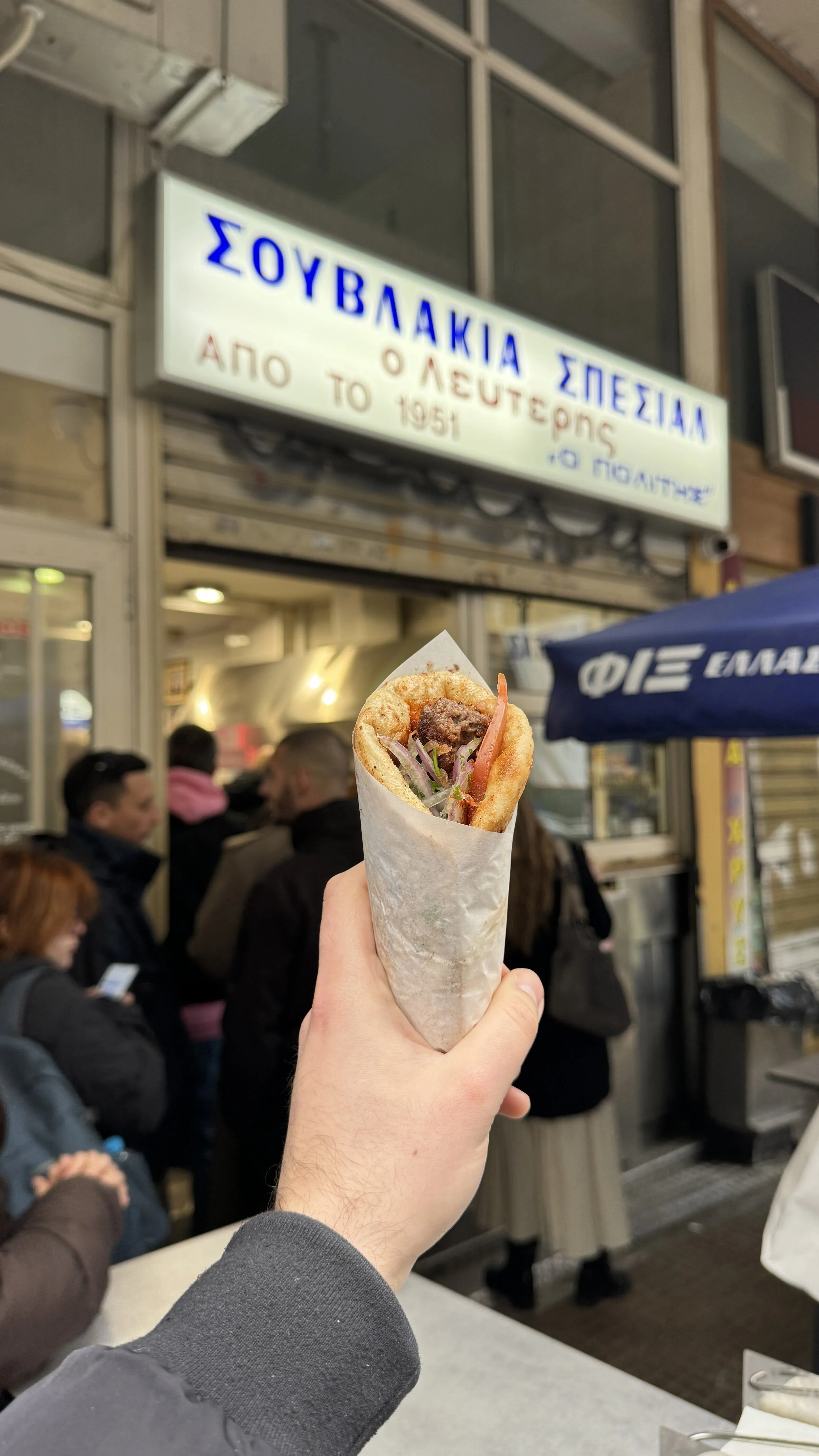
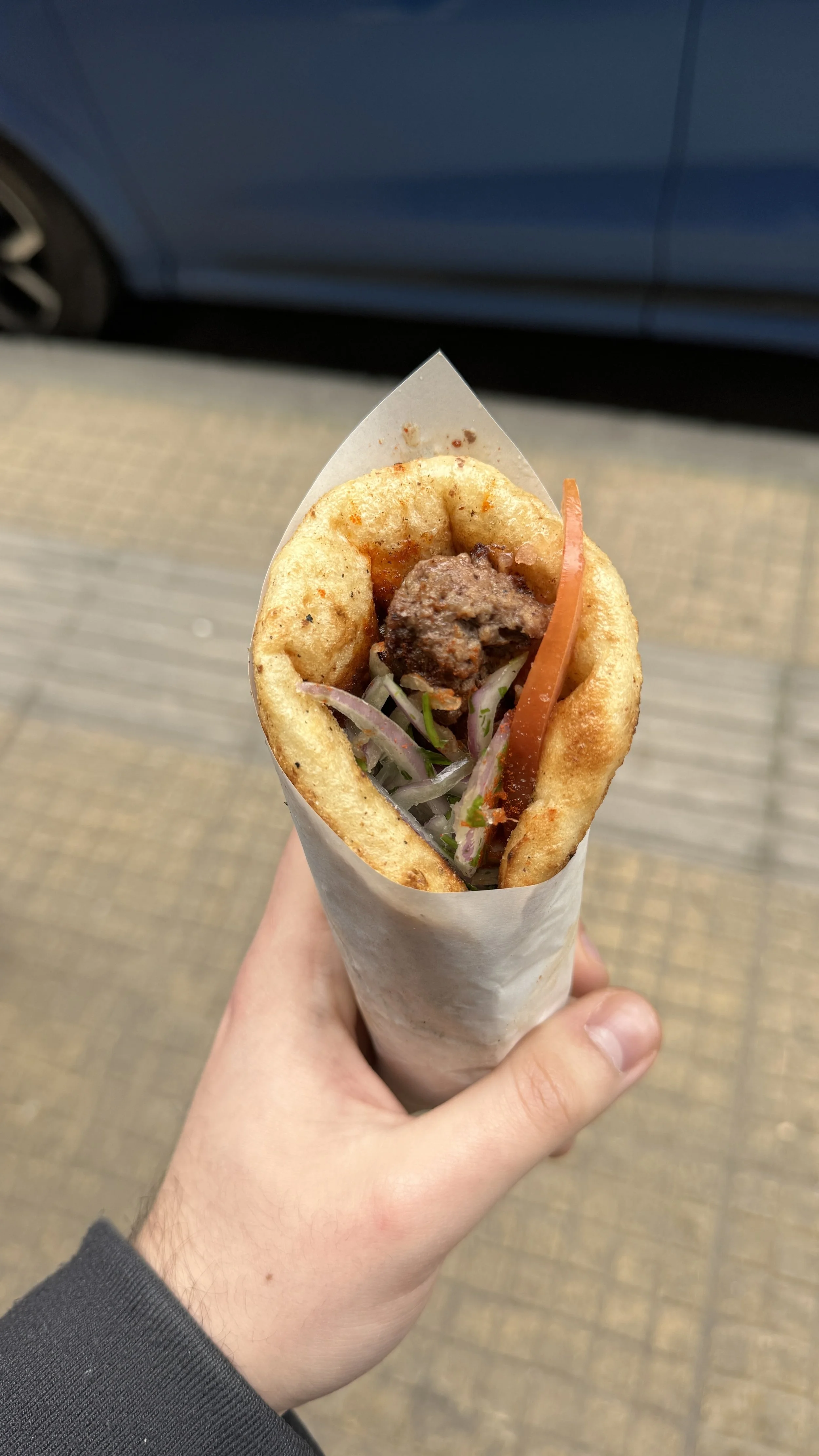
Kebab vs bifteki: what’s the difference?
Although the most popular form of the Greek pita today is arguably pita gyros, the first real tradition that Meraklidis’ kebab and flatbread really inspired was the popularisation of the kebab and, by extension, bifteki in pita. Kebab is finer than bifteki, and typically contains lamb and/or beef – you’ll find it in spots that Meraklidis directly bequeathed to Athens’ current-day food scene like world-famous Thanasis, Bairaktaris, Savvas, as well as Tomas and Kir Aristos. It’s now likely that you see kebab and bifteki on the average modern-day Greek souvlatzidiko menu, wherever you are in the world.
Bifteki, on the other hand, is typically beef patty – whether cylindrical, ovular or circular in shape – and you can find it in popular traditional souvlatzidika across Athens like Lefteris o Politis (pictured above), Kostas of Plateia Agias Eirinis, and countless others. You’ll also find it in many traditional Greek tavernes in larger, burger patty-shaped form, sometimes also stuffed with cheese, or in smaller-patty, ‘biftekaki’ form, usually pan-fried, grilled or baked.
We can safely say that, while kebab in pita was the first true tylichto to appear in 20th Century Athens after Meraklidis opened To Aigyptiakon, the bifteki iteration became popular by the 1950s when the likes of Kostas of Agias Eirinis, Kostas who is now on Filellinon, and Lefteris o Politis moved from carts to brick-and-mortar shops serving tylichta with bifteki (many also with pork kalamaki/souvlaki). The same is true of bifteki generally, which would have proliferated in tandem with tavernes and meat consumption post-WWII.

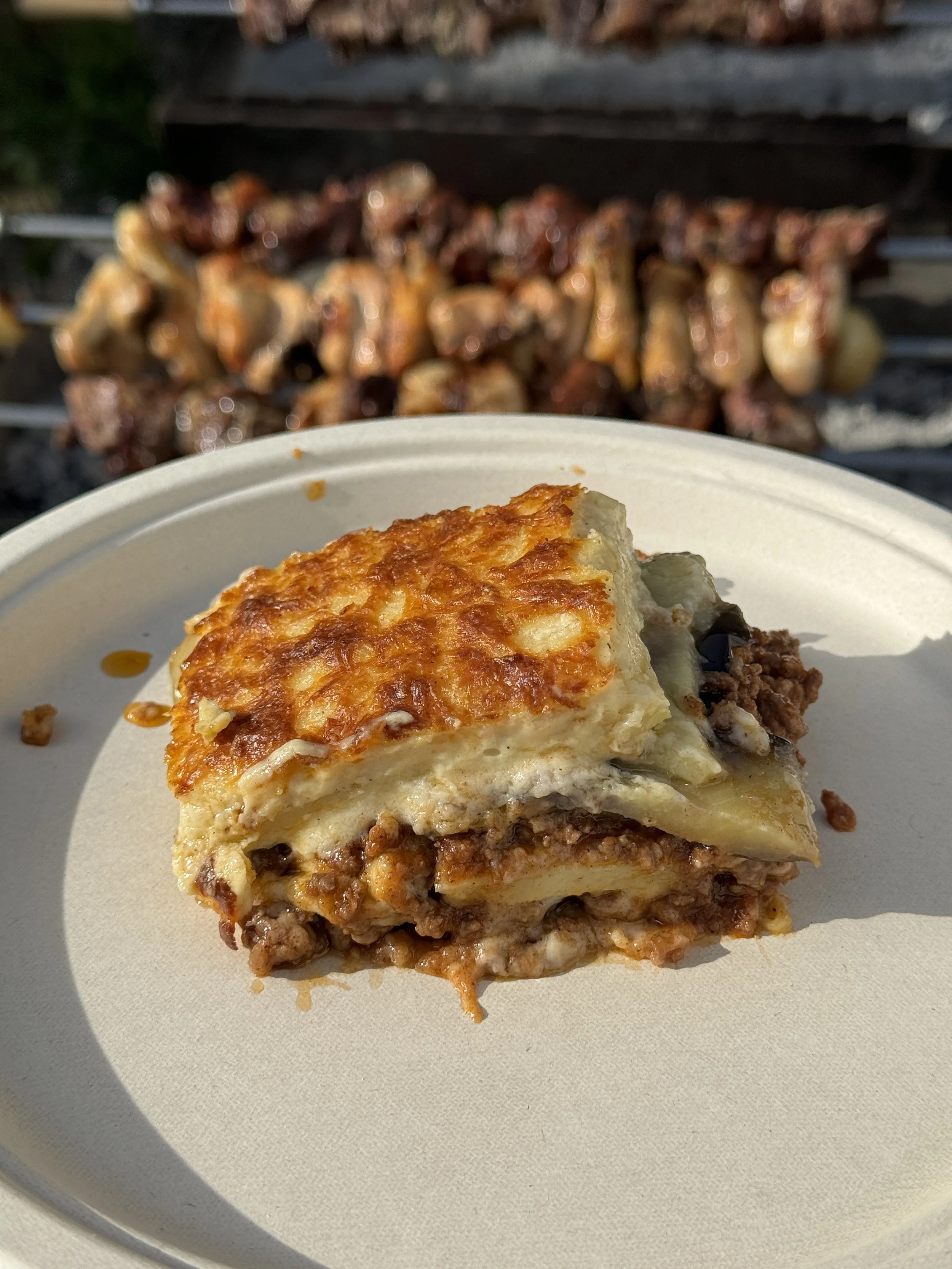
The ‘taverna bifteki’, this one stuffed with cheese and grilled over charcoal.
While many will note the similarities between kebab and the bifteki, and the irony in that Greeks adapted what is arguably an ‘oriental’ adoption, those distinctions do exist in reality. Moreover, if you eat at the oldest and best-respected kebabtzidika in Athens (as noted above, you’ll notice the finer, juicer texture of the kebab, which is usually cooked on lámes – a flat skewer – suspended over charcoal (without any direct contact with a grill). You’ll also notice that kebabs ‘glisten’ due to the finer consistency which distributes the fat content more thoroughly, and that they are softer and bouncier to touch than biftekia. While Lefteris o Politis might be one rare example of a souvlatzidiko which traces kebab-bifteki evolution in 20th Century Athens by cooking its bifteki on the same, flat láma skewer that you’d typically associate with kebab, you’ll notice that the souvlatzides there cook the biftekia on a flat-top grill (which you’ll see far less often at traditional kebabtzidika), with the end product being a chunkier, coarser beef patty consistency (like a burger or meatball). Generally speaking, you’ll either see souvlatzidika cook biftekia on a flat-top grill or on a grill over charcoal.
In some cases, you’ll also see soutzoukakia or keftedakia in pites at some souvlatzidika. While the keftedakia have a courser, crispier, fried exterior than biftekaki or kebab (try at Thymios in Ymittos), soutzoukakia will typically be closer to the finer kebab consistency, just smaller (although they feel more like biftekakia at Volvi in Athens than the soutzoukakia of Thessaloniki or kebabakia in Florina).

Add your email
Subscribe to the Souvlakination newsletter (Nostos) to see more exclusive content and recipes.
Biftekopoleia: Athens’ bifteki spots and the infamous red sauce
Many have established themselves simply by specialising in this tradition of bifteki tylichto, often pairing it with a homemade tomato salsa – in itself another popular Athenian souvlaki custom that proliferated from the 1950s, especially due to the absence of tomatoes in winter. You’ll find tomato salsa across Athens’ traditional souvlatzidika, especially in Nikaia, the Western suburbs and Piraeus, and the beauty of it is that each and every souvlatzidika has their own historical trademark recipe, nowadays often passed down through one or two generations. Rodopolis’ is sweet, spicy and tomatoey, O Kafteros’ is as spicy as the name warns, and Kostas Agias Eirinis is aromatic and chunky.
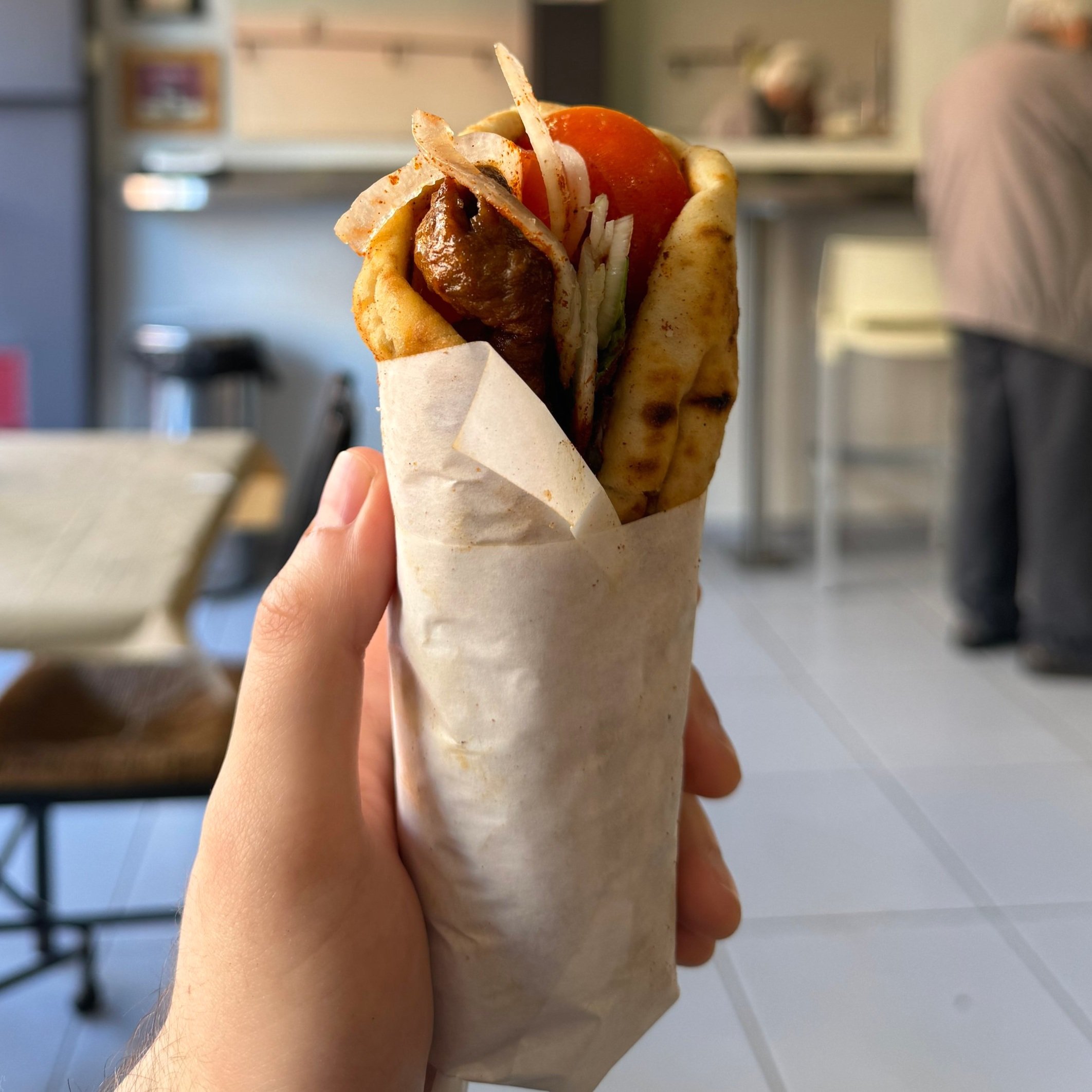
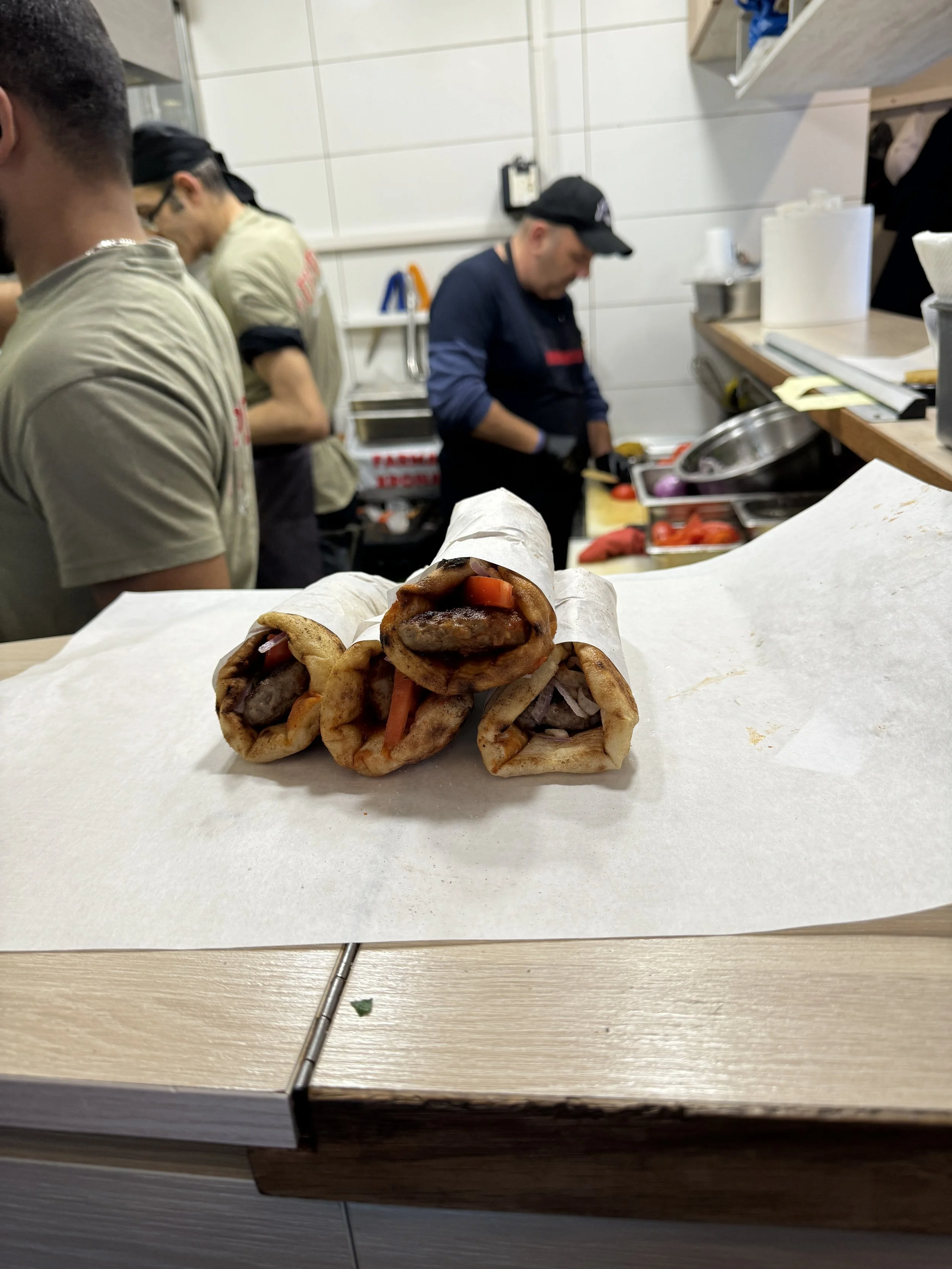
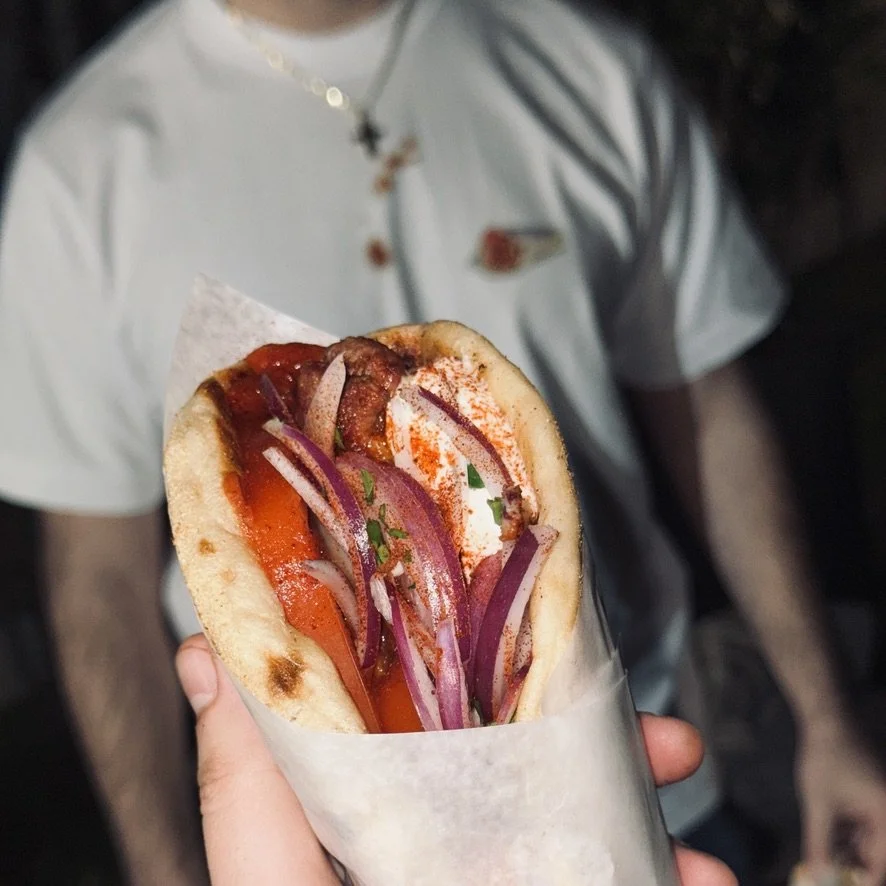
But one souvlatzidiko that captures that tradition with longevity and consistently above all is Giorgos of Piraeus. Ask any hardcore Athenian souvlaki enthusiast, food writer, journalist, or anyone who knows Athens’ food scene particularly well, for their top 5 souvlatzidika, and it’s likely that all will include Giorgos in there. When I meet with Athenian souvlaki connoisseur, Zois Chalkiopoulos, or better known as @searchingfortheperfectsouvlaki, he makes sure to take me there. When I speak with Director of Kathimerini’s gastronomy publications (namely Gastronomos), Angelos Rentoulas, he asks me if I’ve been to Giorgos. Reason being, Giorgos specialises in one thing, and does it incredibly well: juicy, caramelised beef patties in a fluffy pita that is brushed with a light, tomatoey red salsa, with sliced tomatoes and finely sliced onions with parsley. Small enough that you can wrap your hand around it and eat it in 5 bites, but so hypnotically good that you couldn’t eat less than two. Athenian souvlaki heritage, and the modern day ambassador of the tradition that inspires this recipe.
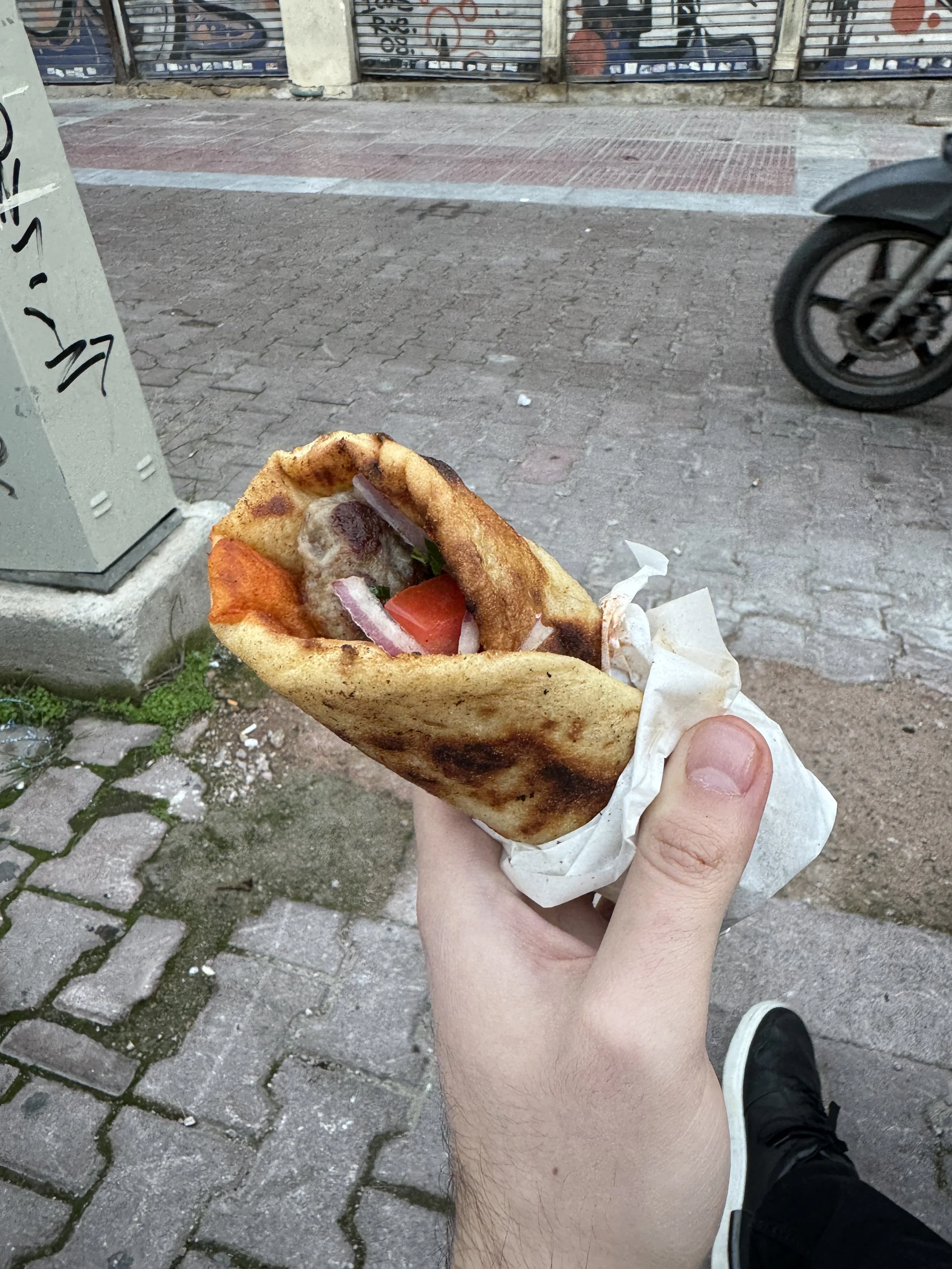
About the bifteki tylichto recipe
This recipe is my take, based on a synthesis of all of the best bifteki tylichta I’ve tried across Athens, with lessons from all. The bifteki itself is most inspired by traditional souvlatzidika, like Kostas of Syntagma’s (now Fillelinon 7) strictly simple approach. Generally speaking, simplicity and execution are king when it comes to good biftekia, and it will blow your mind how good it tastes if you focus on getting good meat and cooking it well. Although you might also see blended/grated/finely chopped onions added to both bifteki and kebab (like at Tomas), and sometimes a few herbs and spices too, the result doesn’t tend to be any more impressive than the most respected traditional souvlatzidika that follow a strictly simple recipe for bifteki. Most of Greek street food’s beauty lies in its simplicity.
While I’m not going to share the entirety of my own tomato salsa recipe, which has taken me 2-3 years of tweaking and iterating to get to this point, I’ll give you a very good basis and blueprint. Feel free to make it your own way, just add flavours with caution and control as you don’t want to overpower the bifteki or the pita as a whole. The salsa pairs well with a squeeze of mustard (like at Lilas in Athens) or a spoon of Greek yoghurt (like at Kyr Antrea’s in Athens).
How to make a traditional Athenian bifteki tylichto aka souvlaki
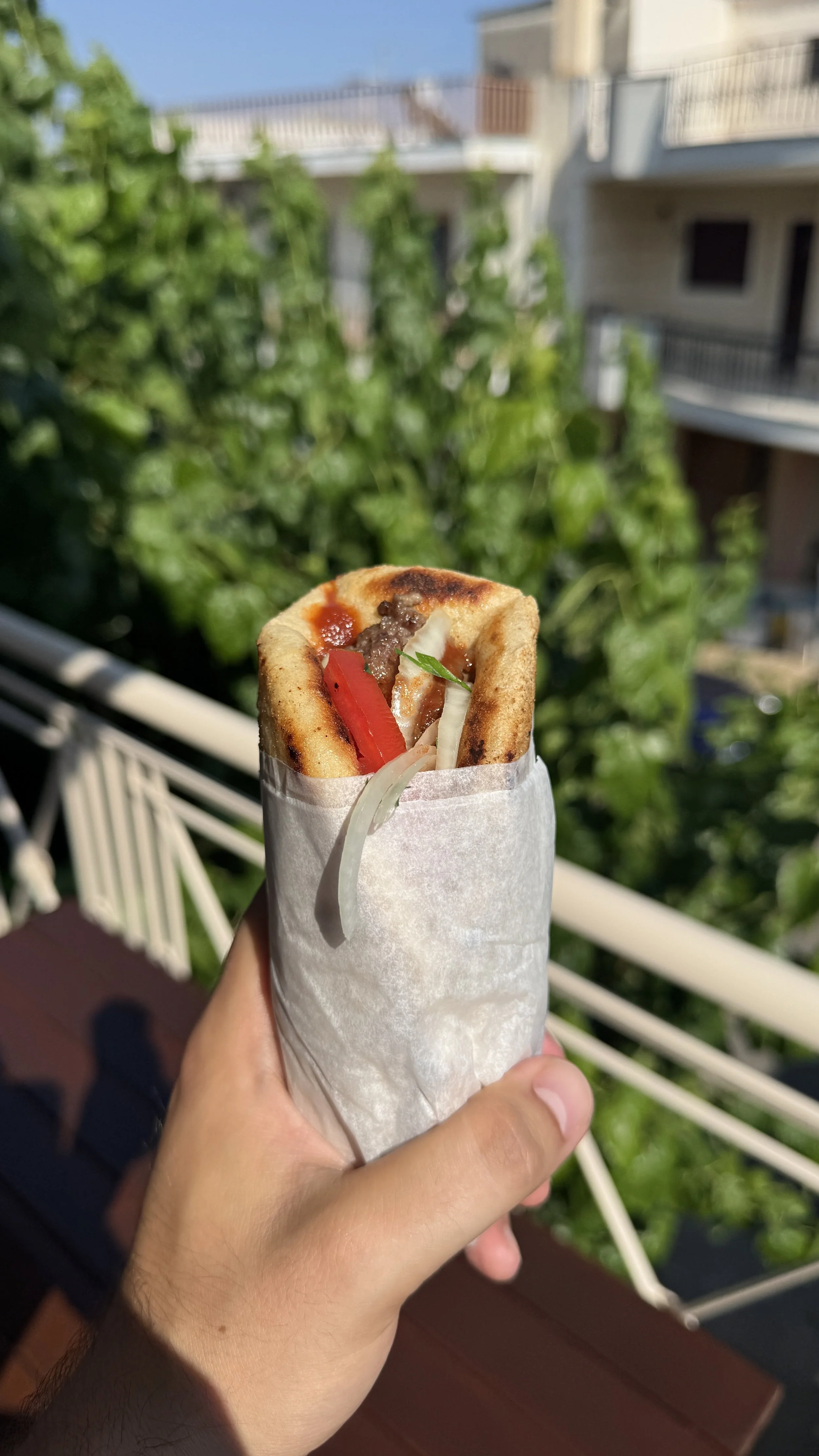
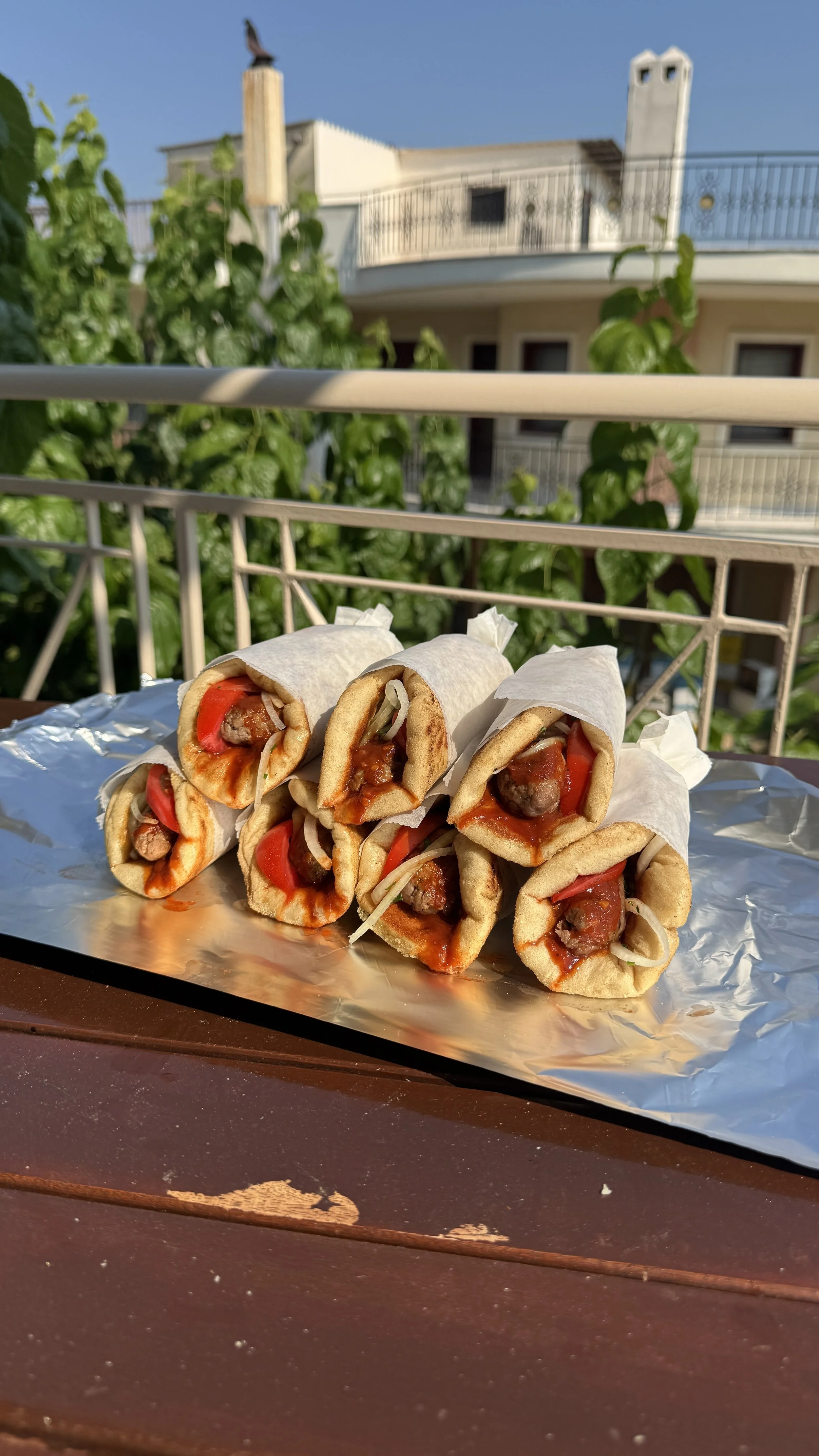
Makes 10 pites
Ingredients:
For the biftekia:
1kg beef mince with a good amount of fat (15-20%)
1 tbsp salt
5 tbsp olive oil
1 tbsp black pepper
For the pites:
10 pites (ideally Chasiotis, Stamatis, Europita, Kolios handmade or Alexakis)
2 tomatoes
1 onion
Small bunch of parsley
10 greaseproof paper sheets
For the tomato salsa:
Extra virgin olive oil
250g grated tomatoes or passata
1 tsp tomato paste
1 garlic clove
1 tsp chilli flakes
Paprika and any other spices of your choice
A splash of wine/cognac/brandy or similar
A knob of butter
1 tbsp honey
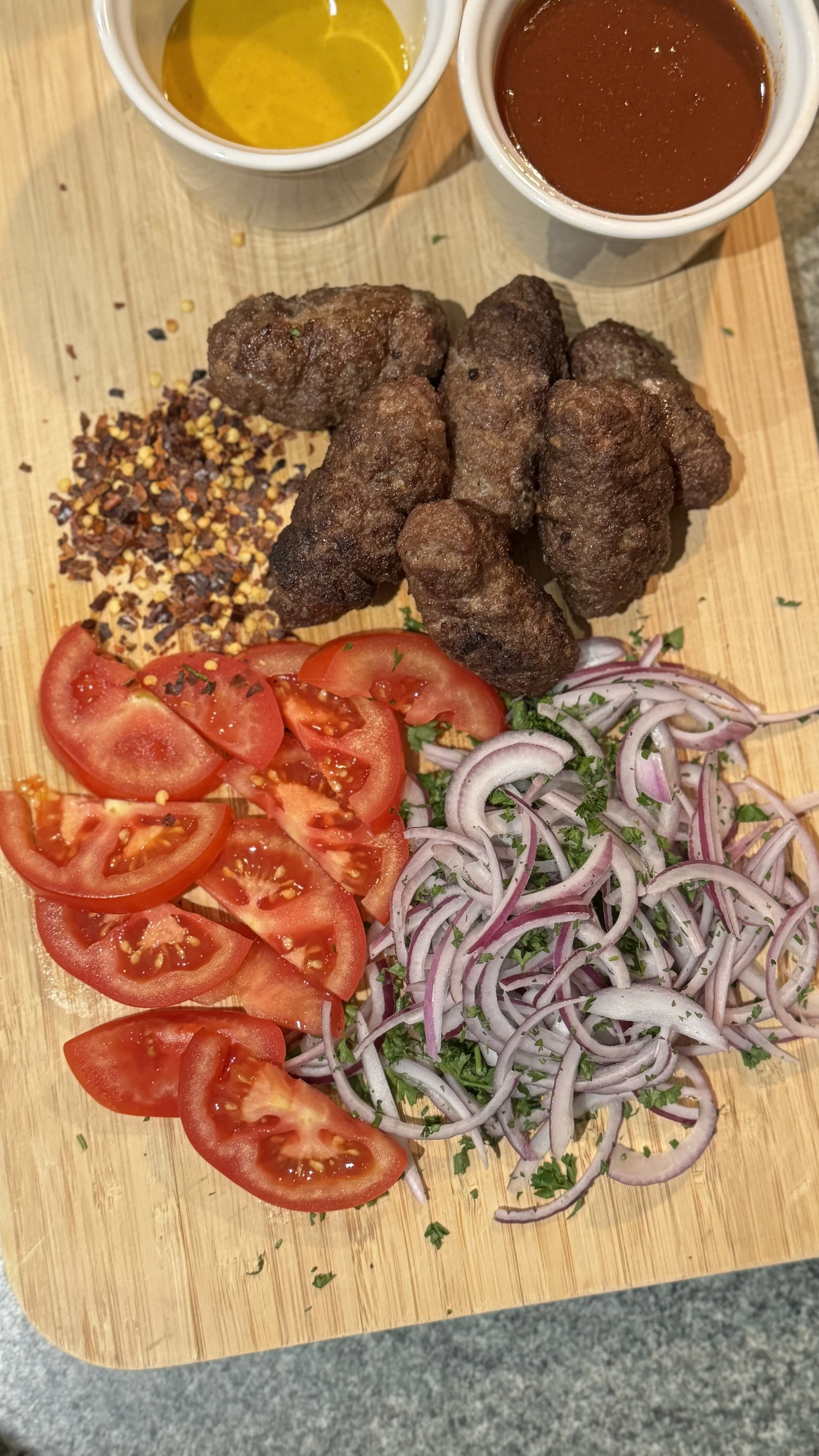
Extra condiments (optional):
Mustard
Chilli flakes
Strained yoghurt
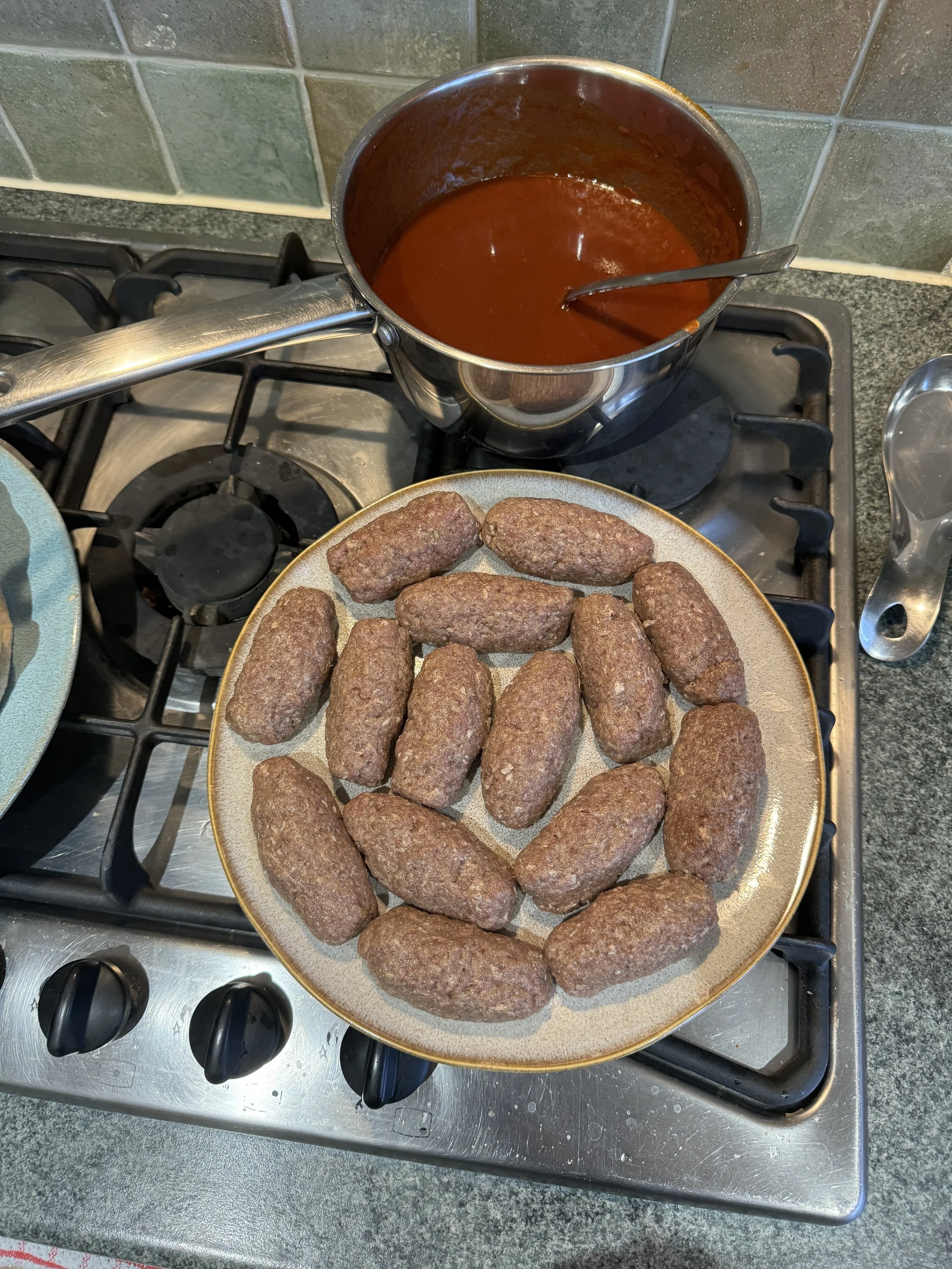
Method:
Making the salsa
Put a small saucepan on a low-medium heat, and add a couple of tablespoons of the extra virgin olive oil. Crush or finely chop the garlic and add it to the saucepan, allowing the oil to infuse and the garlic to gently soften for at least 15-20 minutes. If you are using any fresh/dried chilli or chilli flakes, add it at this stage too.
Once the garlic is soft and slightly golden, add in the rest of your spices and turn the heat up slightly. Cook for another 5-10 minutes, stirring regularly to avoid the spices catching too much at the bottom of the saucepan.
Deglaze with some alcohol, let it simmer away for a couple of minutes, then stir in the tomato paste and cook for another couple of minutes.
Add in your grated tomatoes or passata, using a little freshly boiled water to clear out anything left in the jar or tin. Season, bring to the boil and simmer gently for at least 20-30 minutes (the longer the better). If you wish, add more water to adjust the consistency to your liking. I also add a few other ingredients at this stage…
After the sauce has simmered, turn off the heat, stir in the honey, the butter, and season to taste with salt and black pepper. Set aside.
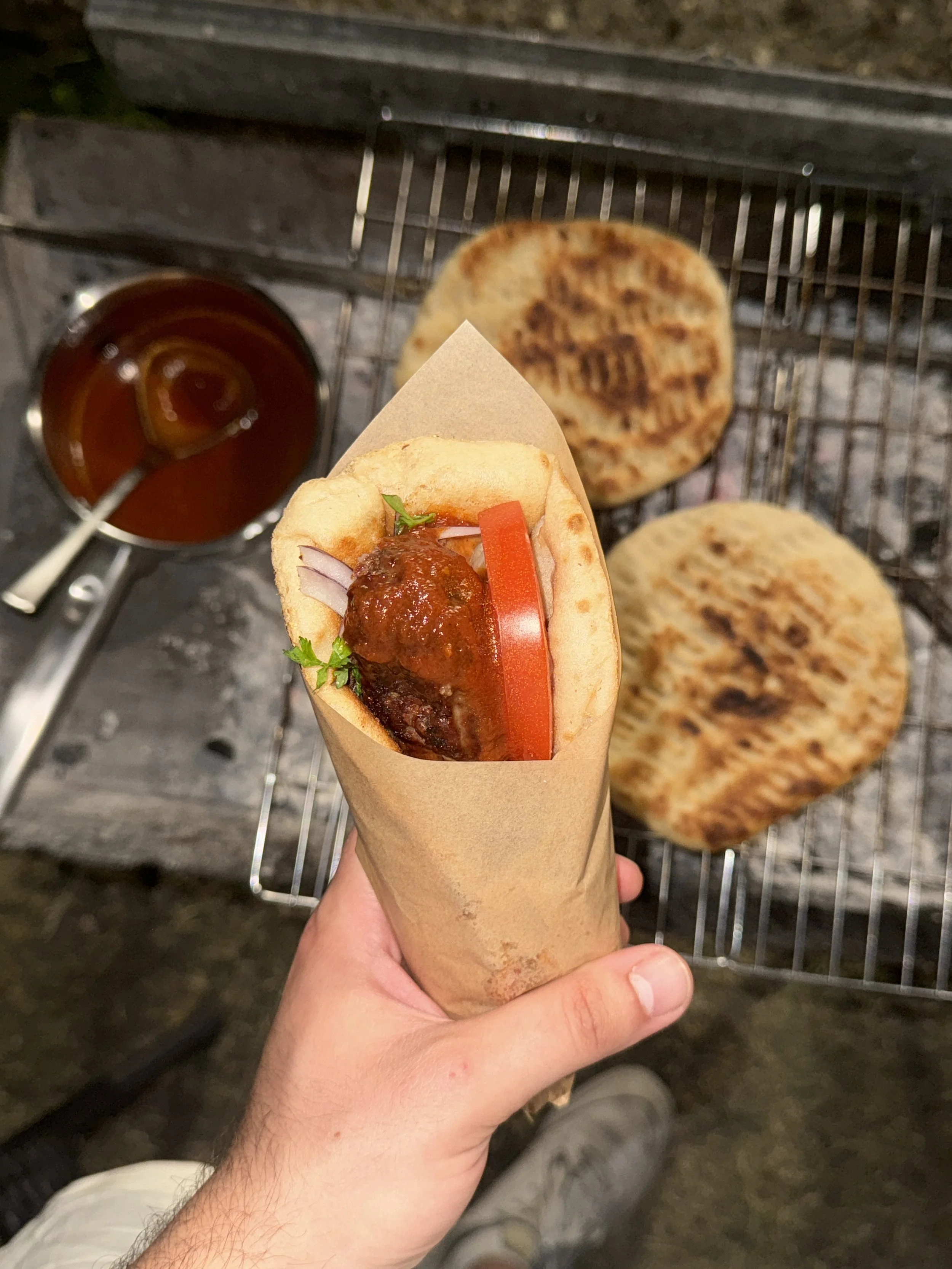
Making the biftekia and pites
Heat a large frying pan or griddle pan on a medium-high heat. OR Light your charcoal.
Empty your minced beef into a bowl. Add in the salt, the olive oil and pepper and combine well.
Divide the meat into golf ball-sized portions, rolling each one into a ball. Add 4 tbsps of olive oil to the pan.
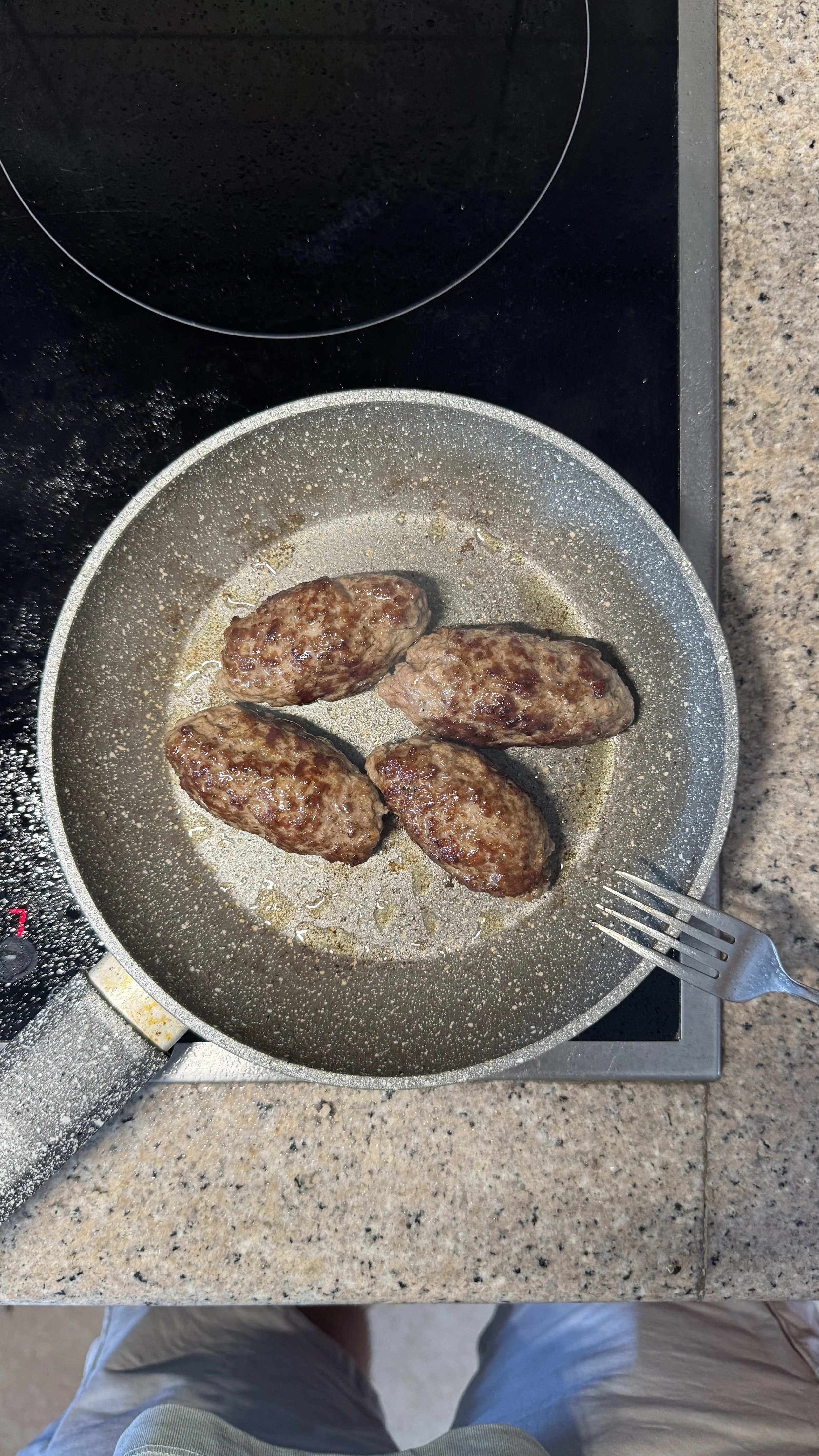
Roll the meatballs into cylindrical soutzoukakia-style shapes and add into the heated oil OR onto the barbecue.
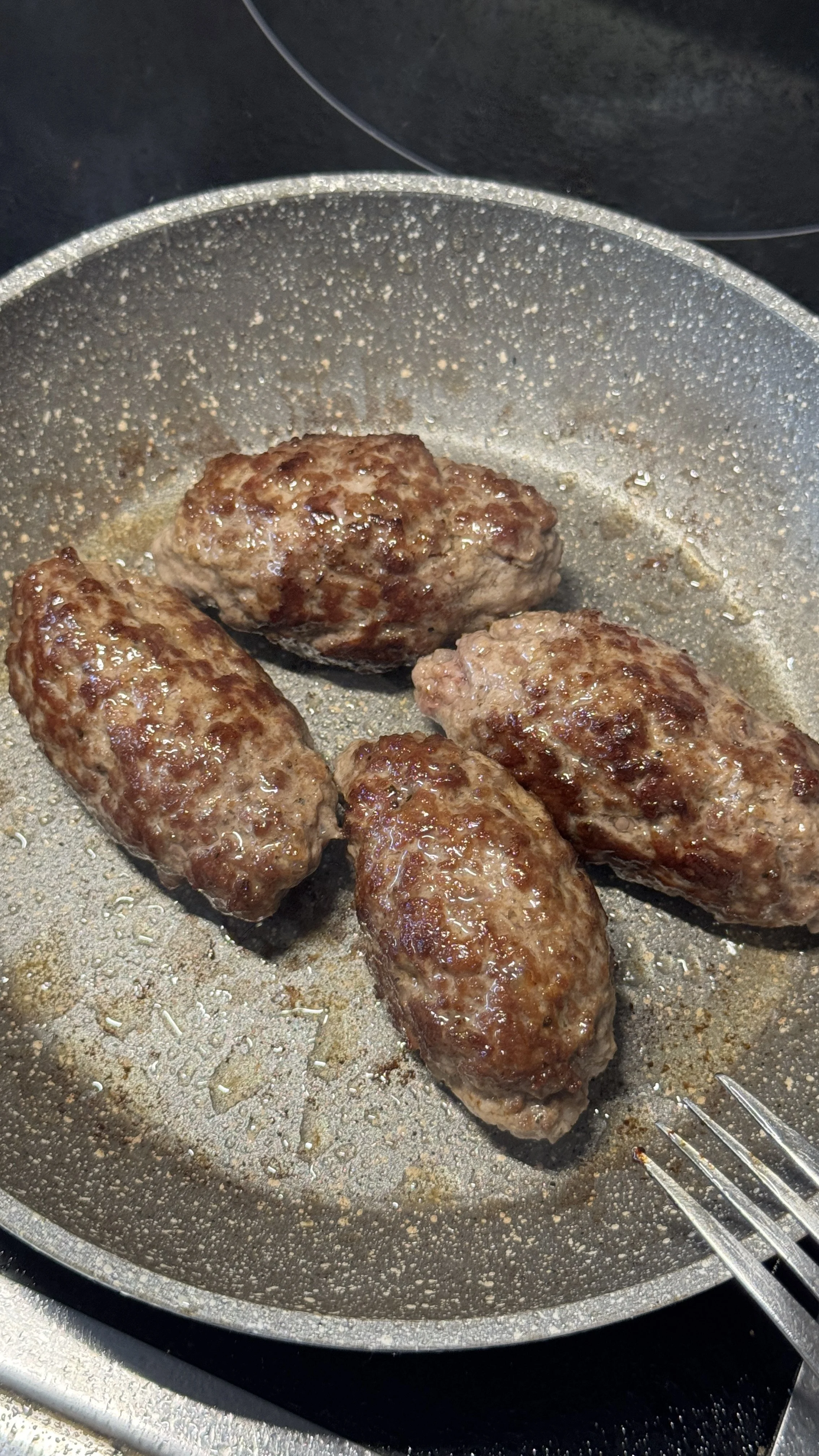
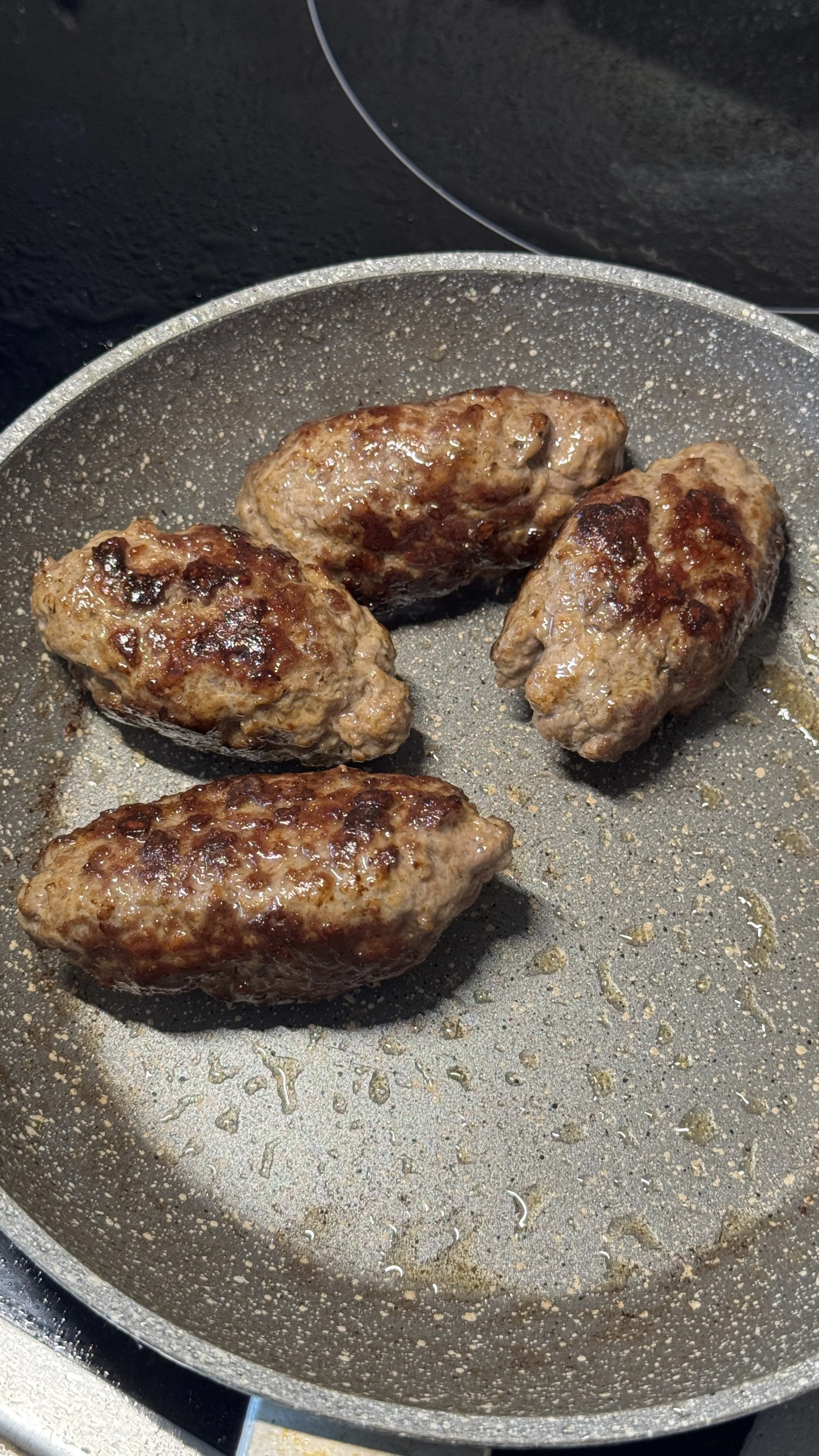
Shallow fry/barbecue grill the biftekakia for 3-4 minutes on each side until brown all over, turning the heat down slightly if the biftekia are starting to catch. The biftekia are cooked once they start to turn a little ‘bouncy’ to touch, rather than mushy or soft – you’ll notice as you turn them over.
While the biftekia are cooking you can also cook your pita breads. Place each pita on top of the biftekia and lightly press down so that the pita can absorb some of the juices from the meat. Sprinkle each pita with cold water just before cooking (in a separate pan if indoors) for 2 minutes one each side, until golden-brown and fluffy.
Place the pites on a wire rack to avoid them going soggy and transfer the biftekia to a tray to avoid them overcooking and drying out.
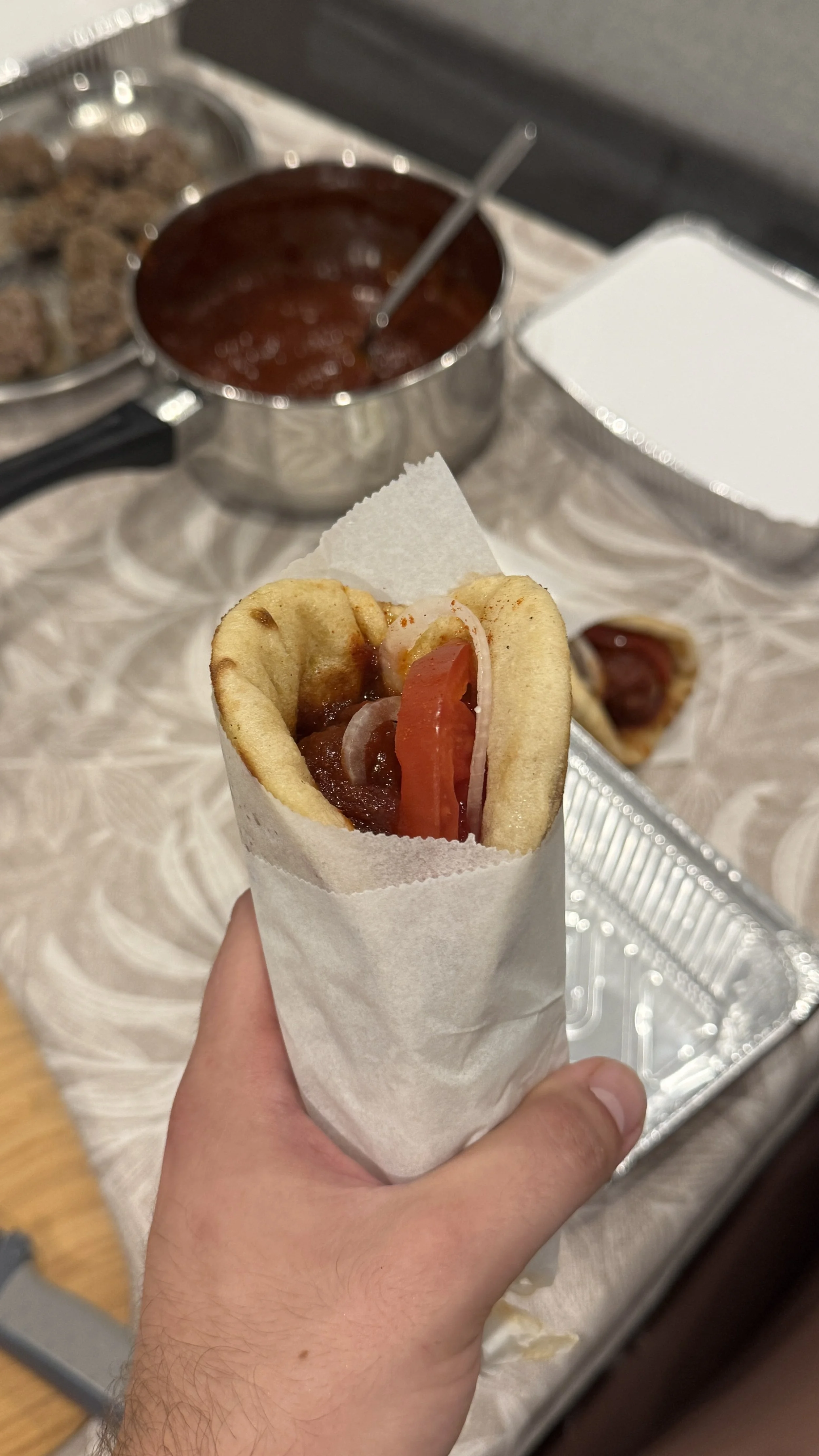
Wrapping the pita/tylichto
Prepare your salad: trim the onion and tomatoes. Cut the tomato in half and cut into half moons, about half a centimetre thick. Cut the onion in half and slice into half moons, as thinly as possible. Give the onions a mix with your hands to separate the segments.
Finely chop a small bunch of parsley and mix into the sliced onion, or serve separately if you prefer.
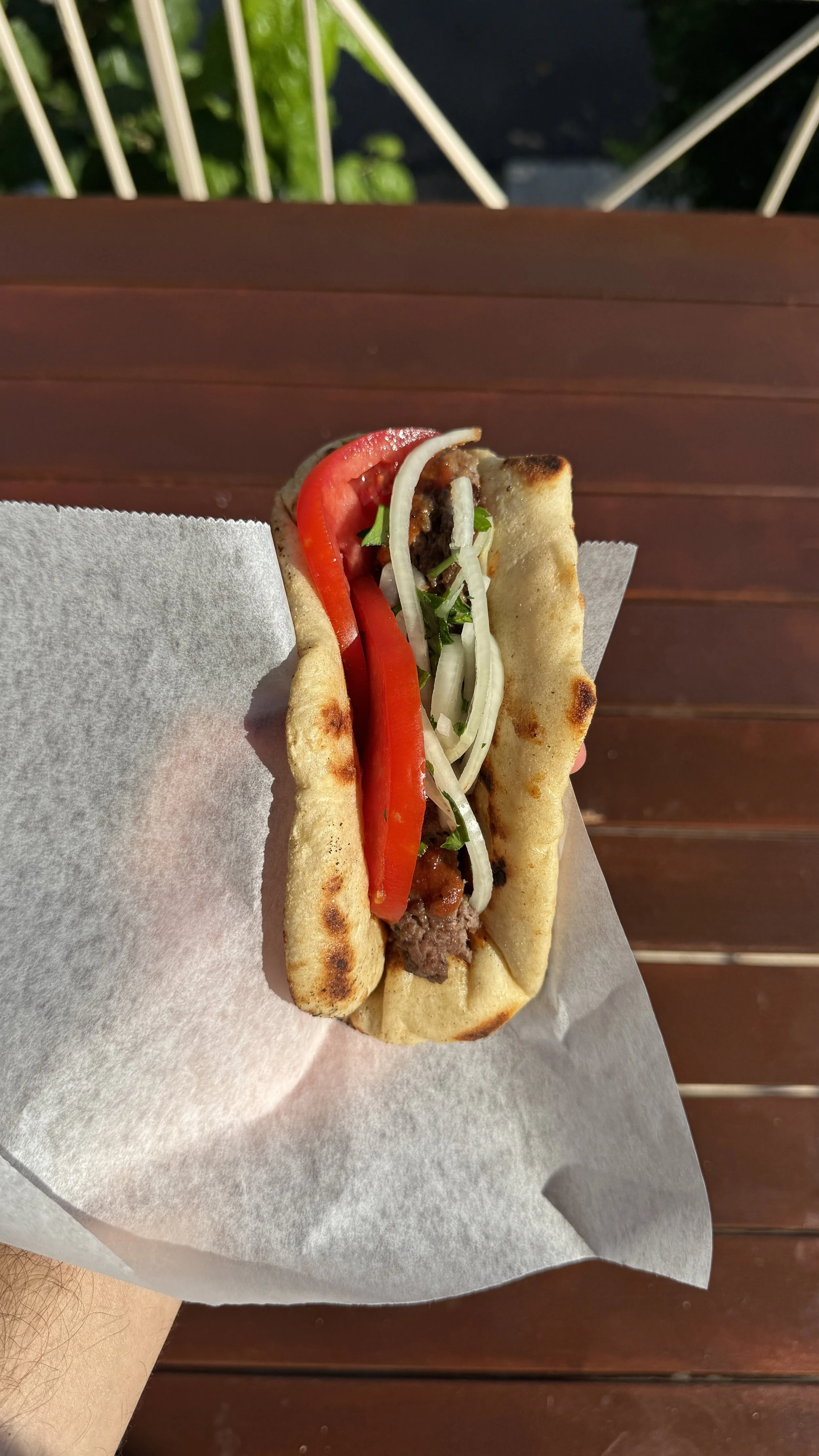
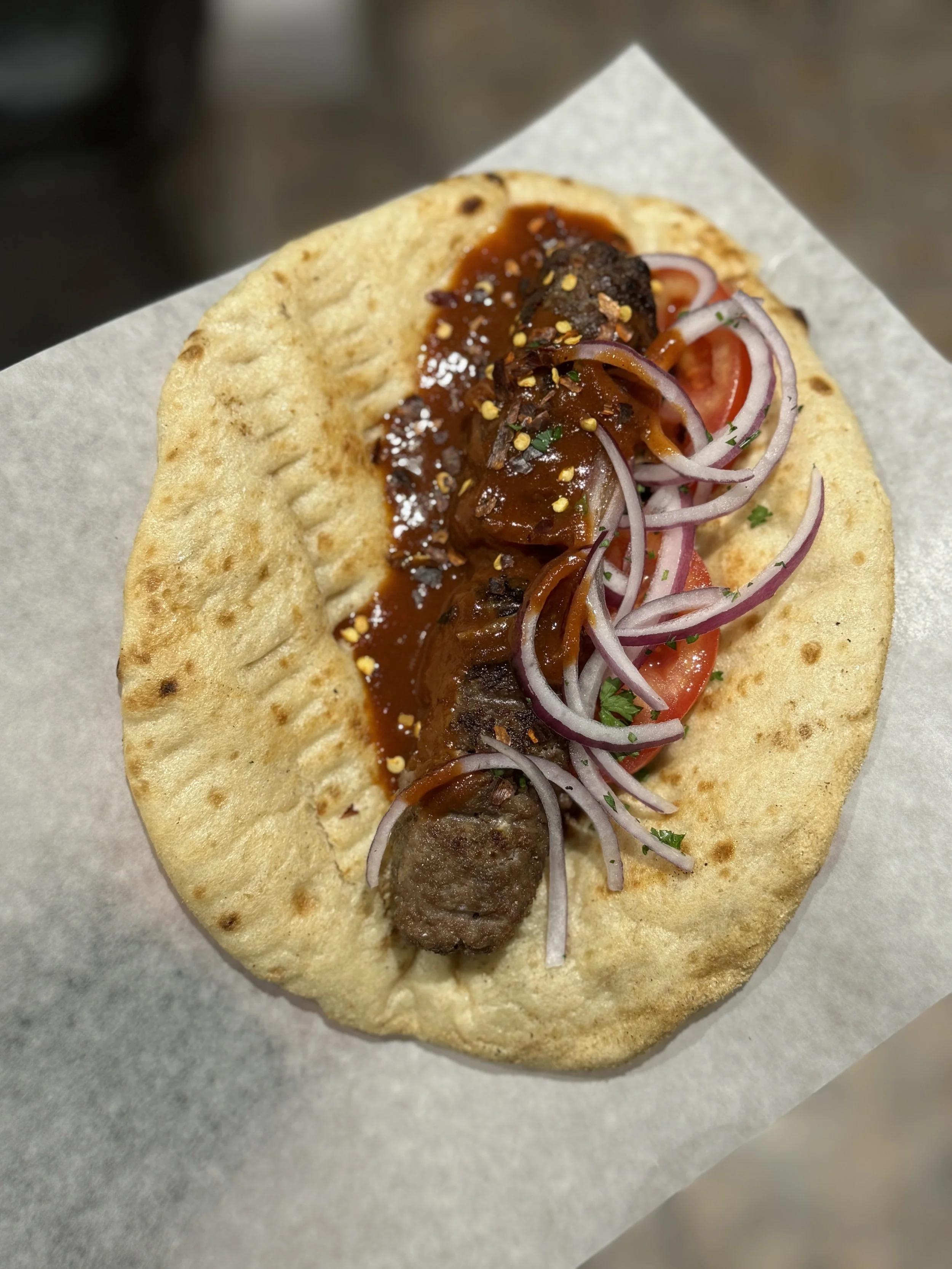
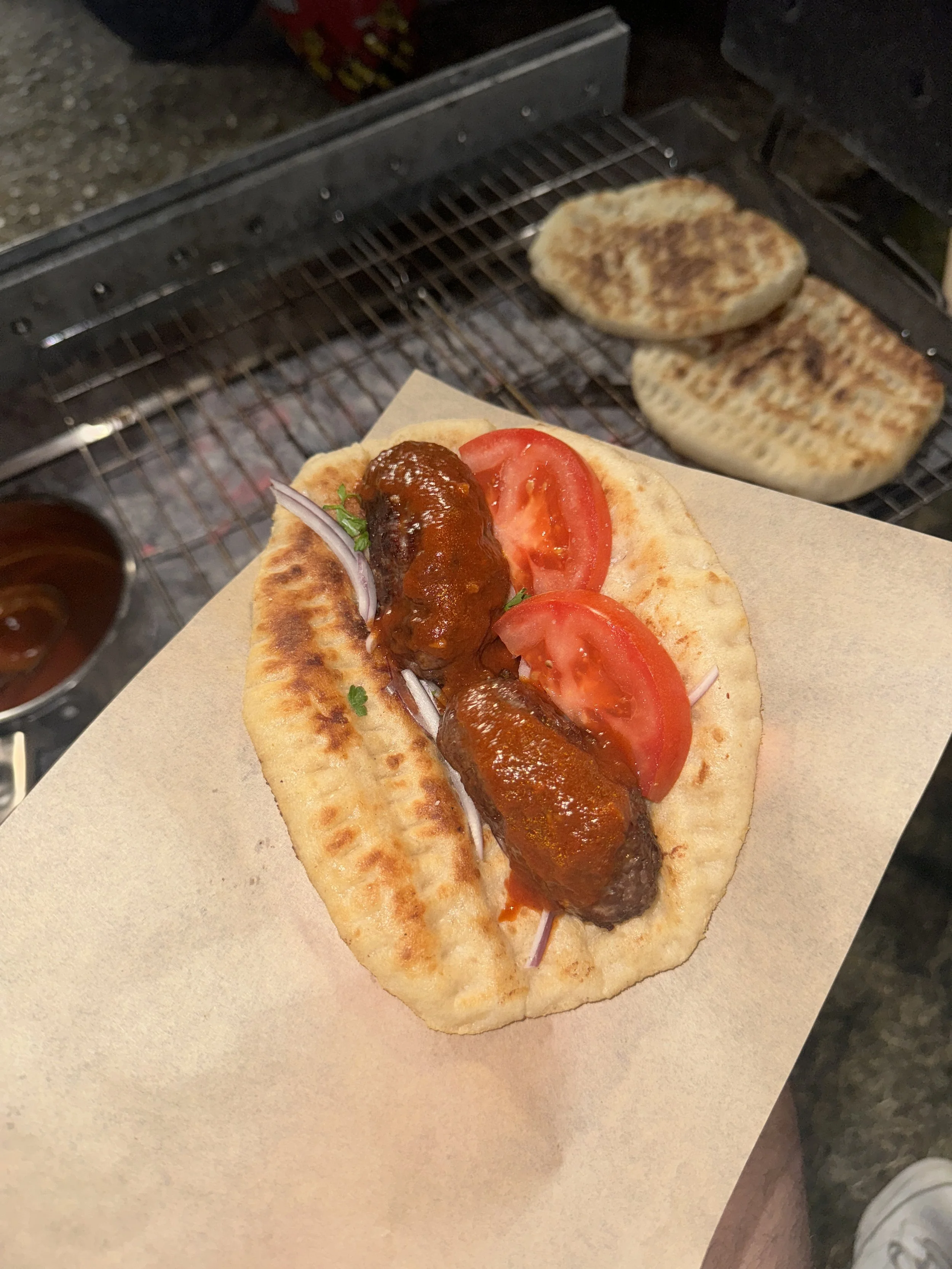
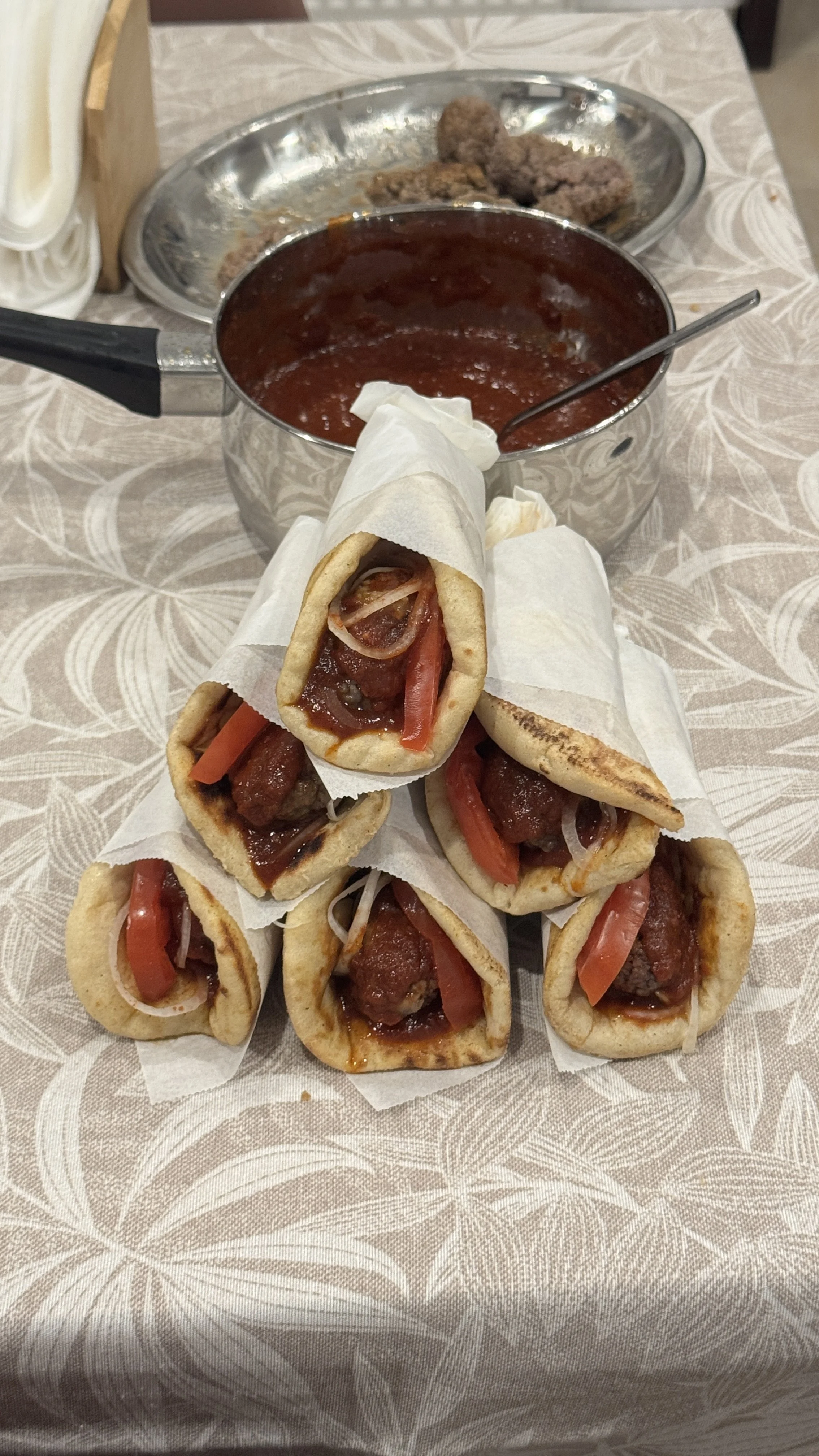
Take a sheet of greaseproof paper and, holding it ‘landscape’, place the pita in the top right hand corner. Lightly brush a little of the salsa around the middle of the pita, from the top to the bottom.
Add the onions next, as the heat helps them to soften and sweeten, and creates a buffer that prevents any extra condiments from melting from the heat. Add in two of the biftekia so that they form a line down the middle of the pita, from the top to the bottom. Spoon over some more of the salsa on top of the biftekia, with a little more on the ‘top’ bifteki than the ‘bottom’ one (to account for gravity as you hold it and eat it).
Then, add 2-3 tomato slices alongside the biftekia, tucking them in slightly.
If you like, add some mustard or yoghurt too at this stage. Then add in any extra chilli flakes you might be using, or any separate parsley. You may add oregano if you wish.
Sprinkle with salt and paprika.
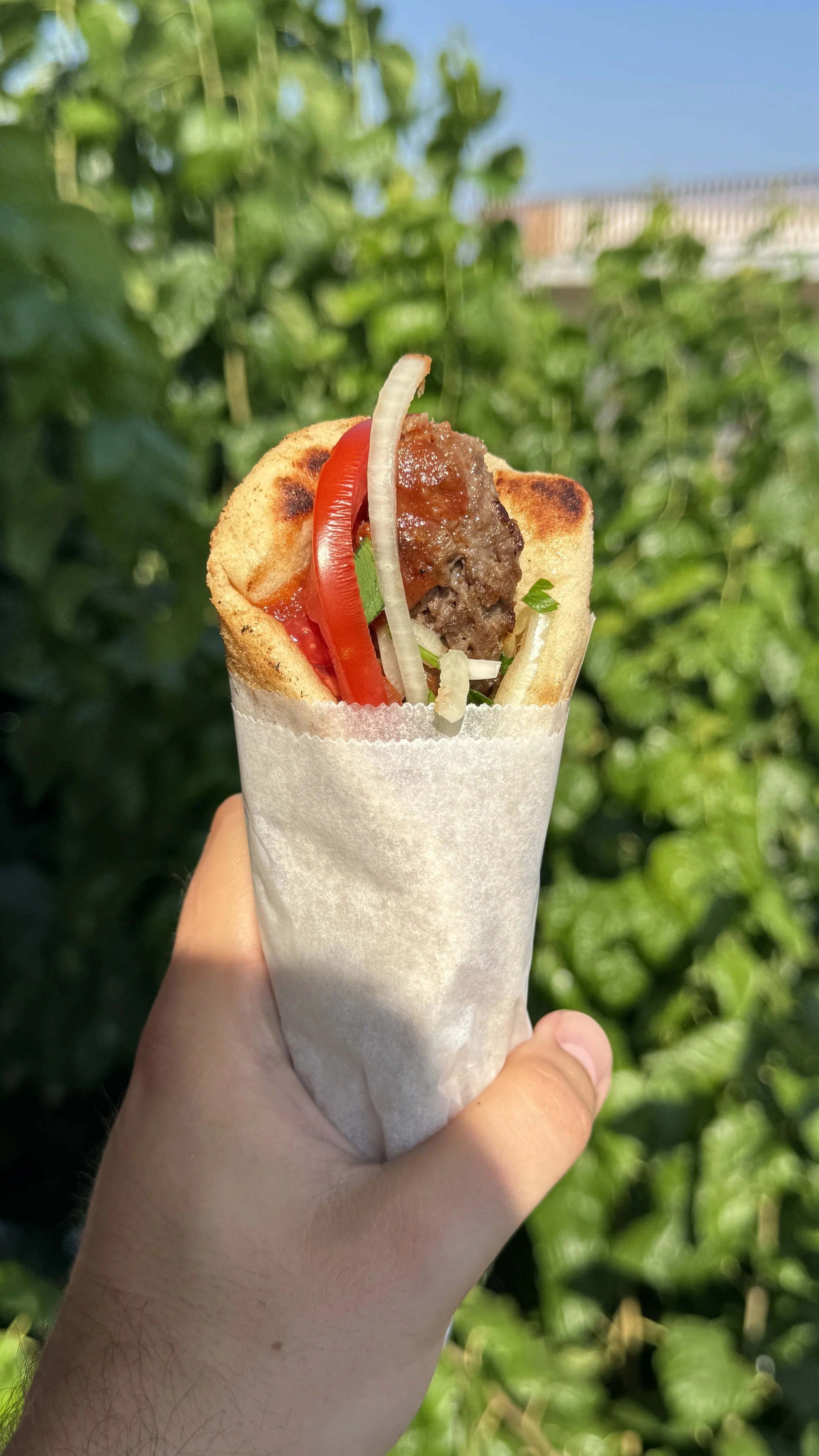
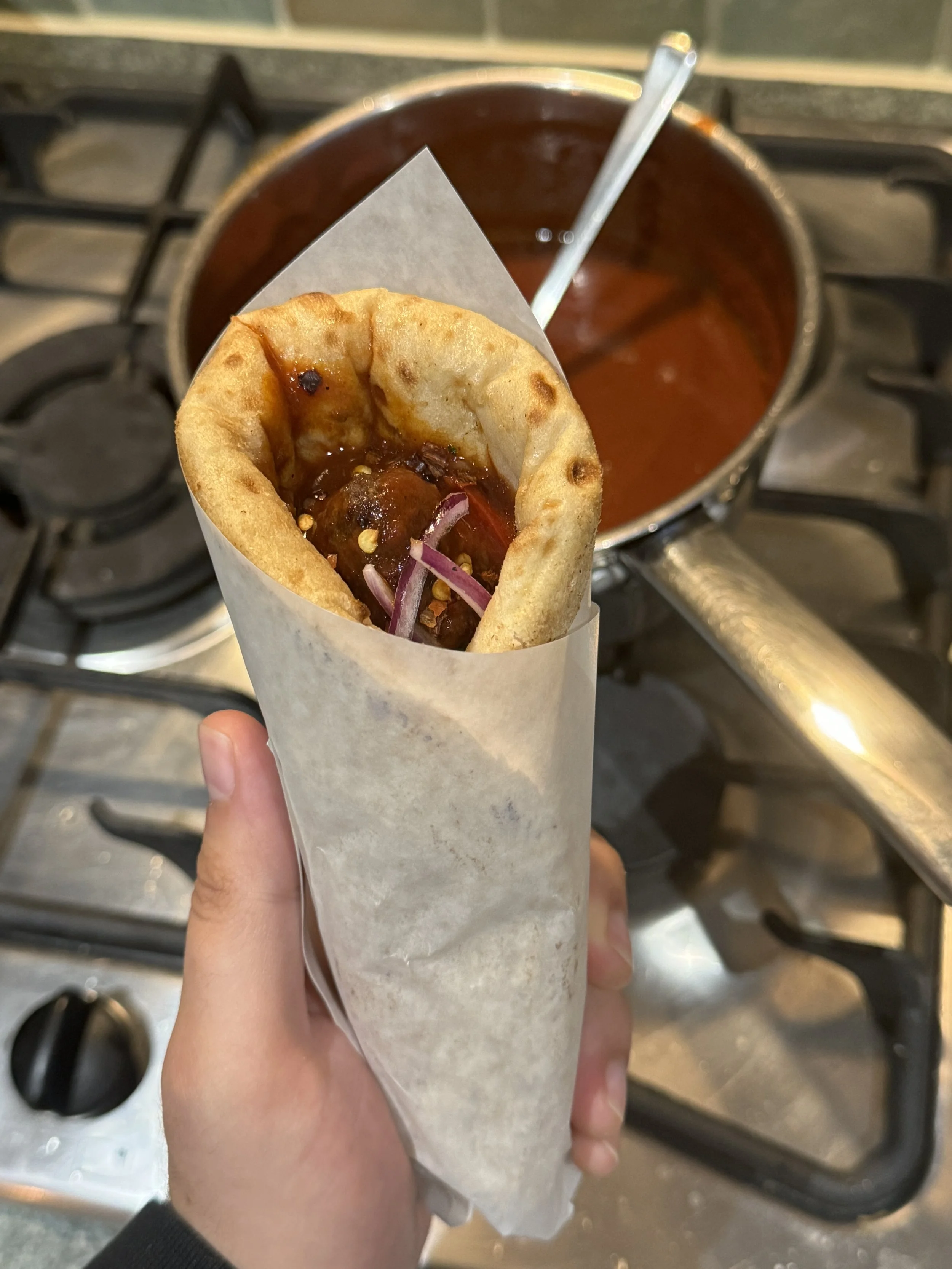
Now, to wrap the pita, hold the pita in the greaseproof paper (in the same position in the corner), and begin closing your hand to fold and wrap the pita in on itself. As you do this, use your other hand to push and roll the loose bit of the greaseproof paper around the pita, slowly removing your initial holding hand out of the way, so you are essentially transferring the pita from one hand to the other.
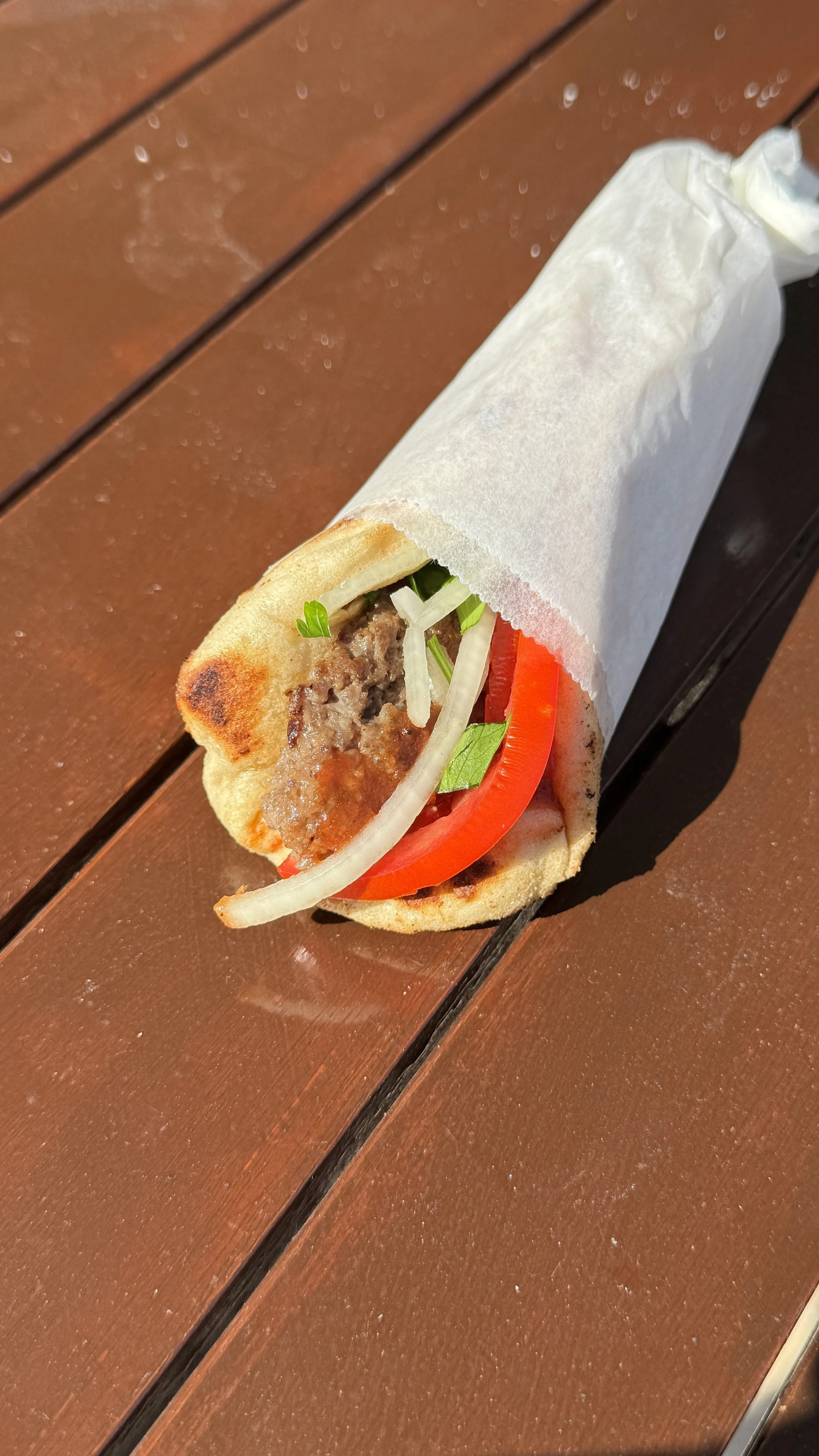
Once you’ve tightly and evenly wrapped the pita in the greaseproof paper, flatten the loose bit of the sheet at the bottom and then fold it to the right, back around to the front, and then back in on itself, lightly pushing the loose bit into the base of the pita with your thumb. Don’t twist the greaseproof paper too much to avoid tearing it.
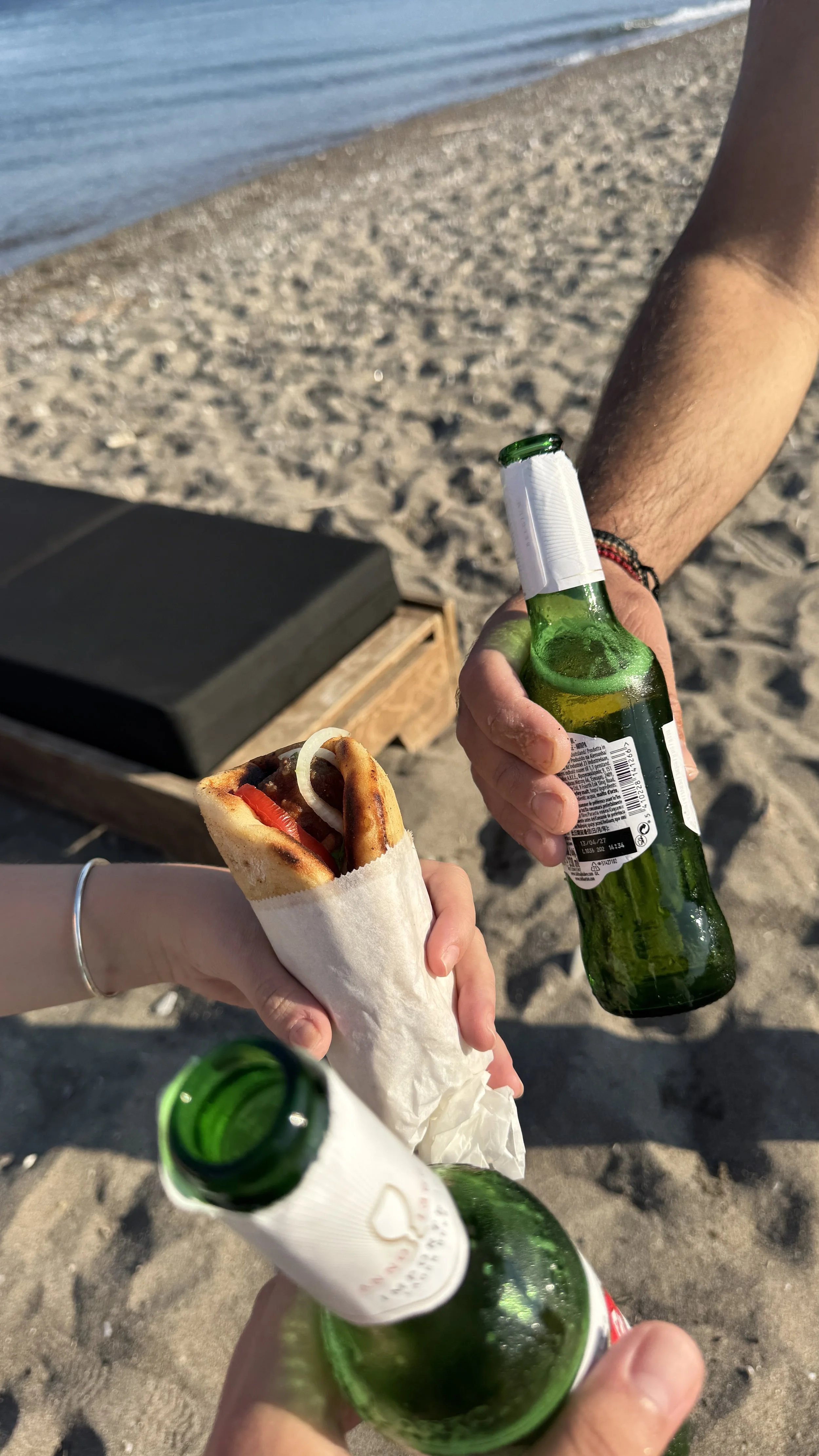
Take to the beach.
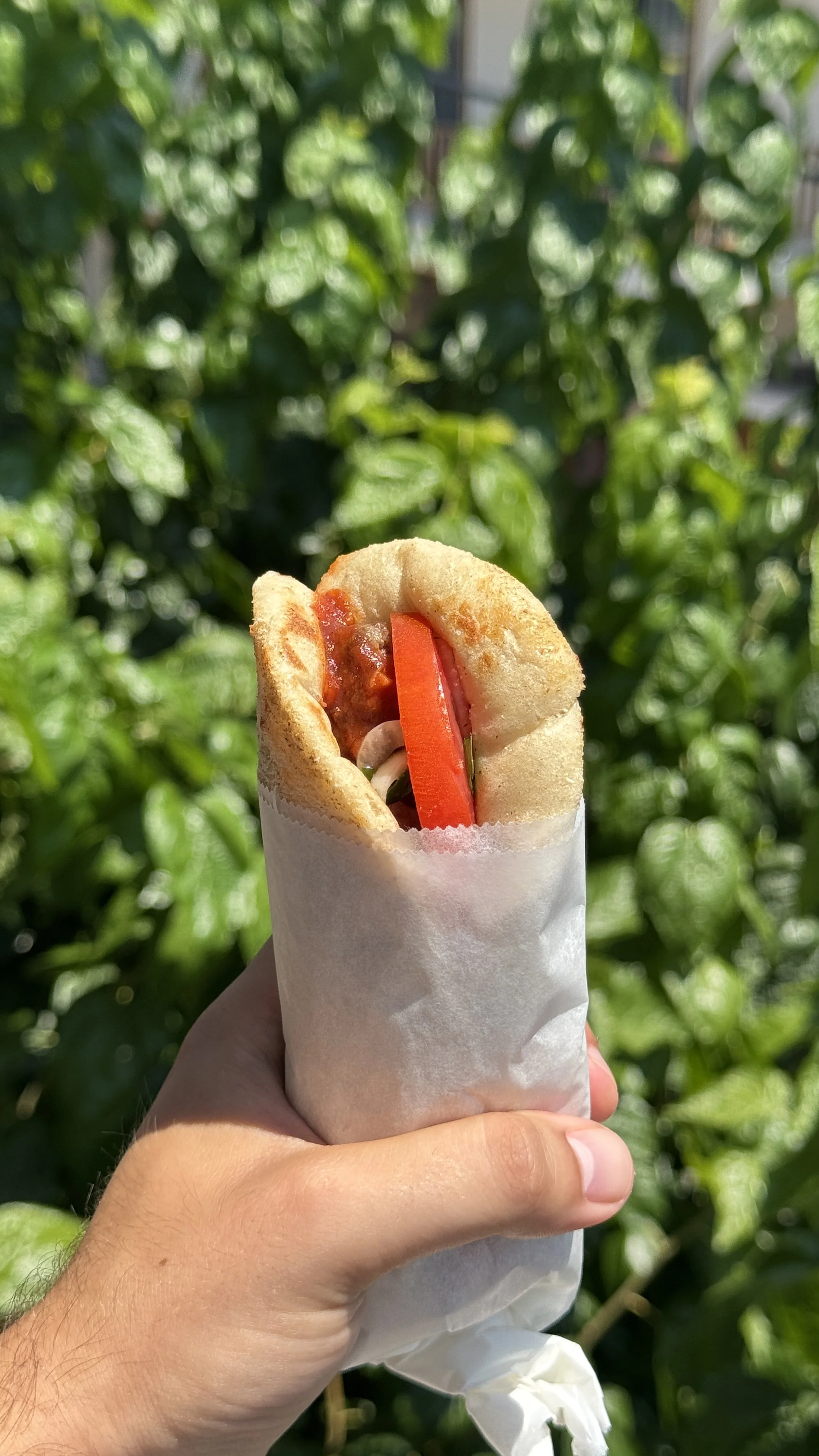
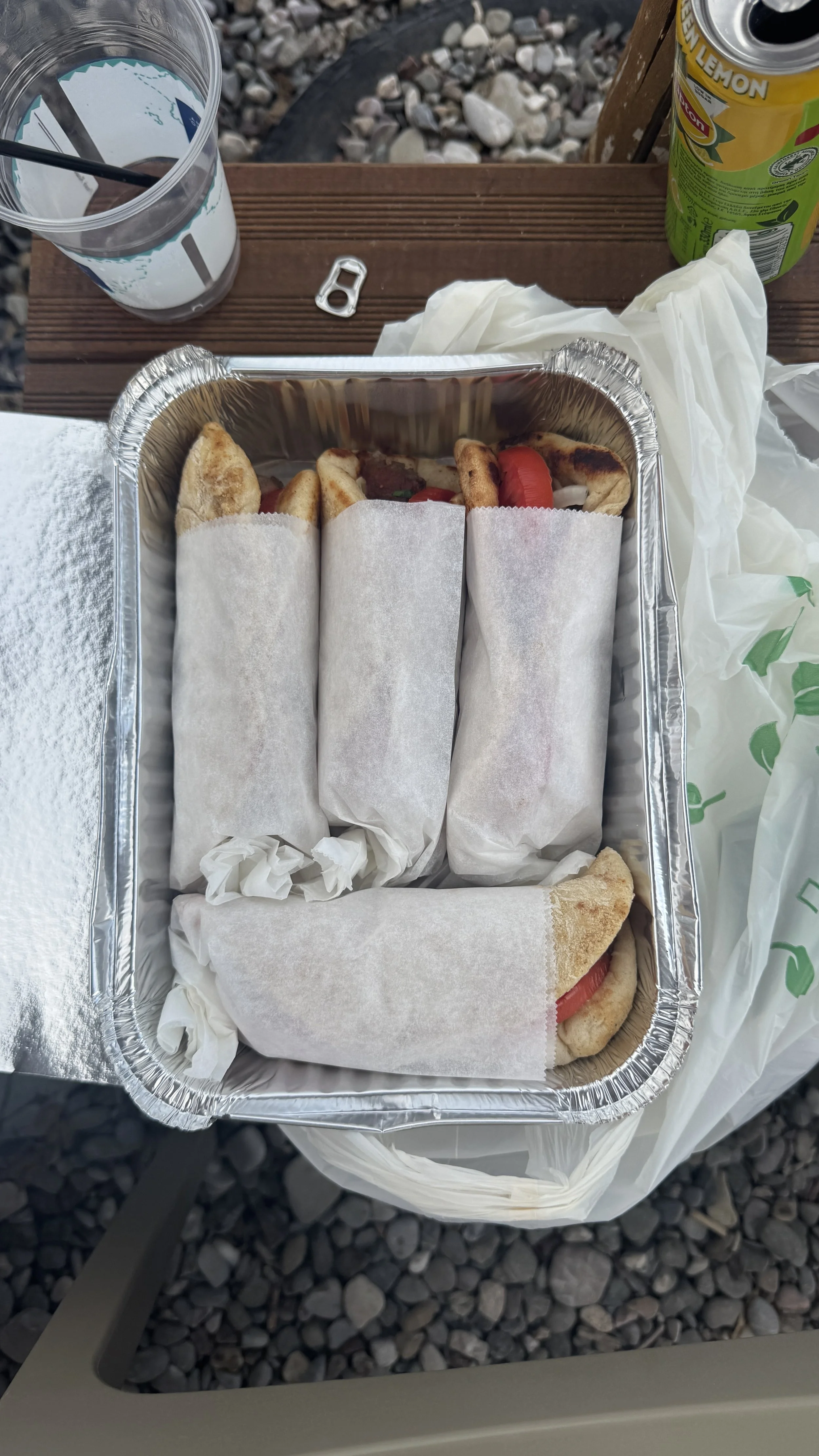
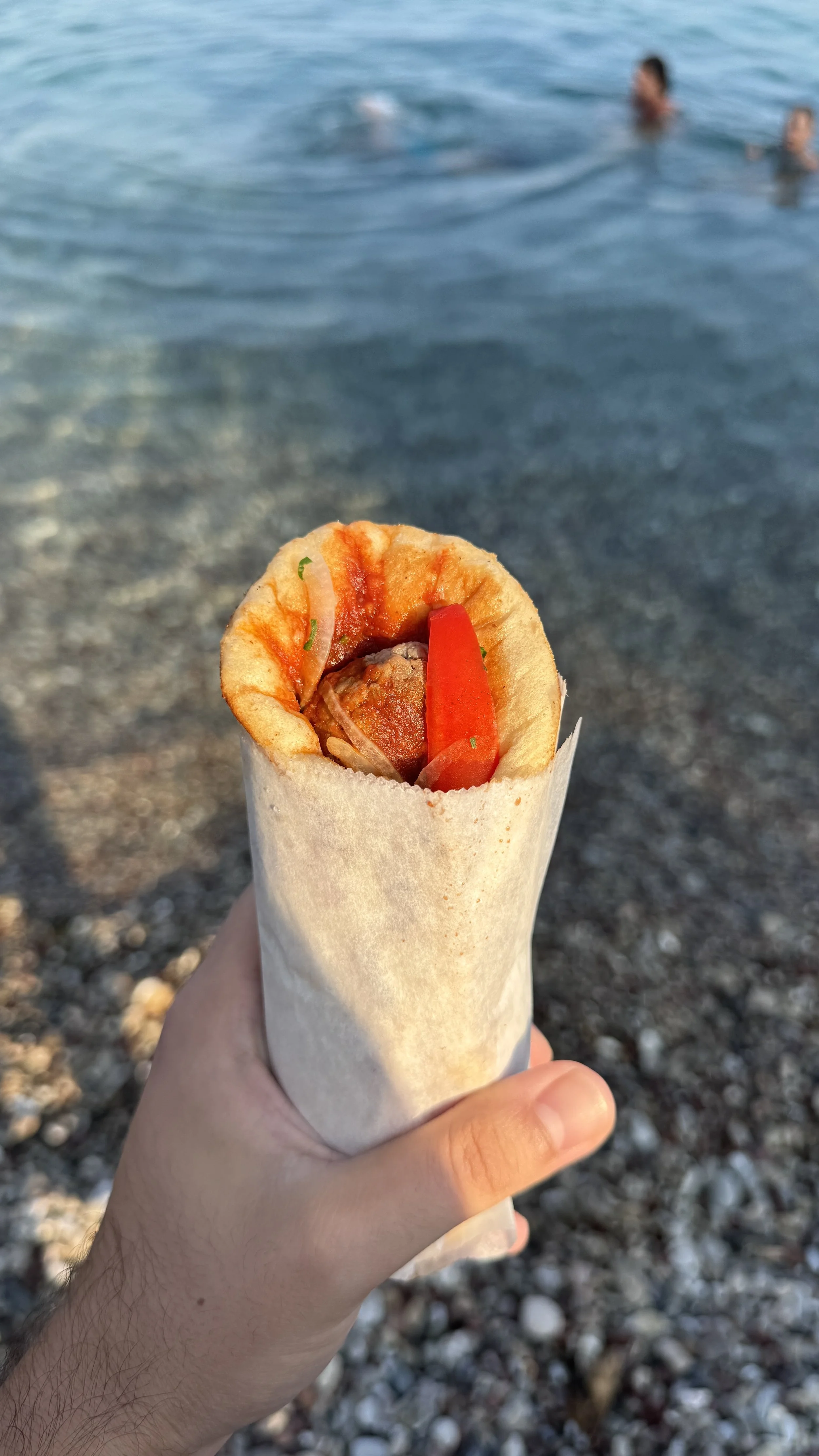
My grandmother’s recipe for traditional village olive breads, the way her mother would make them in mid-20th Century Cyprus.