

Chicken giouvetsi: chicken with kritharaki / manestra

Giouvetsi, kritharoto, kritharaki, manestra or orzo?
Whether you call it giouvetsi, kritharaki, kritharoto, manestra, or something else, giouvetsi is one of the most popular and relatable of Greek comfort foods: patiently-cooked, silky, rich, aromatic, tomatoey kritharaki (aka manestra; orzo pasta), usually paired with tender, slow-cooked meat like chicken/rooster, lamb/goat, beef/veal, or similar – in this case, chicken.
While kritharoto is usually entirely cooked in the casserole dish, with any meat and vegetables chopped and cooked through, giouvetsi is typically also baked in the oven, with larger cuts of meat. ‘Kritharaki’ and ‘manestra’ refer to the pasta specifically (orzo, the grain-shaped pasta).
About the chicken giouvetsi recipe
In this recipe you’ll find a step of mine that you won’t typically see in other chicken giouvetsi recipes, which helps to give a crispy skin result and adds another layer of flavour and texture, without drying the chicken (and you don’t need to add stock). When you render the chicken skin properly (i.e. patiently, starting in a cold pan), you don’t just get that crispy result, you also give the recipe a huge head start of flavour in which you cook the remainder of the ingredients; the onion and the kritharaki soak it all up and the whole dish becomes a whole lot tastier.
It might take a fair bit longer, but if you have the time, definitely don’t rush the first step – just make sure you don’t burn or blacken anything at this stage as it will ruin the flavour of the kritharaki too, which you’ll ideally be cooking in the same pan as the meat. Don’t worry about cooking the chicken through when you first fry it as it gets an hour in the oven later too. Cooking the chicken in the kritharaki means that it comes out of the oven moist and tender, falling off the bone in parts and with the aromas of the spices you add to the kritharaki running throughout.
As well as kritharaki you can also use hilopitaki (the small square-shaped Greek village pasta) for this same recipe.
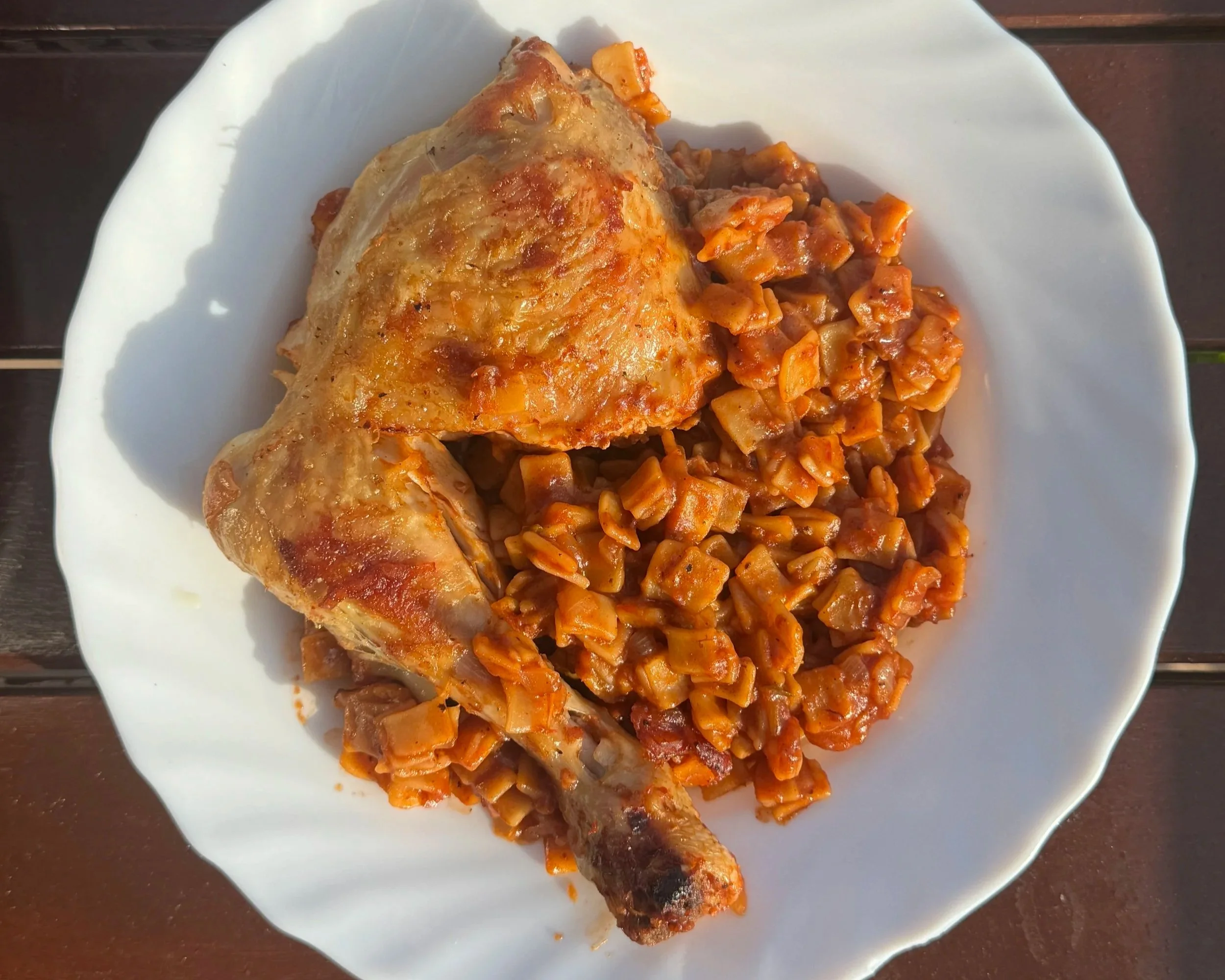
Also works with hilopitaki.
Add your email
Subscribe to the Souvlakination newsletter (Nostos) to see new recipes and exclusive content.
How to make chicken giouvetsi

Serves 4-6 people
Ingredients:
1 whole chicken, cut into 6 or 8 pieces
300g (2 cups) of kritharaki (aka manesta, orzo pasta)
OR hilopitaki (not to be confused with longer hilopites)4 tbsp extra virgin olive oil
2 onions, finely diced
1-2 cloves of garlic, finely chopped or grated
1 small cinnamon stick or 1 tsp ground cinnamon
1/2 tsp ground allspice
1/4 tsp ground cloves
1/4 tsp ground nutmeg
1 heaped tbsp tomato paste
100ml wine
500g tomato pulp (~2 tomatoes, grated or blended)
2 bay leaves
1 tbsp oregano
1-2 tbsp honey
Method:
In a large, deep frying pan (oven-proof if you have one), generously season and place the chicken legs skin-side down before putting the pan on a low-medium heat. After 10 minutes, once you see that the chicken skin has started to release some juices and has turned a pale golden colour, turn the heat up to a medium and gently render the skin for another 10 minutes. Finally, turn up the heat up to a medium-high and fry for another 5-10 minutes, skin-side-down, until golden and crisp.
Turn the chicken pieces over to seal for another 5-10 minutes until golden-brown all over, turning the heat down slightly if you see parts of the bottom of the pan are turning brown (don’t burn or blacken anything as you will also cook the kritharaki in the same pan).
Remove the chicken from the pan and set aside, and turn the heat down to a medium. Pre-heat your oven to 180 degrees Celsius (fan).
In the same pan, add the 4 tbsp of olive oil to the chicken fat, then add in the finely diced onion. Season and sauté for 5 minutes until softened, translucent and starting to colour. Add in the garlic and continue frying for a couple of minutes.
Add in the kritharaki, stir well, and sauté for 5 more minutes, stirring regularly. (This steps helps prevent the kritharaki from sticking and clumping later.)
Stir in the cinnamon, allspice, cloves and nutmeg. Then, stir in the tomato paste and fry it off for a couple of minutes. Meanwhile, discard the stem and blend the tomatoes into a smooth pulp.
Deglaze with the wine and let it bubble away for a couple more minutes, then add into the tomato pulp, bay leaves and oregano.
Pour in 600ml of freshly boiled water together with the juices from the chicken you set aside earlier. Stir well, bring to the boil, and remove from the heat. Then, thoroughly stir in the honey and season to taste. (If you like a glossier giouvetsi, stir in another drizzle of extra virgin oil – or, if you want to cheat – a knob of butter.)
If your pan isn’t oven-proof, empty the kritharaki mixture into a lightly-oiled medium baking dish. Nestle the chicken pieces on top of the kritharaki so that they are at least half – but not fully – submerged.
Drizzle with olive oil, lightly season, and place in the oven. Cook uncovered for an hour.
Allow to cool for 10 minutes and serve with grated graviera, kefalotyri, feta or similar, and some strained sheep’s yoghurt on the side.
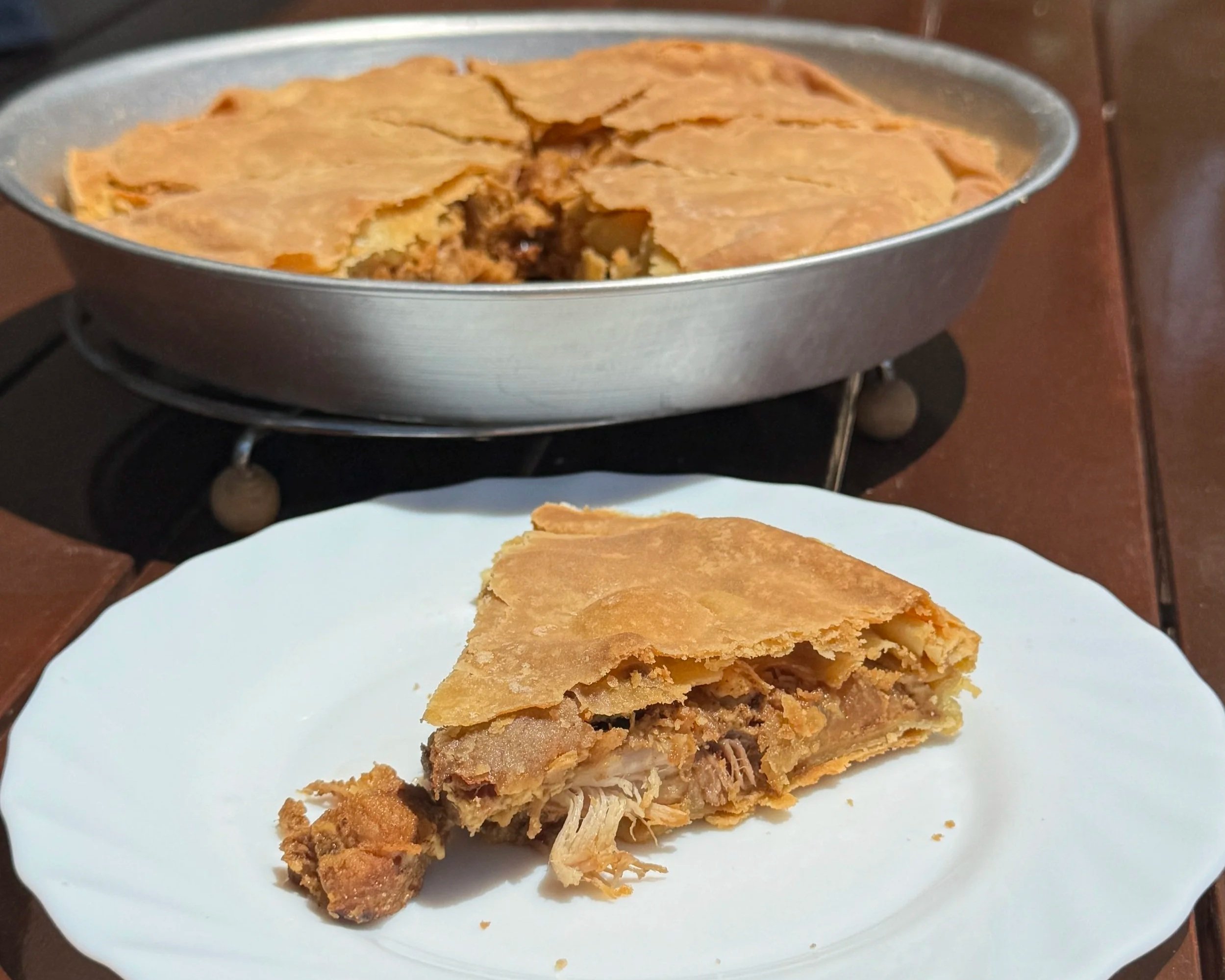
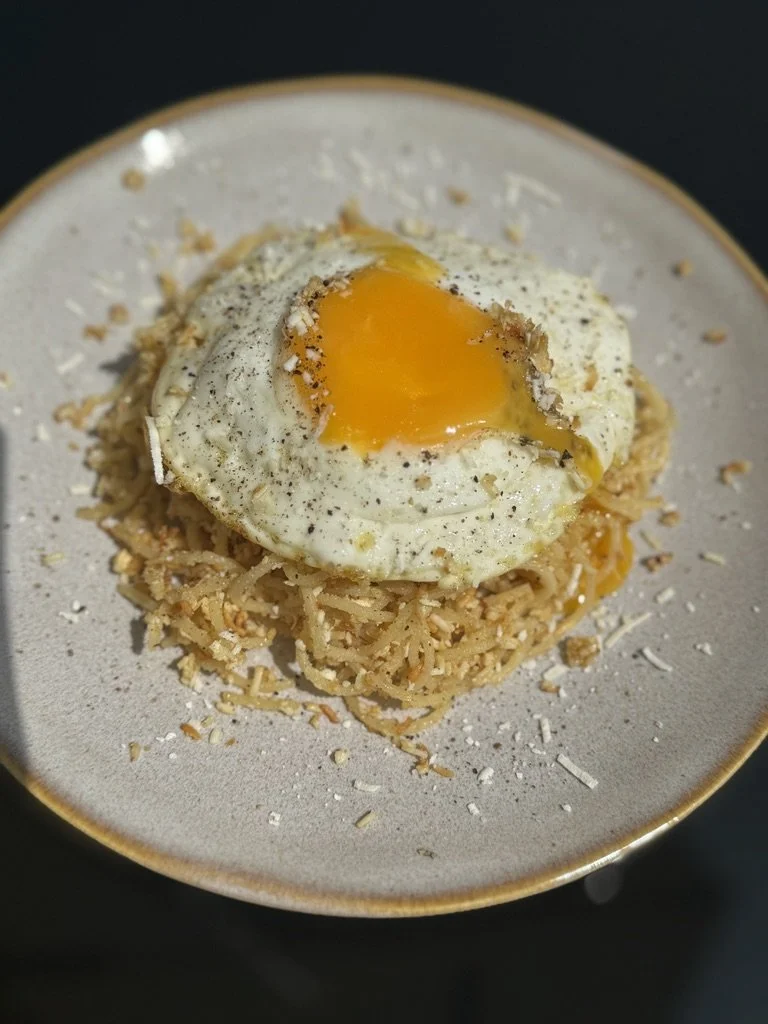
Chicken giouvetsi: chicken with kritharaki/manestra/orzo pasta baked in the oven.