

Ikarian Soufiko Recipe: vegetable stew from Ikaria
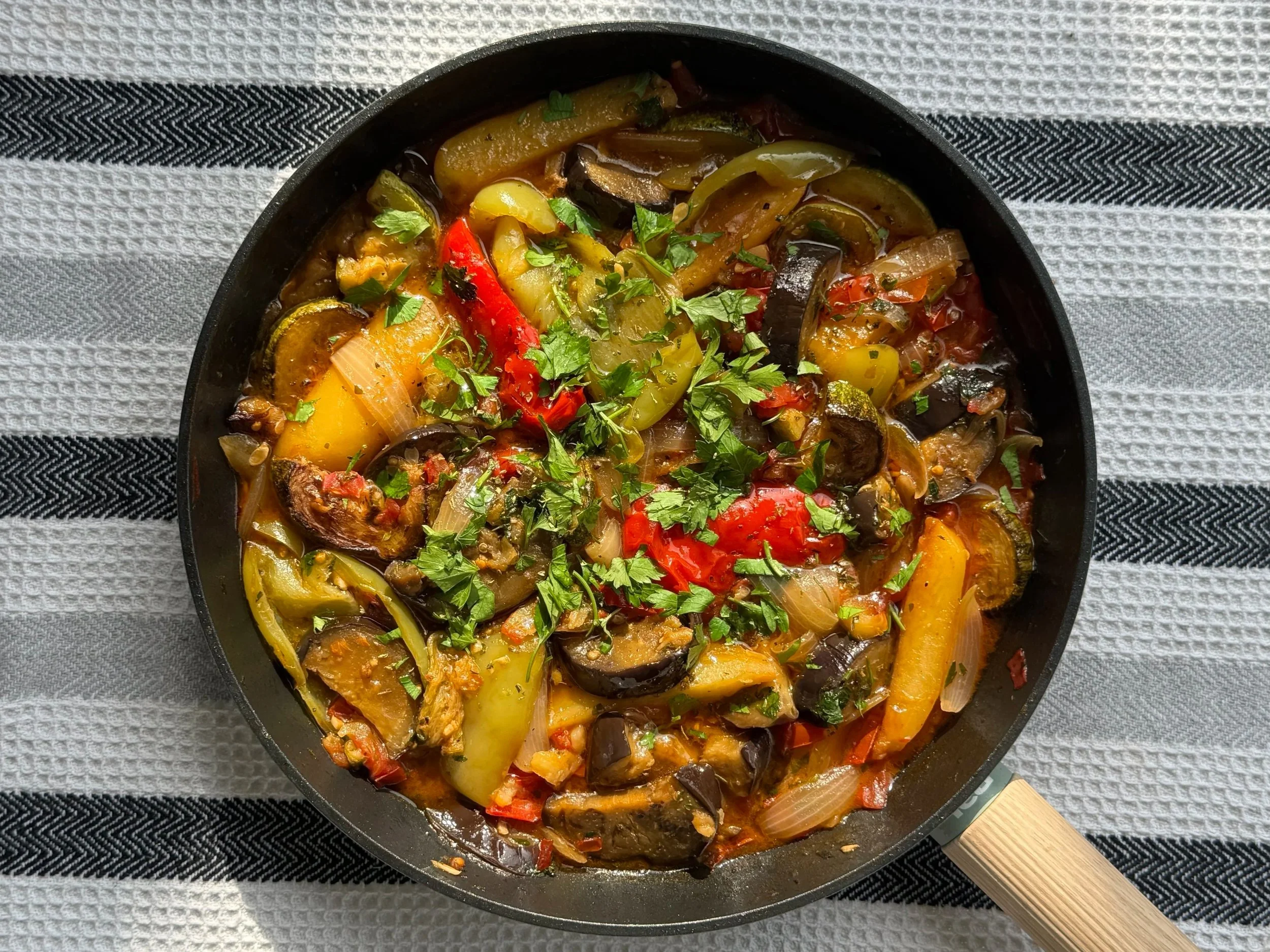
Soufiko and Ikaria’s high life expectancy
If you spend time in Ikaria, you’ll be familiar with soufiko (σουφικό): Ikaria’s traditional ‘tourlou’ (τουρλού) or ‘briam’ (μπριάμ) dish that features on almost every restaurant menu and is a guarantee in Ikarian home cooking all year round.
Lots of people look to Ikarian cuisine as an answer to the island’s reputation for high life expectancy, but touring the island helps you see that the answer is more complex than that. Of every local I spoke to in Ikaria, and if you read interviews and conversations with Ikarians in the Greek press on conversations pertaining to lifestyle, almost all will attribute the island’s renowned-high life expectancy to active lifestyle of its inhabitants.
What I discovered was that the quality, freshness and resultant healthiness of Ikarians’ diet is a product of their active lifestyle. Partly because that activeness is manifest in putting the effort into preserving traditional practices and not out-sourcing processes tat are going out of fashion in much of the world (as we saw in the island’s bakeries that still make their products from scratch, as well as its restaurants that work with produce from their own gardens). Secondly, that active lifestyle and the Ikarian diet are actually synonymous when you consider that the root of Ikarian’s activeness is traditionally gardening on a rugged island. Home-grown, locally-sourced, seasonal ingredients still form the basis of the Ikarian diet, and the relative remoteness of the island, as well as the villages and settlements on it, defend that blessing for most.
Soufiko and seasonality
Likewise, Ikarians adapt soufiko to seasonally-, and locally-available produce – hence it varies with seasonality, from household to household, restaurant to restaurant, and village to village. Because of its ubiquitousness, everyone has their own recipe and variation, but all based on the same theme.
Although each soufiko you’ll try, even during the same season, will contain different ingredients, most will typically feature aubergines, courgettes, potatoes, onions and peppers, in the summer at least – and always plenty of extra virgin olive oil. In autumn and winter, Ikaria’s popular butternut squash/pumpkin (ταμπουράς) will commonly feature. At Στο Καμπί, I even tried soufiko with carrots and sweet potatoes; Ikarians are resourceful and stubbornly idiosyncratic, so you’ll never find the exact same soufiko in any two spots. Similarly, Ikarians popularly cook ‘mageirio’ (μαγειριό), their fasolakia (long green beans), often supplemented with peppers and sometimes sweetcorn.
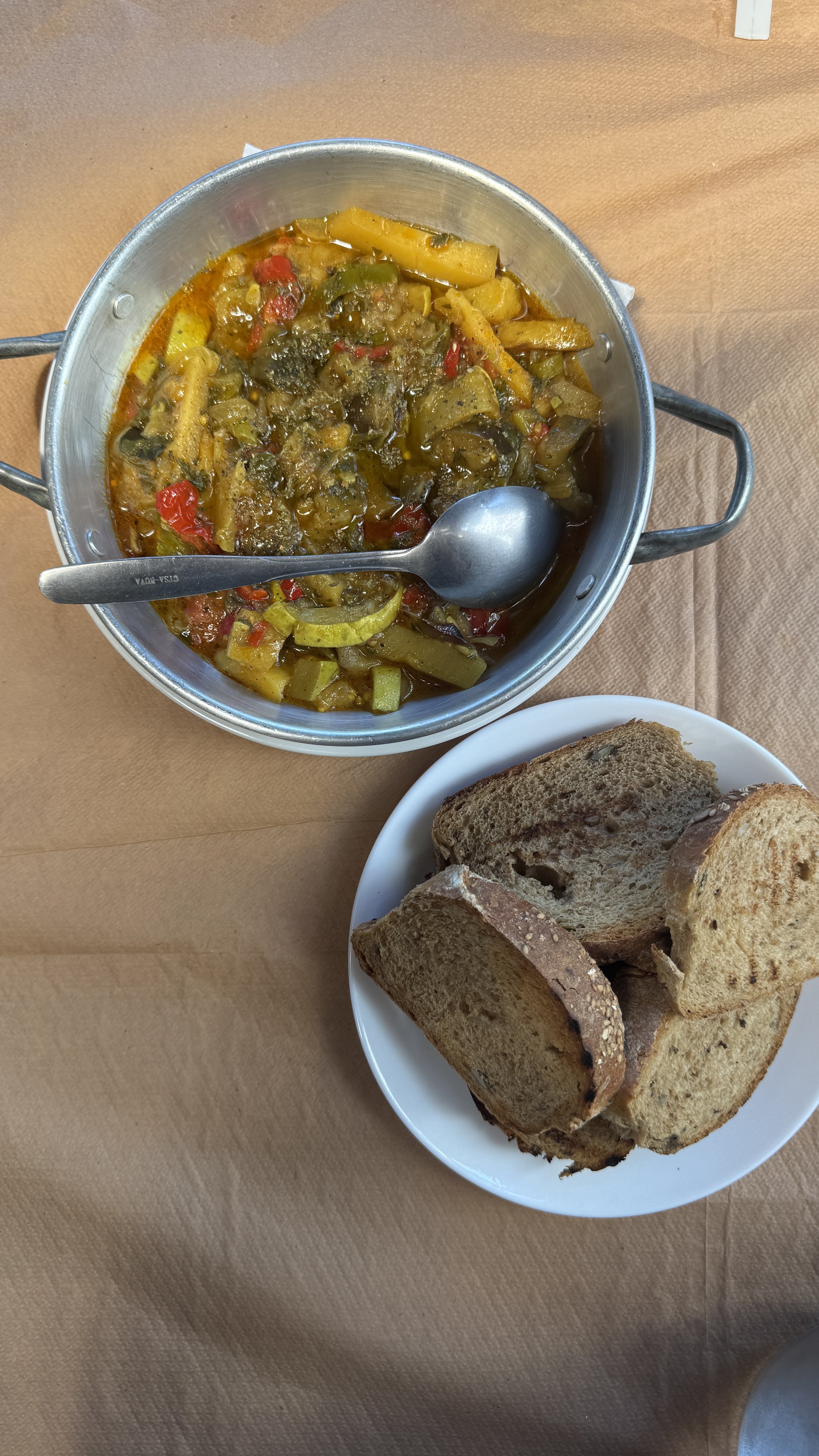
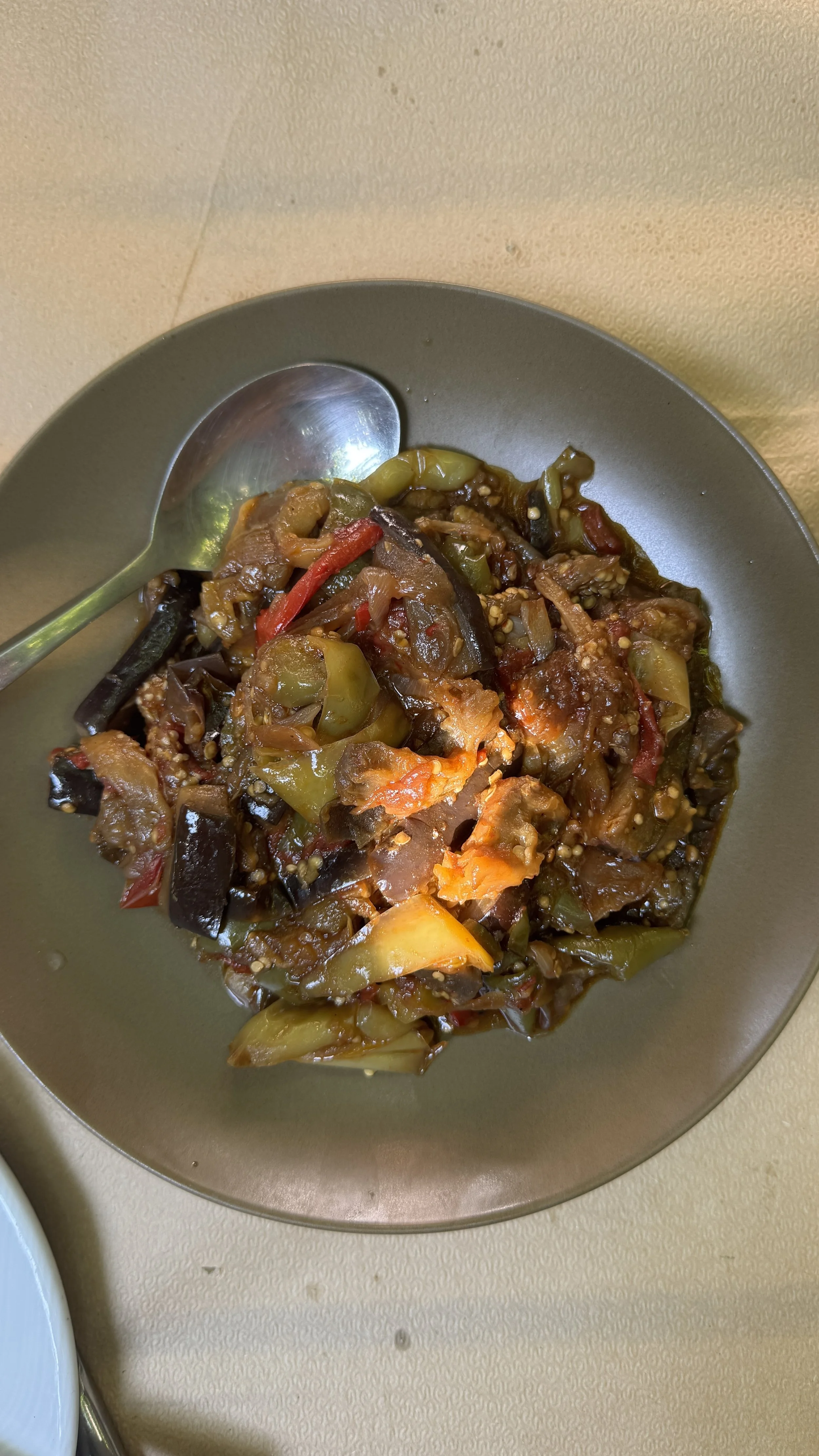
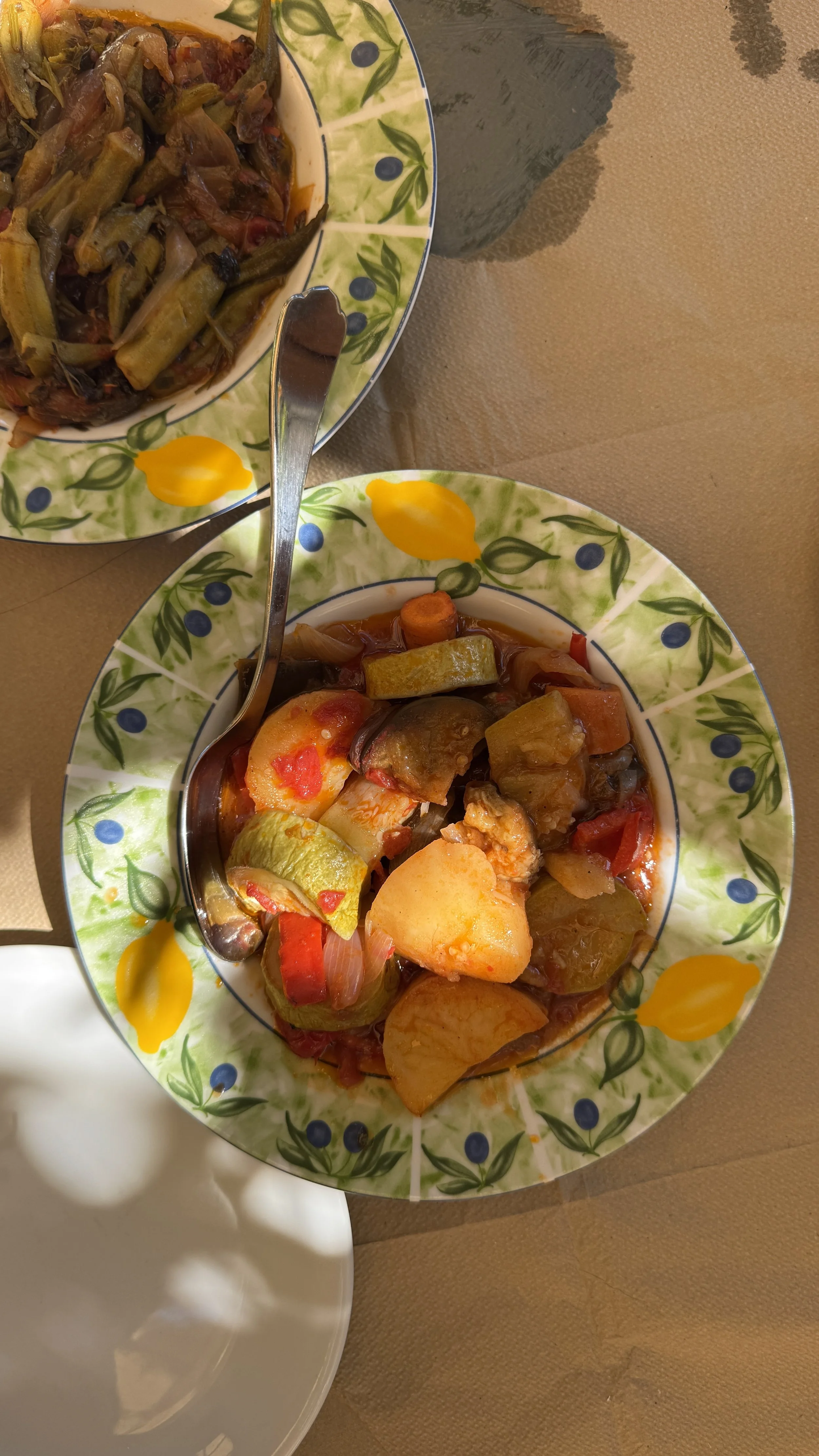
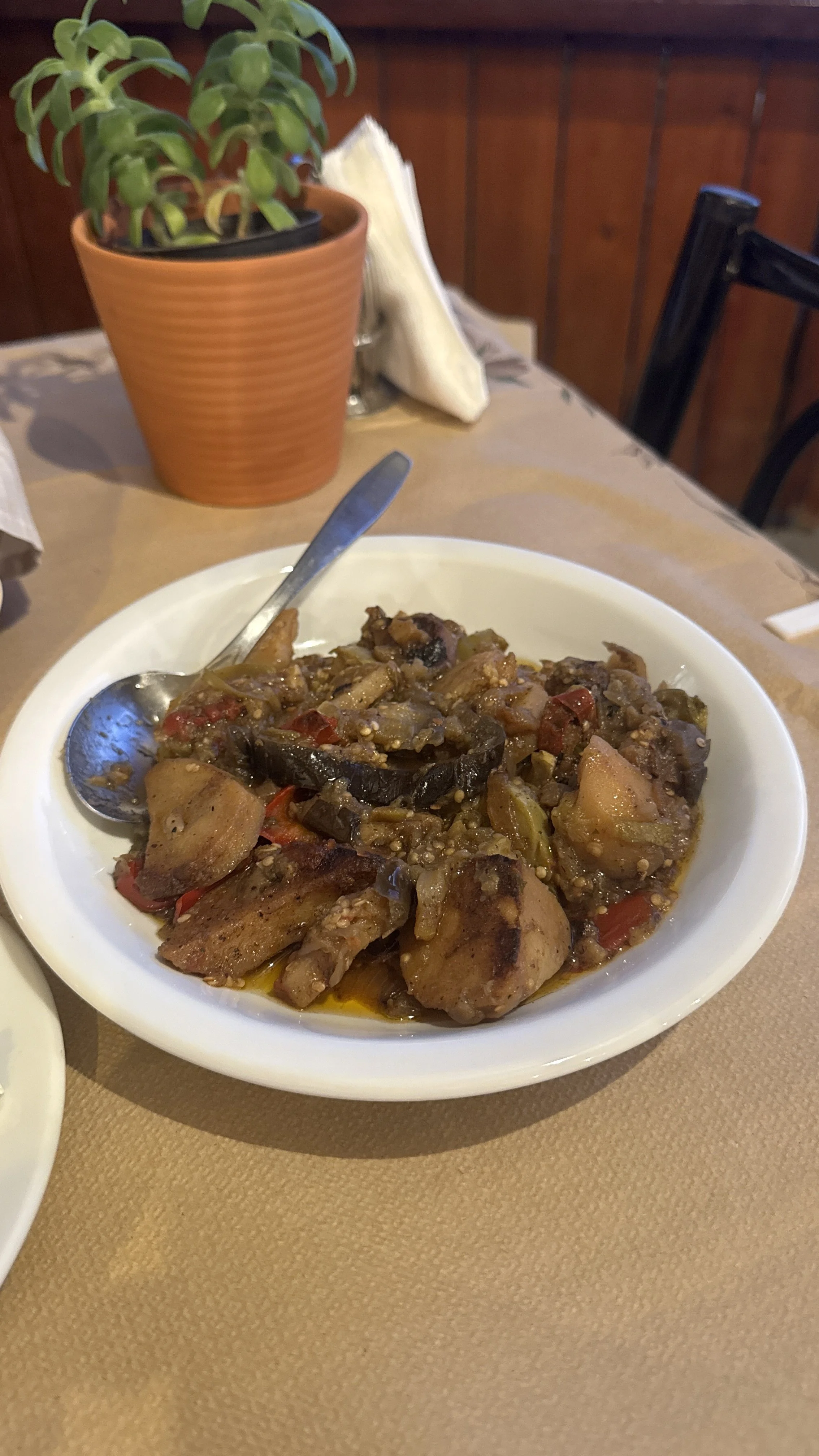
The best soufiko I ate in Ikaria:
Στα Πέριξ, Ακαμάτρα
Ταβέρνα Μουριές, Τραπάλο
Ταβέρνα Ηλιοβασίλεμα, Ξυλοσύρτης
Οινομαγειρείο της Πόπης, Φύτεμα
Add your email
Subscribe to the Souvlakination newsletter (Nostos) to see our full guide to Ikaria when it goes live.
How Ikarians make soufiko
Soufiko is cooked in a large frying pan («τιγανάρα») on the stove, often with its lid used to help soften the vegetables and speed up the cooking process. Cooking methods will also subtly vary, with some allowing the vegetables to ‘catch’ at the bottom to add some colour and depth to the dish, others loading the pan with the vegetables in layers, without directly sautéing them all. Generally, the trick is to shake the pan rather than stir aggressively as to avoid breaking up the potaotes. Otherwise, some will add tomato, and few will deglaze the pan with some wine. Adding the chopped parsley at the end is also an optional step that you sometimes see.
Special attention is also given to the order in which vegetables are added, with ‘harder’ vegetables like potatoes and squash (when in season) to be added first to allow for them to fully soften. However, I also add the onions at this stage to allow for them to soften and ‘melt’, which helps to creates a beautiful, thick base that ties the soufiko together and adds a layer of sweetness and richness to the dish – only when I do this does the soufiko come close to the tastiest one we had in Ikaria, which was definitely at Sta Perix in Akamatra. I cook the potatoes and onions patiently to begin with, allowing them to catch a little for some colour and flavour.
Soufiko works well as a side, alongside meat and other mains, or as a meal in itself together with a pasta (as Ikarians will do). You’ll also typically see soufiko accompanied with kathoura or kopanisti, Ikaria’s main cheeses (you can use feta). If anything is left over, I put the pan with the vegetables back on the heat, crack in a few eggs and make an omelette.
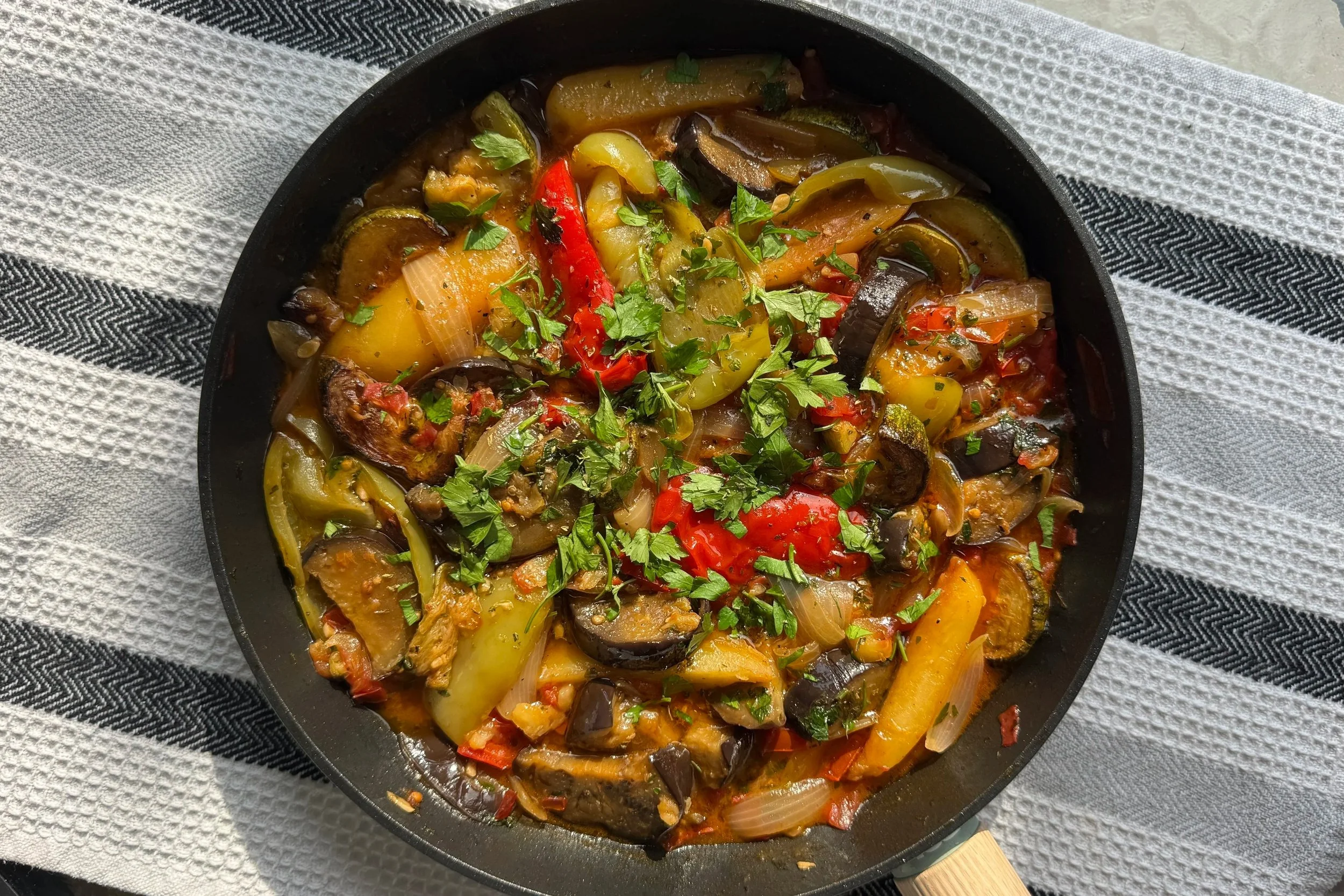
How to make Ikariotiko Soufiko
Ingredients:
5tbsps extra virgin olive oil
2 large onions
2 cloves of garlic
2 regular potatoes
2 regular aubergines
2 regular courgettes
1 green pepper
1 red pepper
1-2 Florina peppers
1 tbsp oregano
Optional:
2 tomatoes when in season
1 small butternut squash, cut into 1-2cm wedges
1 small bunch of parsley
Method:
Cut the onions, bell peppers and potatoes into wedges. Cut the longer peppers, aubergines and courgettes in half length ways and then into 1-2cm half-moons.
Place the largest, deepest frying pan you have on a medium heat and heat the olive oil.
Add the potatoes and onions (and squash if you’re using) to the pan. Finely chop and add in the the garlic. Lightly season with salt and fry for 10 minutes, stirring occasionally, until golden and slightly softened.
Add in the peppers, lightly season some more and continue for 5 minutes.
Next, add in the courgettes and aubergines, together with a pinch more salt. If you’re adding tomatoes, finely chop and add them in too. Give the pan a shake to mix the ingredients from now on so that you don’t break up the potatoes when stirring.
Turn the heat down to a medium, cover with the lid and cook for 30 minutes, giving the pan an occasional shake, until the vegetables have all softened.
Remove the lid. Chop and add in the parsley (if you’re using) with the oregano and gently mix. Remove from the heat and allow to cool for 5-10 minutes.
To serve, drizzle with some more extra virgin olive oil and sprinkle with a pinch of oregano.
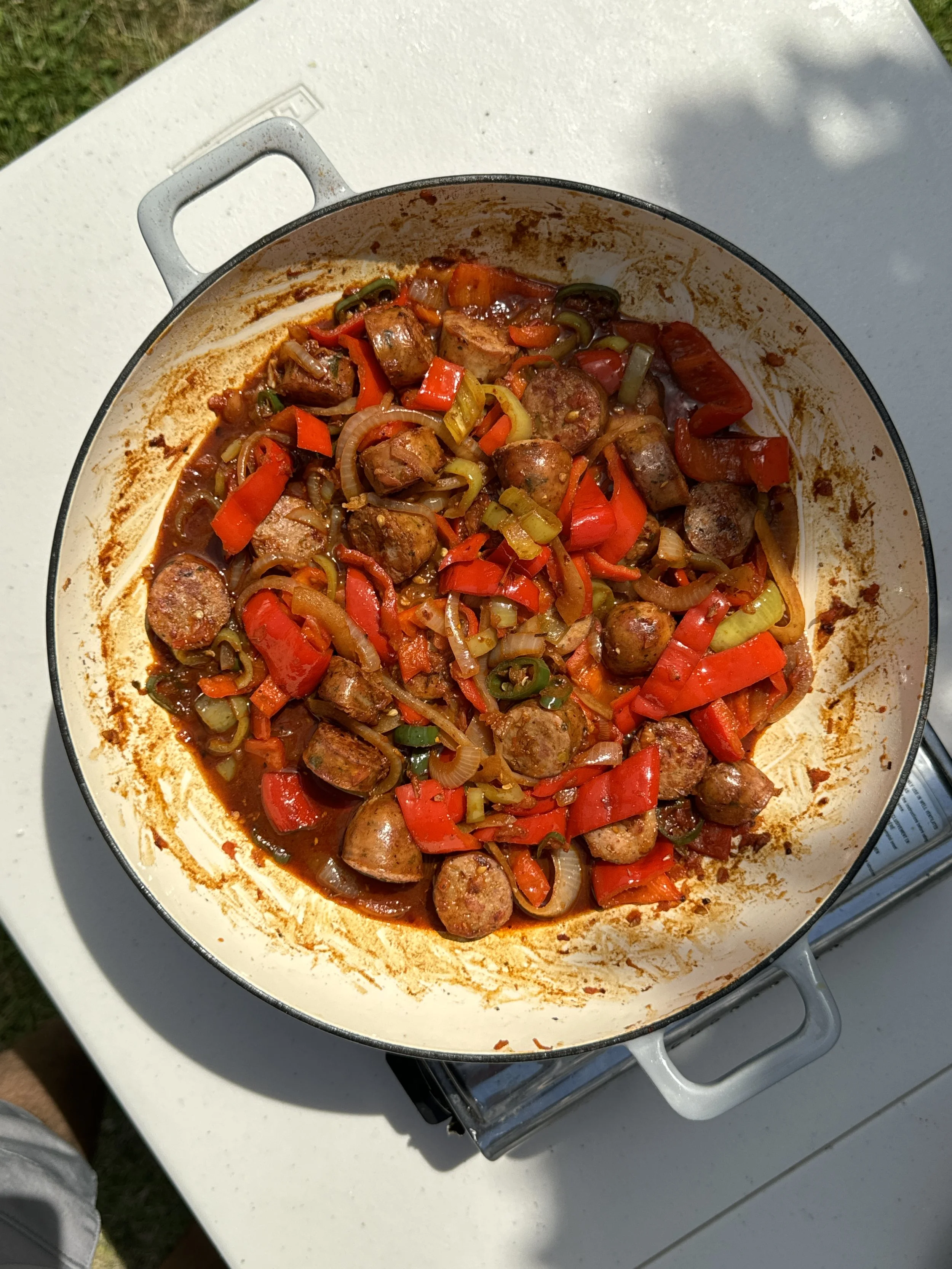
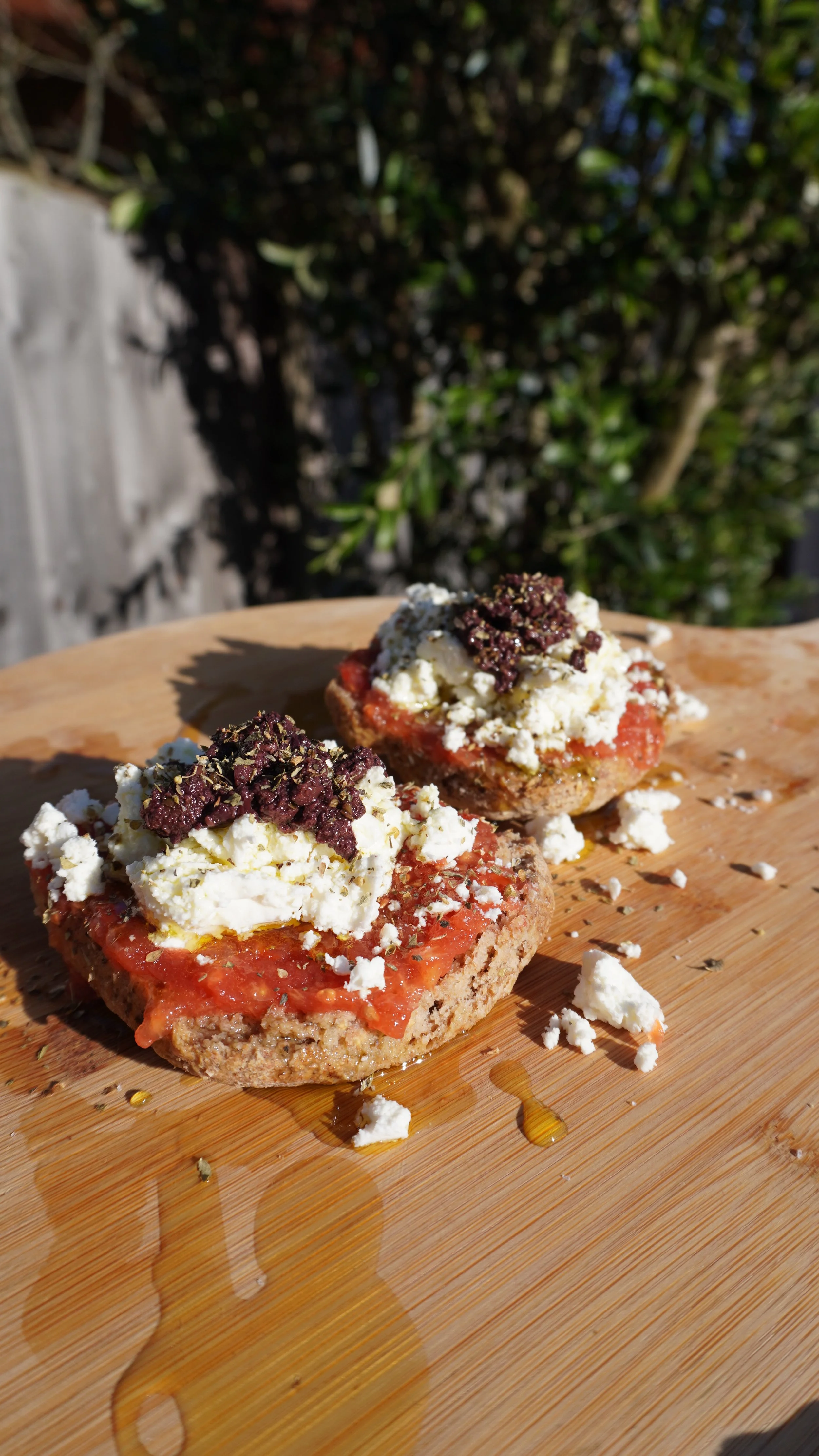
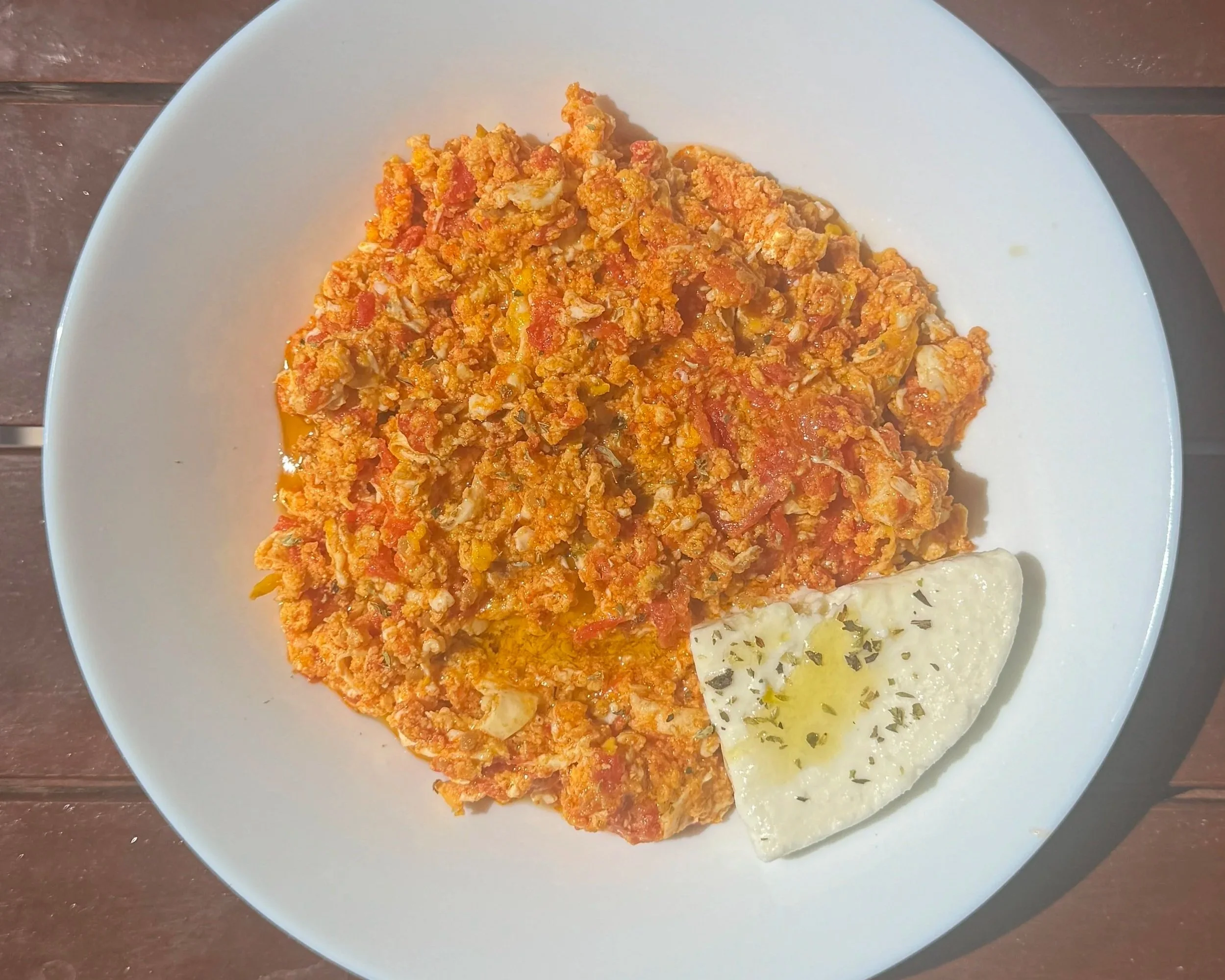
The vegetable stew that you’ll find in almost every household and restaurant in Ikaria, and in every season.