

Gaia, Mayfair: the most nonsensically expensive restaurant I’ve ever been to

Gaia in London’s Mayfair is the most expensive Greek restaurant I’ve ever been to. But is its Greek food worth the price tag?
What could have been one of London’s best high-quality renditions of authentic Greek cuisine shoots itself in the foot with a nonsensically absurd pricing strategy. In business terms, it might work for the restaurant and its target audience, but that doesn’t fly here, with a cuisine that has its roots in poverty, inclusivity and sharing, built out of natural ingredients that people used to grow and herd themselves before humans started devolving in the 21st Century. To make a concept like this work, you really need to have a special product.
To eat larger portions of the same exact dishes with much more flavour in Greece will cost you more than TEN TIMES LESS than it does here. Above all: you can eat good Greek food in London for much cheaper. Beyond business strategy, there is absolutely no justification in terms of the food itself as to why everything is just so unbelievably and unreasonably expensive at Gaia. You can’t even call it fine dining.
But how good is the food itself?
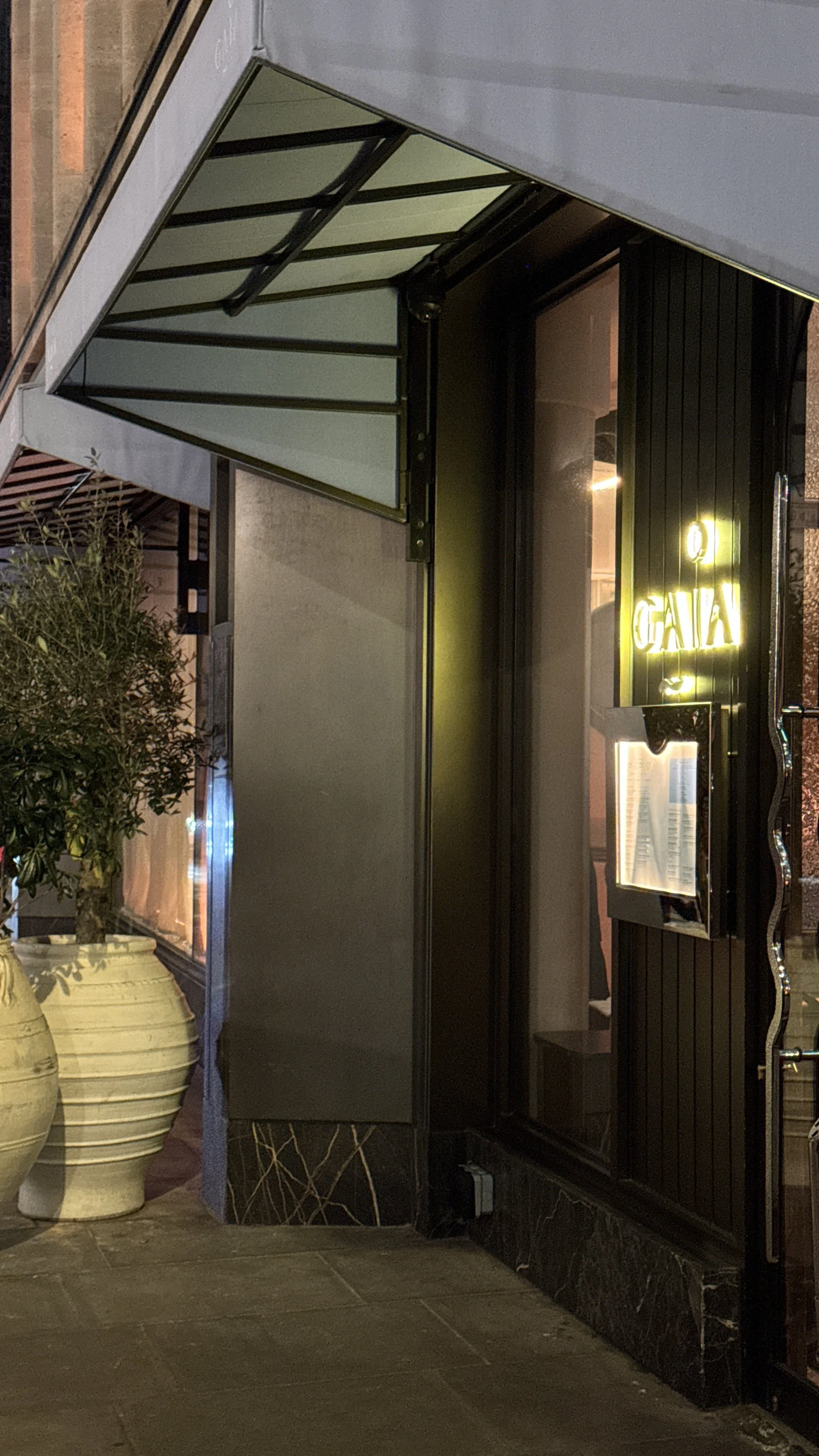
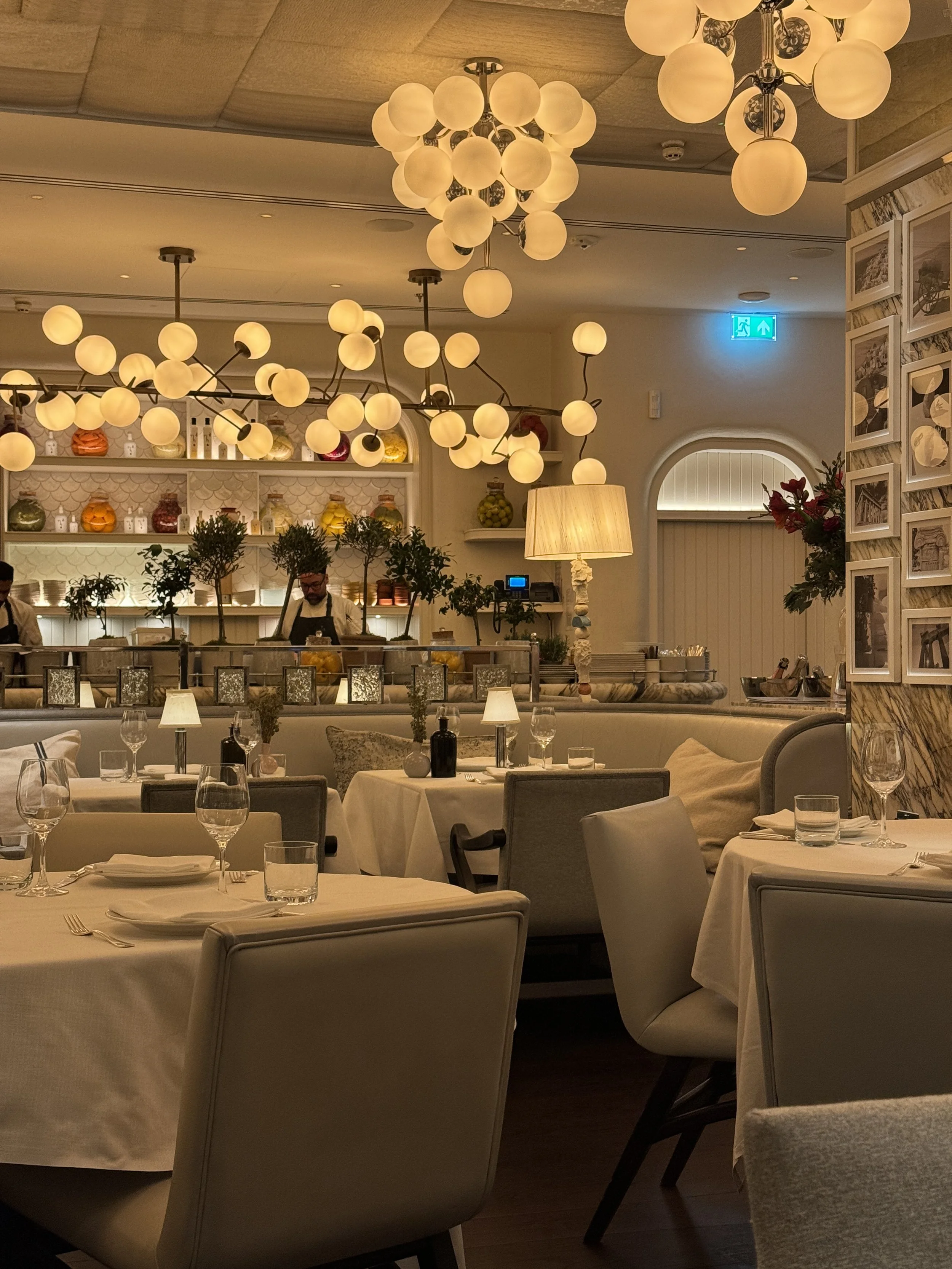
How good is the food at Gaia relative to London’s Greek restaurant scene?
Given the obscene pricing disparity, I came here expecting to find a lot of disappointments in the food. But, I have to be honest and say that – pricing aside – I also found lots of positives. It’s tasty, traditional Greek food re-envisaged, cooked well and plated neatly, with a few very subtle yet obvious signature touches, which do work well without taking the focus away from the crux of any given dish. I’ll run you through the bill while telling you whether the food was worth it or not below.
Let’s factor in the extra charges first, such as the 12% service charge. Credit where it’s due: the service is excellent and the restaurant has more personnel on its payroll in the room than patrons (which would have perhaps helped justify the food being about half as expensive as it actually is). I don’t know what the separate £4pp cover charge is for, though.
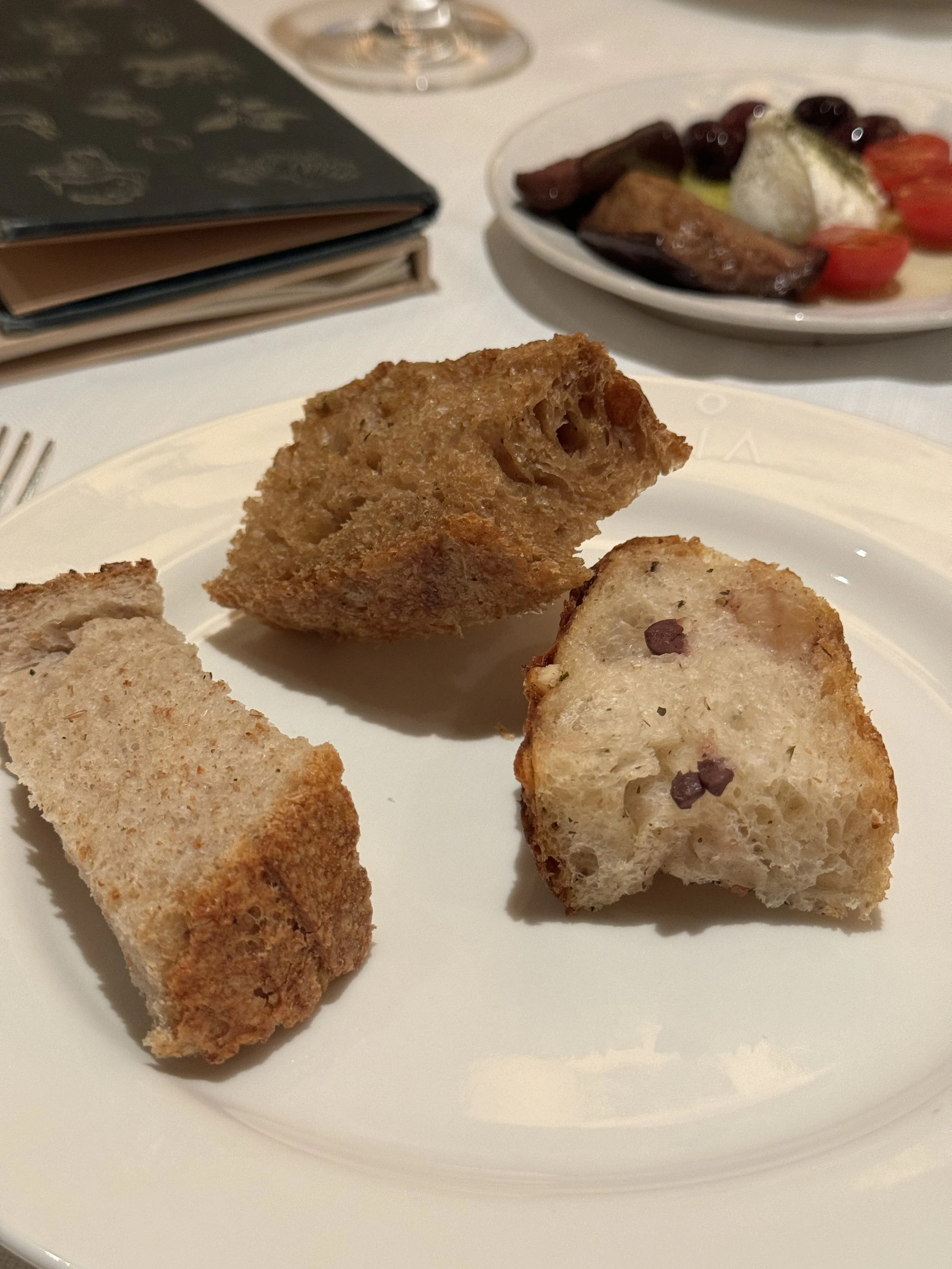
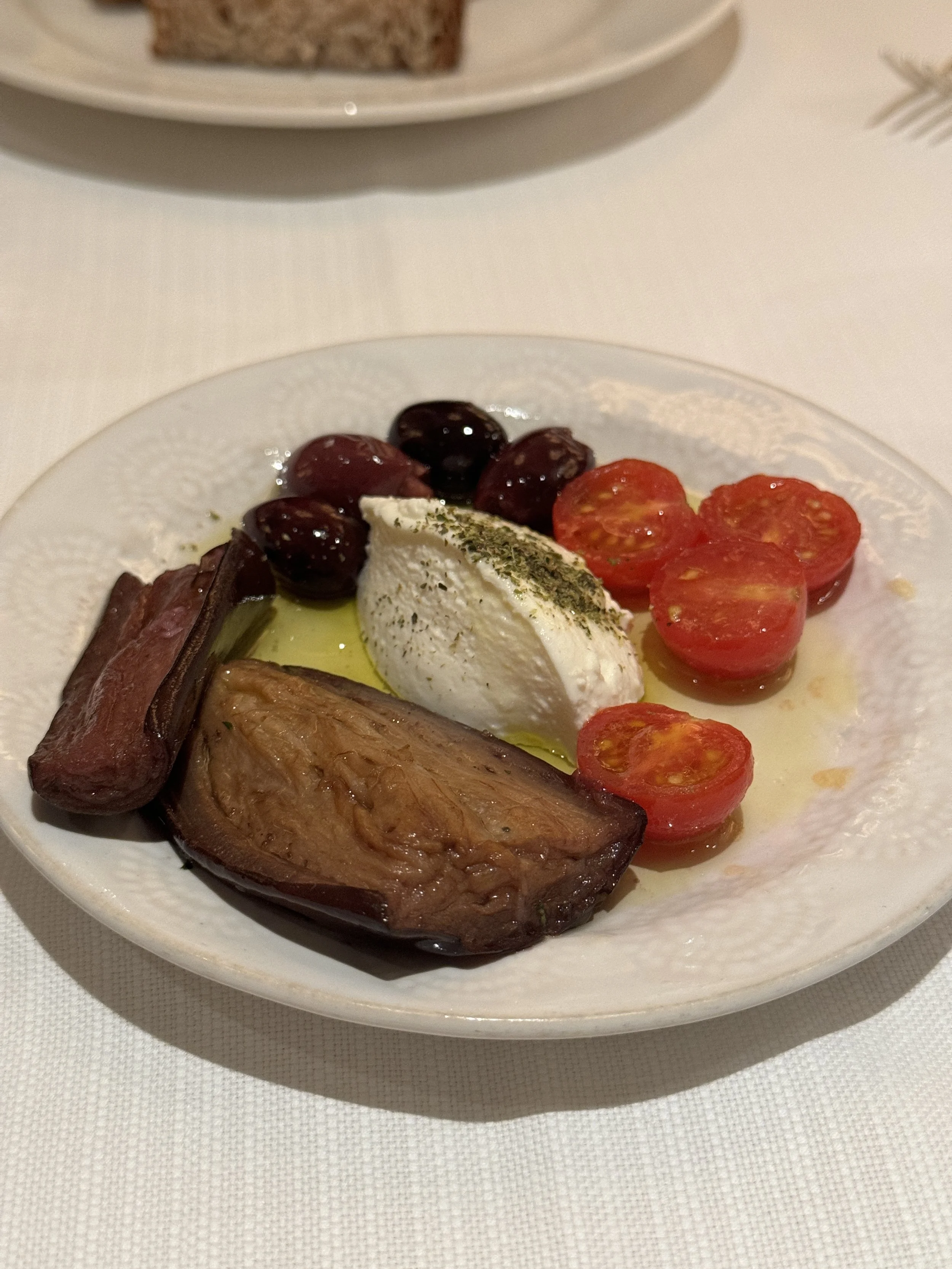
That said, you’re immediately greeted by a waitress offering you complimentary bread straight out of a basket. House-made bread is always a rare win in London’s restaurant scene, and the olive bread, brown focaccia and sourdough at Gaia is, admittedly, very very good. A complimentary olive oil-submerged meze of whipped feta, delicious cherry tomatoes, roasted aubergine, and a few Kalamata olives waits in the wings to land immediately after the bread hits your plate. Strong start.
I’m just relieved that it wasn’t on the bill.
Breakdown of the bill
Onto the bill. Here you can see it in full, and below you can read about the dishes one-by-one (from least to most expensive, bar the salad). All prices are, obviously, correct as of the time of writing. N.B. There were two of us, and we didn’t order any alcohol – just the 2 bottles of still water (school night).

Tzatziki = £13 = 17€

Disappointingly, a £13 tzatziki is apparently only worth one small bowl’s worth, less than a third of a small mug. It’s as it should be, at least, and does, however, come with a pleasant surprise: proper, authentic, Greek flatbreads, perfectly oiled and seasoned, with a nice golden-brown patched crust. Given that most of London’s modern Greek restaurants simply order the ‘handmade’ Kolios range via Maltby & Greek (or just go for the inferior standard Kolios packs that I use as a last resort at home, like Meraki in Fitzrovia), I was intrigued to FINALLY find something better.
I knew it wasn’t Chasiotis, though. Gaia’s flatbreads have a lighter, fresher taste and a more natural texture than anything factory-made, good or not. Our waitress confirmed that they are actually house-made, making Gaia one of the only Greek restaurant in London I know to make its own pita breads in-house, let alone this well. A pleasant surprise to say the least. At least we can say that, as a whole, the bread is great here. Also, house-made dips are quite expensive throughout London and are rarely accompanied with pita bread, as this was. For those reasons:
Verdict: worth it for the pita bread.
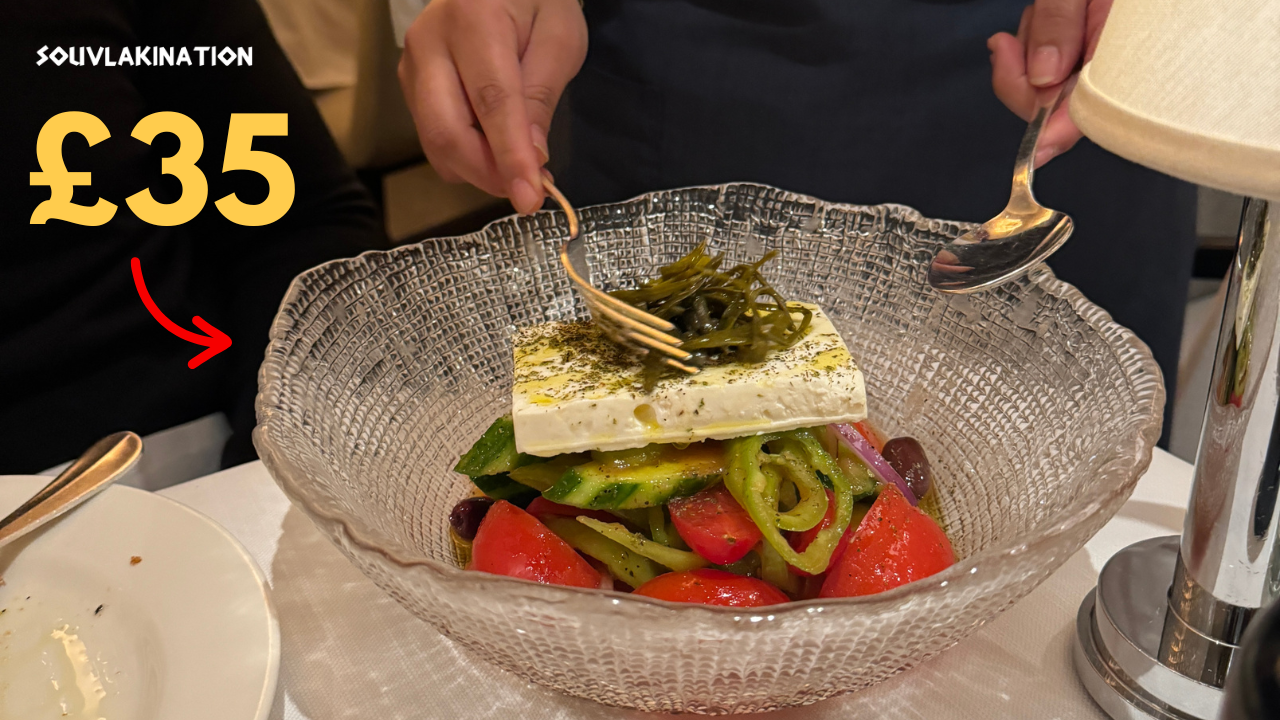
London’s most expensive Greek salad = £35 = 40€

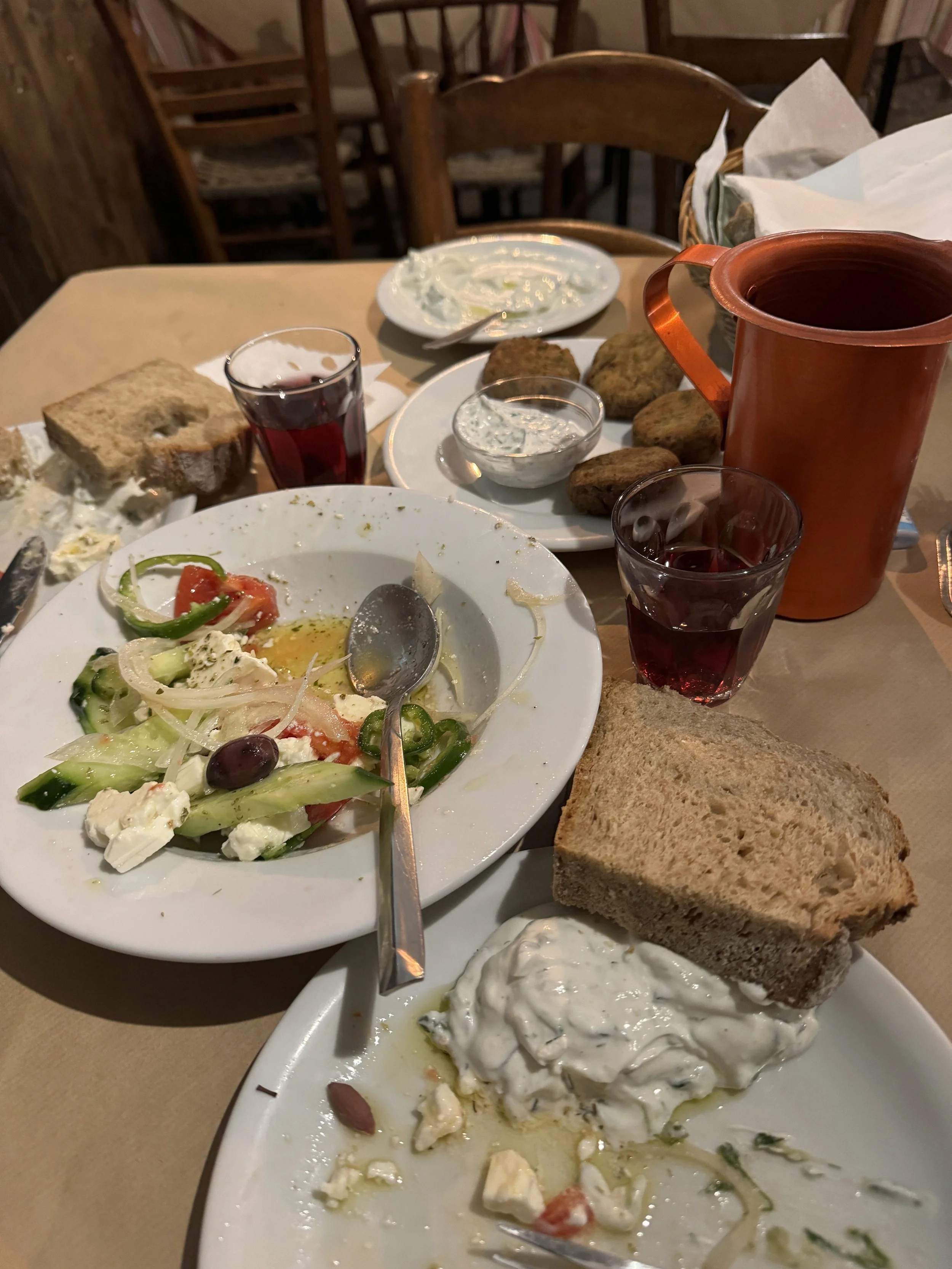
For a Greek salad to be so expensive, you expect something really special or, at least, an authentic Greek salad with the ripest, tastiest produce. For me, that’s to be found at Nissi in Palmers Green, for £12. That’s the best Greek salad I’ve had in London. Authentic, of course, but made using the tastiest ripe produce I’ve seen in a London Greek salad, with the feta, olive oil and oregano holding up to that too. That was also during winter, meaning we can judge Gaia’s Greek salad against Nissi’s on a level playing field.
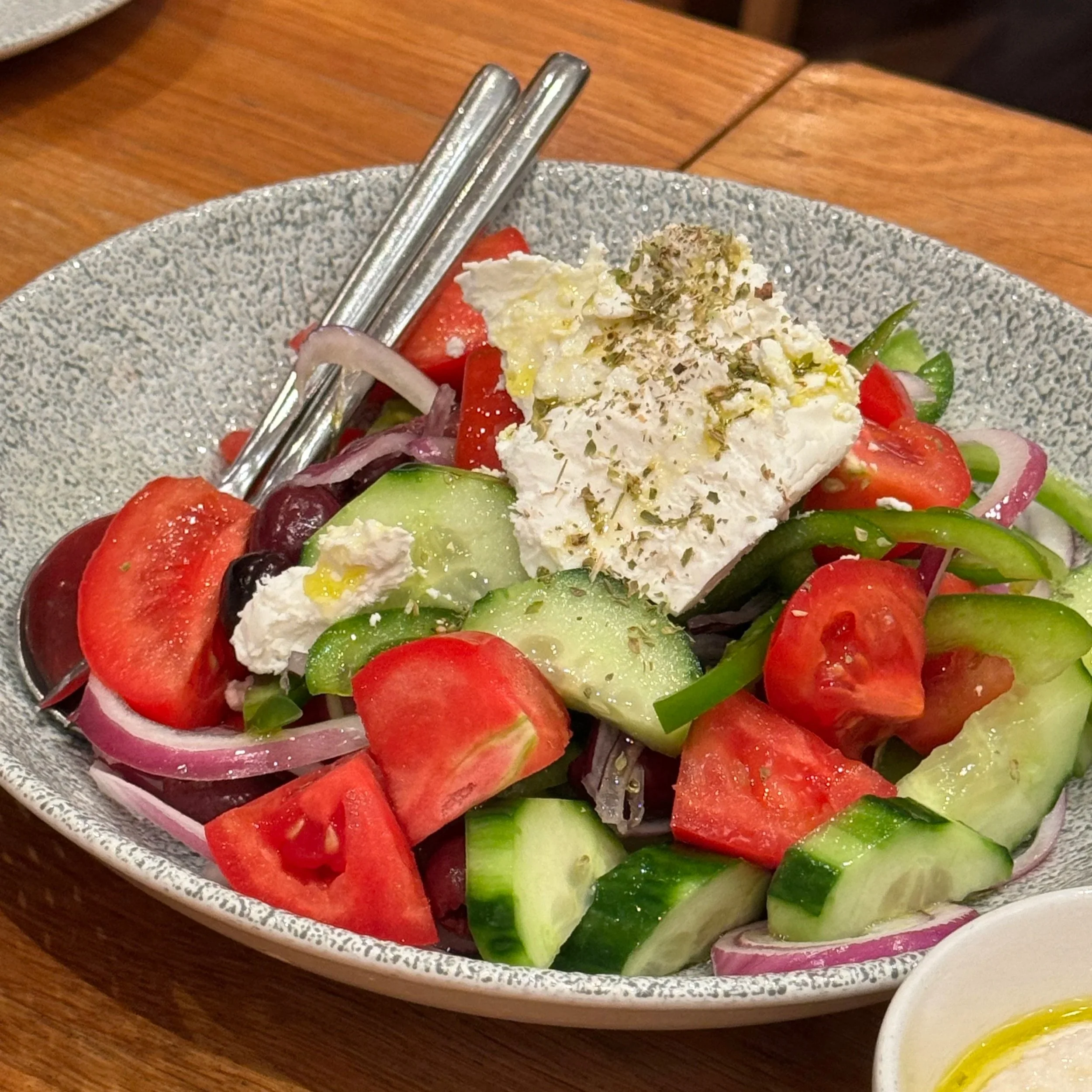
Nissi’s Greek salad is very similar but knocks Gaia’s out the park for almost 1/3 of the price. You also have extra virgin olive on your table at Nissi to dress your salad to your liking.
Gaia’s Greek salad is authentic, with all the main ingredients (tomato, cucumber, onion, feta, olives, oregano, olive oil, vinegar) and most of the typical additions (green peppers, capers and samphire). I suspect it also has a touch of honey in the dressing too, like you’ll find at Mazi in Notting Hill. The ingredients are ripe, with a mix of tomatoes, and everything well-sliced and proportioned. But it’s nowhere near as tasty as the Greek salads I make at home, let alone Nissi’s. The clean ‘feta’ (slice) of feta looks like the factory feta of Epiros or Dodoni in my fridge. The tomatoes have no flavour.
For £35, you expect a lot more. Or at least some barley rusks broken into it so there is at least one more poor excuse to consider as to why it costs so much. Not even the Greek salad at Milos in St James’ is this expensive (which is equally disappointing for the same reasons, even at £28). That enchanting bread basket doesn’t return when you need it to soak up the dressing at the bottom of the bowl and, after a fast round of charming surprises, you’re back to reality at this point.
Verdict: daylight robbery, ridiculous, theft, senselessly overpriced without any justification whatsoever, shameful and concerning.
Dolmadakia = £17 = 20€

While the menu lists ‘dolmadakia’, it doesn’t clarify that it’s actually just 3 dolmadakia gialantzi, i.e. stuffed vine leaves with rice and herbs, without the minced meat or other fillings. The dolmadakia themselves are good and tasty, topped with pine nuts and raisins, on a bed of yoghurt and olive oil, and alongside a really delicious tomato-based paprika sauce (which also forms the base of Gaia’s giouvetsi). As enjoyable as it all is, over £5 per dolma just doesn’t make sense.
Verdict: would have been worth it had there been more dolmadakia on the plate.
Spanakopita = £18 = 21€
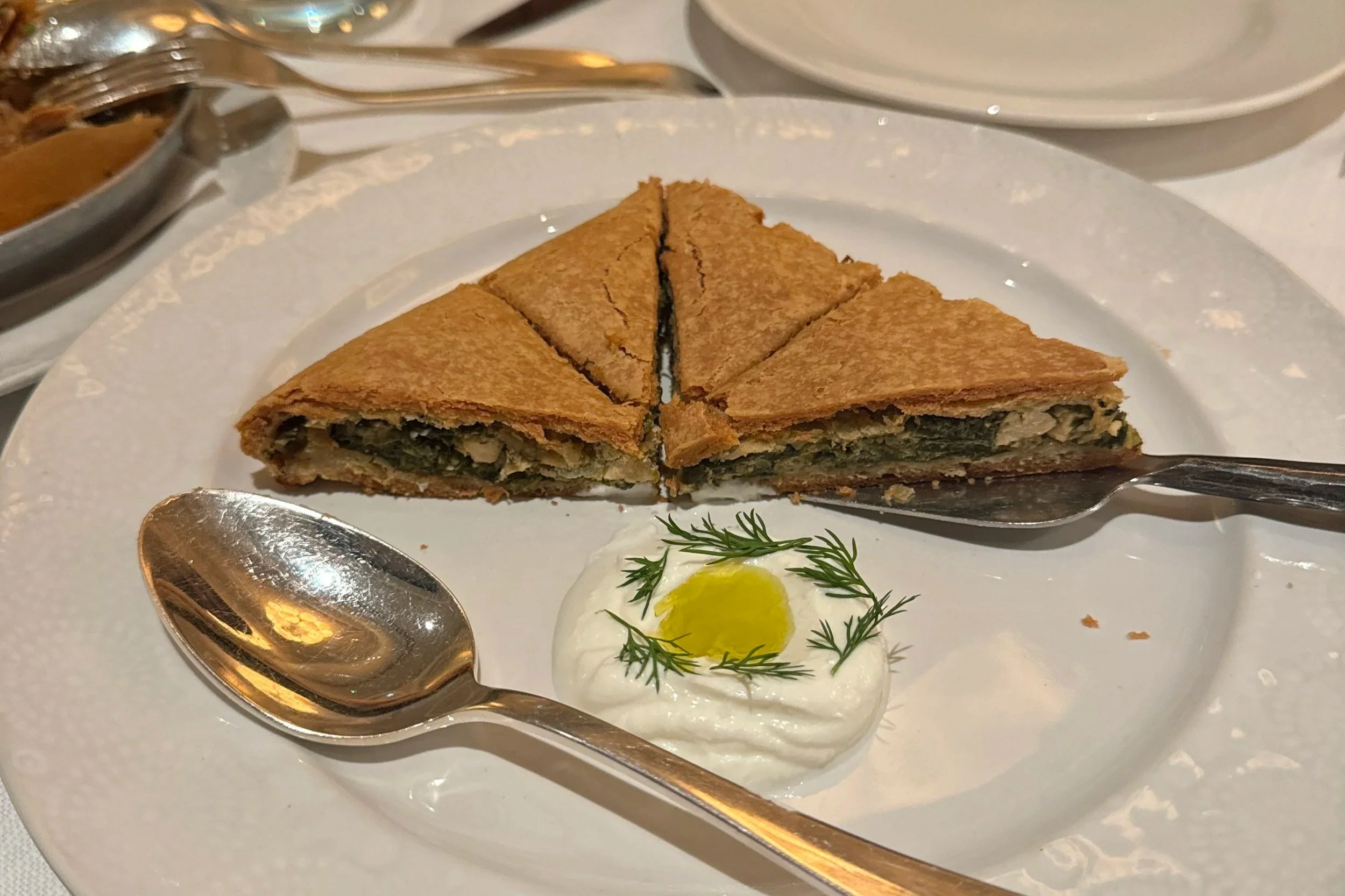
The spanakopita is one slice of spanakopita that the waiter dissects into quarters when it lands on your table. Its filling is a nice layer of greens and feta, between a doughy crust of filo. Although just about buttery and crumbly at the edges, the filo is actually bizarrely soft and doughy in the middle, from the surface down. I don’t know if that’s an intentional twist or a mixture of the kitchen not cooking the thick sheet of filo for as long as they could have and not letting the steam out of the pita after it cooks. While it’s still technically a traditional form of spanakopita, I suspect the choice to skip the art of opening thin sheets of filo has something to do with avoiding the mess that crispy-thin filo might make in a prime Mayfair location.
Verdict: not worth it.
FYI You can read my spanakopita recipe, which includes instructions for making thin homemade filo and some tips on how to avoid those common pitfalls, here. People are calling it the best spanakopita recipe on the internet. Everyone, including Gaia’s team, can read it for free below.
Feta saganaki = £20 = 23€
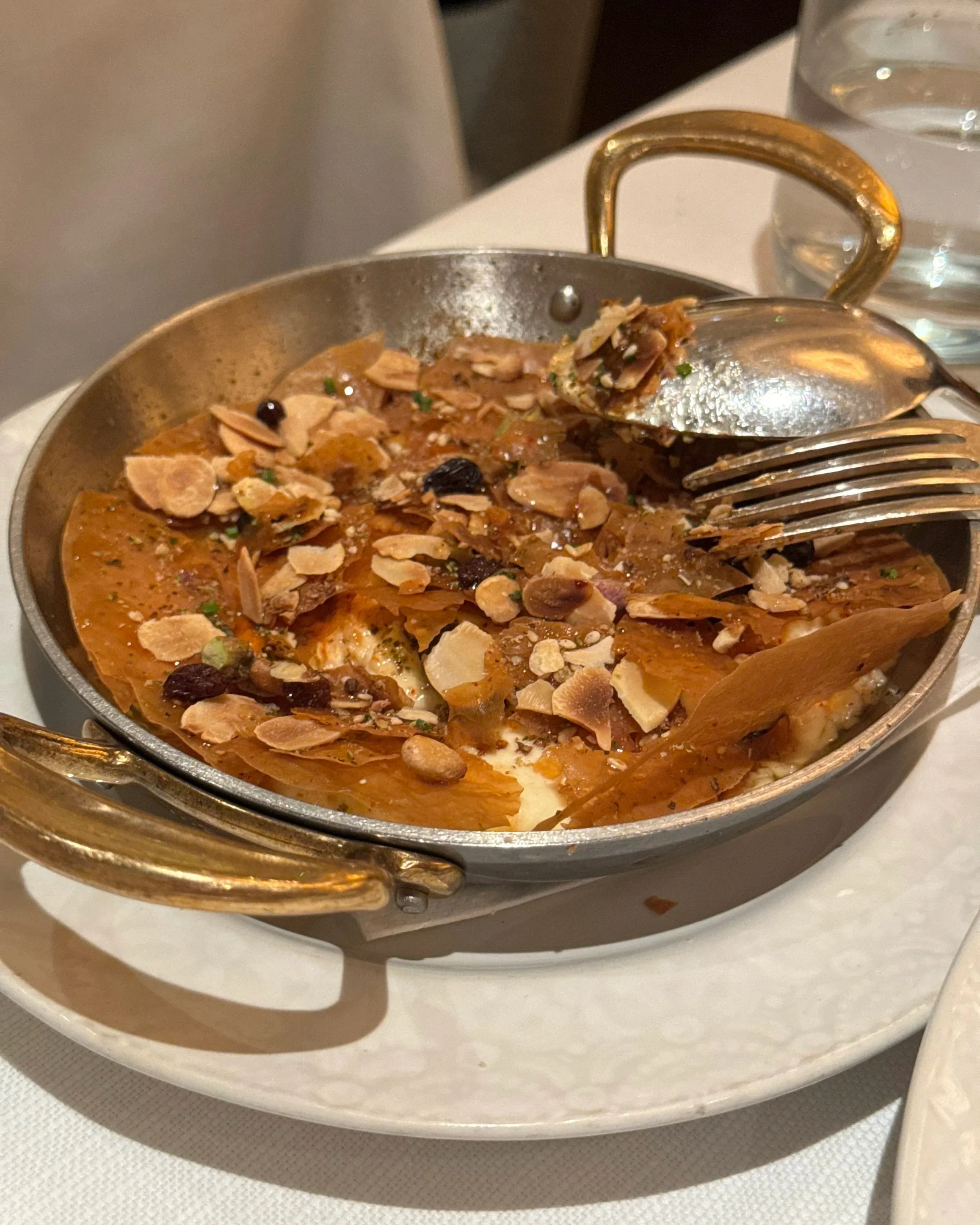
Starting with a win, it’s rare you see feta saganaki actually served in a saganaki (the kind of dish from which the name of various dishes originates). Gooey, molten feta is topped with a thin layer of (this time) thin and crispy filo, above which almond flakes, seeds and berries sit. It’s okay. It’s really not worth £20 for a deconstructed version of what is already a simple dish, and with no amazing additions – not even a flambé finish that you get to see in North America’s Greek tavernes.
Verdict: complete rip off.
Mousakas = £26 = 30€
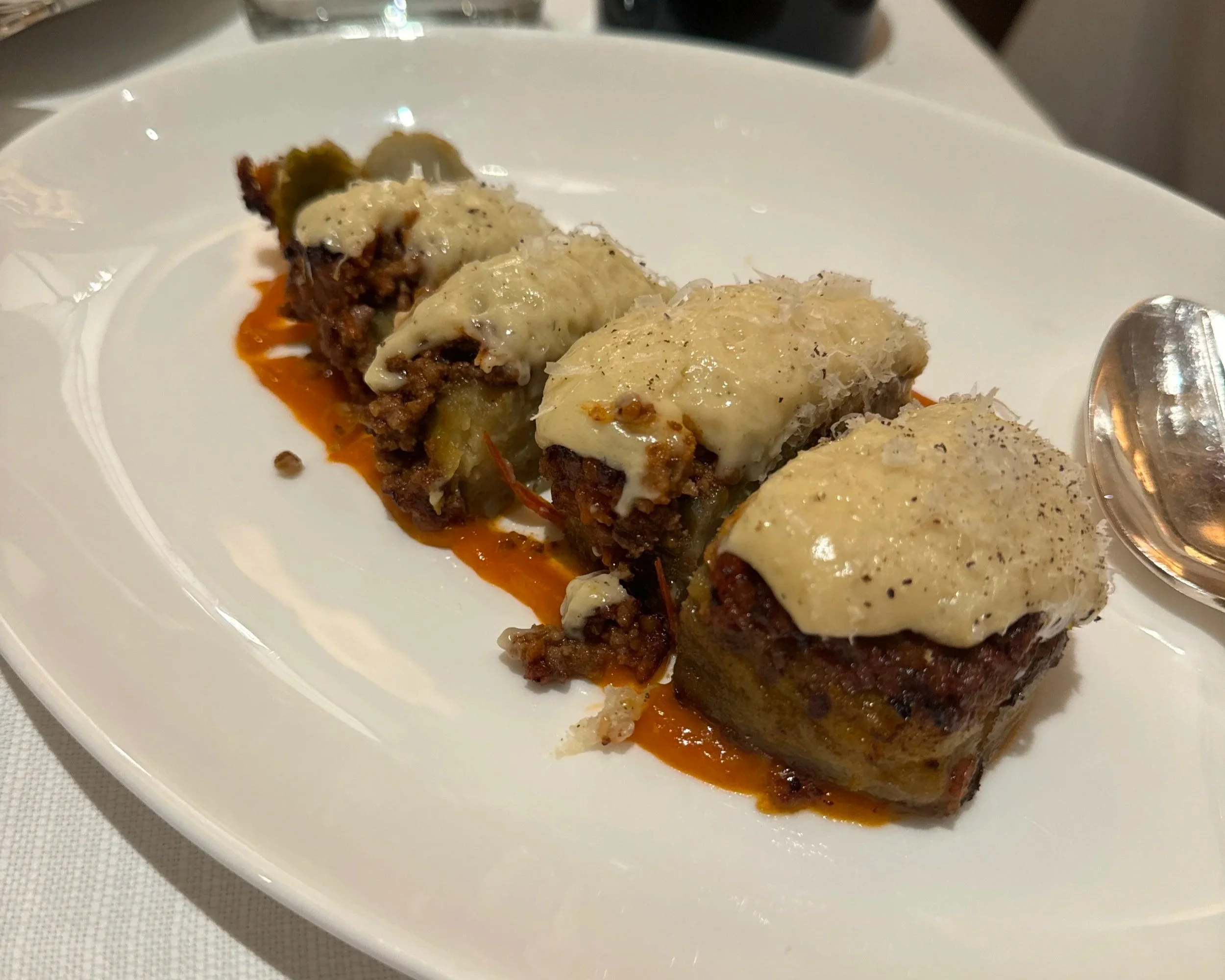
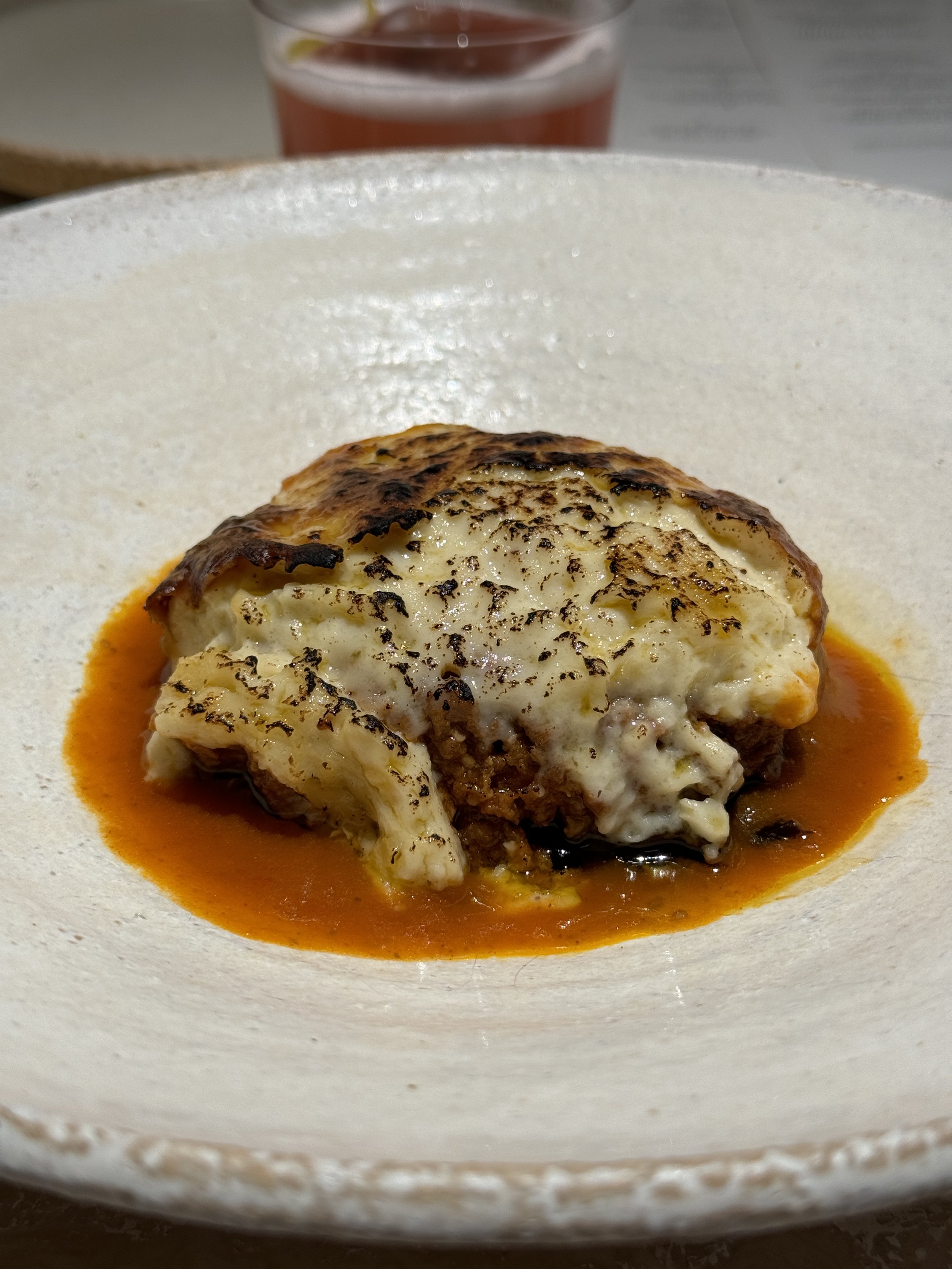
Some context first. Mousakas is usually a tray bake, which Greeks serve as a slice or large spoonful. Greeks also made papoutsakia: cored aubergine halves, filled with minced meat and topped with bechamel and cheese, which is like mousakas inside of the aubergine rather than the aubergine inside of the mousaka. This comes from the fact that aubergine and minced meat with tomatoes were the original main ingredients, although sliced potatoes (and sometimes courgettes) are also commonly added nowadays. You can read about when a Greek chef first added the bechamel sauce and the history of mousaka in our mousakas recipe here.
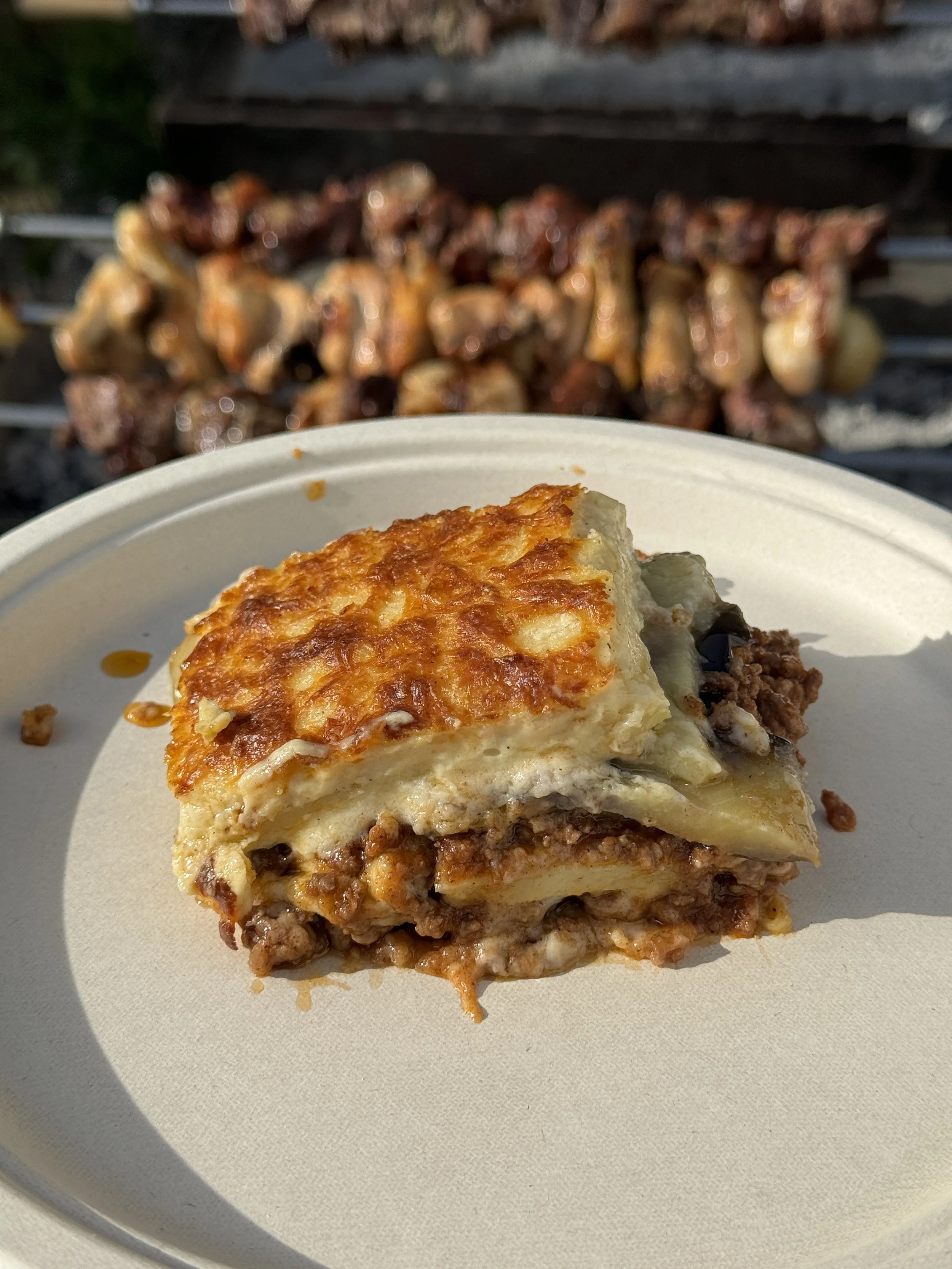
Gaia’s mousakas is actually a thin papoutsaki, with a streak of a delicious, glossy, optimally sweet and meaty reduction in its orbit. It still has the potato in there, and is definitely a mousakas. Overall. The length of the aubergine is probably equal to the surface area of the average modern-Greek London slice. It’s absolutely delicious and is actually cheaper than the mousaka at equally absurdly-priced Opso in Marylebone (£27), but it isn’t better than Asimakis’ lamb mousaka at Myrtos in Chelsea (£22). You can read our full review of Myrtos after it opened here (more reviews like these coming).
Verdict: worth it relative to the rest of the menu.
Add your email
Be the first to hear about Souvlakination news, noteworthy openings and recipes.
Lamb cutlets = £58 = 67€
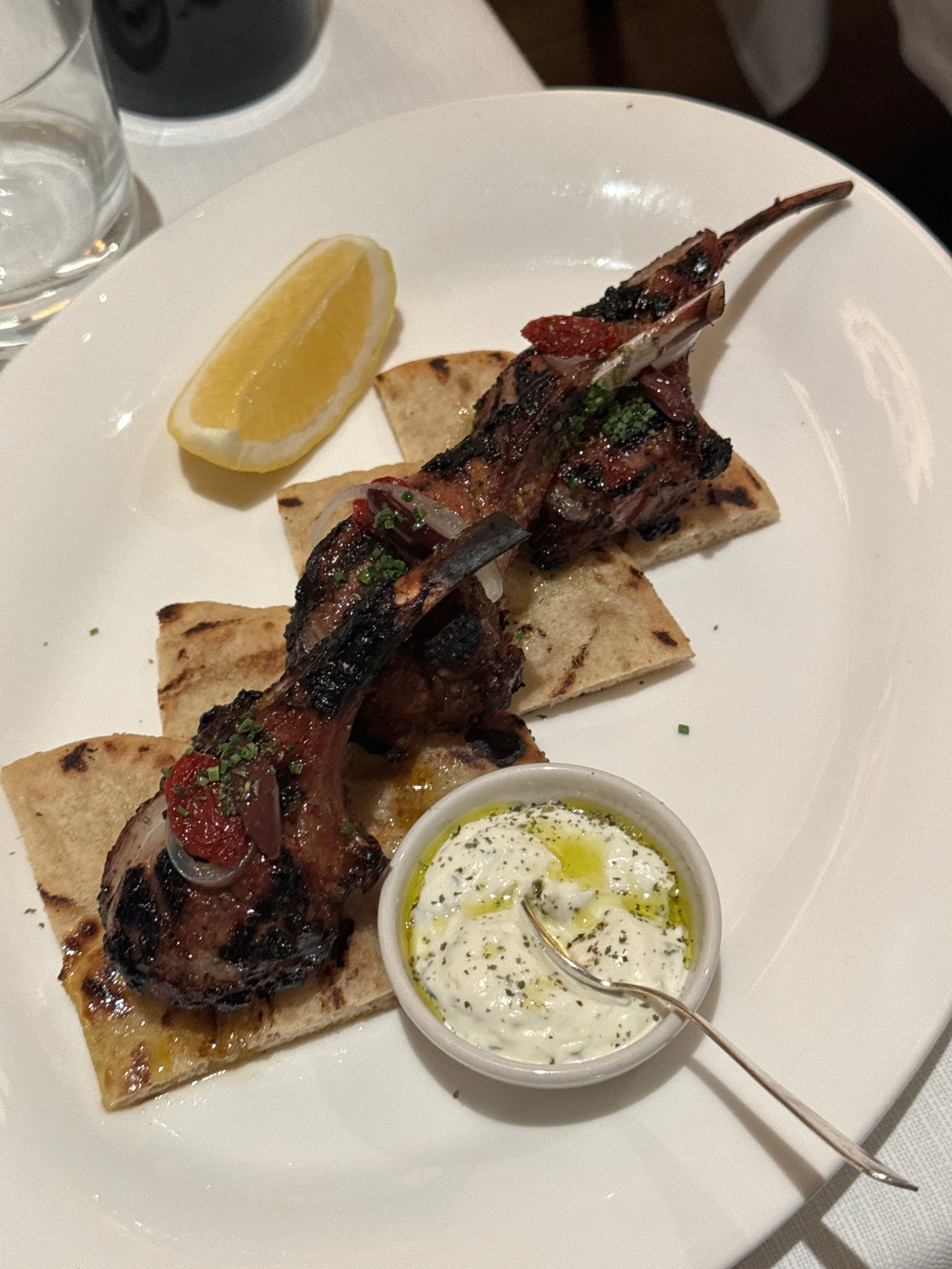
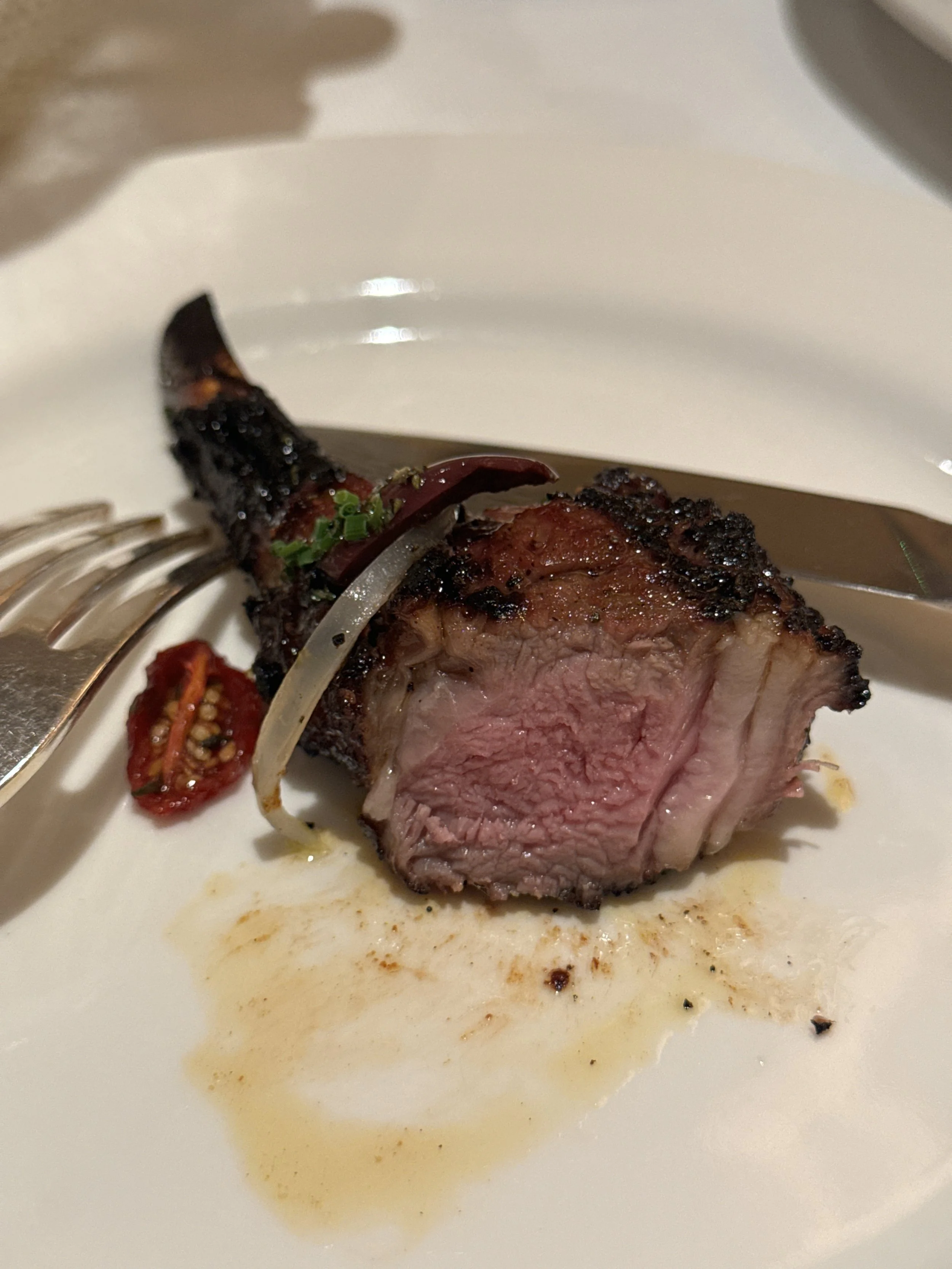
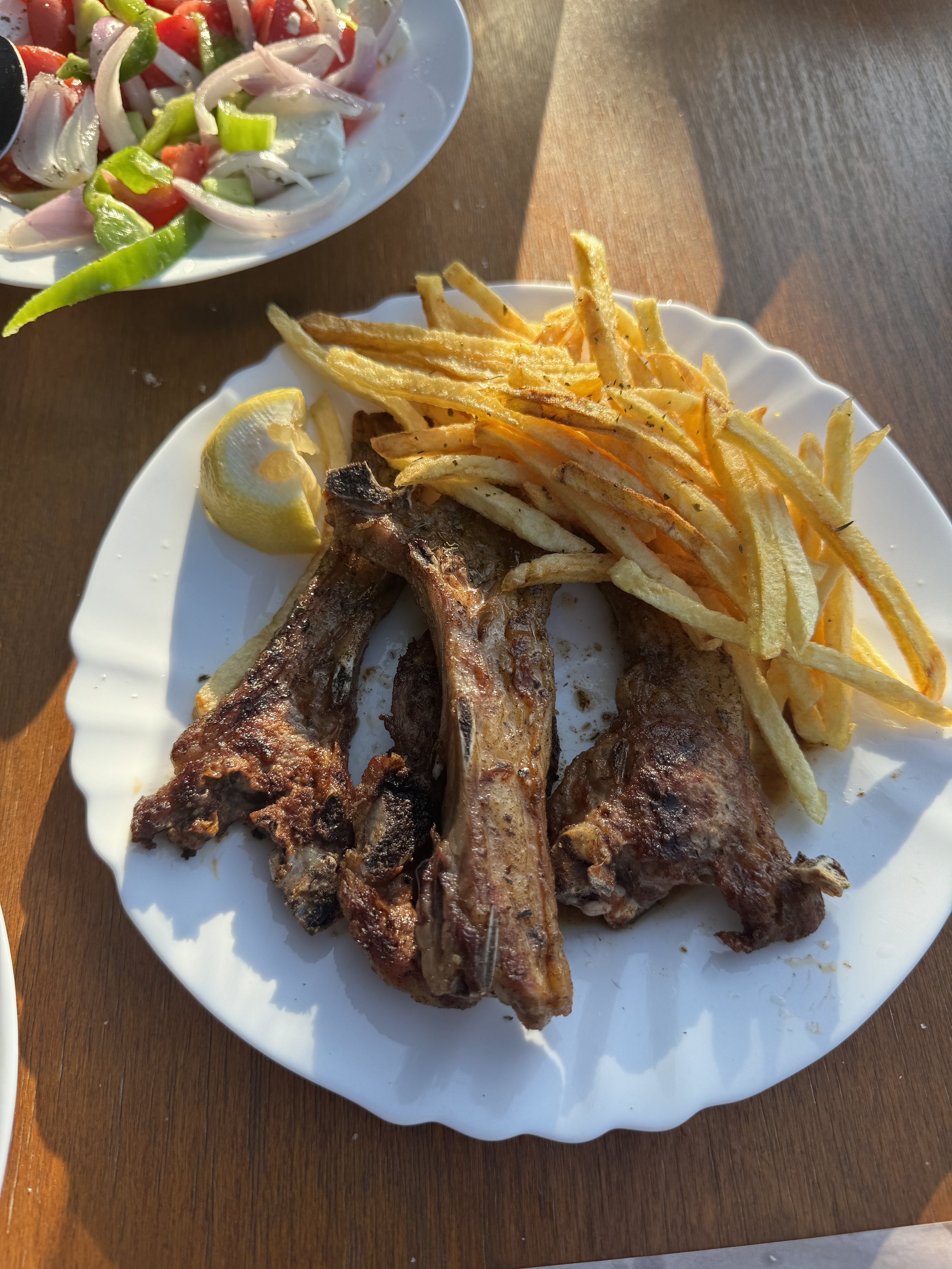
At almost £20 per cutlet, we’re entering ‘stupid’ territory. Lamb cutlets (païdákia) in Greece are most commonly thinner and deliciously crispy and juicy. So we can thank Gaia for serving some fairly thick pieces, which are actually perfectly cooked. I asked for mine medium-well to see if the meat would still be tender, and it was. A slightly smokey-sweet charred crust suggests a sort of glaze. It’s not very Greek, but it works, as do the meticulous touches of a tiny onion slice, a small sundried tomato, and a fragment of olive that are elegantly placed on each chop. Like the mousaka, I enjoyed eating this but have to, once again, acknowledge the absurdity of the pricing.
Verdict: worth it if you have money to waste. I definitely don’t after this.
Fish?
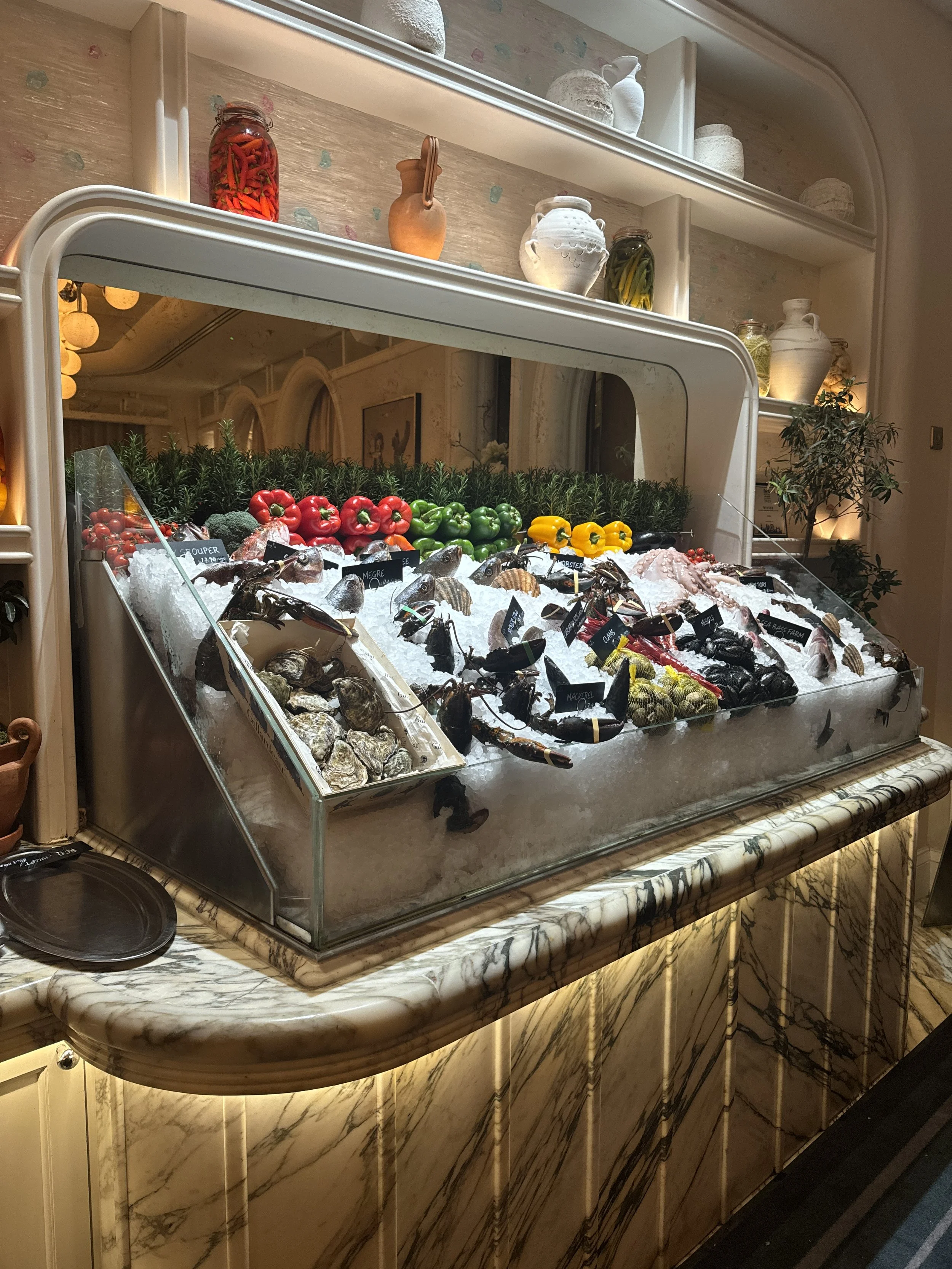
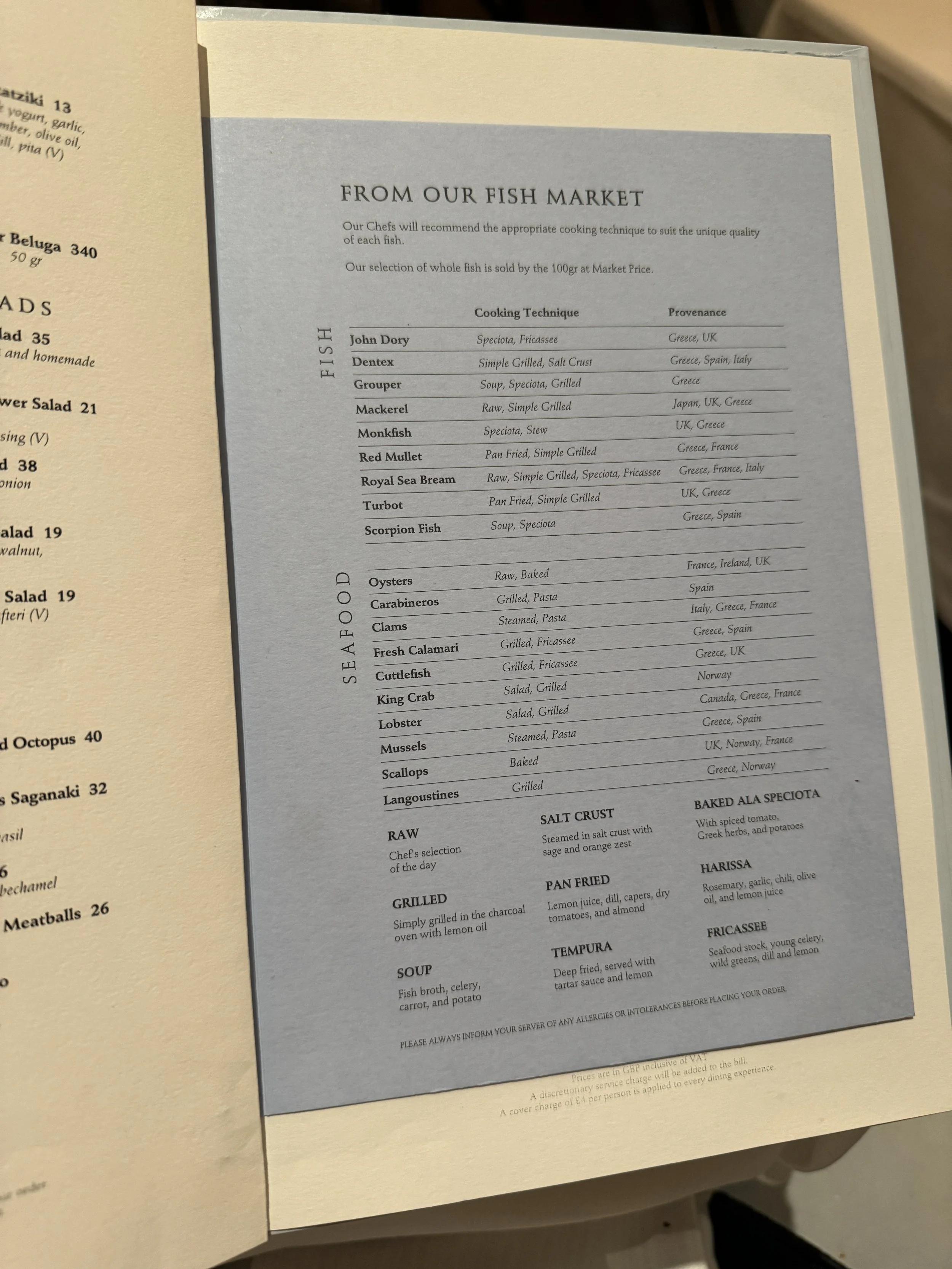
When you eat in Greece or Cyprus, you usually go for either fish or meat; we don’t usually mix the two. We didn’t order any fish this time, which is priced per kilo based on ‘market price’ and, going by Jay Rayner’s review, is also needlessly expensive. That said, there’s a glorious fish counter as you enter the restaurant, just like you’ll see at Milos, at Kima in Marylebone (Opso’s better fish-focused sister restaurant) and at the newer Krokodilos in Kensington. Except here, there’s a nice sheet slotted into your menu which lists the provenance of the fish – a nice touch that you don’t see all that often. Let me know what you think of the fish if you can afford to go and try it.
Dessert?
We couldn’t afford any dessert but here’s the menu.

Conclusion of our review of Gaia
I arrived at Gaia expecting a massive let-down given the pricing for a standard Greek menu. While the massive let-down didn’t come, I left wishing that the pricing had been fair enough for me to tell people that it features some of the best-quality executions of authentic Greek food in London’s modern Greek restaurants, and that they should go. Sadly, I can’t do that for a restaurant where the menu and the entire concept betrays the very essence and inclusivity of the cuisine it claims to represent: strategically – intentionally – pricing out the masses while naming itself after Greek mythology’s Mother Earth. Even if I wanted people to go and try it, the restaurant clearly doesn’t want most people to. There is nothing Greek about that. I don’t know if it has anything to do with a non-Greek owner, but I know that they probably couldn’t care less.
To the team at Gaia, thank you for the great food and service, but please ask your superiors to re-evaluate your pricing, especially the £35 you charge for what is really just a standard Greek salad that underwhelms.
Why did I go, then, you’re asking? I’m writing the world’s first ever complete guide to Greek food in London. And I’m almost done.




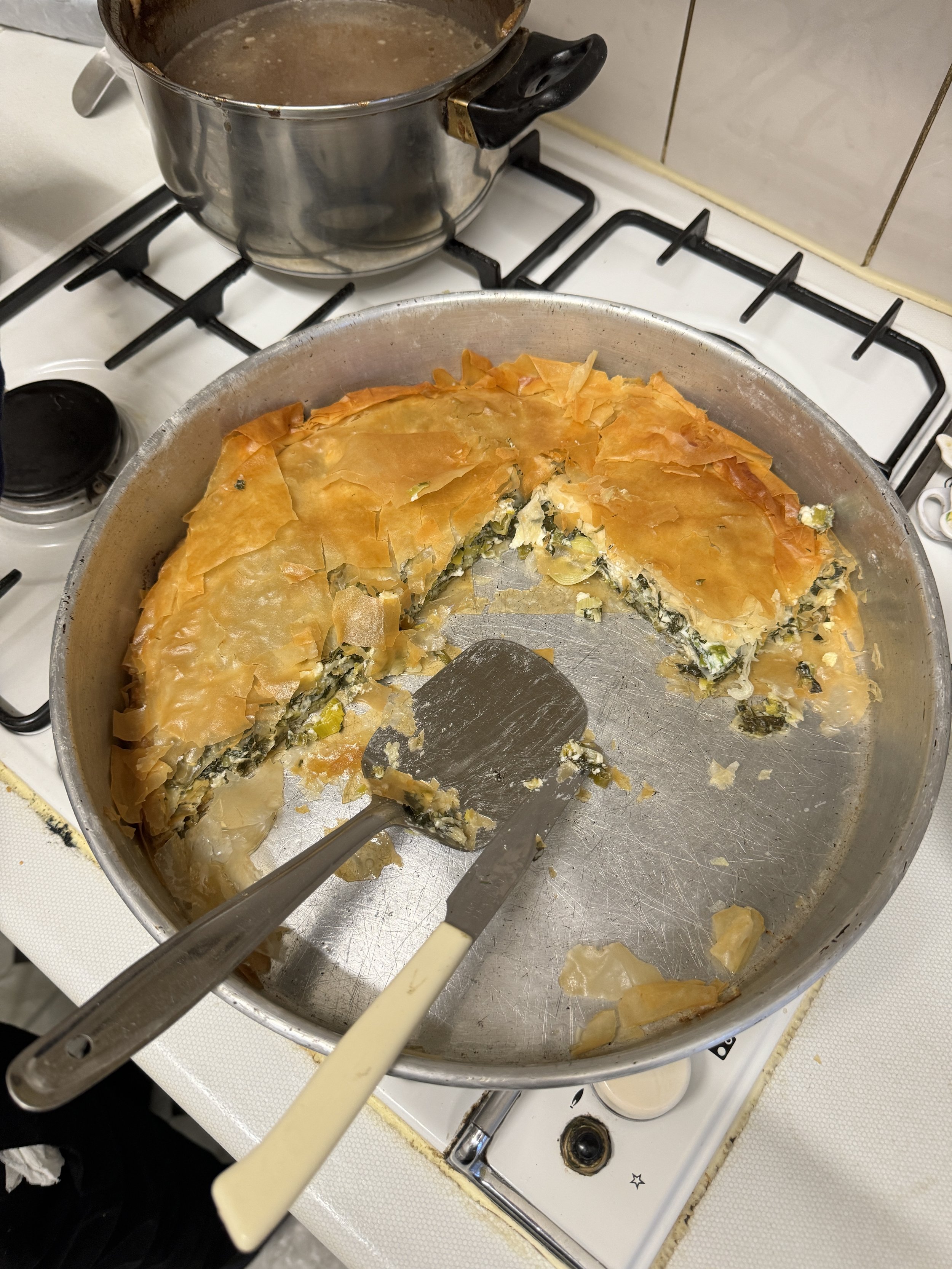





A traditional Greek village spanakopita or hortopita with homemade filo pastry. The real thing.