

Dakos Recipe: Cretan barley rusk ‘salad’

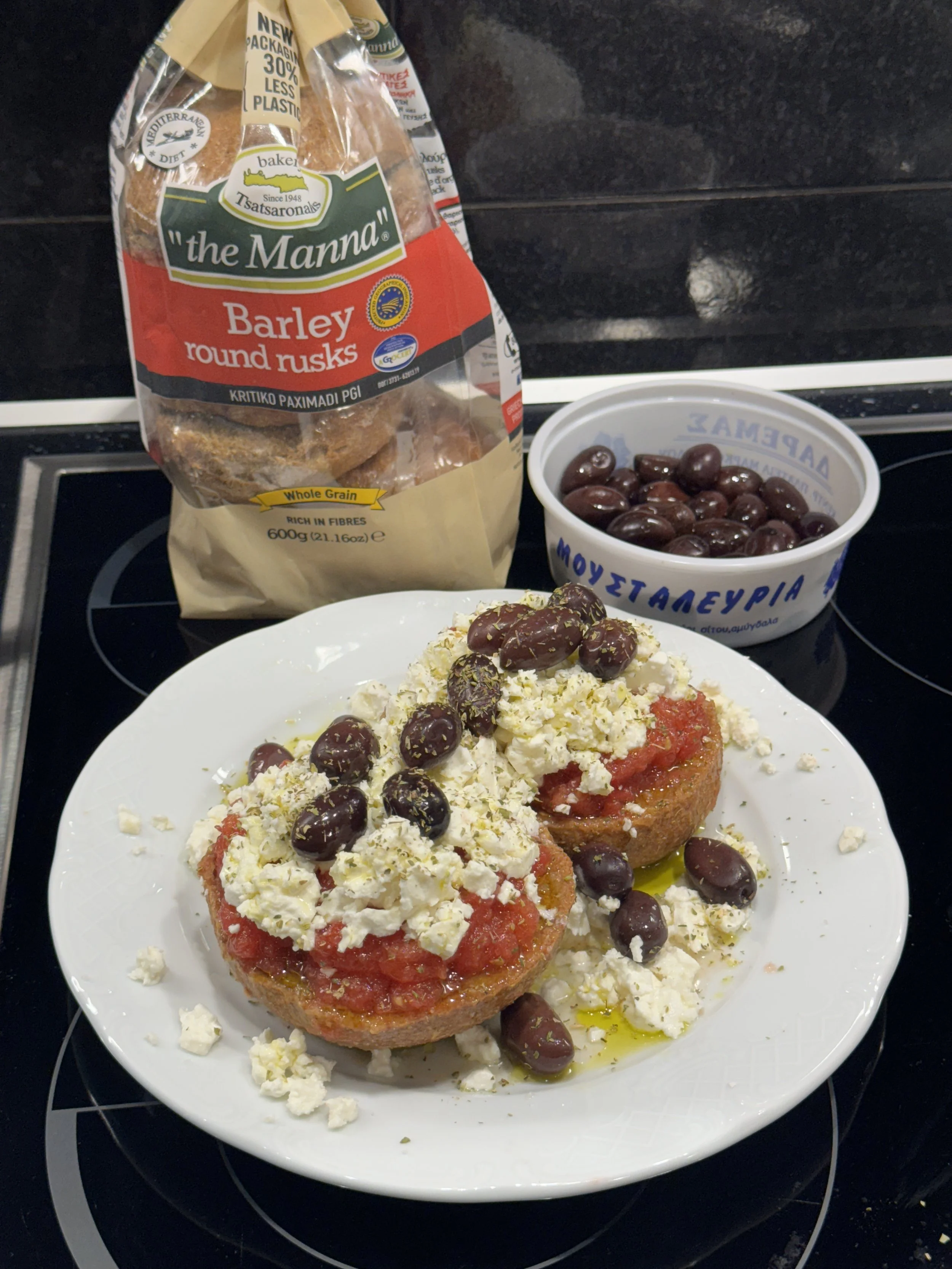
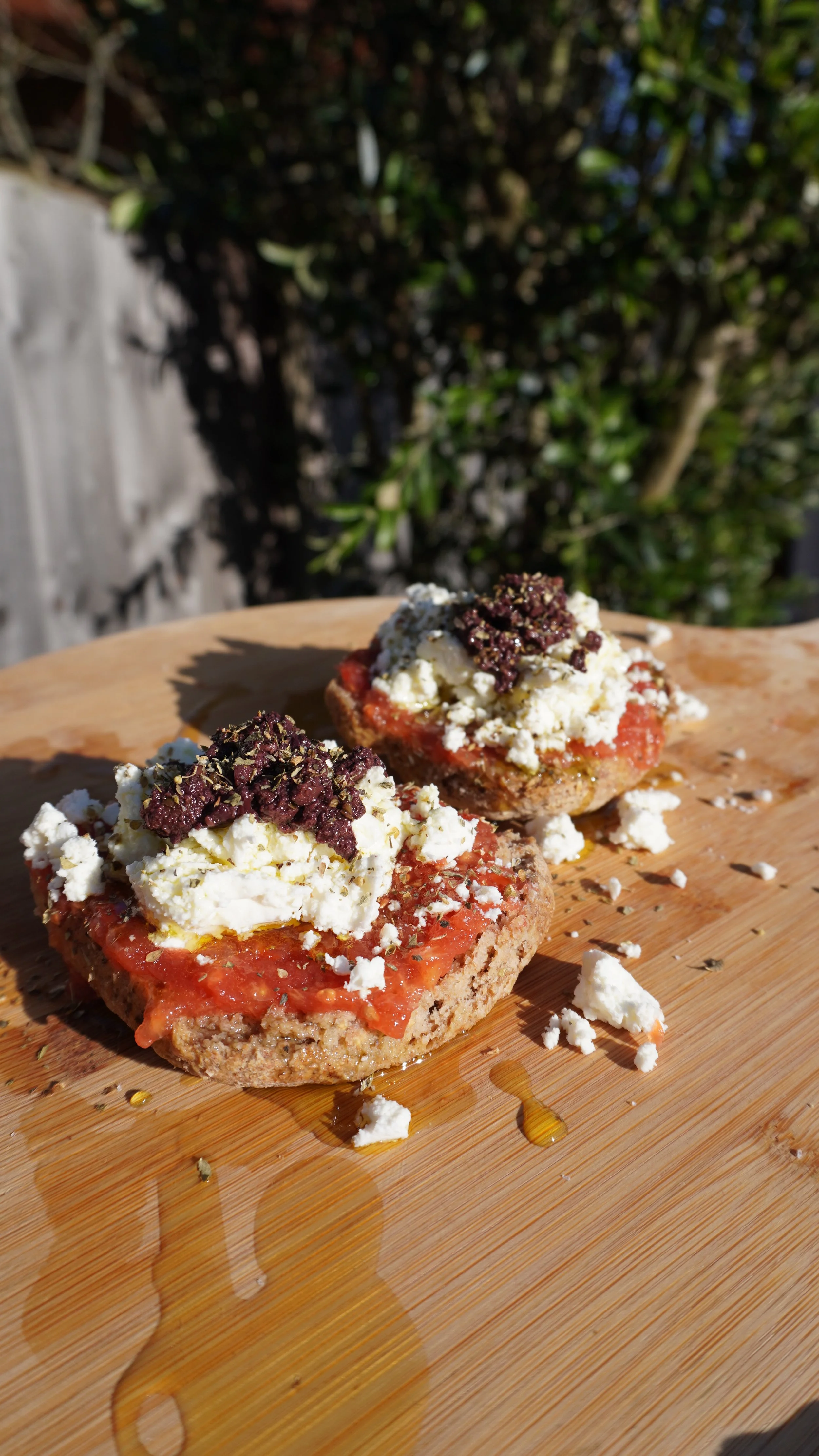
Cretan barley rusk with tomato, mizithra cheese and olives.
Dakos (or ntakos; ντάκος) actually refers to the round barley rusk itself – the paximadi, but has also become synonymous with this ‘salad’, usually served on the rusk, but often also deconstructed. The rusk originates from Crete, where farmers in the mountains tended to cultivate barley – hence the barley rusks, baked twice to last longer. In Crete, dakos is also often referred to as koukouvagia (κουκουβάγια). Technically, the koukouvagia refers to the round barley rusk or kritharokoulouro, and ntakos the longer, more rectangular rusk. Either can be used for this recipe.
You’ll often encounter the dakos deconstructed as a ‘salad’, with the rusks broken up and mixed with the other ingredients, or substituted with smaller bite-sized barley rusks – meaning there are plenty of ways to make this. If you’re using larger rusks you can also break them up before serving to make it easier to eat, if you like. The main twist here is using olive oil paste rather than olives, as I’ve found it’s a good use of olive oil paste from our friends at Manayi, and makes it easier to eat all the toppings in one bite :)
Add your email below
Be the first to hear about new Souvlakination recipes.
How to make Cretan Dakos: Recipe

Ingredients
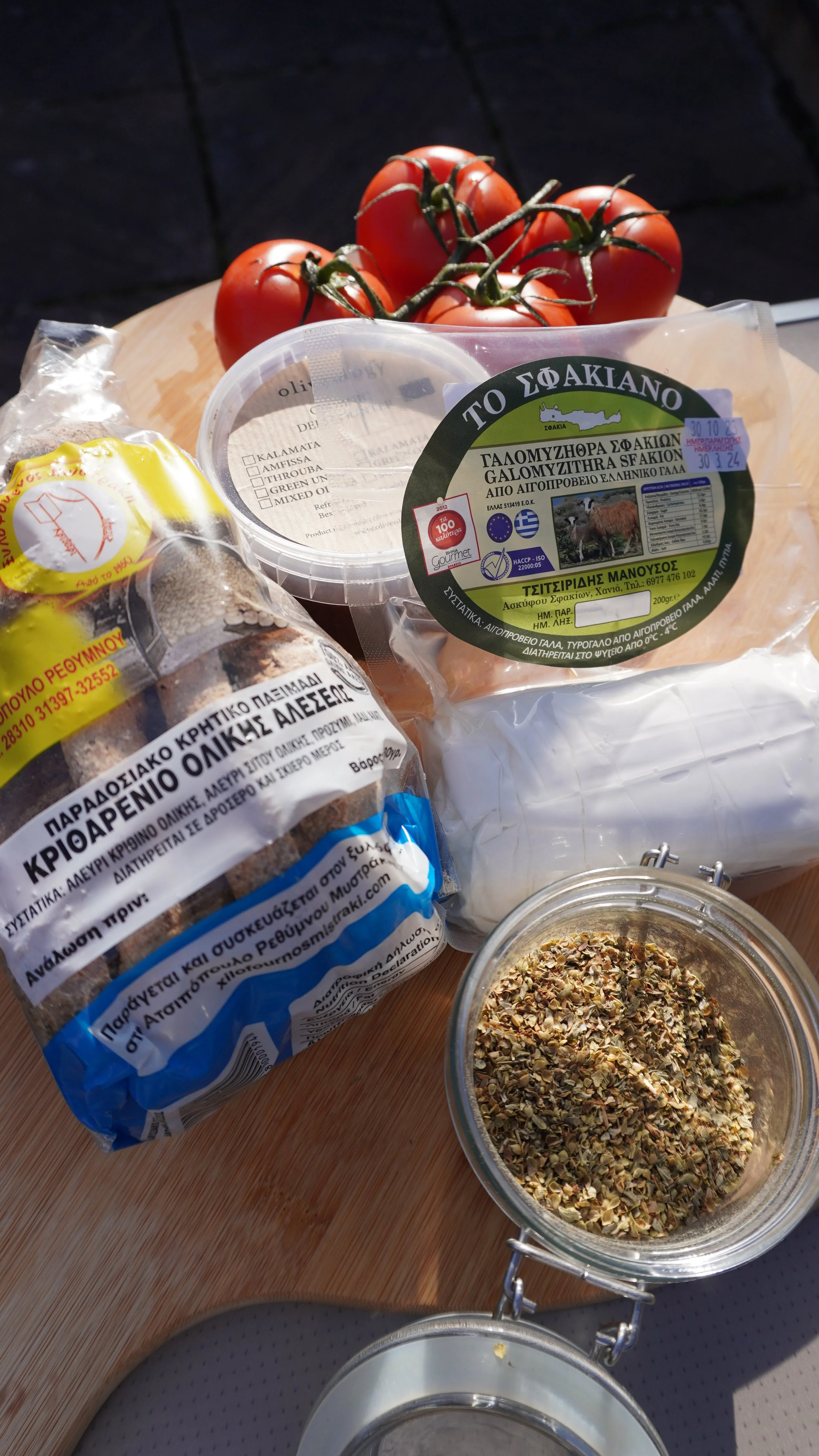
Kritharokouloura or Cretan barley rusks (round or rectangular; dakos or koukouvagia)
One large, ripe organic tomato
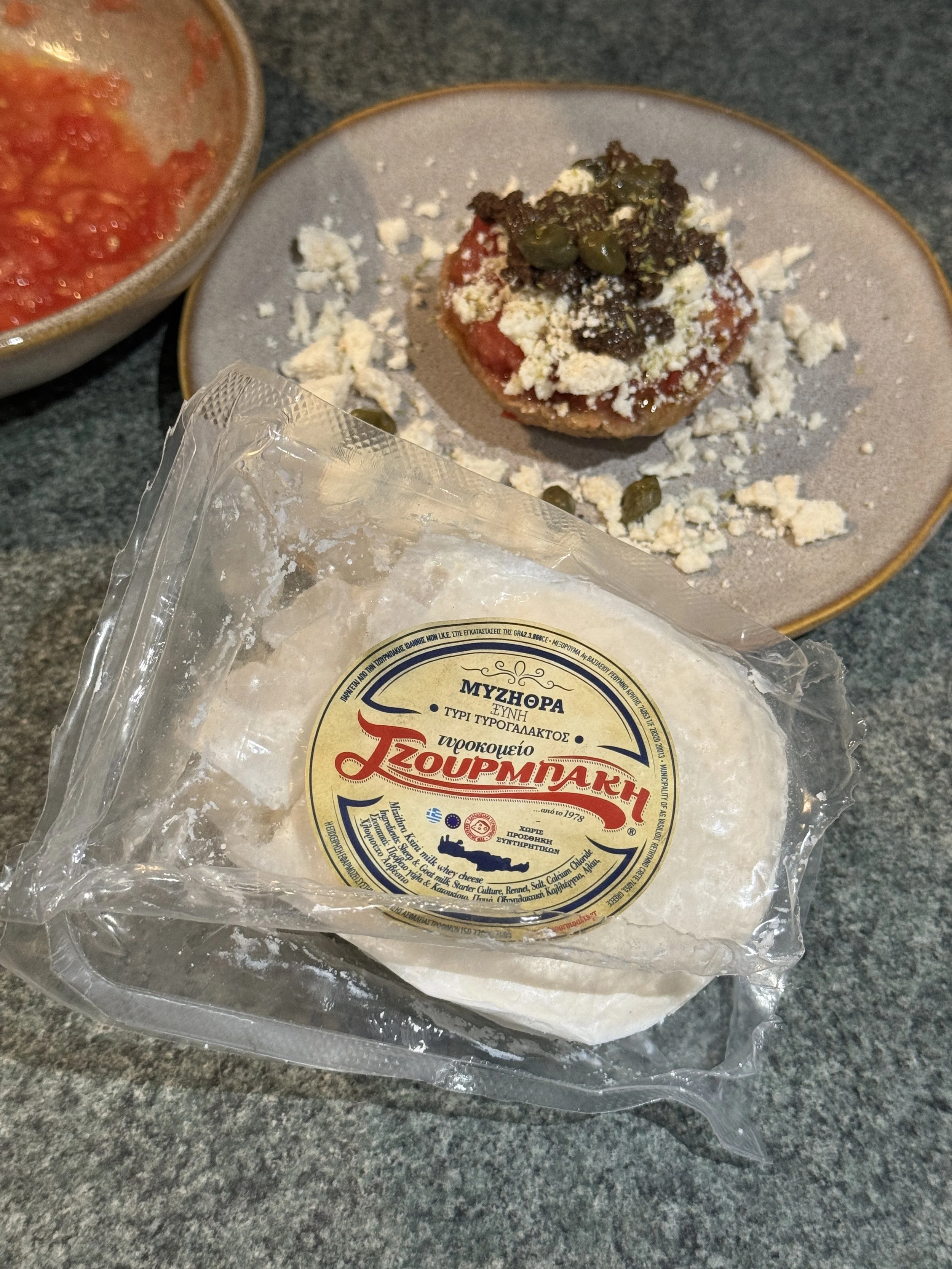
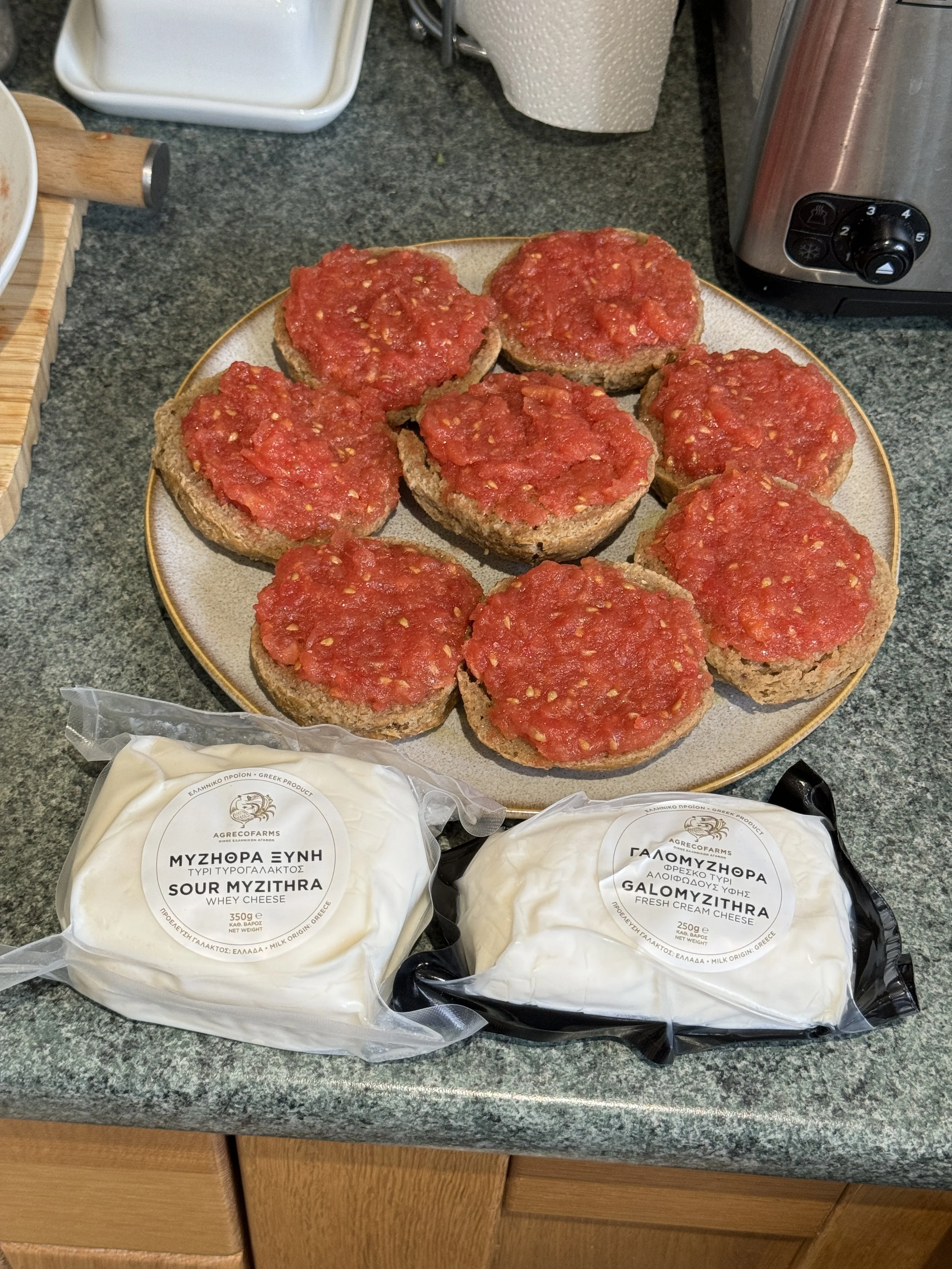
A couple heaped tbsps (40g-50g) of xinomizithra, feta or galomizithra (not dry aka xiri mizithra)
A few pitted black olives OR olive paste
(Optional: One teaspoon of pickled capers or samphire/kritamo)
Oregano to garnish
Extra virgin olive oil
Salt
Method
First, grate the tomatoes. To grate them: cut them in half and grate them into a bowl using the coarse side of a grater (big holes) so that nothing but the skin and stalk is left in your hands, which you can them discard. Drizzle with some extra virgin olive oil and lightly season.
Dip the barley rusks into a bowl of water for about 10 seconds each side to soften them, and place them crust-side down on a plate. Don’t run the rusks under the tap to avoid them falling apart.
Drizzle the rusks with a little extra virgin olive oil, then generously spoon the tomato mixture on top.
Drizzle with a little more extra virgin olive oil and season with a little more salt.
Crumble the mizithra or feta on top.
Add the olives (and capers/kritamo if you like).
Drizzle with a little more extra virgin olive oil and garnish with oregano. Done.

Greek food recipes

A simple, soulful recipe that places the emphasis on disproportionately tasty, quality ingredients, most inspired by my time in Cyprus.