Taverna Ermou, London: the first good traditional Greek taverna

London’s Greek food scene
Up until the past 5 years, London’s Greek taverna scene was largely dominated by Cypriot tavernes that traced the migration patterns of London’s Cypriot community – from Camden and West London boroughs, up through to Harringay, Enfield, Barnet and now Hertfordshire. Given the irrefutable overlap between Greek and Cypriot cuisine, those tavernes largely deployed the ‘Greek food’ label, meaning that London’s perception of Greek cuisine was long dominated by quintessentially Cypriot traditions (add in a random mix of adaptations and foreign dishes that they deemed necessary for the London market). As popular as many were, they didn’t tend to really live up to the Greek label or reflect Greek food as you would find it in Greece’s cities let alone its villages.
That landscape first began to change after the Greek debt crisis. A spike in Greek migration to London preceded the first real wave of restaurants in the 2010s and early 2020s that mirrored the culinary situation in Greece. One caveat: that reflection was almost exclusively led by young, well-educated, politically-engaged professionals who all veered towards a modern, refined and sometimes, dare I say, pretentious representation of Greek food. A welcome and necessary development, albeit one that further exposed a missing bridge: there were still no traditional Greek tavernes that focused on referencing traditional Greek food the way you find it in Greece, in a simpler and universally relatable way. While restaurants like Myrtos, Mazi, The Life Goddess, 1905 and Vori are all worthy in their own right, I think it’s fair to say that London still needed a cliché traditional Greek taverna that wasn’t another stagnant London Cypriot stereotype nor too much of a refined take. A taverna in which you could feel more comfortable, look at your table and honestly see the resemblance with a typical Greek taverna in Athens.
London’s first real traditional Greek taverna
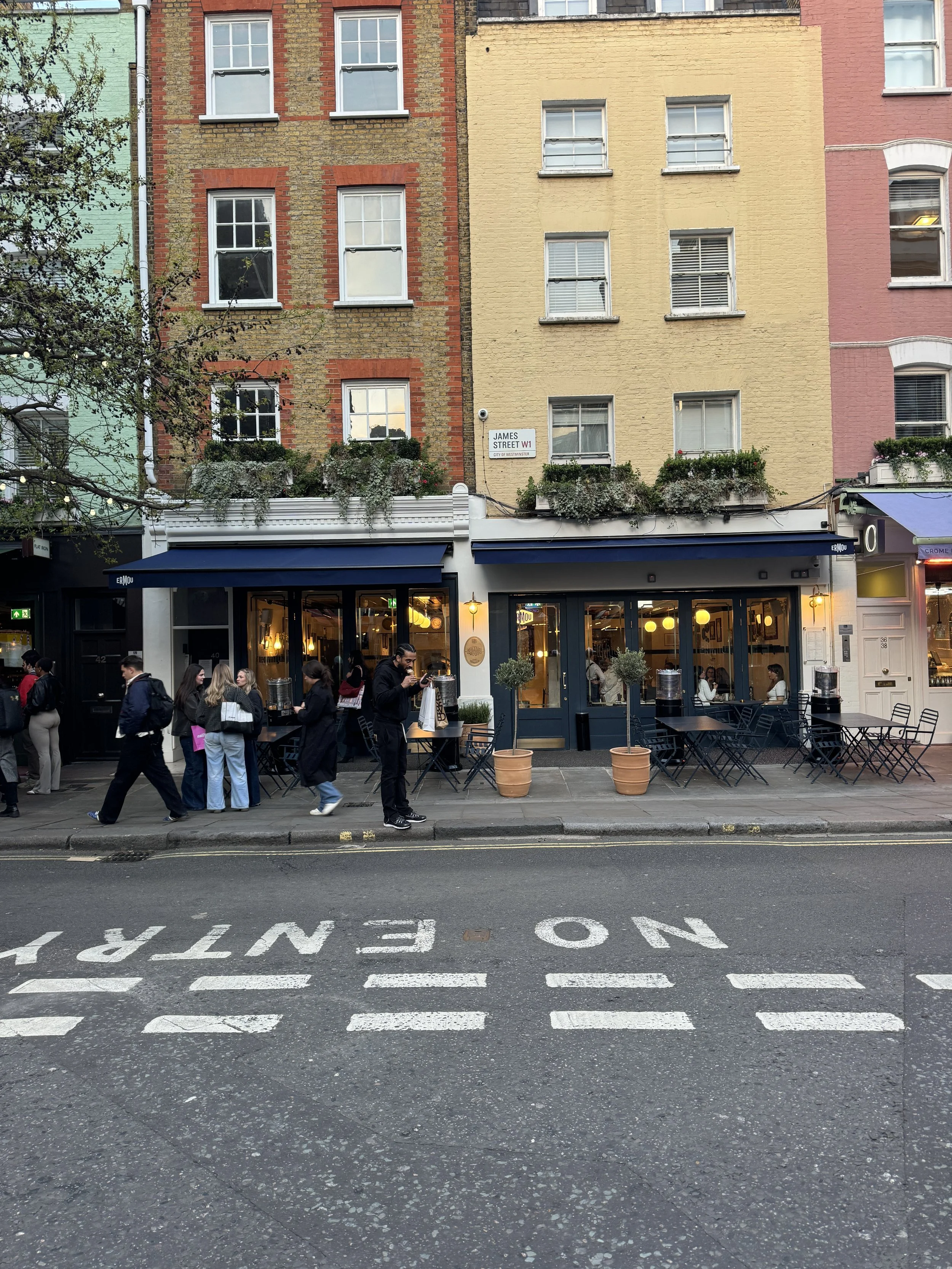
The truth is that the first Greek restaurant in London to really live up to that brief is Taverna Ermou on James Street in Marylebone.
In fact, it is a Greek taverna in Athens, which inherits its name from its original location on Ermou, the main shopping street that cuts across Monastiraki, from Syntagma to Thiseio. Having only first opened in Athens last September 2025, Ermou’s second branch is the Greek restaurant that London most needed, something its ownership knows as much as anyone. The Douzis brothers, Thomas and George, are the masterminds behind one of Greece’s most successful global hospitality brands: Ergon. Many of you will know Ergon’s Deli on Mayfair’s Maddox Street, now one of central London’s longest-standing Greek hospitality spots.
A few subtly original yet sensible twists aside, Taverna Ermou’s menu helps to plug London’s authentic Greek food gap. Its menu reflects the original site in Athens, with a mission to recreate an “old Athens” taverna. Last week I wrote about how Maza is London’s first spot to successfully capture Athens’ current wave of neotavernes, but Ermou is the first to really capture the typical, traditional Greek taverna and do it well.
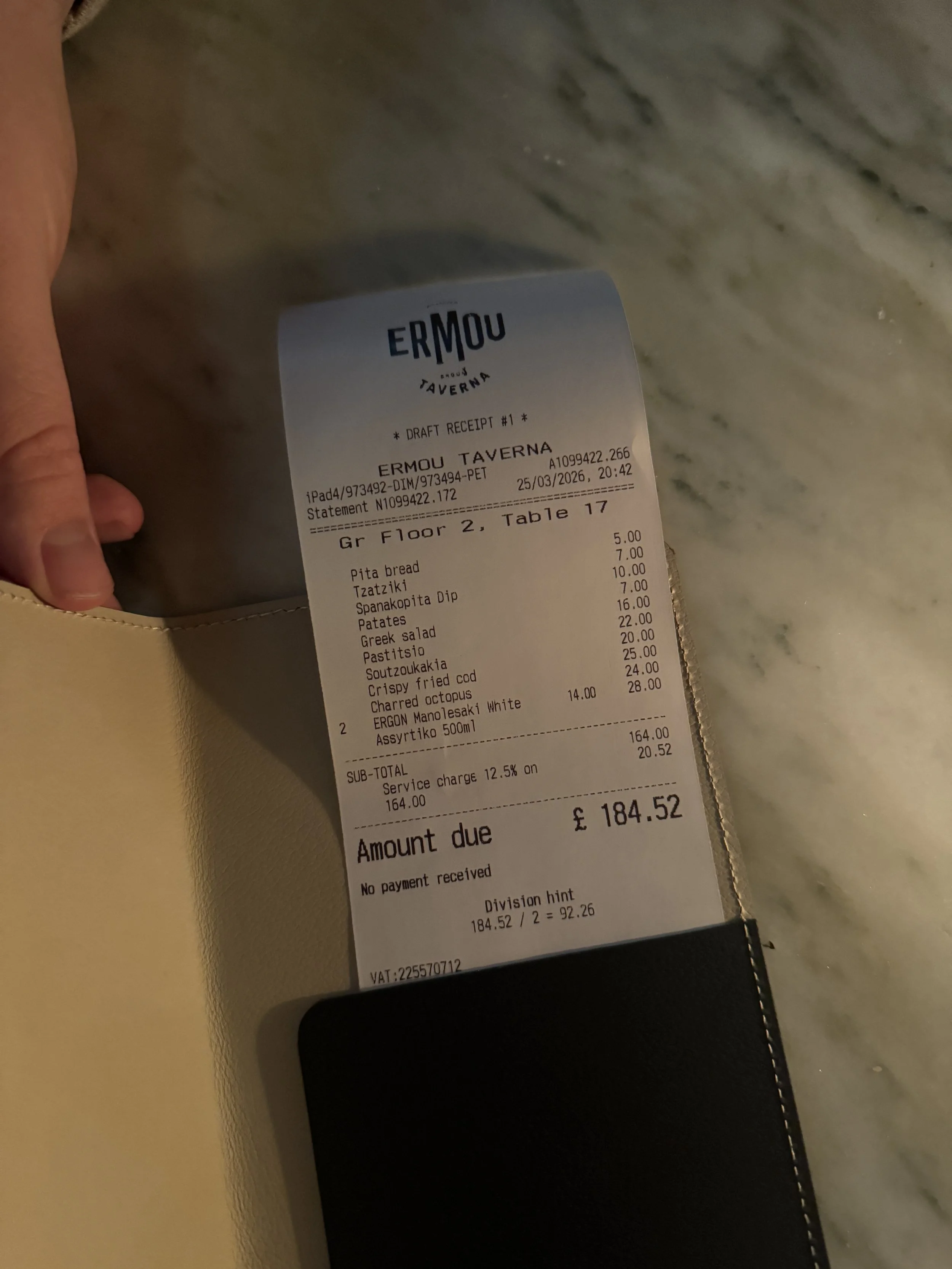
Although the Greek beers and retsina are yet to arrive, it stays true to the definition of ‘taverna’ by not forgetting about the wine (no such thing as a taverna without Greek wine). Beware: there are some good quality and good value-for-money wines on the list, and the Assyrtiko from Estate Manolesakis in Drama went down easily enough to justify a second £14 carafe (you can get an entire litre for £26, which would have saved us £2 had we just faced the reality of the occasion). Otherwise, a good-quality bottle of Kechris’ Retsina for £24 (which, although it’s yet to arrive at Taverna Ermou, I recently tried at Tzaki in Melbourne) will pair well with a mix of dishes.
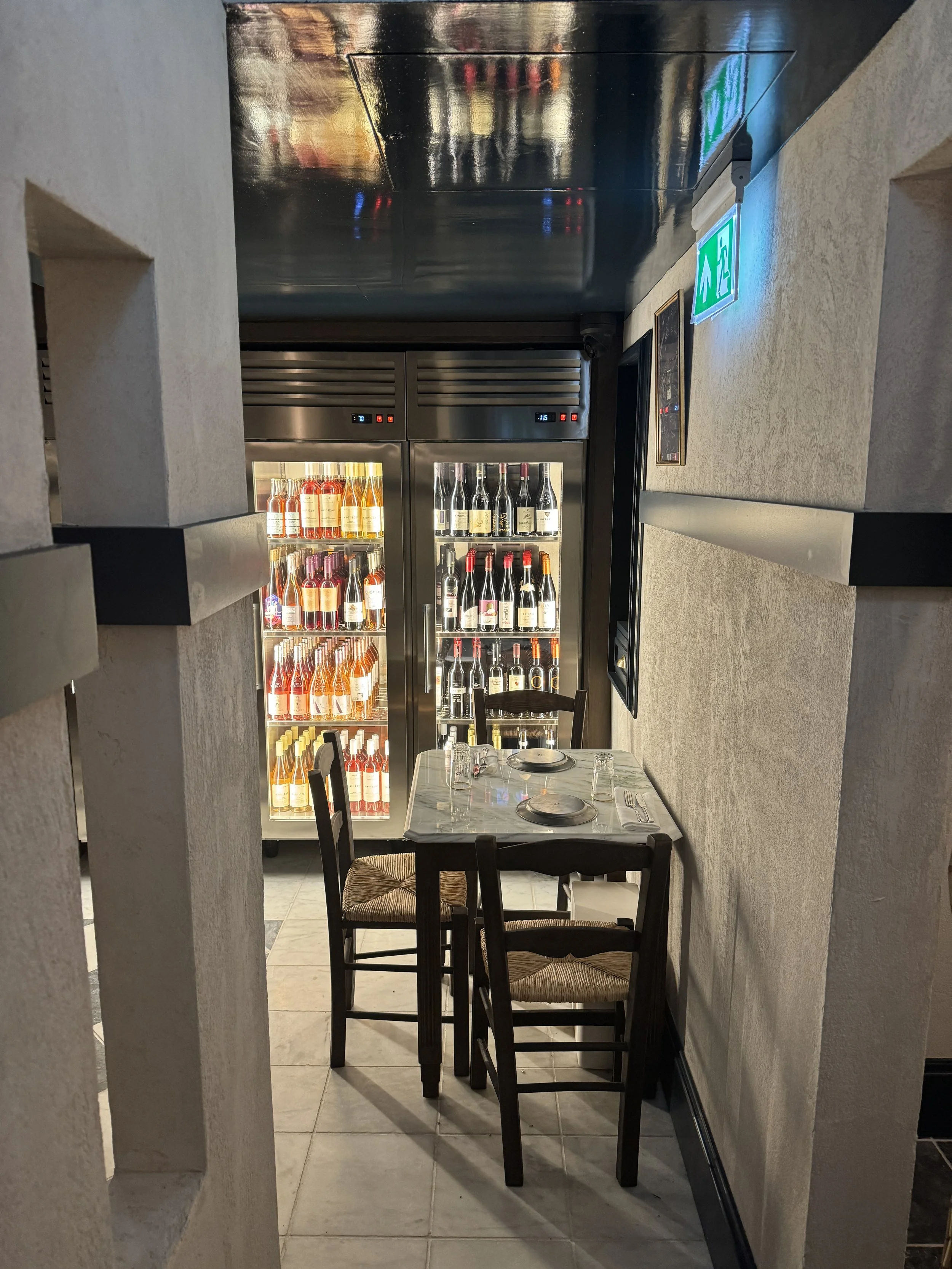
The Real Greek food in London
At last, a menu with simple, traditional Greek Greek food – no frills or riddles. Although Taverna Ermou initially opened on Saturday 21st March 2026, I headed down a few days later, on Wednesday 25th – a double Greek national holiday marking Greek Independence and the Annunciation of the Virgin Mary, on which Greeks typically eat battered salt cod with a garlic-potato puree. Just as well, because bakaliaros skordalia has been one of Taverna Ermou’s menu staples since it first opened last September in Athens. Honestly? Better than any fish and chips I’ve ever had in my entire life living in London. Crispy, crunchy batter, with fresh, flakey cod and a deliciously smooth garlic potato puree with walnuts. Another reason to celebrate the occasion. Where else do you find bakaliaros skordalia on a Greek restaurant menu in London? (1905 is really the only other place that will make it on the day in all honesty.)


Another classic, octopus with fava, is one of the standouts here; the octopus perfectly tender with a hint of smokey char, on a bed on top-drawer, ambassadorial fava that spoils London with a disproportionately high-quality take on a Greek classic. It’s pimped up with a sundried tomato paste and delicately sharp caper leaves. I didn’t leave a smear of fava behind.
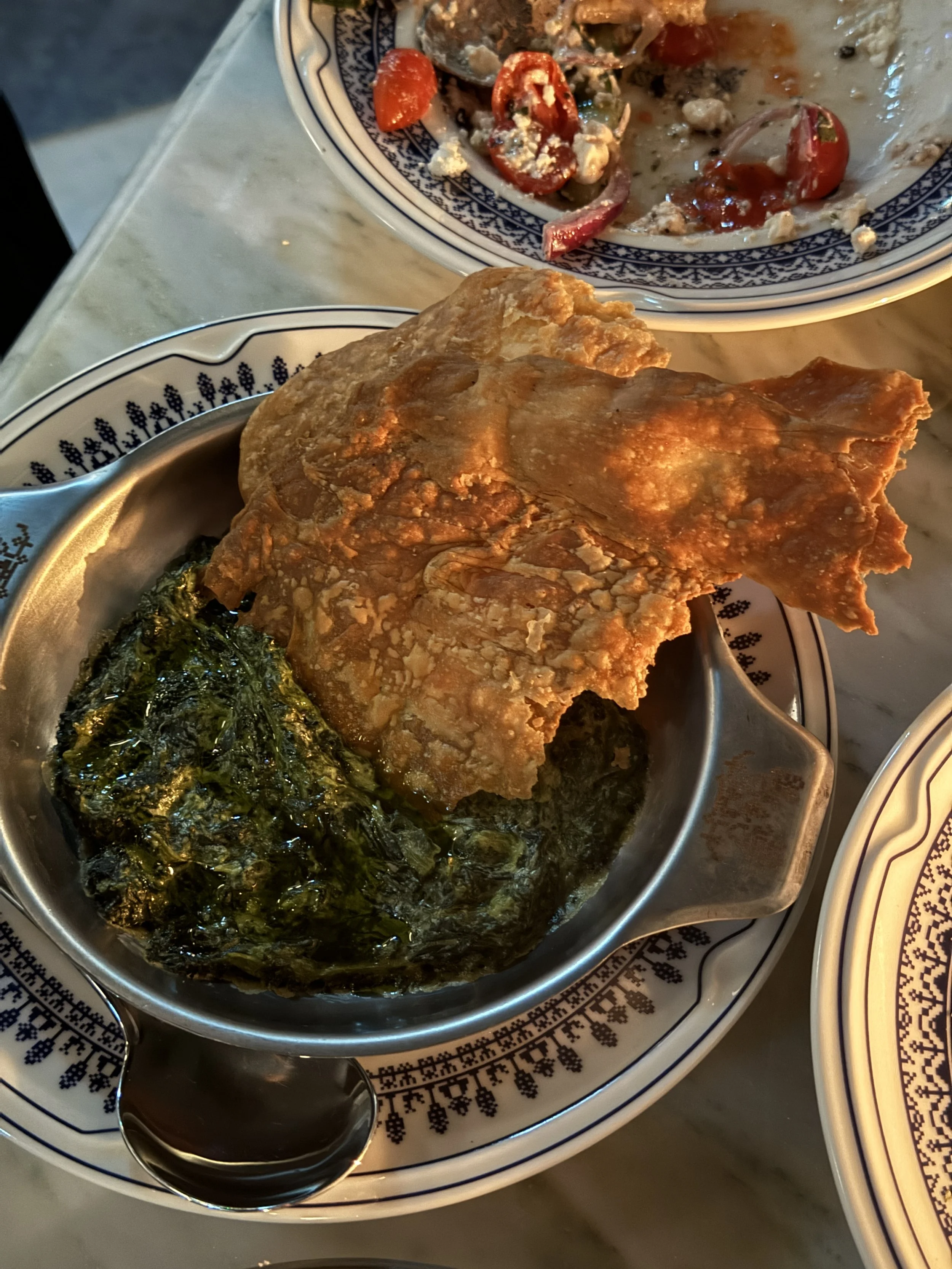
Again, no Middle-Eastern dips like hummus – just greek tzatziki, tyrokafteri, taramosalata (spelled correctly). Among the warm dips: melitzanosalata, bougiourdi (baked cheese with tomatoes and peppers which you don’t see often in London) and a “spanakopita dip” that is exactly what it says it is, no riddles or smoke and mirrors designed to fabricate style through deceiving. Most importantly, it tastes like Greece. Homemade, flakey, crumbly, crunchy phyllo with the perfectly seasoned, perfectly silky spinach dip – both of which capture the flavour as well as the texture of a good traditional Greek pita. It’s a deconstructed dish that keeps its form intact. It works at Myrtos in Chelsea and it works here.
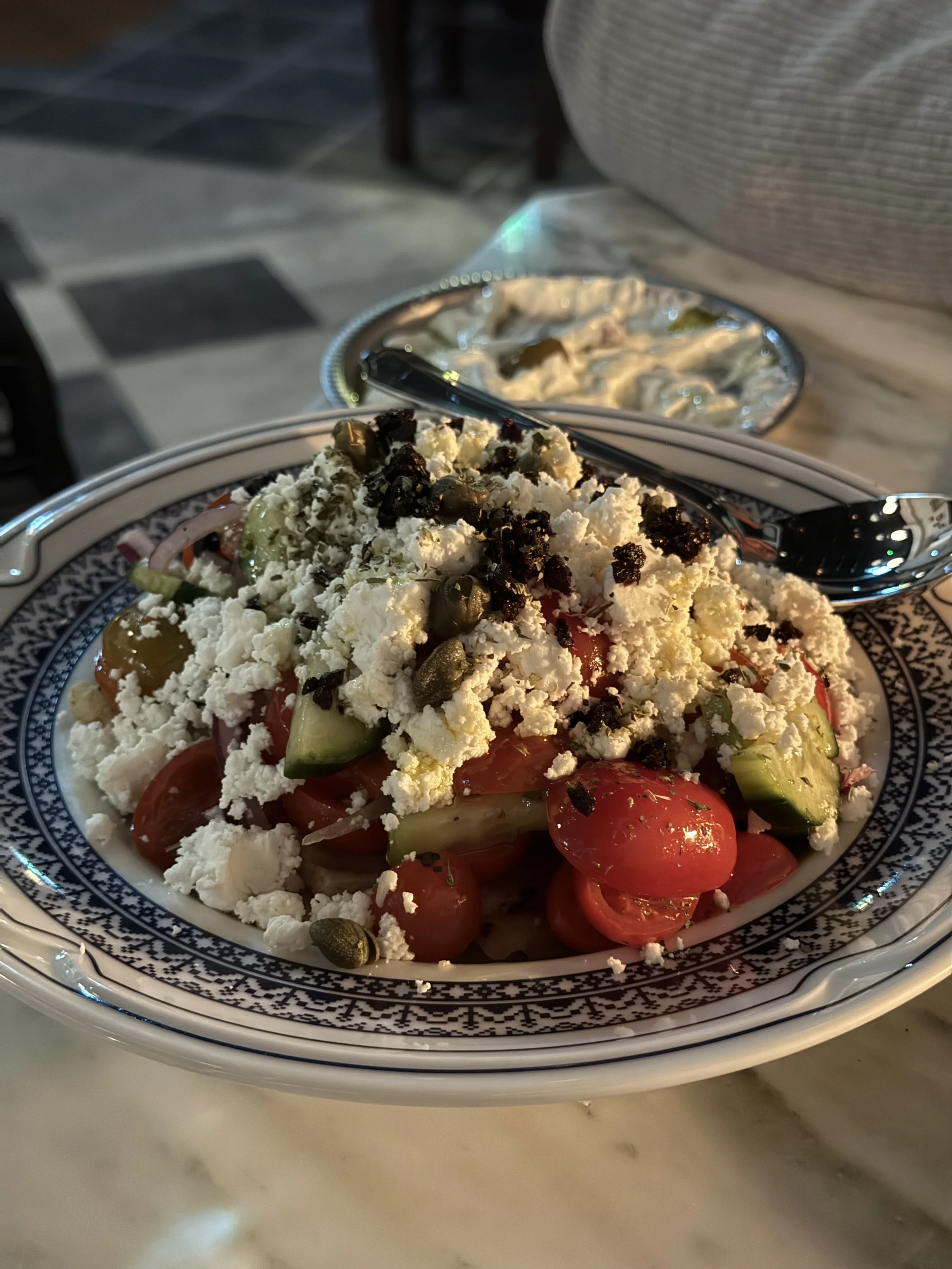
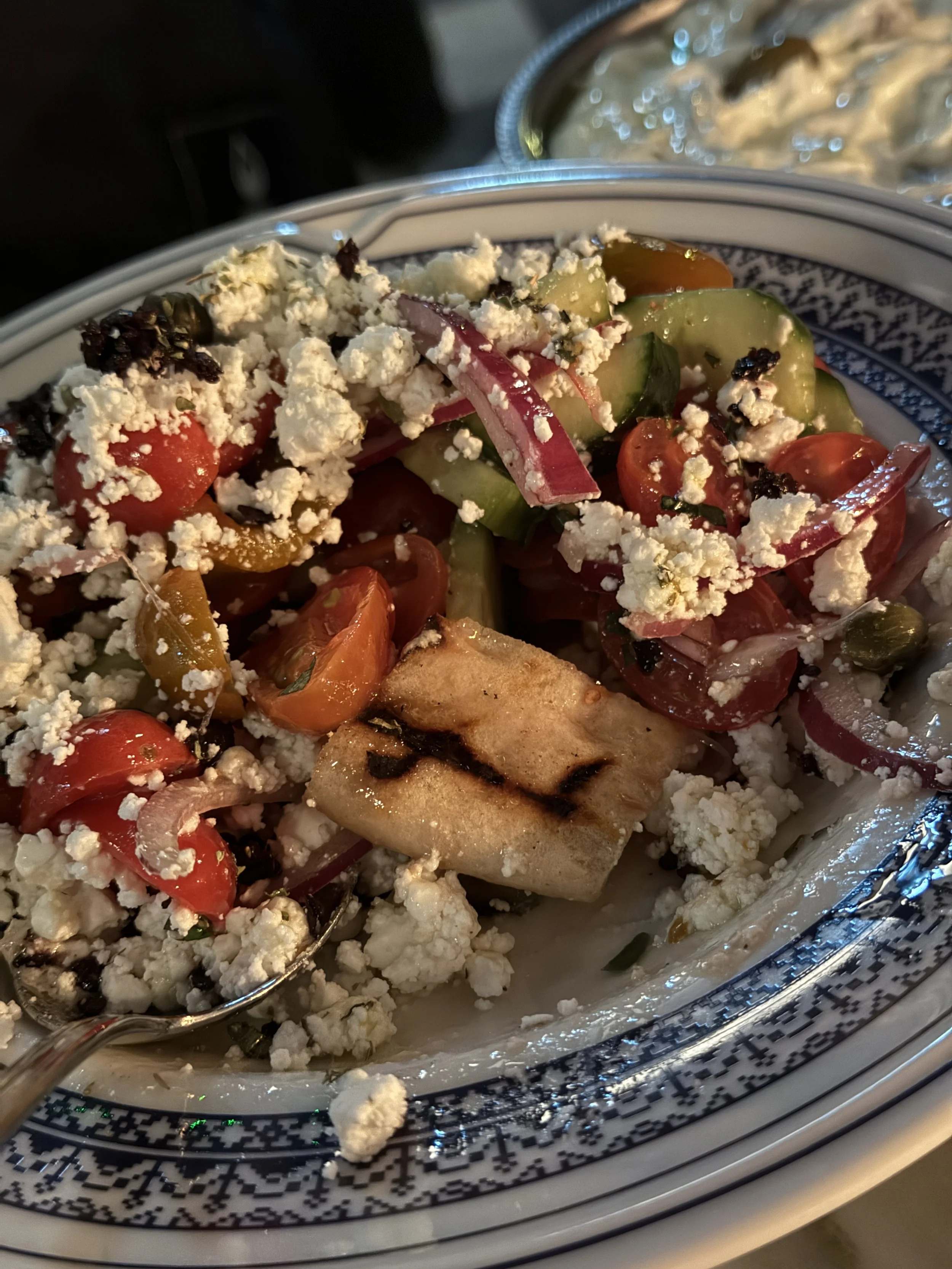
A good Greek salad. Good produce – with the common London cherry tomato hack that easily circumvents seasonal limitations – and good, crumbled feta. Soft, glossy, charred red peppers are a fresh twist that reference the common addition of peppers in a choriatiki (Greek salad). They do pair well with the subtle touch of basil which, I hate to say it, also actually works. Perhaps the smartest adaptation, though, is the additional pita bread that lies at the base of the salad bowl to soak up all of those juices (a pre-made ‘papara’, if you will). If I’m being honest, it would work even better with a slice of fresh bread rather than the same factory-made pites (which, as good as they are for souvlakia) we see in almost every new Greek restaurant in London. Ultimately, with its preservatives and texture, the pita didn’t actually manage to soak up a satisfying-enough amount of the salad dressing. But the Greek salad remains among the best I’ve had in London, and certainly better than the unjustifiably expensive £35 one at Gaia. That said, the staff informed us that homemade pita breads are to come.
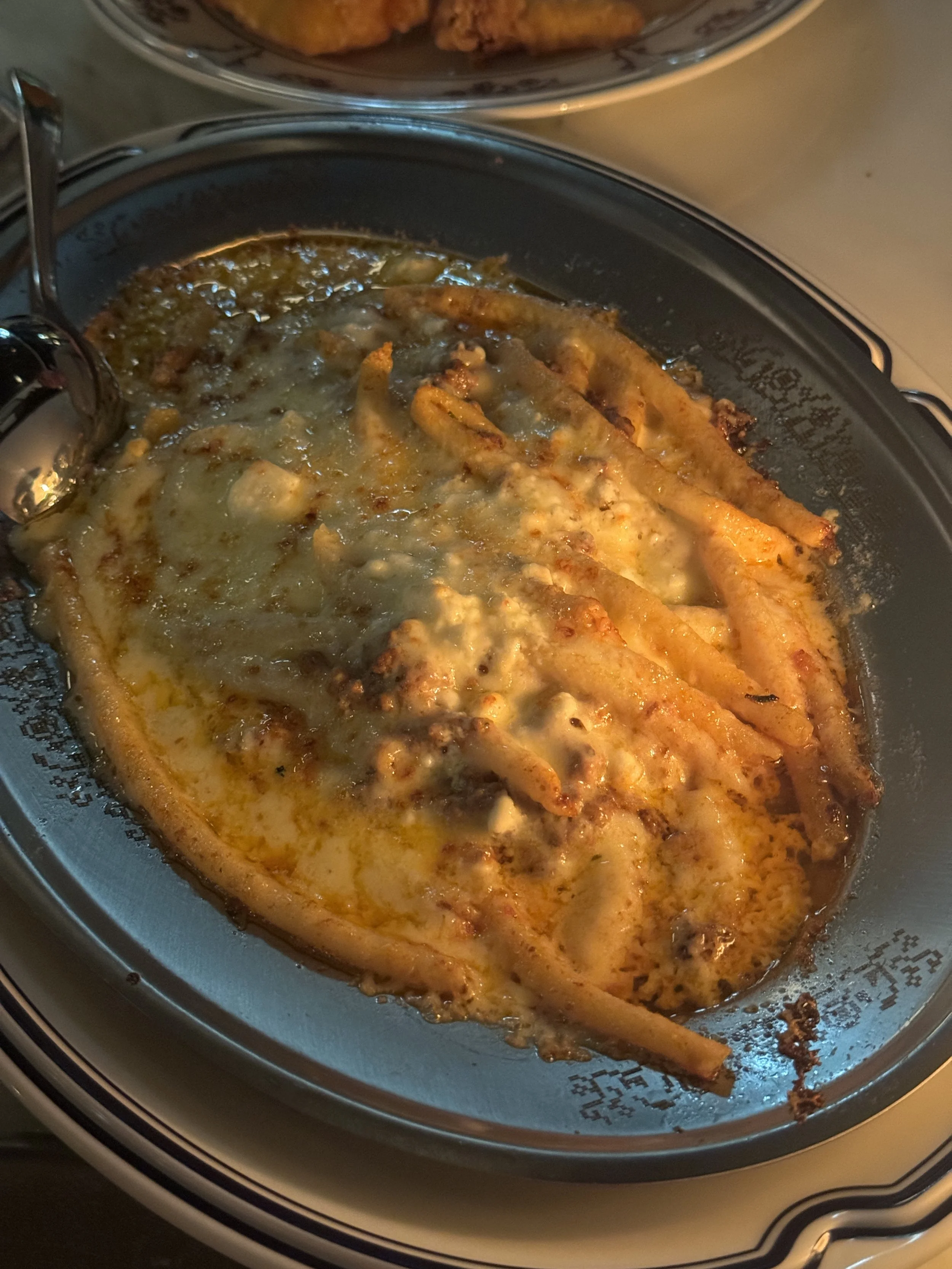
Good, delicious, Yiayia-inspired, childhood-memory-invoking, hand-cut chips (aka “patates” on the menu) perfectly reinforce Taverna Ermou’s rustically traditional, yet stylishly reserved atmosphere – just a light dash of oregano and the right amount of salt. Crispy and fluffy. A twist on tradition I can get behind and actually admire, having thought about it, is Taverna Ermou’s pastitsio. It’s not in any way deconstructed, but it’s flattened: a clever adaptation which means that instead of being served a stale, re-heated slice, you get a huge slice flattened across a whole platter that is cooked in a gas-fire oven to order (whereas it’s not possible to cook a classic pastitsio to order without making someone wait at an hour). It’s enough to feed 2-4 people. Everything is intact, from the proper bucatini pasta to the deliciously rich minced beef, the creamy bechamel and a crusty, gooey seal of Cretan graviera cheese.

Thessaloniki, the Douzis brothers’ hometown, is a running theme in the menu, from the bougiourdi to the soutzoukakia. Although more of a bifteki consistency and not quite as fine and juicy as Dioagonios’ or Diavasi’s works of art, the soutzoukakia are more than ample for a London rendition. Served with the fresh, finely sliced red onions and parsley that accompany the model Diagonios ones, on a bed of pita with a pillow of yoghurt, and with a chunkier, subtle nod to the spiced Smyrneiki saltsa that Greek refugees from Asia Minor took with them when they moved into its modern-day borders in the 1920s.
(You can see Souvlakination’s full Thessaloniki food guide here.)

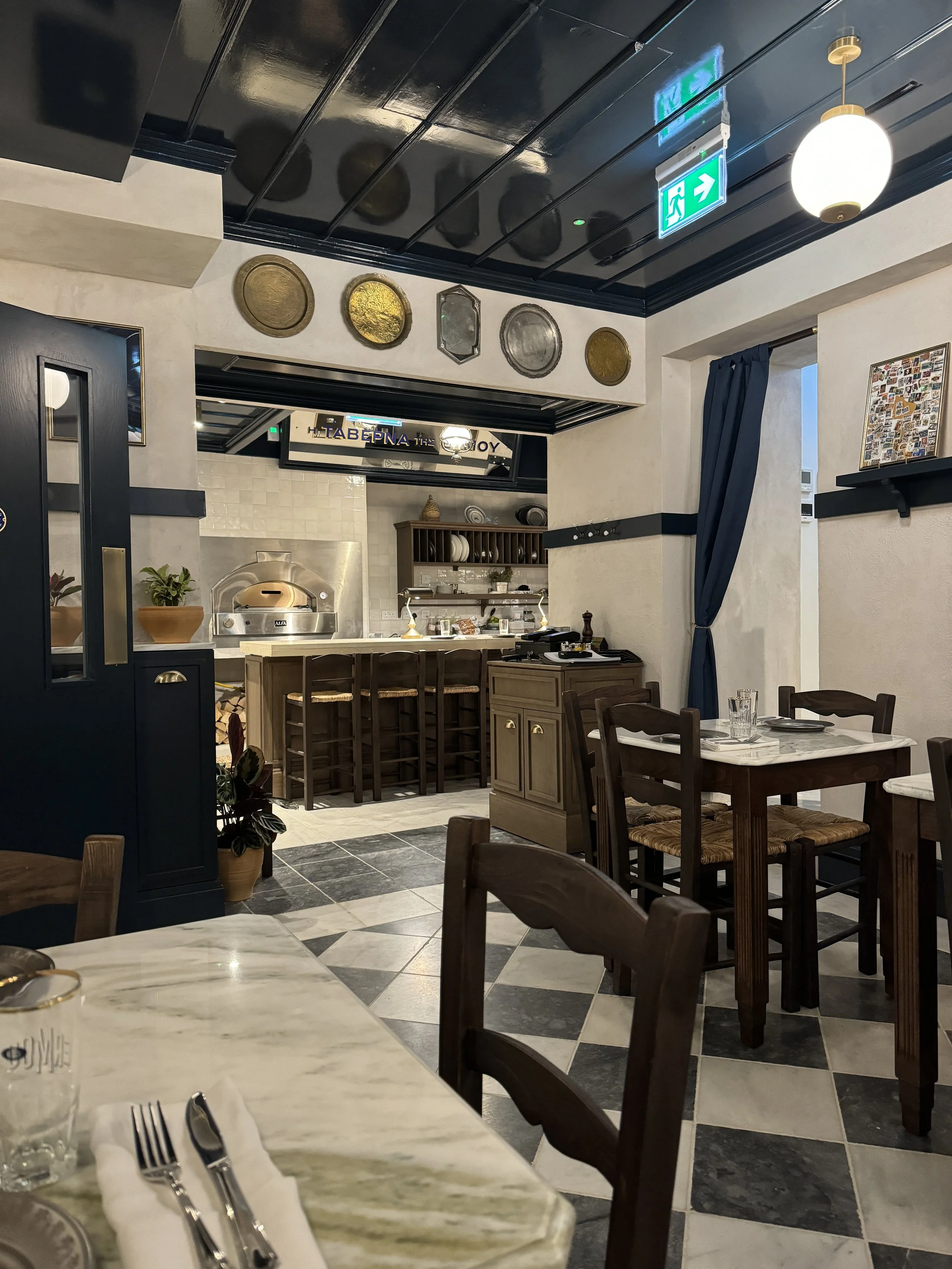
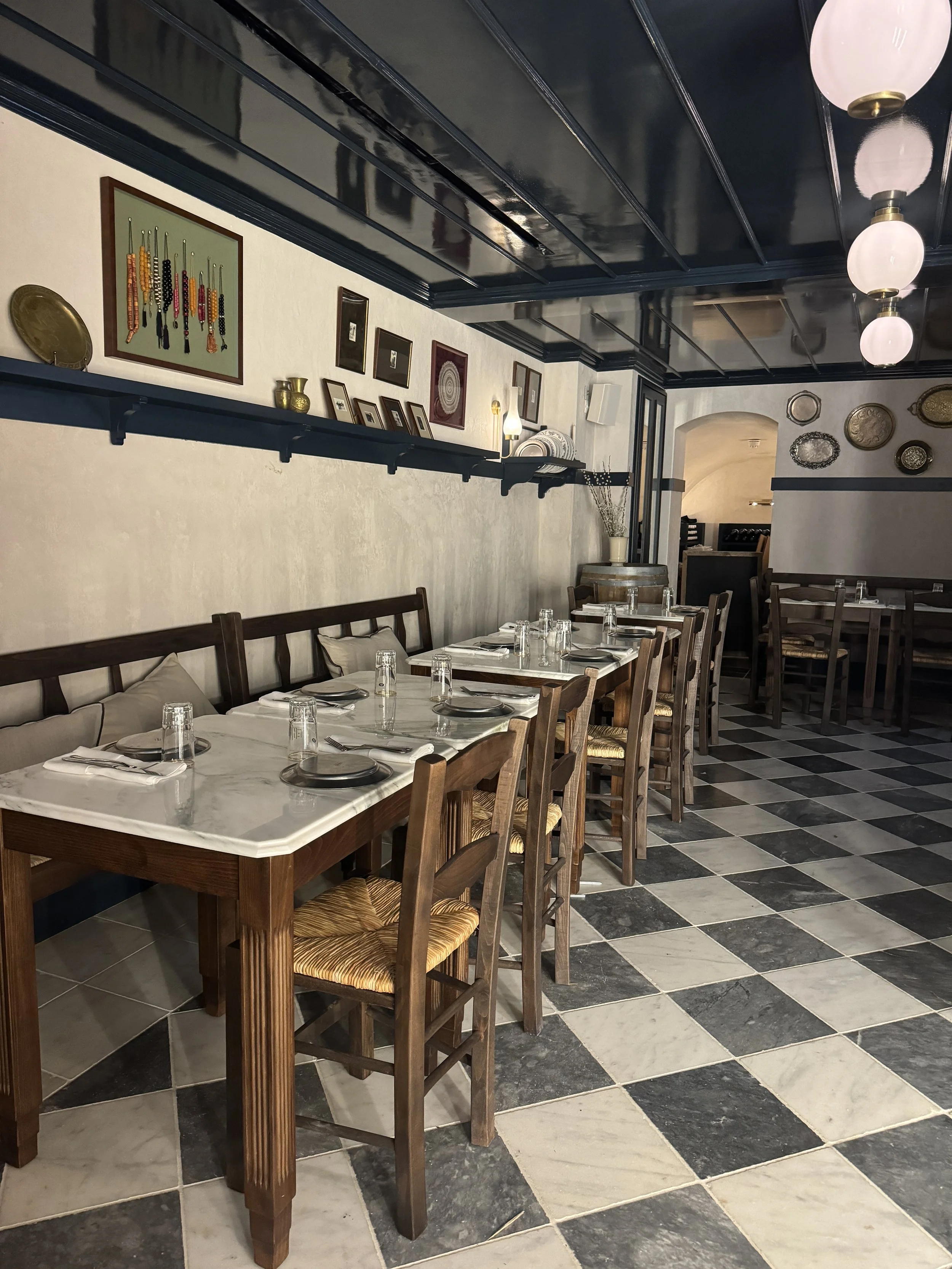
We were so full by the end of the meal, and determined to waste nothing (just a small piece of fish and soutzoukaki in the end), that I’m going to have to go back for the homemade, baked-to-order galaktoboureko dessert. And that Kechris retsina that pairs well with everything. Well, that’s the first excuse I can think of, and I’m bound to find many, because this is easily the best take on authentic, simple, traditional Greek taverna food I have ever had in my entire life in London, with its essence and fundamentals – like the use of extra virgin olive oil – intact. Great service, beautiful, elegant interior. A traditional Greek taverna for 21st Century London that is honest, real, Greek and good.
📍Taverna Ermou, 38-40 James St, London W1U 1EU


Sorry for the bad photo but be grateful.