

Maza, Mayfair: London’s first real Athenian Neotaverna
London hospitality power-couple Christina Mouratoglou and Adrien Carré were the first to show London an authentically modern take on Greek cuisine when they opened Mazi in 2012. Now, they are the first to capture the current mood of modern Greek cuisine. Maza, in London’s Mayfair, accurately transposes Athens’ booming new-age gastrotaverna scene to London – a project which Christina tells me was two years in the works. And, after visiting on its launch day, it shows.
Maza and the Athenian neotaverna trend
Maza is heavily inspired by Greek tavernes of the 1980s, but it’s also London’s first real success in capturing the defining mood of Athens’ 2020s food scene. Popular Athenian gastrotavernes and gastrokafeneia like Taverna ton Filon, Pharaoh, Manari, Plyta, Phita, Akra, LS & SIA and Seychelles have come to define the often hard-to-define modern Greek neotaverna, where nostalgia, culinary talent and creativity meet resourcefulness and traditional fundamentals. The common denominator is traditional Greek classics in contemporary settings with subtle, logical yet idiosyncratic culinary twists, often against backdrop of modern, minimalist aesthetic, vinyl records and lengthy, curated wine lists.

Stay up-to-date
Add your email to be the first to hear about the latest Greek food news.
Largely due to the success of such spots in bringing traditional Greek cooking and the Greek taverna into the modern age, that wave of neotavernes has spread through Athens like wildfire since the pandemic. Because neotavernes also maintain the ethos of the taverna as an affordable, inclusive social hub of the masses, where the food is made for sharing, they become popular fast. So much so that younger, creative and international audiences have helped push the wave beyond Greece, now that it’s become somewhat oversaturated in Athens.
For example, you see this new-age gastrotaverna trend referenced as far as Australia in spots like Homer in Sydney and Tzaki in Melbourne. But Maza is the first to successfully bring it to London. It also does so in an undeniably authentic way, and with a concept that’s got genuine substance and depth. A stylish retro-chic interior with quarry floor tiles and basket wicker ceilings is romantically nostalgic in a vulnerably personal manner. Low-hanging ceilings, a border of tall plants and the moody sunset hue of the backlit bar all reinforce the intimacy of the mellow neotaverna type we see in Athens.
‘80s… Athens… Mayfair... without the cliches

80s nostalgia is a running theme throughout the concept and Christina’s background is central to that: her grandmother’s immaculately meticulous handwritten recipes overlook the pass, just as the menu references “Grandma’s meatballs” and “80’s disco fries” with shredded veal kokkinisto and grated cheese – a dish that Christina says characterised her 80s upbringing in Thessaloniki. Expert playlist curation complements a refreshingly coherent concept with an 80s inspired playlist that seamlessly swings from Toto to Vissi to Abba to alternative Greek (entehna) with rhythmic fluency. Sitting at the counter seats, you sense a good energy around the pass as you watch orders come together and flames leaping for the souvles spinning above the grill.
As for the name, ‘Maza’ (μάζα)is named after an Ancient Greek barley bread, which you get to try as an amuse-bouche with housemade butter while you scan the menu.

The maza at Maza
A Greek menu and a Greek salad that doesn’t identify as dakos
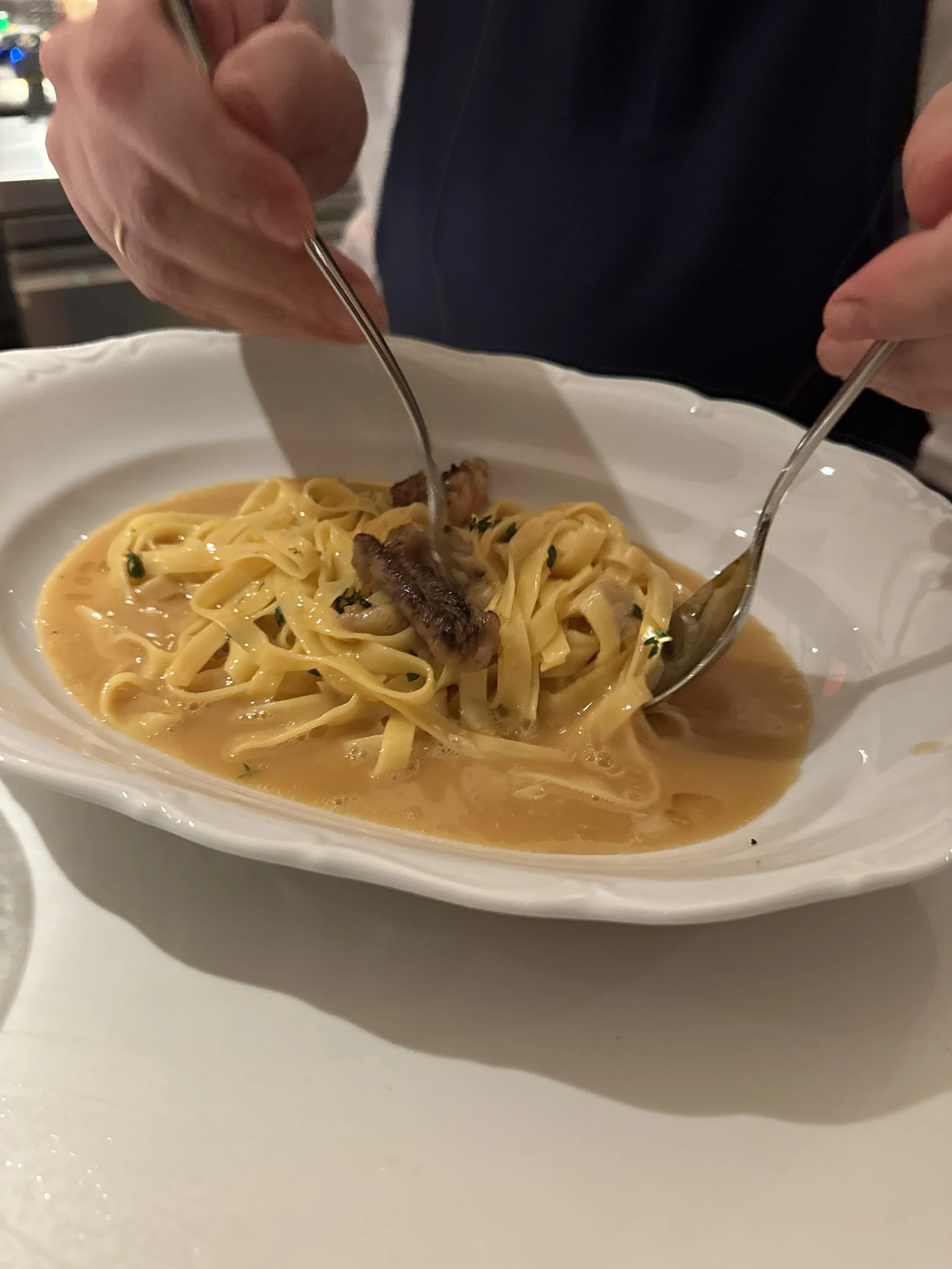
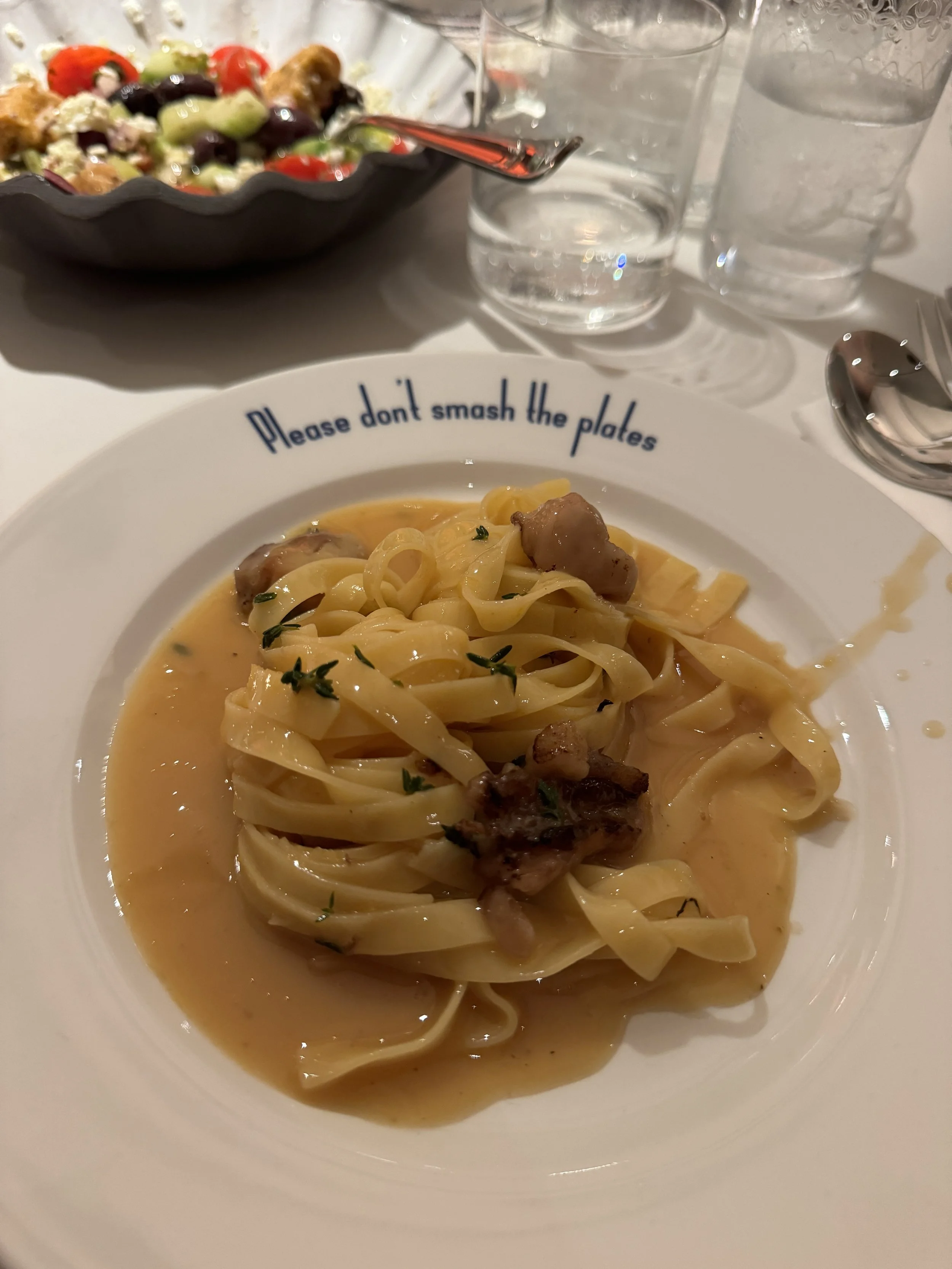
Executive chef Sofoklis Maragoudakis is a big part of what is quite frankly the first successful attempt to bring Athens to London. Like Mazi, Maza’s menu balances originality whilst remaining unequivocally Greek (finally, a Greek restaurant menu without hummus). Frigadelia (liver wrapped in caul fat) and a secretly-intricate handmade tagliatelle makaronada dish with bone marrow are both strongly reminiscent of Manari, Plyta & co, and the tendency of these neotavernes to resurrect traditional, overlooked ingredients like offal and marrow.

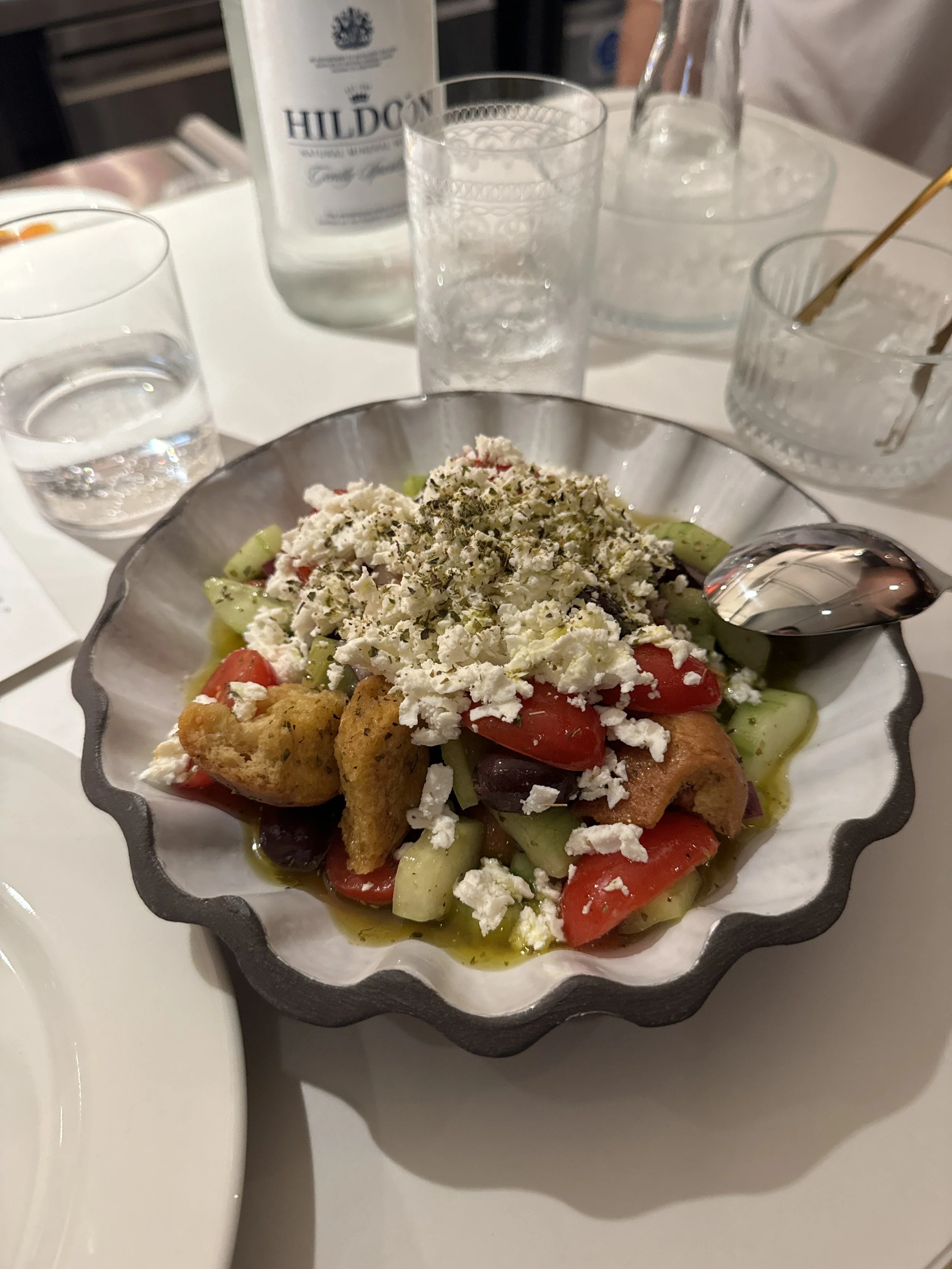
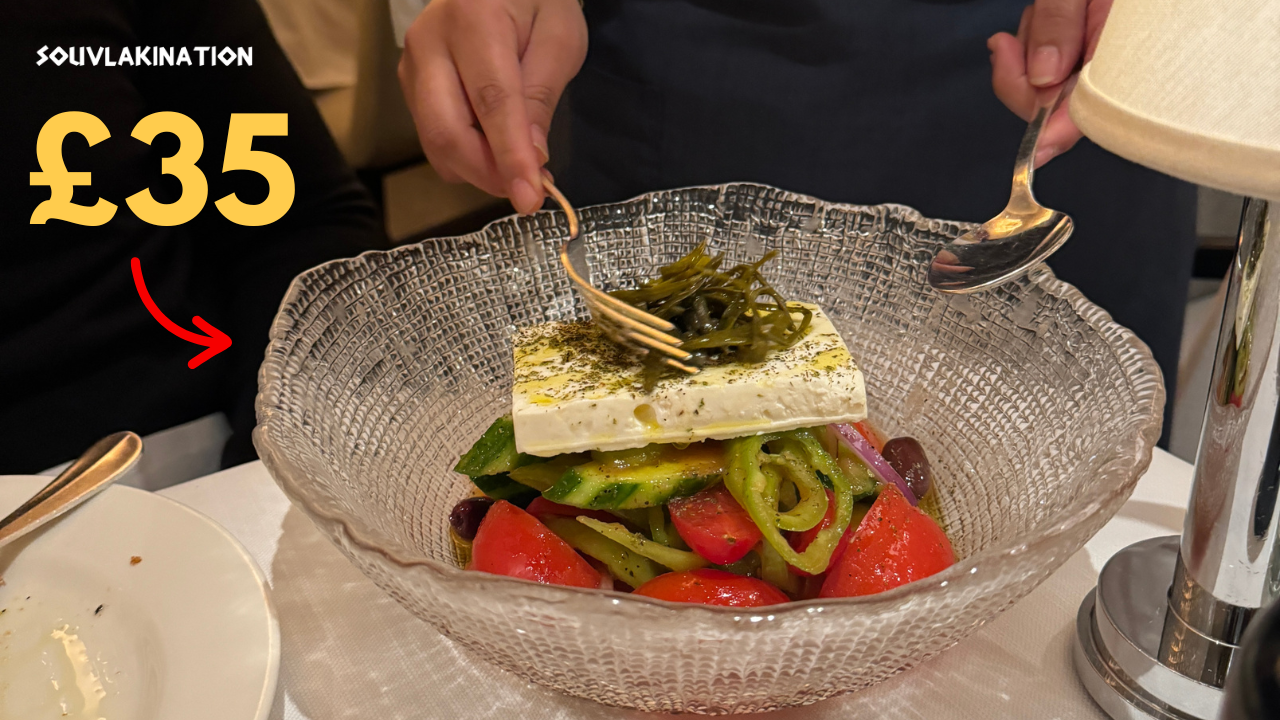
Looking at the menu, fish carpaccio and crudo dishes have become somewhat cliche across new-age Greek restaurants, particularly outside of Greece. But Maza’s seabass carpaccio stays Greek, with kritamo (rock samphire) and grape juice underlining a running theme of genuinely Greek ingredients throughout the menu – both in terms of their centrality to Greek cuisine across centuries and in terms if provenance. For example, Christina insists on using green chilli peppers from Greece for the tyrokafteri (spicy feta dip). A “tomatoes of the month” side dish on the menu also suggests an attention to provenance and quality ingredients, which you taste in the “Greek salad” with rusks from Kithira. It’s also refreshing to see the Greek salad not labelled as “dakos” just because the rusks are in there (“dakos” actually being the whole rusk with grated tomato and mizithra on top rather than a Greek salad with any old rusk broken into it). Like Mazi, Maza proves that there is plenty of uncharted territory within the remits of Greek cuisine, and lots of opportunity to create novel experiences without abandoning its essence.
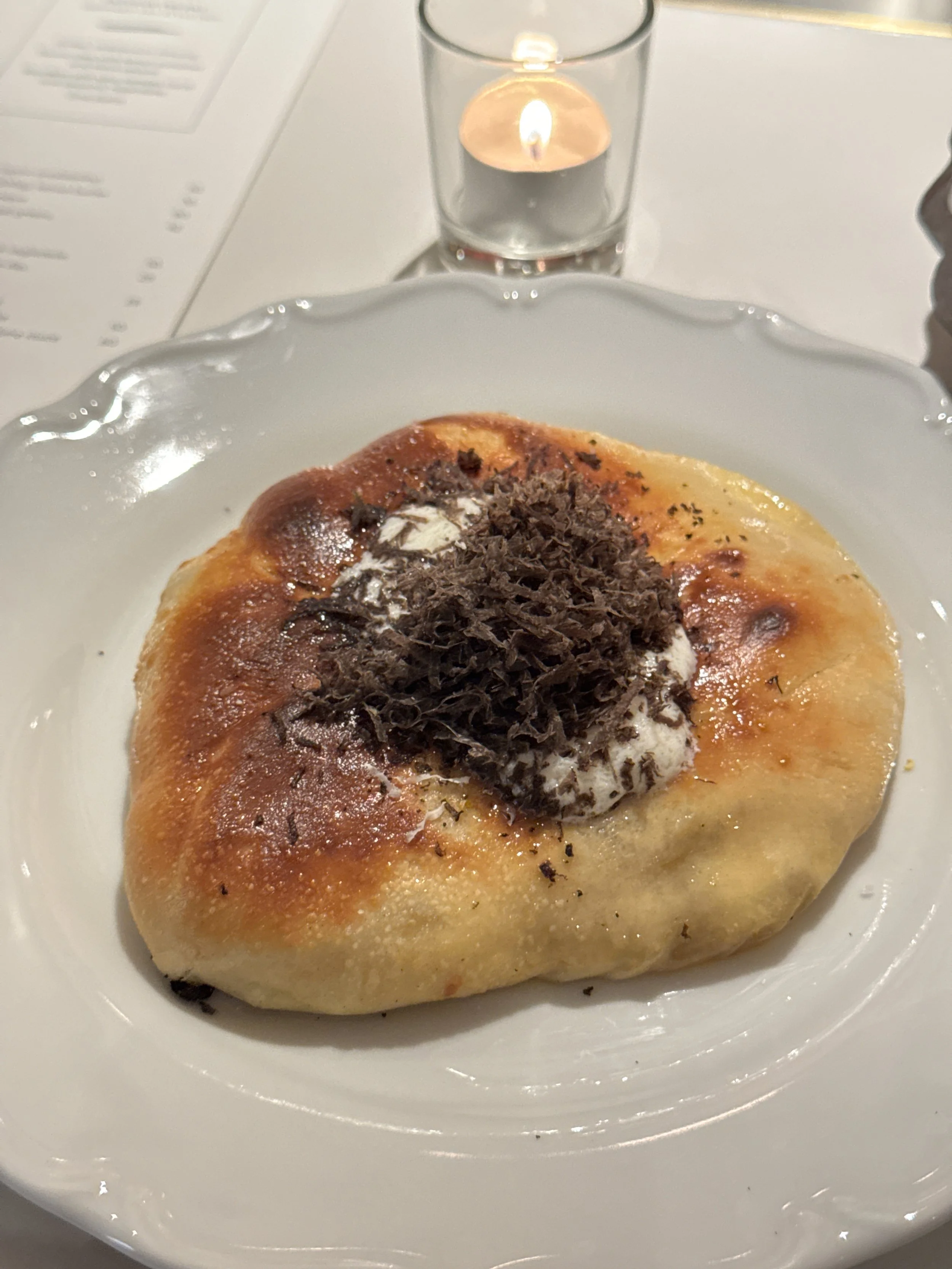
The one wildcard dish is perhaps the chatsapouri – a stuffed Georgian flatbread that is increasingly popular in and around Greek cities like Thessaloniki and is similar to peïnirli (the open, filled flatbread that has become a ubiquitous Greek bakery staple in modern Greece). Maza’s chatsapouri is stuffed with cheese and an aubergine marmalade which bursts with steam as you cut (or better, tear) through the fluffy envelope. Alternatively, there’s a housemade spanakopita, but the chatsapouri is again testament to Maza’s success in portraying Greece for what it really is and introducing original ideas that have basis to the London market. While we often see Greekness lost and convoluted on confused, international menus in many of London’s modern, so-called Greek spots, the chatsapouri is a novel but logical touch on an unmistakably Greek menu. In other words, Maza simultaneously captures Greek cuisine in its most natural, original form, and also through the perspective of what Greeks in Athens and Thessaloniki actually typically eat day-to-day.
Housemade pites and gyros that is actually gyros
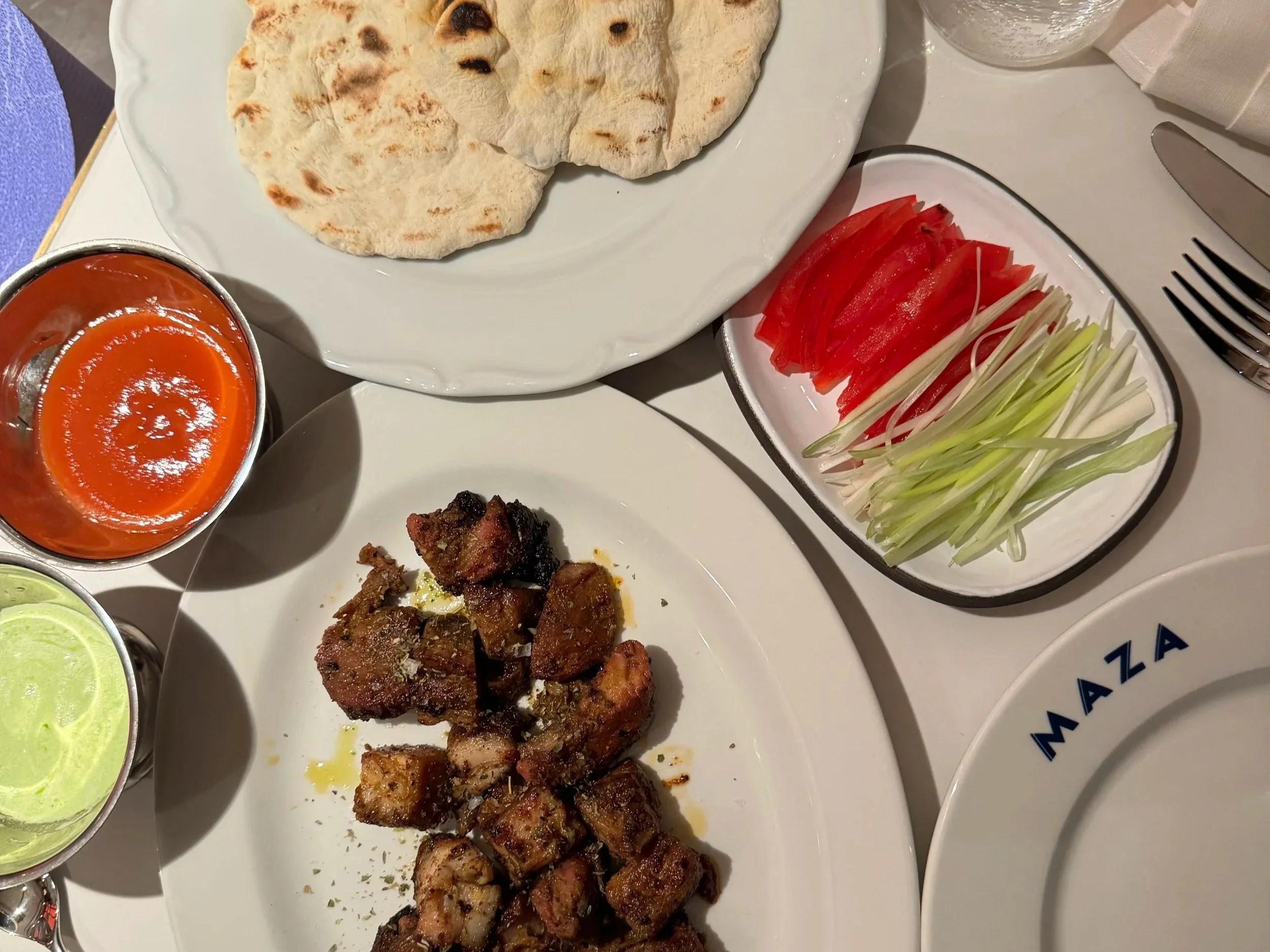
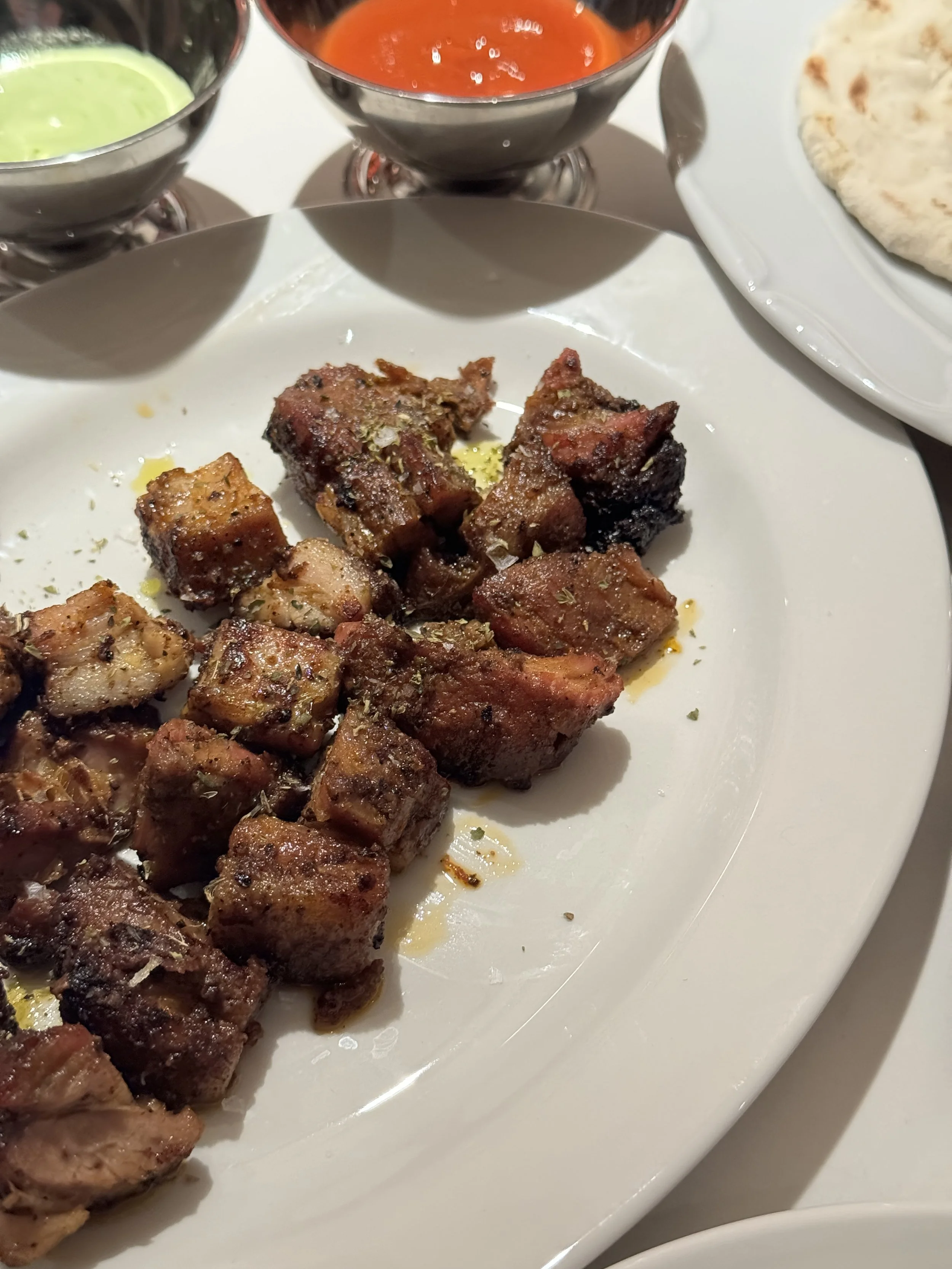
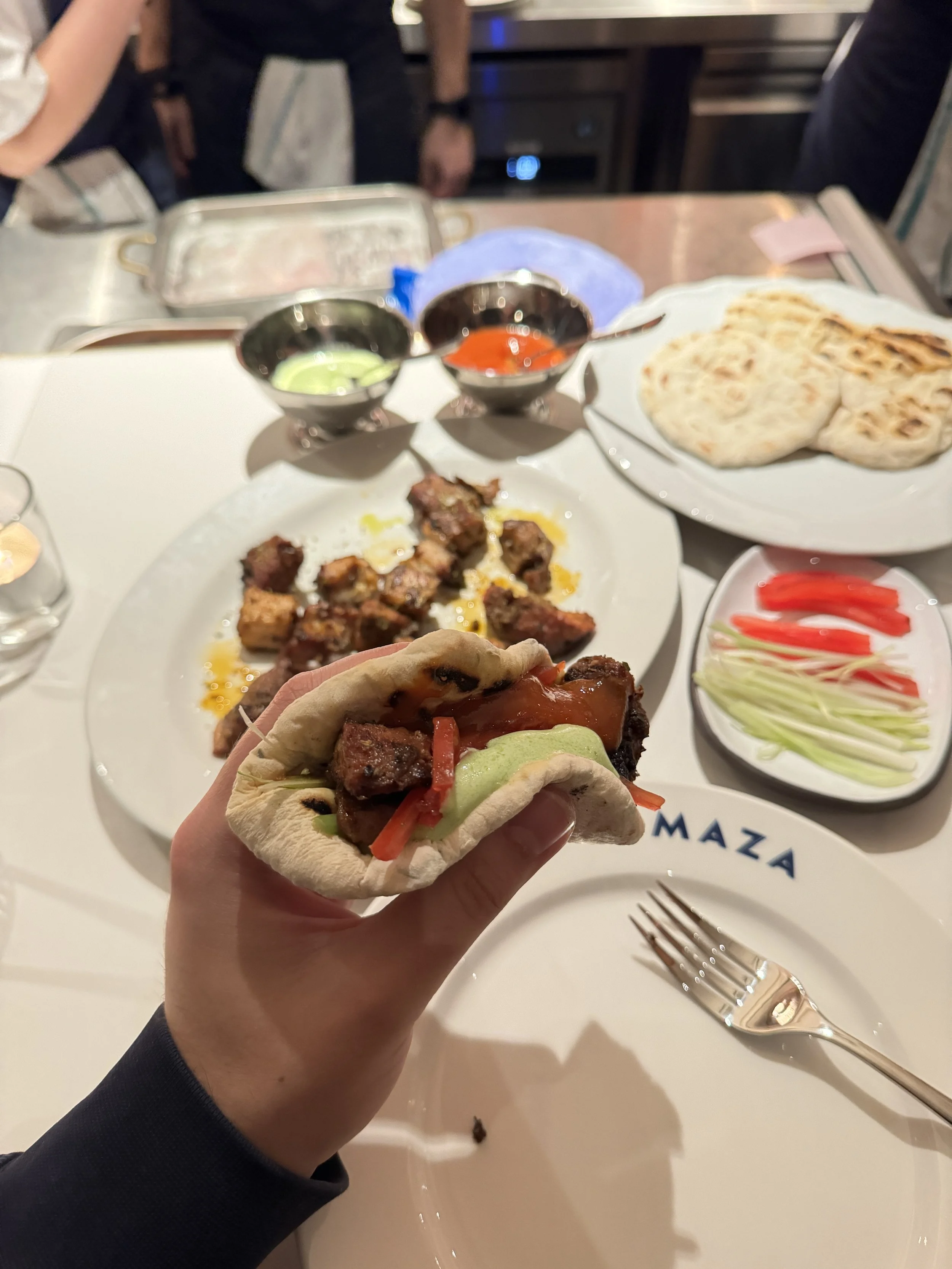
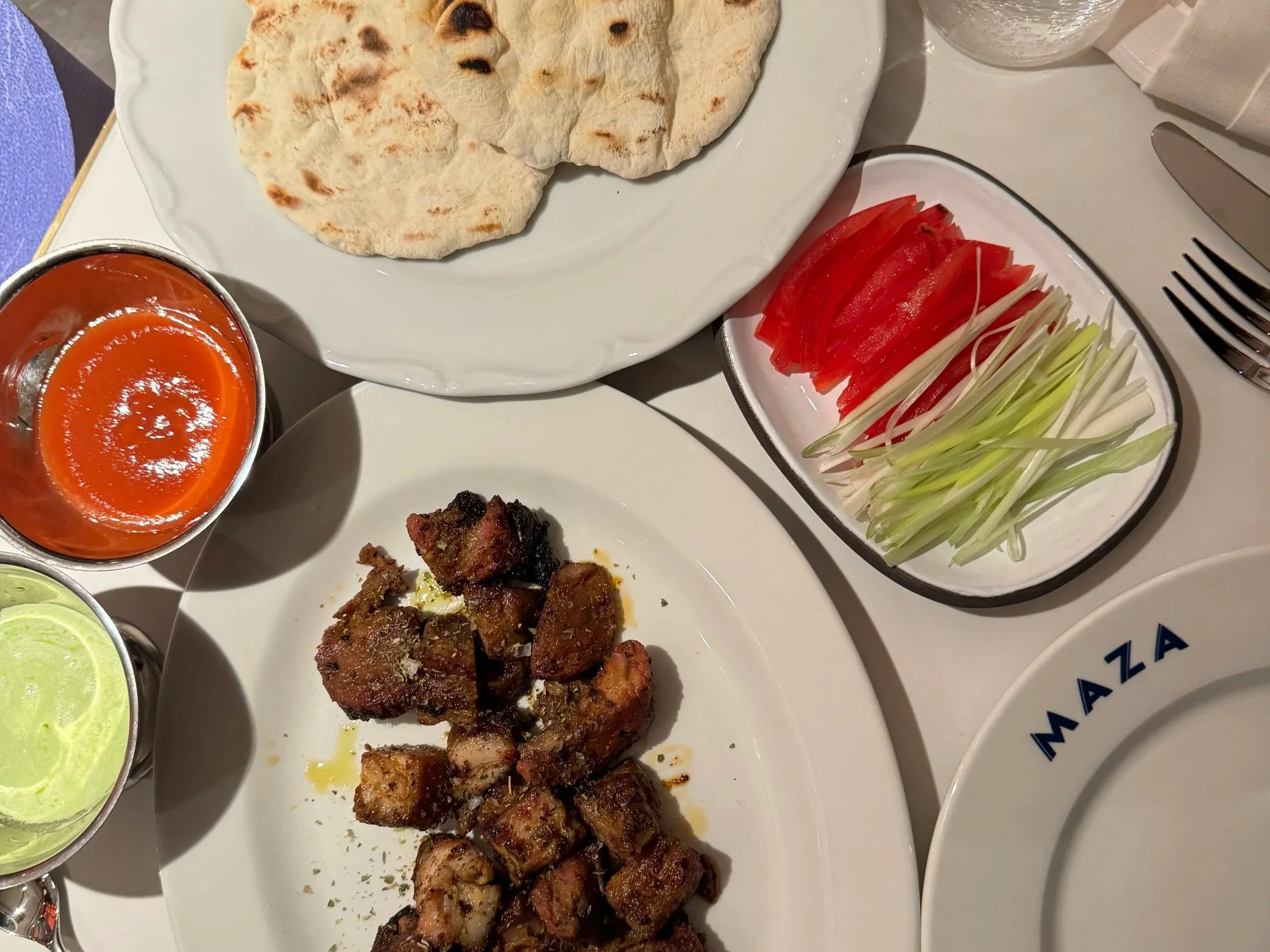
Here, you also see handmade pita breads cut, rolled and grilled to order – a desperately-needed sight in London’s Greek restaurant scene (we normally see the same two or three factory-made pita breads, always served cut into quarters). Maza’s pites are rustic and natural, floury and fluffy, and pair perfectly with the pork gyros sharer. The gyros itself is actually gyros: pork collar and pork belly cuts, grilled on a rotisserie souvla and sliced to order. It’s cooked and chopped more like kontosouvli (larger chunks, horizontal skewer, larger slices) but stays true to the definition of gyros (“to spin”). In fact, a simple, traditional gyros marinade means that the meat tastes exactly like gyros in Greece, with the perfect meat:fat ratio that the balance of belly and collar cuts guarantees.
That Maza has managed to recreate the real taste of Greek gyros from scratch in a way that many of London’s gyradika haven’t is a headline in itself. You get to assemble the mini pites yourself, together with a streamlined tzatziki that is green with dill oil, and a sweet homemade ketchup, which is surely inspired by Christina’s Thessalonian roots (ketchup being a popular pitogyro/sandwich condiment in Thessaloniki). The tomatoes are de-cored and the onions are spring onions. Both are cut julienne-like and, if you grew up in the Anglosphere, it reminds you of the crispy duck pancakes from your local Chinese takeaway. Together with the rustic handmade pites, it makes you feel at home.
Let’s go to Maza Mazi
Stop there. If a trendy Athenian neotaverna in a mews in classy Mayfair can make you feel at home, it’s a success. For once, London has a trendy, authentic and accurately current Greek restaurant that isn’t just stylish, but is also honest, real, and Greek to its core. Just as Christina and Adrien have achieved with Mazi and sister restaurant Suzi Tros, Maza has accomplished a stylishly modern take on real Greek food without compromising on its decency and dignity. With stylishly humble, honest and authentically nostalgic food, it plugs a gaping gap in London’s Greek food market and will be a restaurant that connects with many – Greeks included. Plus, with a menu that already looks relatively reasonably priced, it becomes even more so when you consider that the dishes are built large for sharing. With all that in mind, Maza really has succeeded in bringing Athens to London.
Maza opened on Thursday 12th March 2026 and is located at 21-23 Bruton Place, Mayfair, London, W1J 6NB.






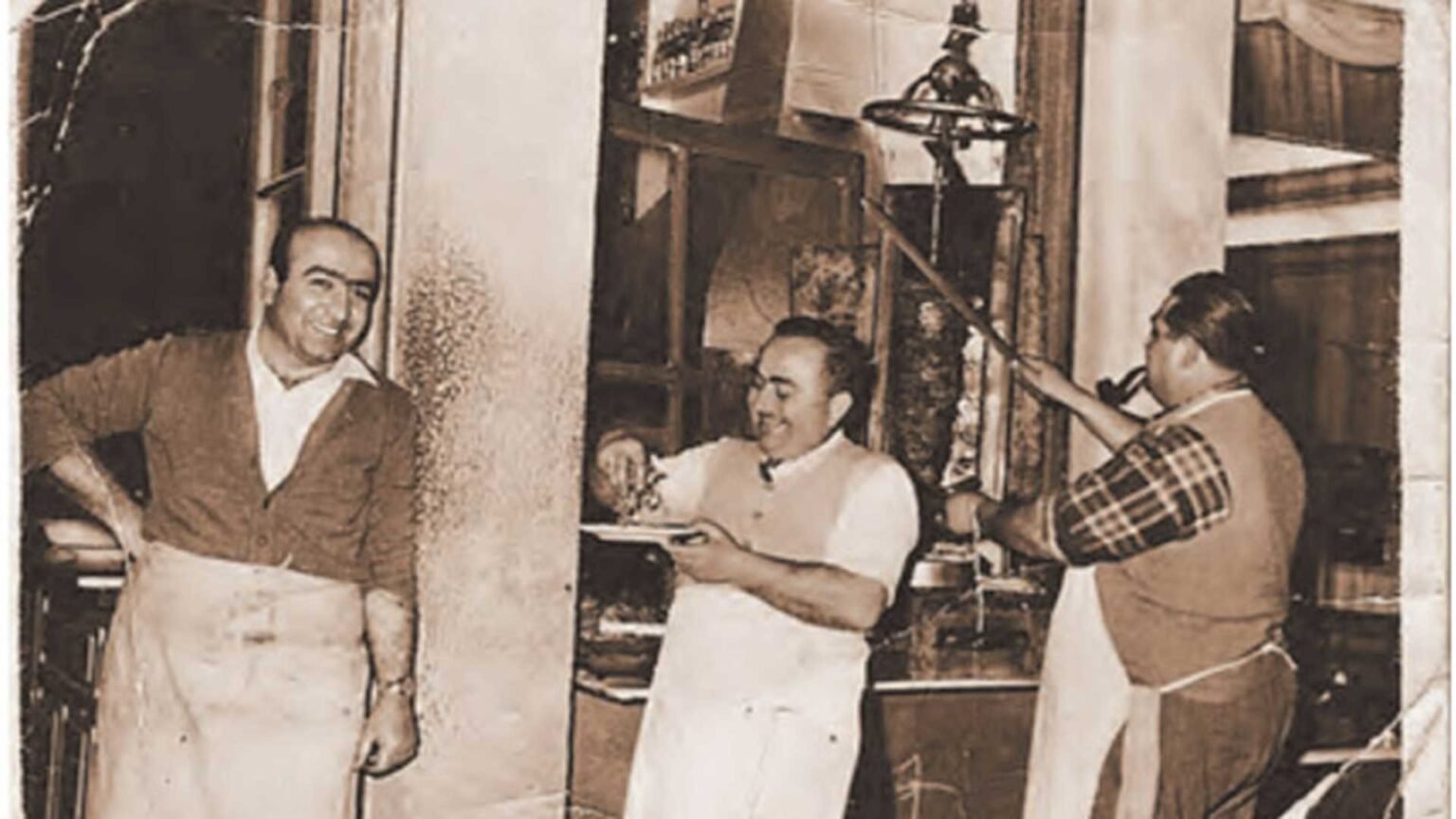

Athens’ newest traditional souvlatzidiko represents everything that makes Greece, its cuisine and its national street food an example for the rest of the western world to follow.