

Zylia Taverna: London’s newest taverna is both Greek and Cypriot

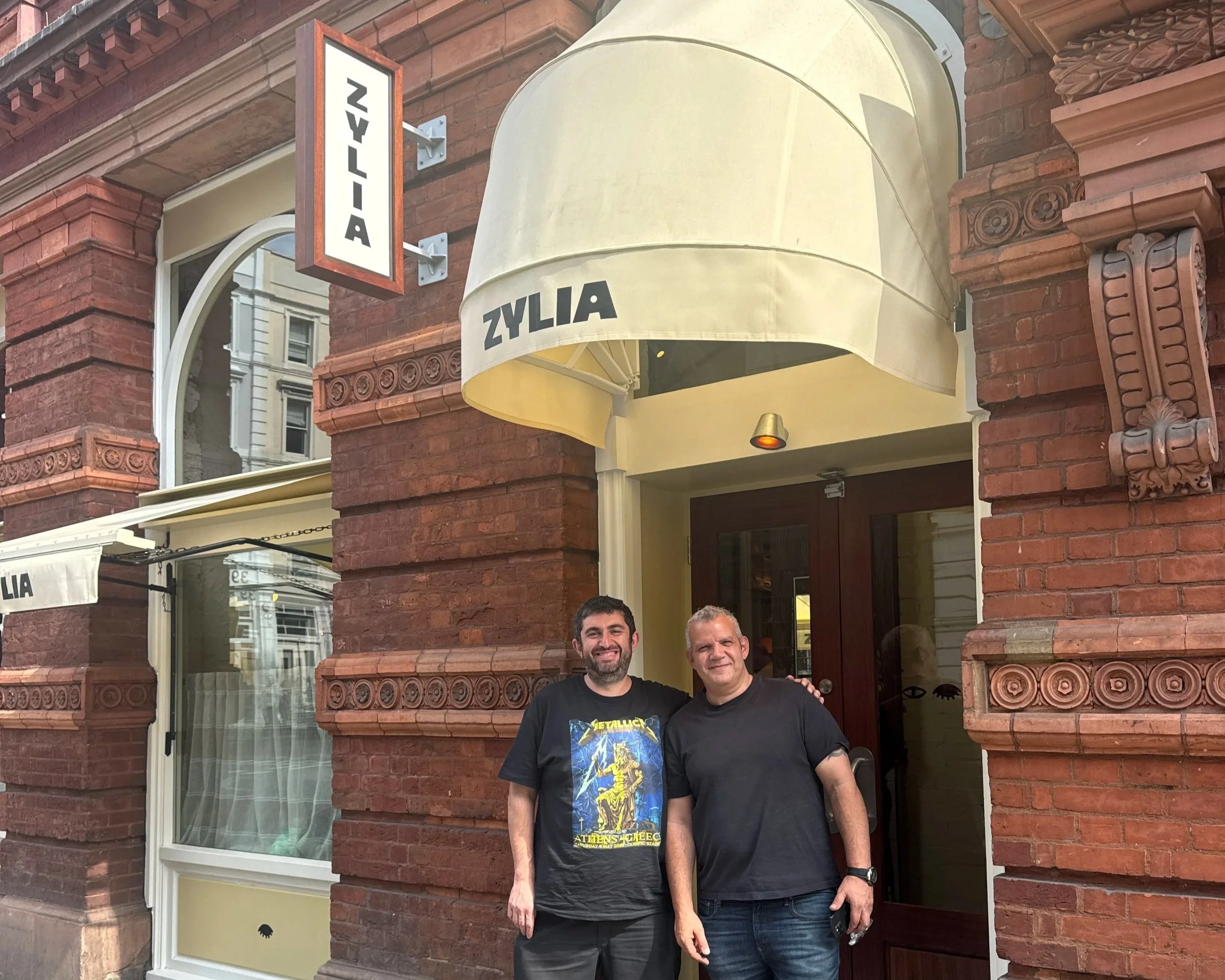
Zylia Taverna in London’s Covent Garden is the project of duo chef Nick Molyviatis and restaurateur Barry Karacostas.
Greek or Cypriot food?
Because, historically, London’s Greek-speaking population has historically been predominantly Cypriot, there’s long been a conflation of Greek and Cypriot cooking traditions. Many Cypriot tavernes of the 20th century would use the Greek label, referring to themselves as ‘Greek tavernes’, while focusing on Cypriot cooking traditions and adorning the interior with maps and photos of Cyprus. In any case, it’s Cypriot culinary traditions specifically that have most characterised London’s Greek food scene, at least up until recently.
The point is in no way ideological or political: there are enough distinctive dishes and ingredients in Cypriot cuisine that it would be a shame to abandon that nuance and simply call Cypriot cuisine ‘Greek’. Sheftalia, halloumi, shouskoukos, mahalepi, koubes, etc. etc. all come from Cyprus. Likewise, the way Cypriots make dolmadakia (which they call koubebia) is quite different to the way that Greeks do (which I’ll explain in my recipe this week), just like the way in which they make souvlakia and souvles. The nuance runs deeper than terminology and dialect – it’s material.
Labels aren’t there to divide us; like language and words, they’re a tool which we can use to help describe and understand complex reality. That’s why it’s important that we use labels properly, and make sure that we’re speaking a language that actually reflects the world we live in. Otherwise we’re just making sounds designed to get a certain reaction out of people (i.e. manipulate them). Of course, there is a huge overlap between Greek and Cypriot cuisine, but the same logic would apply to a taverna that specialises in antikristo, kalitsounia, skioufikta and dakos – you would call it Cretan, not just Greek (the two aren’t mutually exclusive either). Is the dish you’re eating from a region in Greece, or the island of Cyprus? Be clear and be honest.
Add your email
Support the Souvlakination Substack and get exclusive behind-the-scenes, detailed, independent food writing and all my personal favourites and hidden gems that I can’t post.
London’s changing Greek/Cypriot demographics
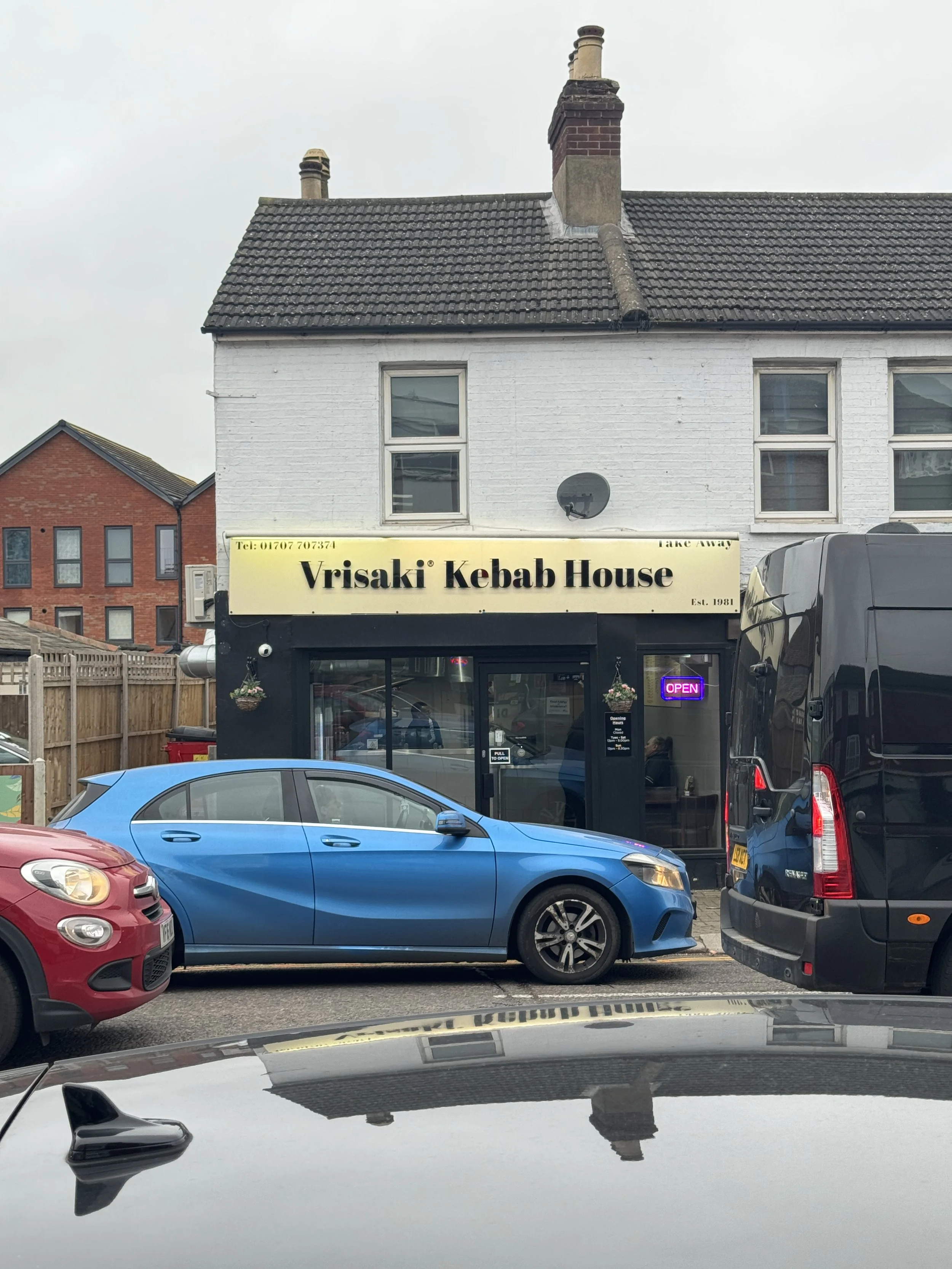
Now, London’s Greek-speaking demographics and restaurant scene are changing. Since the Greek debt crisis, a large influx of economic migrants from Greece, mostly in the 2010s, has bolstered London’s Greek population, and given us a wave of authentic Greek restaurants that represent what people actually eat in Greece. That includes Cretan restaurant 1905, its sister restaurant The Life Goddess, refined takes at Mazi, Maza and Suzi Tros, Vori, Myrtos and, most recently, Taverna Ermou from the Ergon team. They join clusters of long-standing tavernes in West London (Halepi & Aphrodite), Camden (Andy’s, Daphne & co), and Enfield (Babinondas, Paneri & co), with the locus of the Cypriot community now having shifted northwards with newer openings around Cockfosters and Potters Bar (Tavernaki, Fig Tree, Deserie, as well as Vrisaki 2.0).
I mention all of this because Zylia is the first new opening that really captures the situation, the moment, of our Greek/Cypriot/Greek-Cypriot restaurant scene in London, bringing Greek ideas into a predominantly Cypriot status quo – but without abandoning the Cypriot label. And it’s not just some of London’s older Cypriot tavernes that are guilty of having done that, with newer Greek openings often adding halloumi, sheftalies and other Cypriot dishes to their menu as a means to connect with London’s sizeable Cypriot community, but without ever attributing those dishes or ingredients to Cyprus, and often while using inauthentic, sham ingredients (like British halloumi). On the other hand, Zylia doesn’t neglect the Cypriot label and uses bona fide Cypriot ingredients. And it actually sets a good benchmark in doing so.
Although tweaks and iterations are to be expected and some things might change with time, here’s what I think of Zylia based on the soft launch before it opens its doors on 3 June 2026.
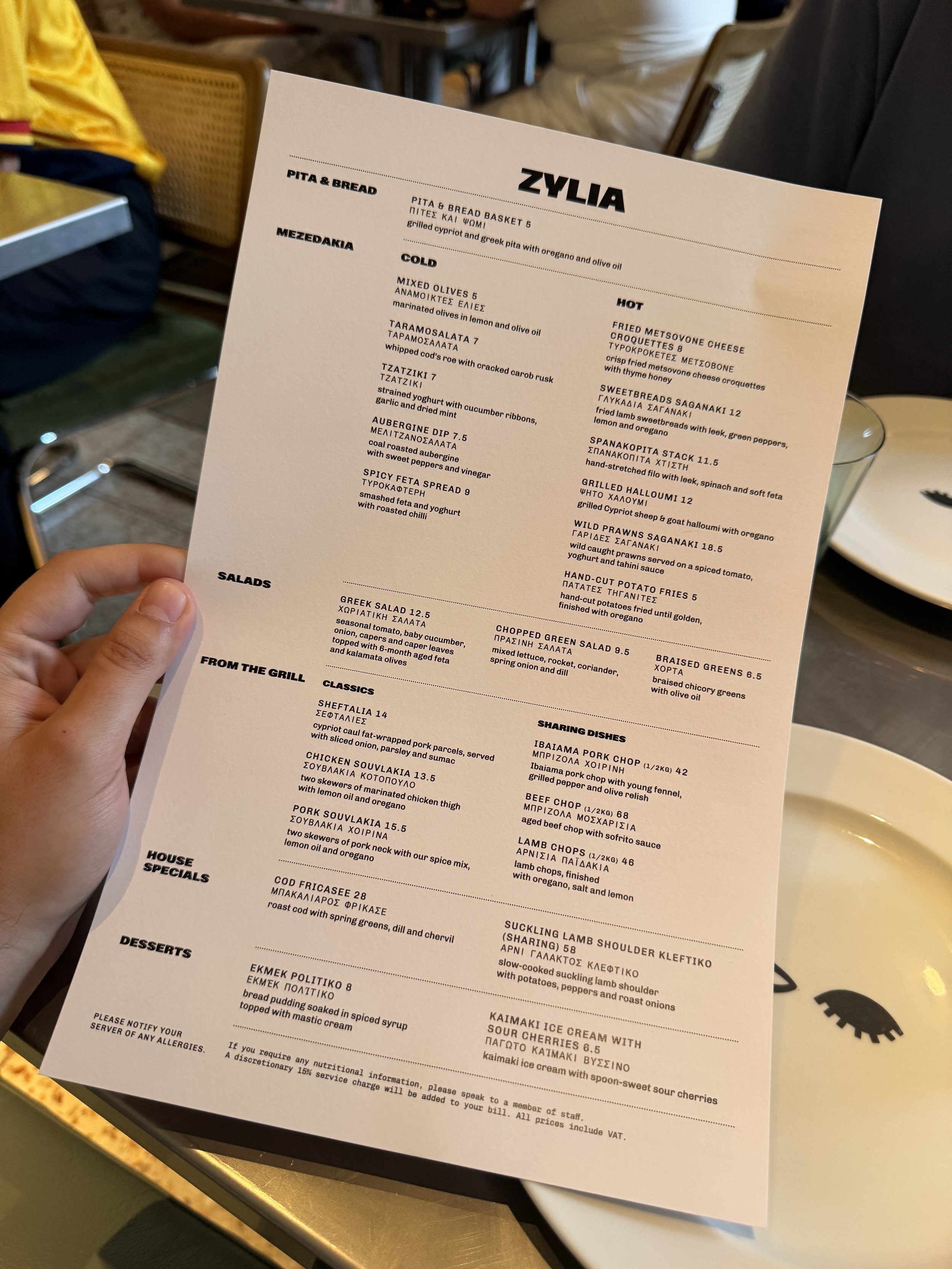
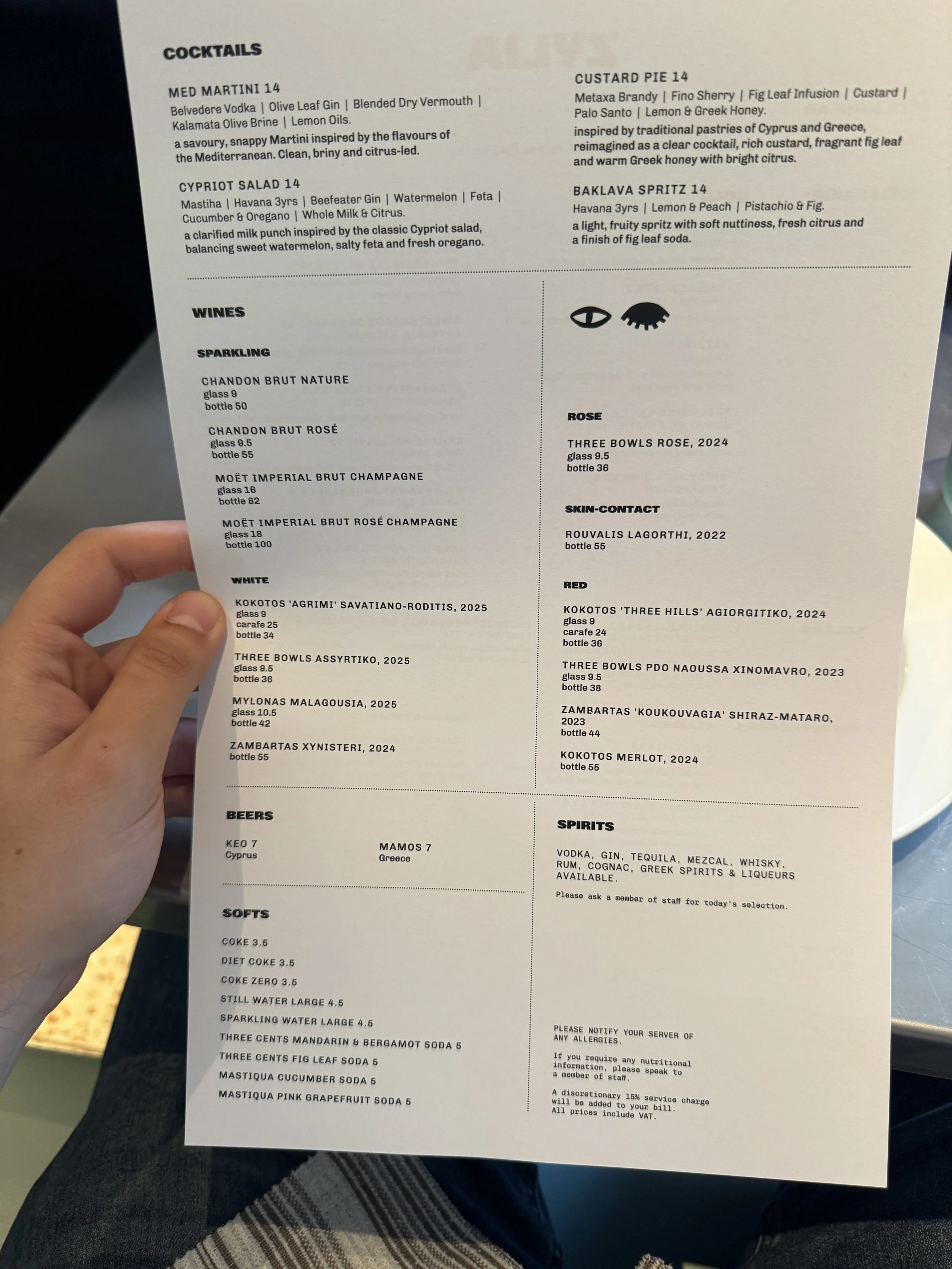
I think many mistakenly expected a new take on a traditional Cypriot taverna when they heard about Zylia, but it’s best to view it for what it says it is, “a Greek Cypriot taverna”, i.e. one that draws inspiration from both Greece and Cyprus, through the lens of the duo that is chef Nick Molyviatis from Athens and restaurateur Barry Karacostas from Cyprus. Nick is and has been involved in some of London’s best restaurants, many of them my personal favourites too (Singburi, Kiln, Speedboat, Smoking Goat – all Thai-inspired). While Oma/Agora ended up taking an awry trajectory from what initially appeared to be a Greek-inspired project, Molyviatis also played an instrumental role in its success before departing. Now, Zylia is his turn to represent his culture, his way, together with Barry’s Cypriot roots.
Cypriot food at Zylia Taverna
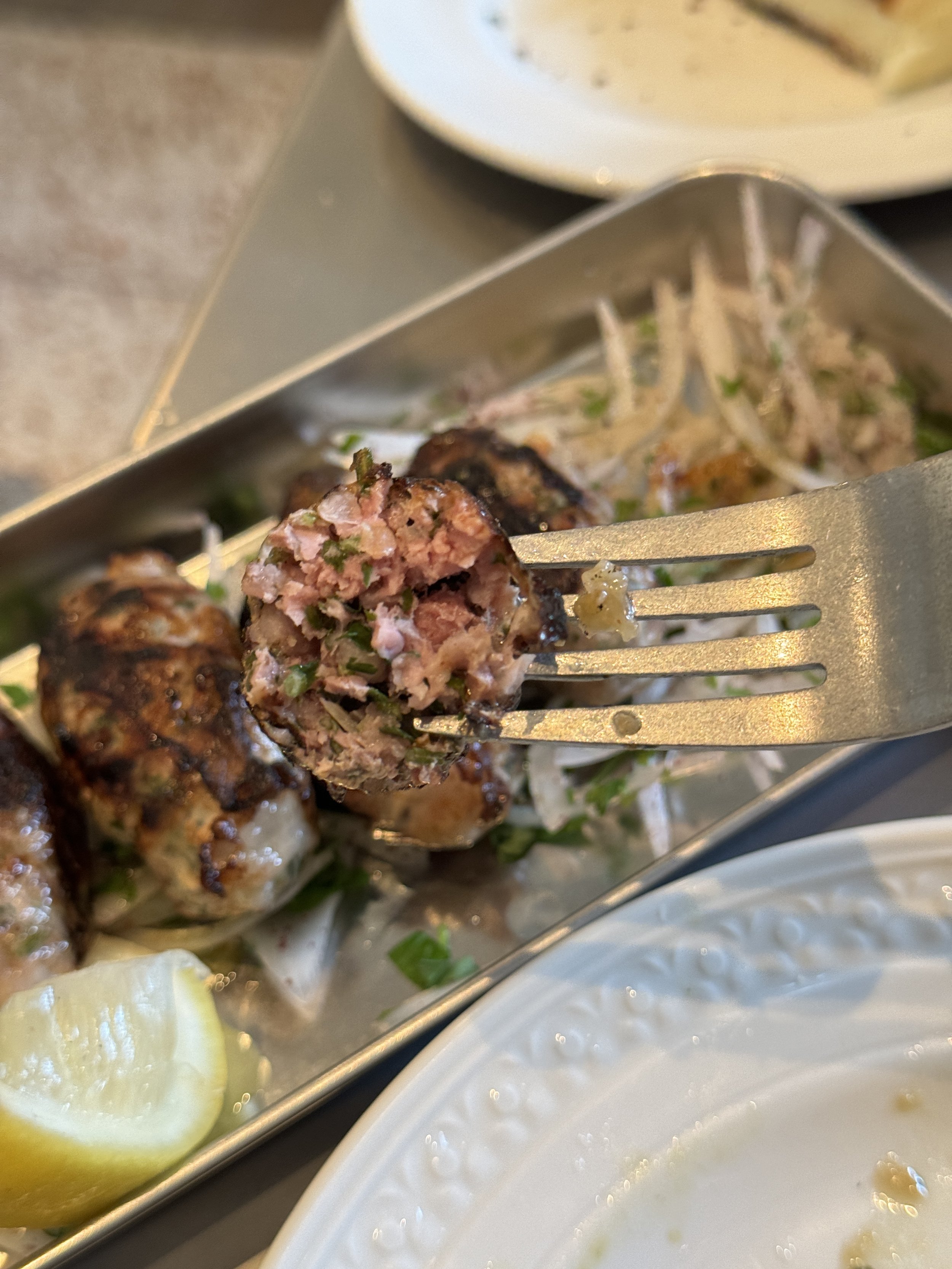
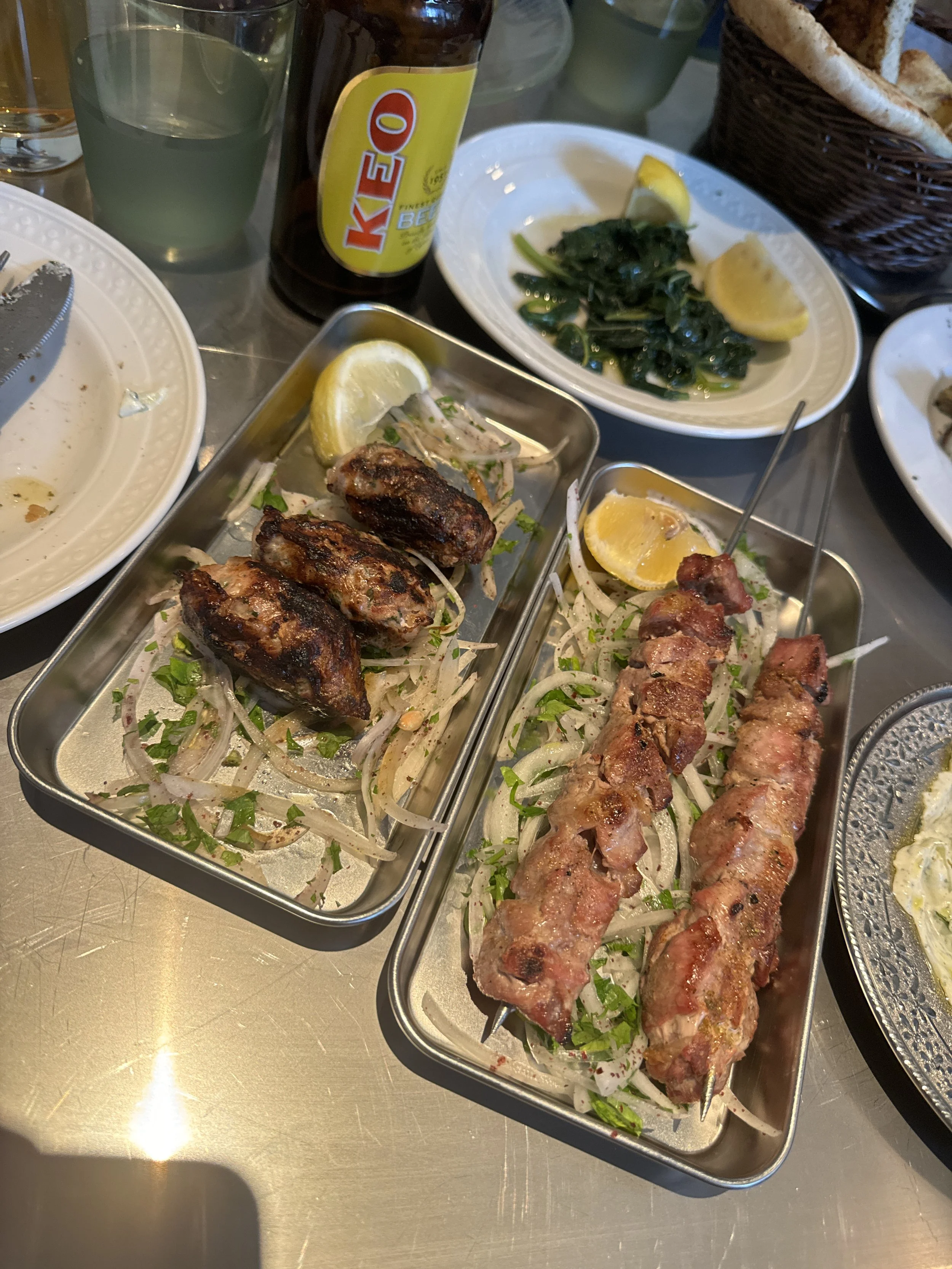
I can attest to the level of thought and sensitivity that both are putting into the project, Nick having interrogating me for everything I know about sheftalies and what should be in them (pork mince, finely chopped parsley and onion, a dash of cinnamon, all wrapped in caul fat). Our conversation leads to me showing Nick and Barry my favourite sheftalies, souvlakia and souvla in the UK, up in Potters Bar, and after a trip to Cyprus, Nick agrees.
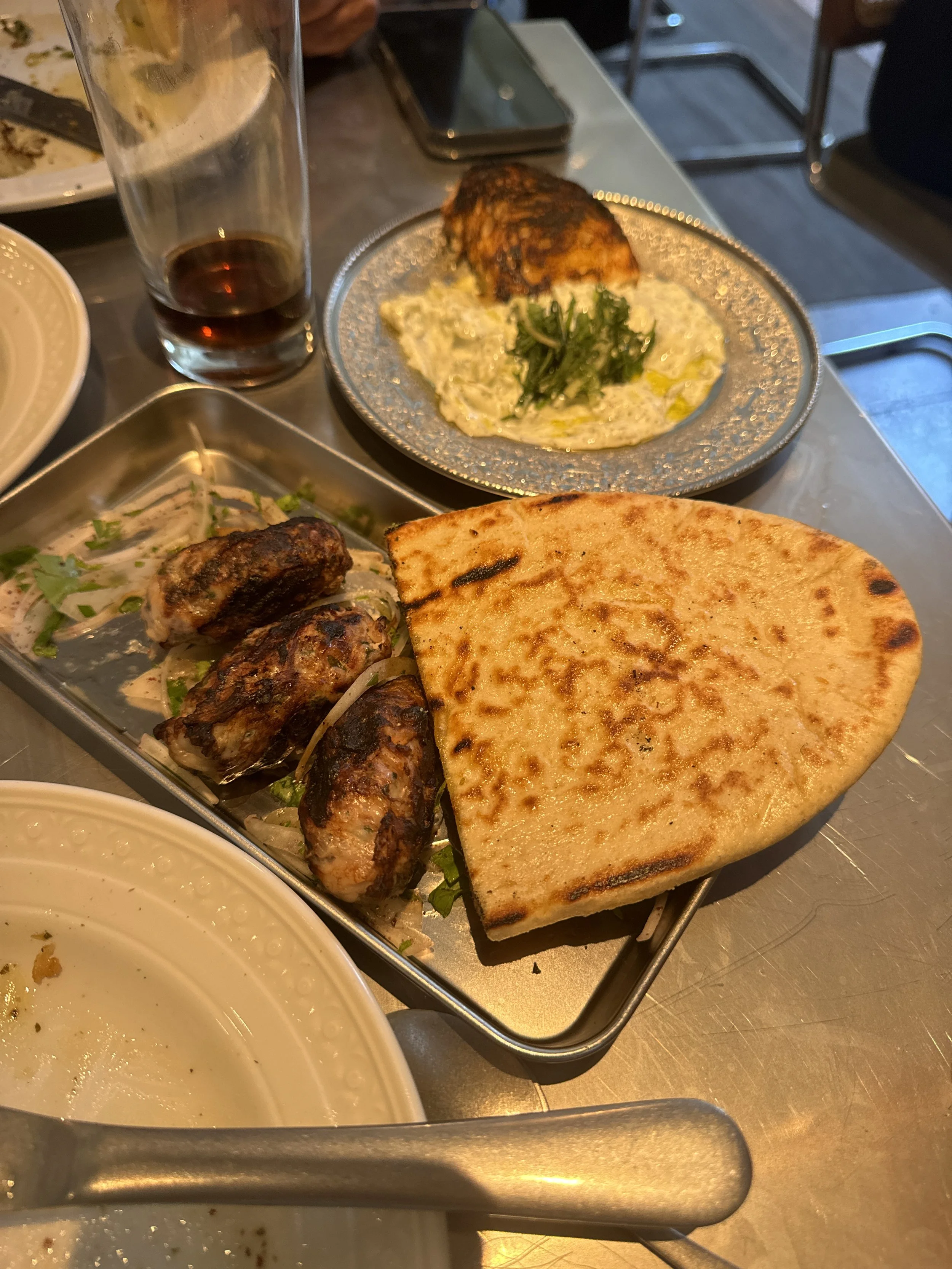
So it’s both rewarding and incredibly relieving that, when I arrive at the Zylia soft launch on Saturday 30th May 2026 and put my impartial, critical hat on, Nick’s sheftalies taste exactly as they should. He’s still working on perfecting the recipe ahead of the 3rd June hard launch, and I agree with him that a little more fat would help make them juicier, and that some more crisp caul fat around the outside wouldn’t go amiss, but I mean what I tell him next: these are some of the better sheftalies I’ve had in the UK. They might not be Fig Tree or Mitsi Tavernaki standard, but the taste is exactly right. They’re nice and meaty like most good homemade ones, and I much prefer that to the mushy versions that are loaded with breadcrumbs that you find in a lot of Cypriot souvlijitika and tavernes in London. After Fig Tree, Mitsi Tavernaki, Apollo and Tavernaki, I’d say that Zylia’s are the next best example of what good sheftalia should be in London (and Herts) – definitely ahead of the dry keftedakia-style ones at Dionysos, and the mushy types at Deserie and co. I’m proud that we have something that actually reflects our cuisine well in central London, for all those who will first encounter it here – tourists, Brits and everyone else in between.
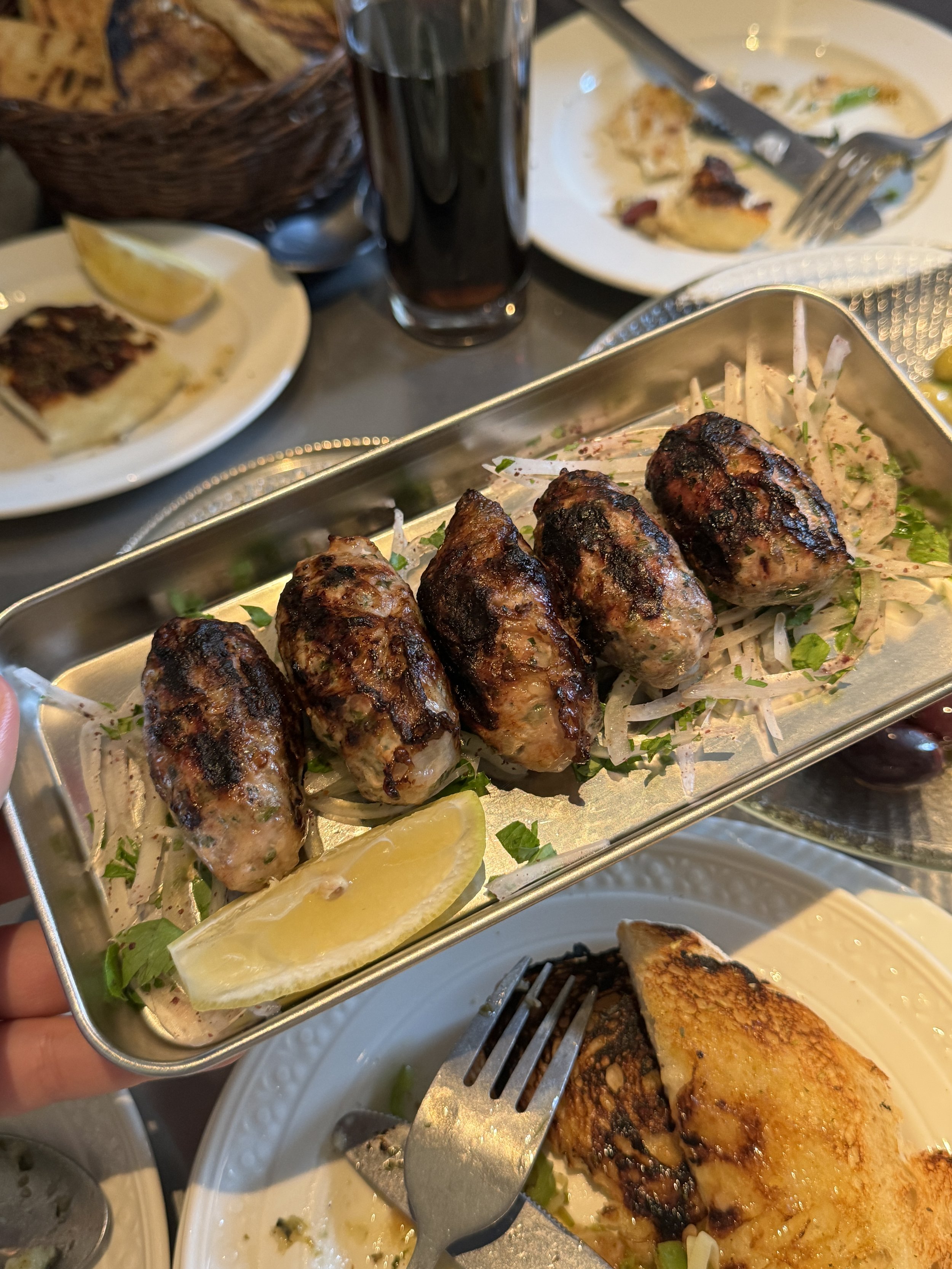
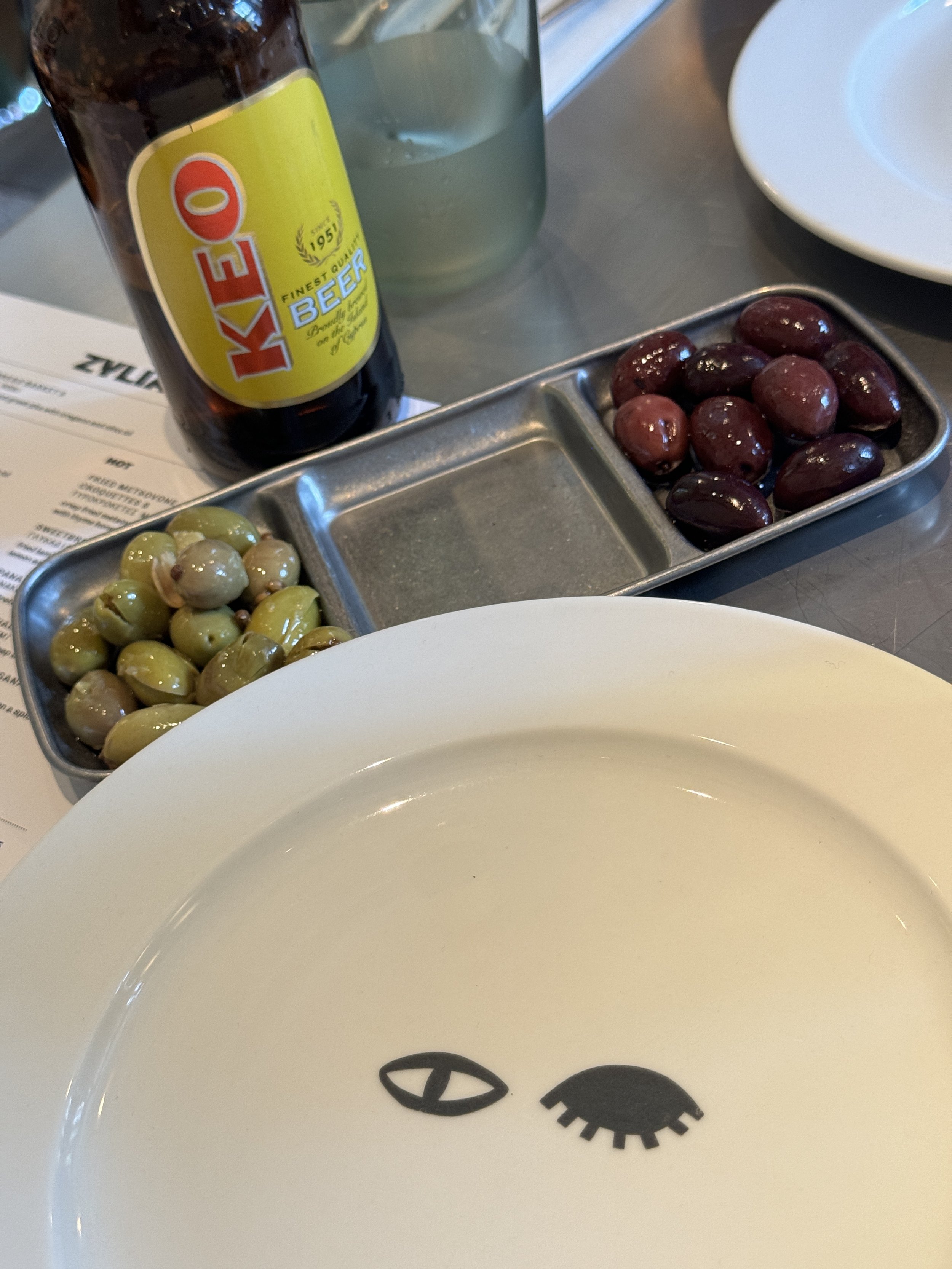
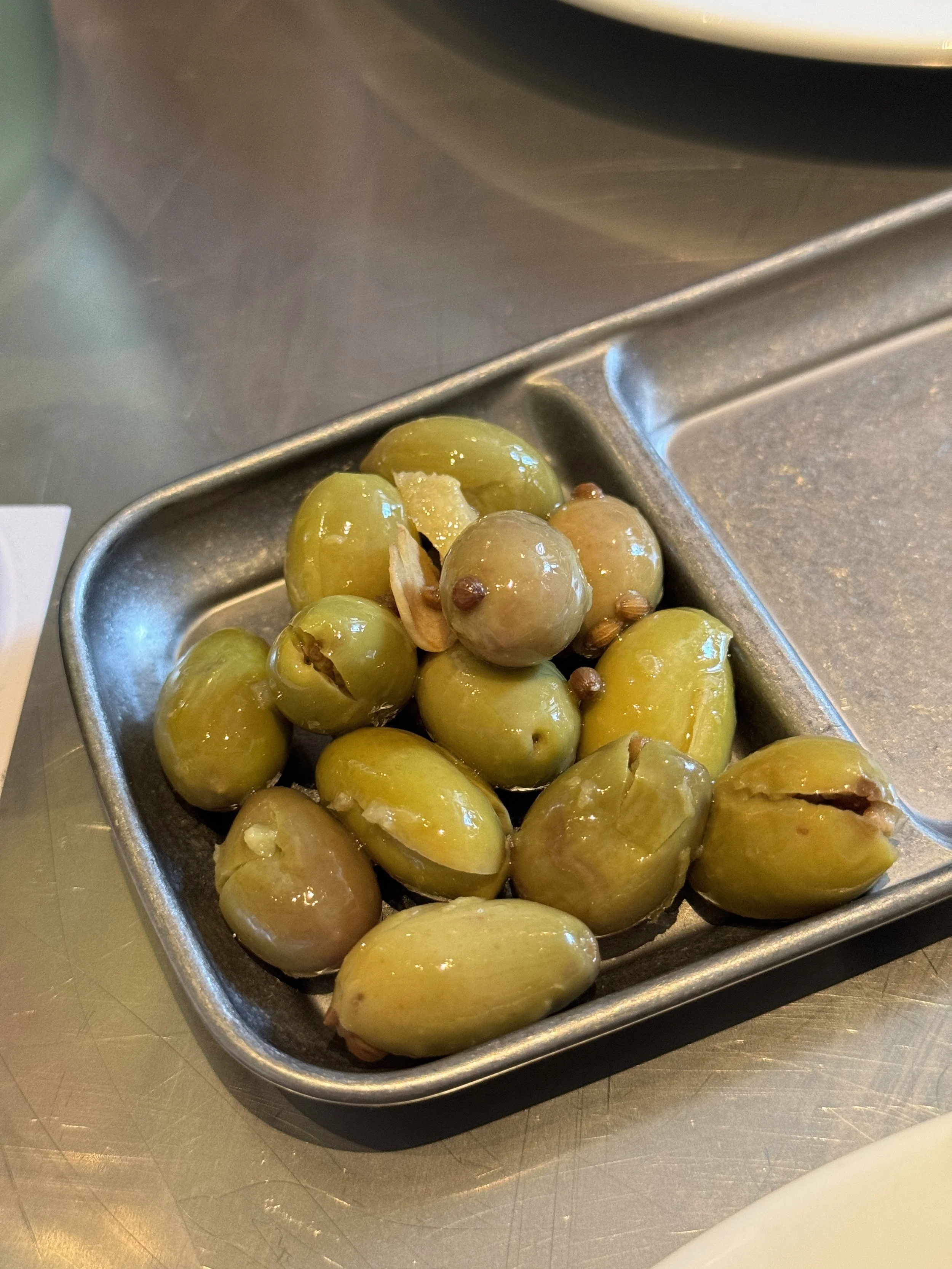
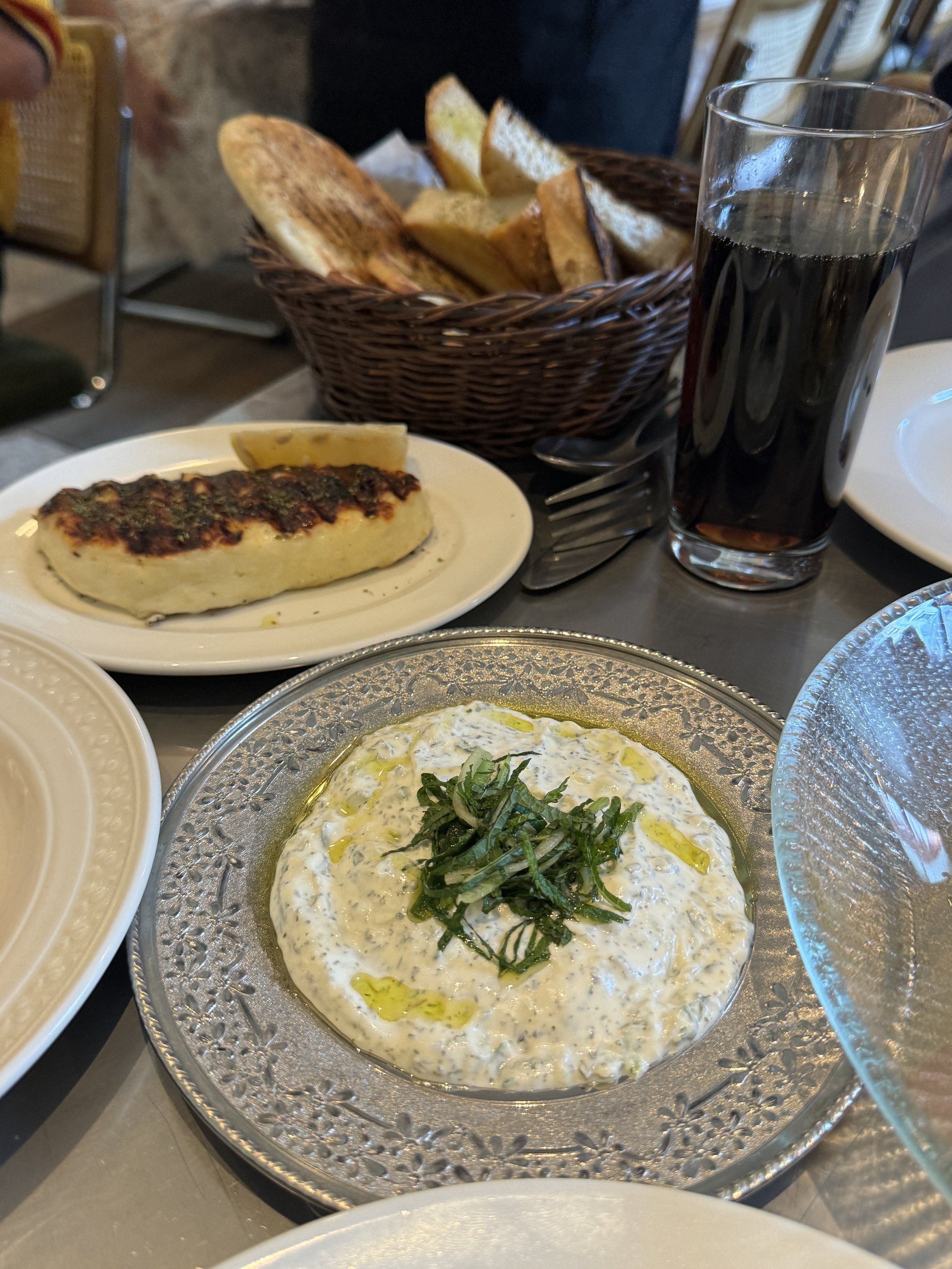
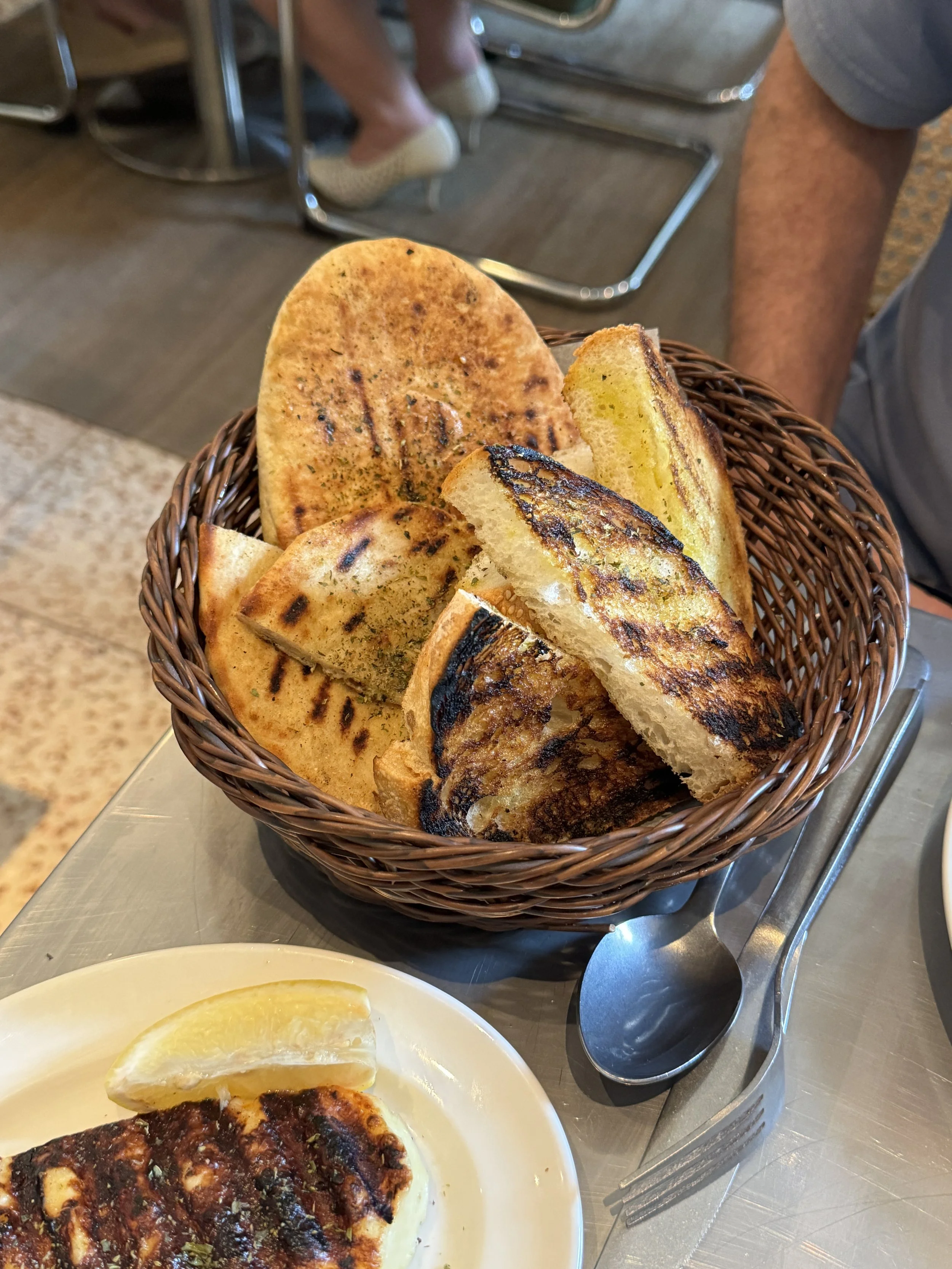
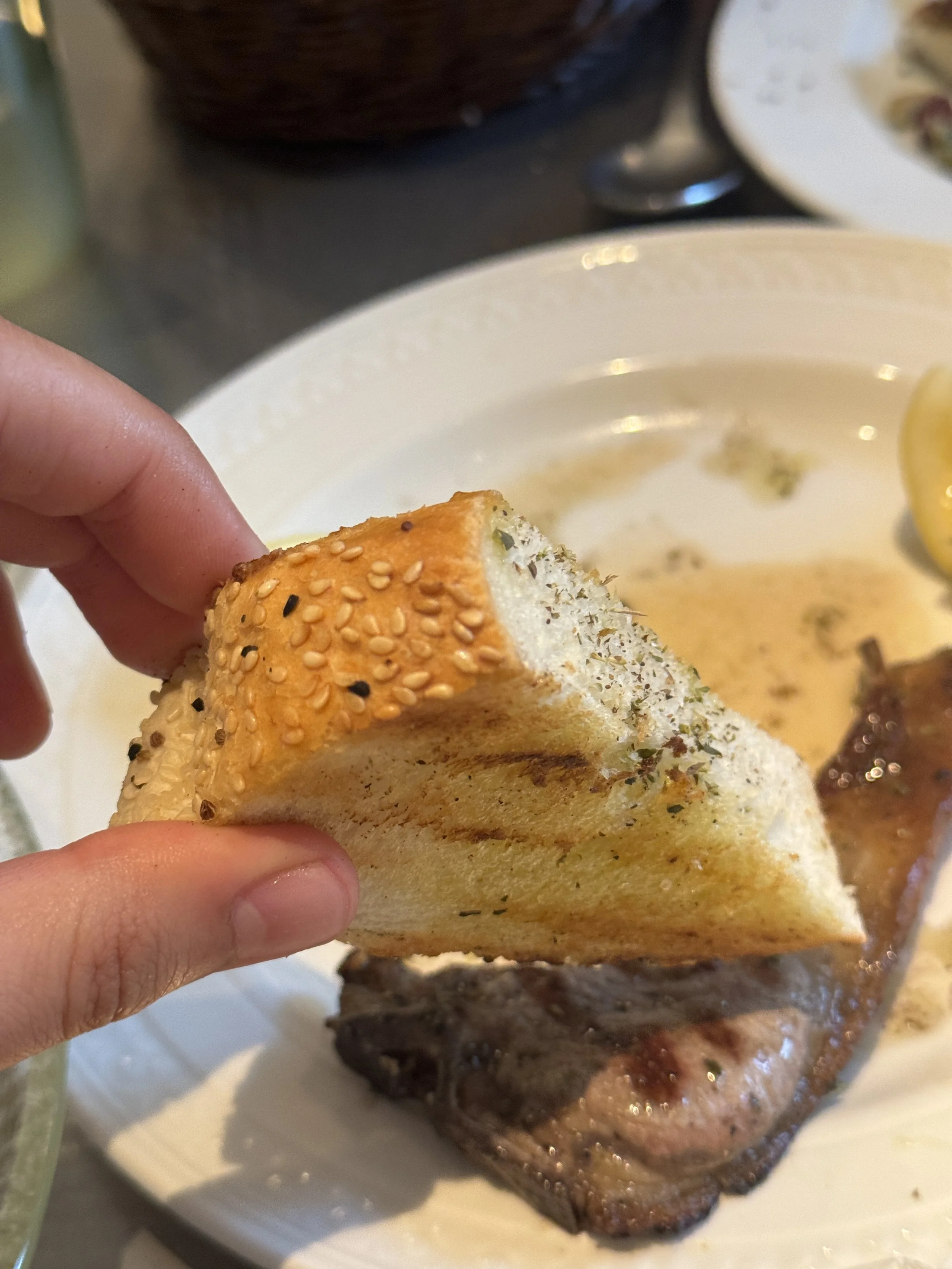
Rewind: as soon as you’re seated, you’re waiter swiftly brings you some good olives, kalamata and tsakistes (smacked olives marinated in olive oil, lemon and coriander seeds). All that’s missing on the Cypriot-front is a nice bowl of tashi (tahini-based dip particularly popular in Larnaka but now much of Cyprus), or some pikla (Cypriot piccalilli, particularly popular in Limassol). However, the tzatziki is ttalattouri-esque – what Cypriots call it – because, in Cyprus, it tends to have a good dose of mint, just like Zylia’s does (Greek tzatziki most-typically just being dill on the herb-front). The halloumi is a proper aigoproveio (goat and sheep milk) halloumi from Cyprus (Lygias), the way you’re more likely to see it at a traditional taverna in Cyprus than the UK, grilled and served whole with a wedge of lemon. And, together with your typical Greek pita bread, the bread basket is complete with your proper Cypriot pittes, and slices of the Cypriot-style koulouri loaf the Cypriots are familiar with. Although Zylia’s focus isn’t just Cyprus, Cyprus is incredibly well-represented where it appears. And so is Greece.
Greek food at Zylia Taverna
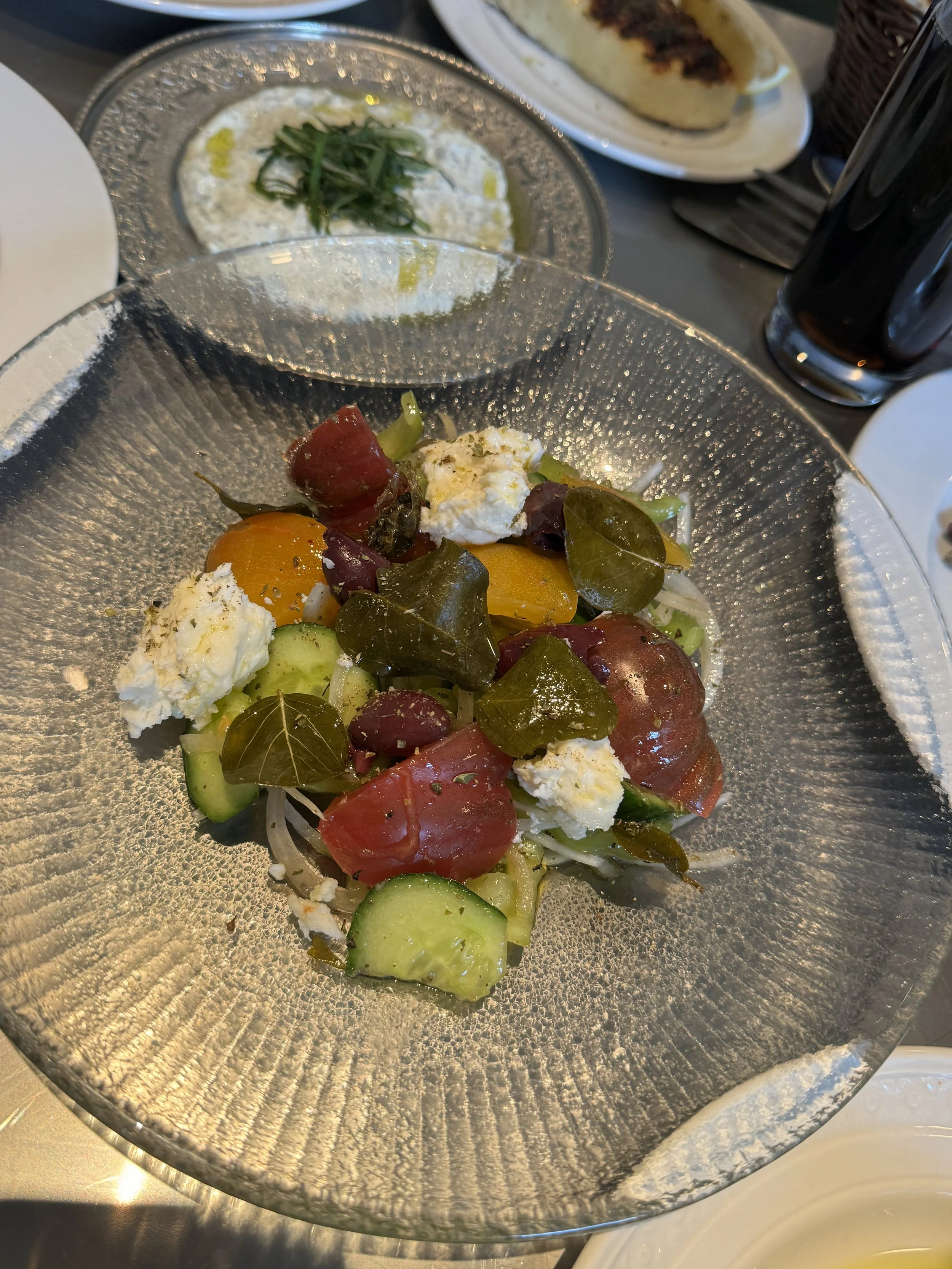
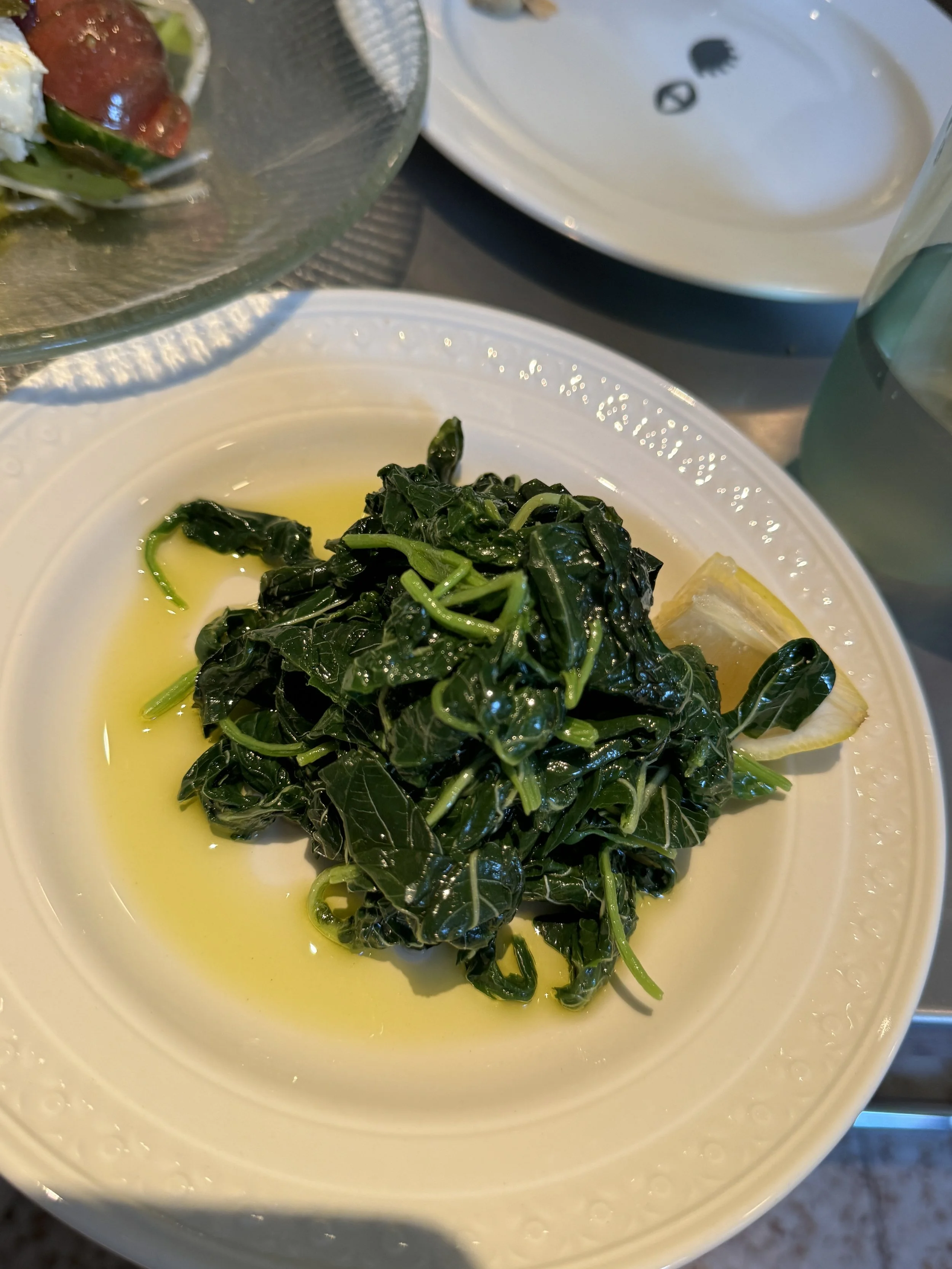
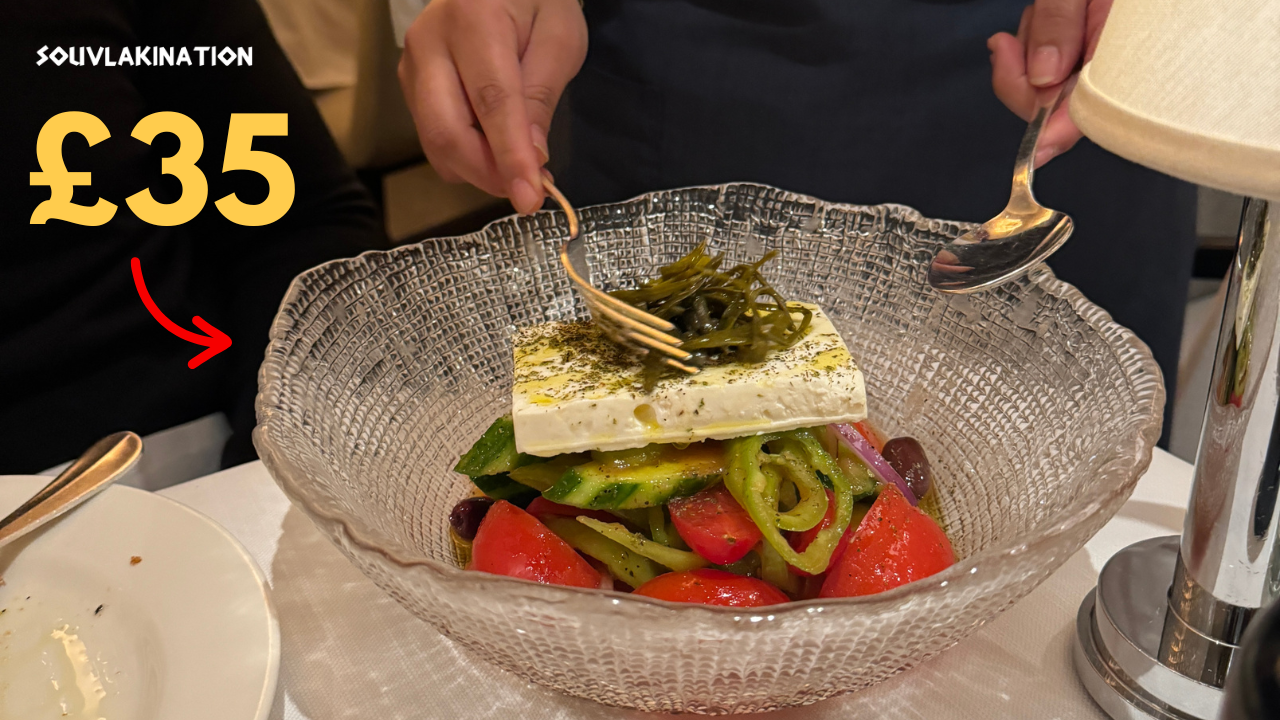
Greek salad is known as a choriatiki (χωριάτικη) in Greece, and it’s most typically cucumber, tomato, olives, onions, feta, oregano, olive oil, a dash of vinegar, and sometimes green peppers and capers. In Cyprus, a choraitiki also usually contains a different mix of salad leaves – lettuce, purslane and coriander being the most common additions. But when you order a ‘Greek salad’ (‘Ελληνική’) in Cyprus, you get a traditional Greek salad (i.e. choriatiki) as you’ll find it in Greece, which is exactly what you get at Zylia. Zylia’s Greek salad is as it should be, with a clear focus on good ingredients and a nice touch of caper leaves on top. It also sidesteps the cliché trend of using rusks in everything, and it’s nice to just be able to get a decent Greek salad in central London without the pretentiousness. The same is true as the horta (greens), which are cooked and wilted just right, packed full of fresh, lively flavours, and served with the correct amount of olive oil and the obligatory lemon. They’re served cold, as they often are in Greece and, personally, I prefer this – it reminds you of a slow, refreshing lunch by the beach, and of family meals in Greece where the horta are served straight out of the fridge a lot of the time. The flavours are actually a lot livelier that way too, and you get less excess water in your plate.
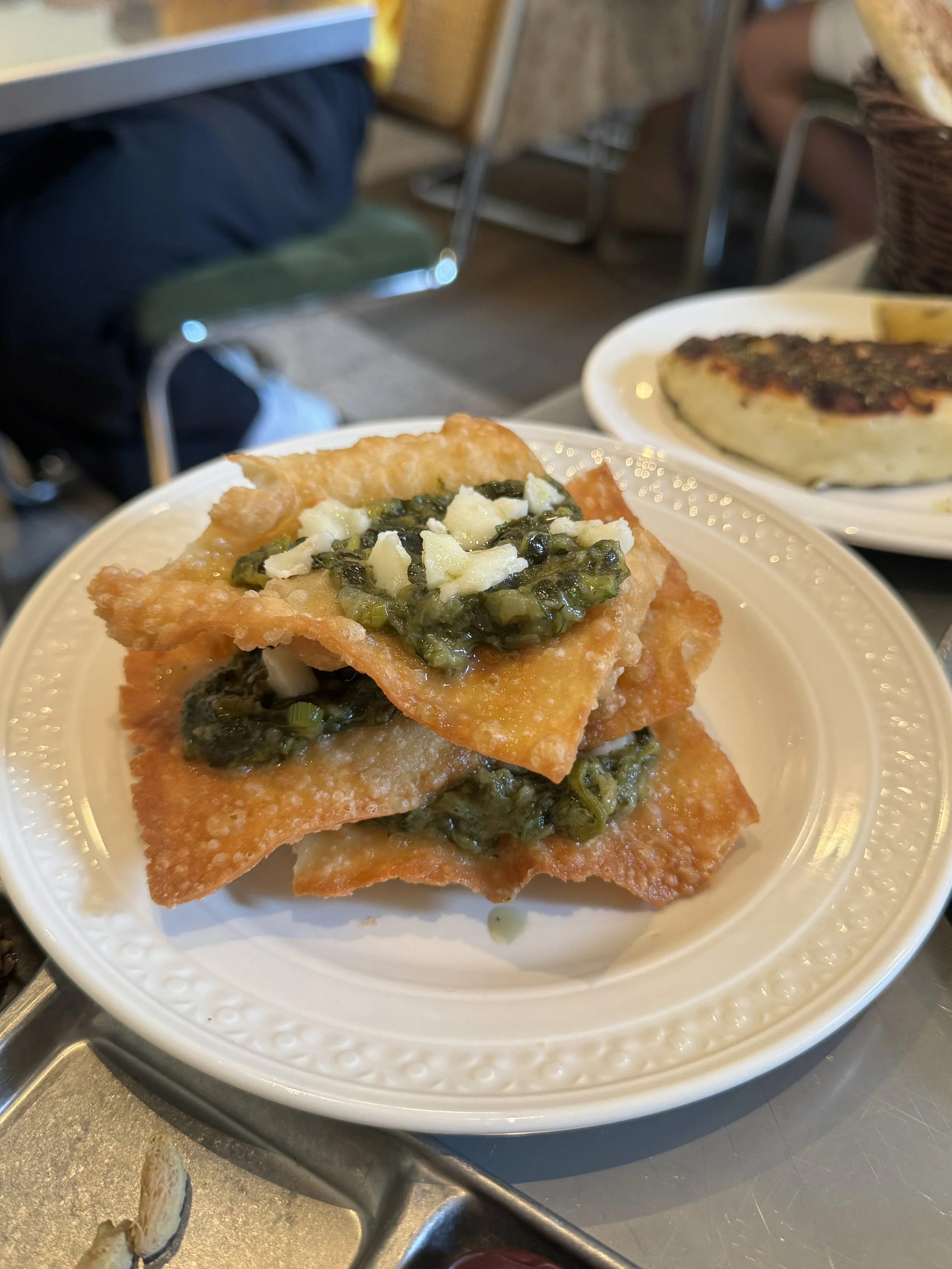
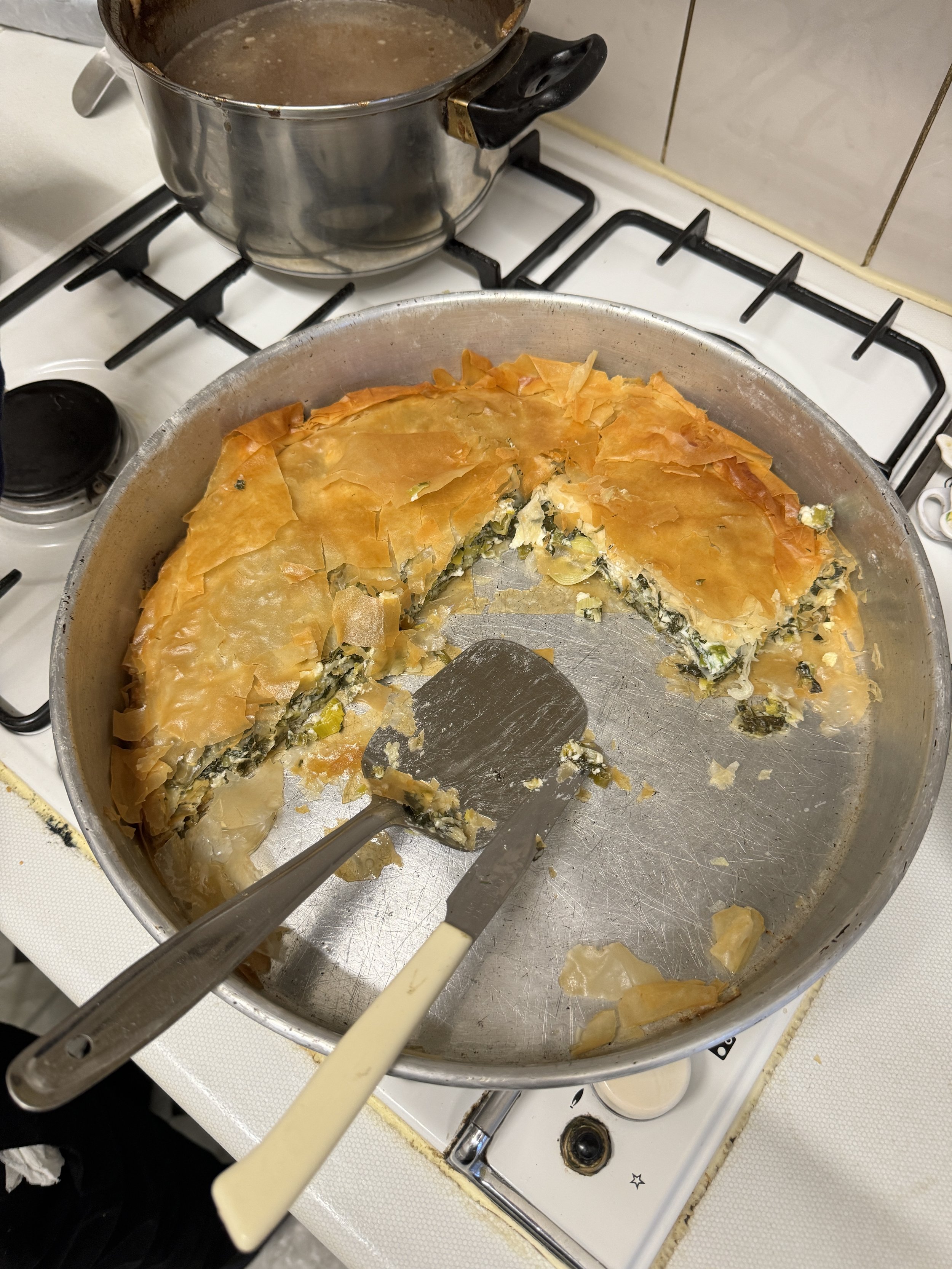
Another deconstructed spanakopita is inspired by a Manolis Papoutsakis (Haroupi, Deka Trapezia, Pharaoh) dish at Deka Trapezia in Thessaloniki, and it was Asimakis that first brought the idea to London at Myrtos, with Ermou’s served as a dip. Zylia’s is just as good as the others, with crispy, light filo and creamy, silky greens and cheese.
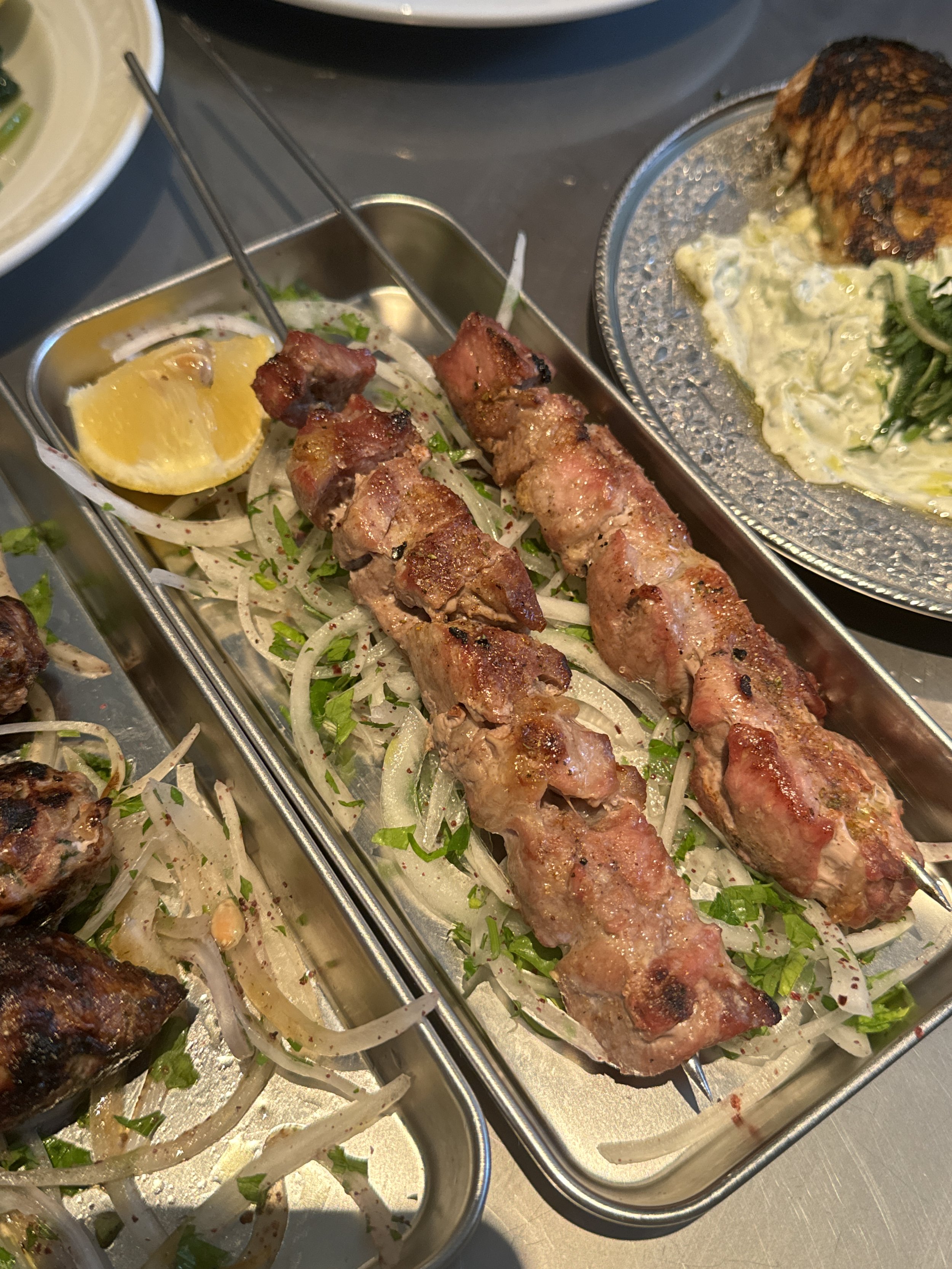
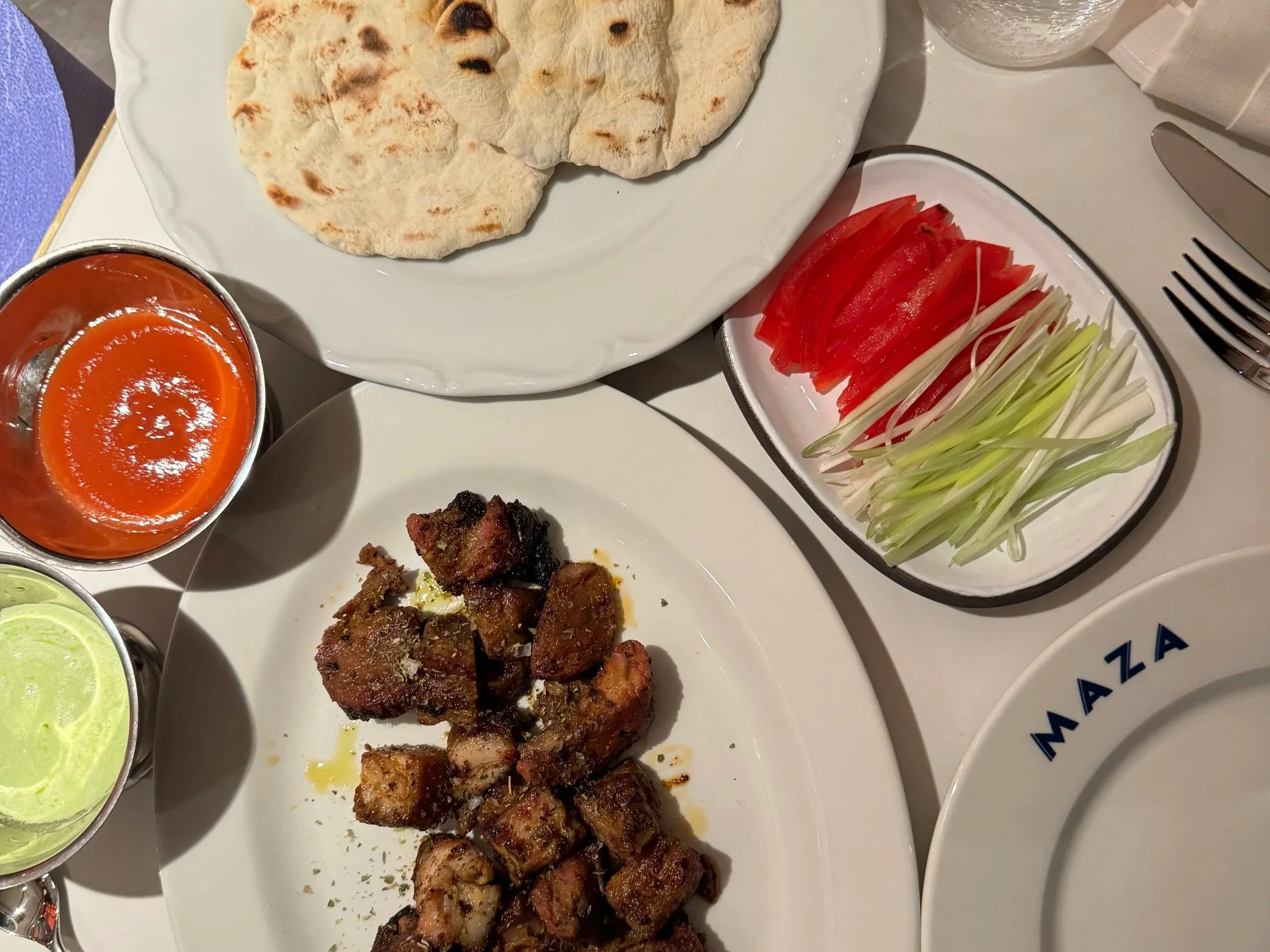
You get proper pork neck souvlakia at Zylia, cut and served in a way that is pretty much a hybrid of Greek and Cypriot-styles. The size is something between the traditional, thin Greek kalamaki, and the thicker chunks you find in Cyprus, but here they are served on the metal skewer – a smaller version of what’s most typically used to cook souvlakia in Cyprus (Greeks most typically use wooden skewers). Cypriot souvlakia are idiosyncratically simple – nothing but salt and maybe a little oil is usually all that’s added. Flavour-wise, Nick’s souvlakia are a bit closer to what you’ll encounter in Greece, with a good basting of ladolemono (oil and lemon) and a subtle pinch of a couple spices. For central London, they’re a good representation of our national street food, and I couldn’t find a reason to not finish both skewers myself. Served with the traditional sliced onion and parsley (albeit the onion would be chopped rather than sliced in Cyprus), and a central London twist of some sumac for the soft launch. I don’t think the sumac is necessary – and it’s certainly neither Greek nor Cypriot – but it’s subtle and sparing enough to not offend. Of course, this review is based on the soft launch, so bare in mind that there might be some tweaks by the time you go!
The best dishes I tried at Zylia Taverna
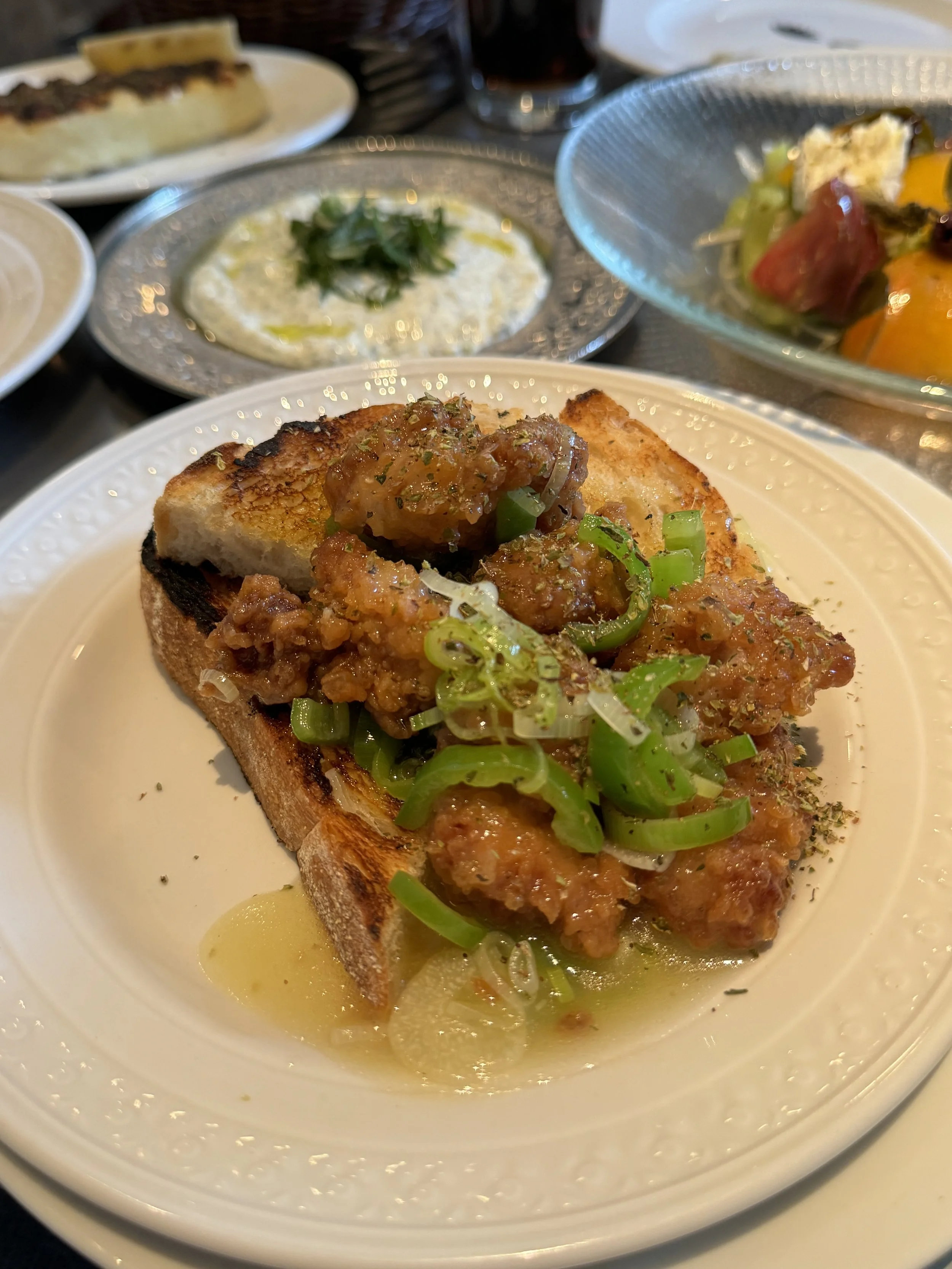
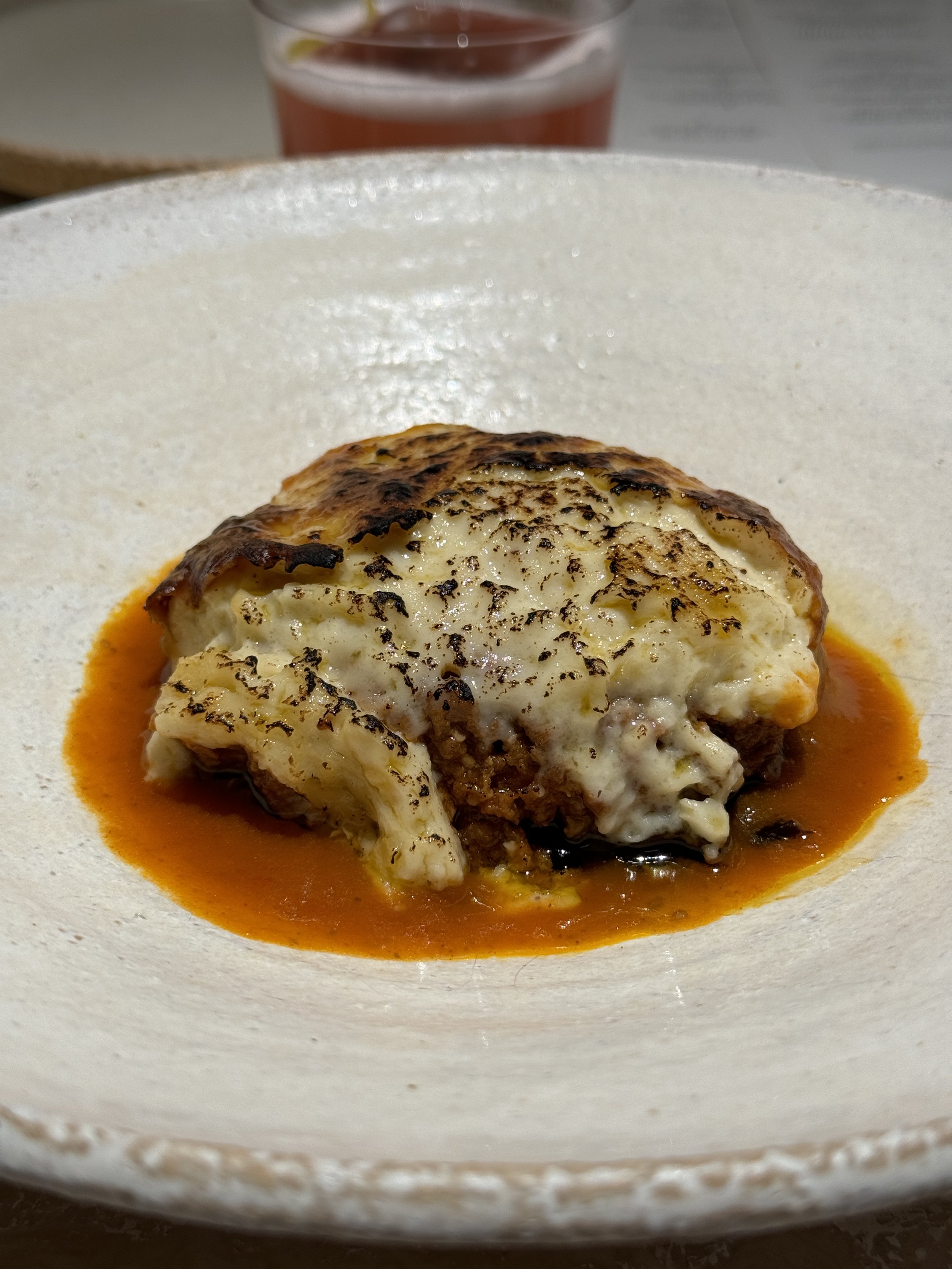
Onto the star dishes in my opinion. Sikotaria tigania (pan-fried offal) is the inspiration behind the standout sweetbread dish (above). Coated sweetbreads in a beautiful, velvety sauce with sliced leeks, served with oregano on the perfect, crusty, grilled bread that is just what you need to soak up all of those creamy juices. Perfectly balanced, seasoned just right. A simple but effective, traditional dish that makes good, resourceful use of overlooked cuts, with a subtle chef’s touch to help it connect with a wider audience (hence the focus on sweetbreads, which don’t have that intense offal flavour). Having seen sweetbreads (glykadia) on a lot of Greek restaurant menus in Australia, it’s notable that Zylia has finally given us that option in London too. Tavernaki has long been my favourite Cypriot taverna in the UK since it opened, partly because one of the rare mezedes you find there is a delicious chicken liver dish, which – even as someone who doesn’t like the taste of offal – I love. Zylia’s sweetbread dish reminds me of that, and is pretty much the only other offal dish I’ve ever enjoyed having in the UK (probably just behind the sweetbreads I once ate at Brawn, but ahead of St John’s in terms of enjoyability for me personally).
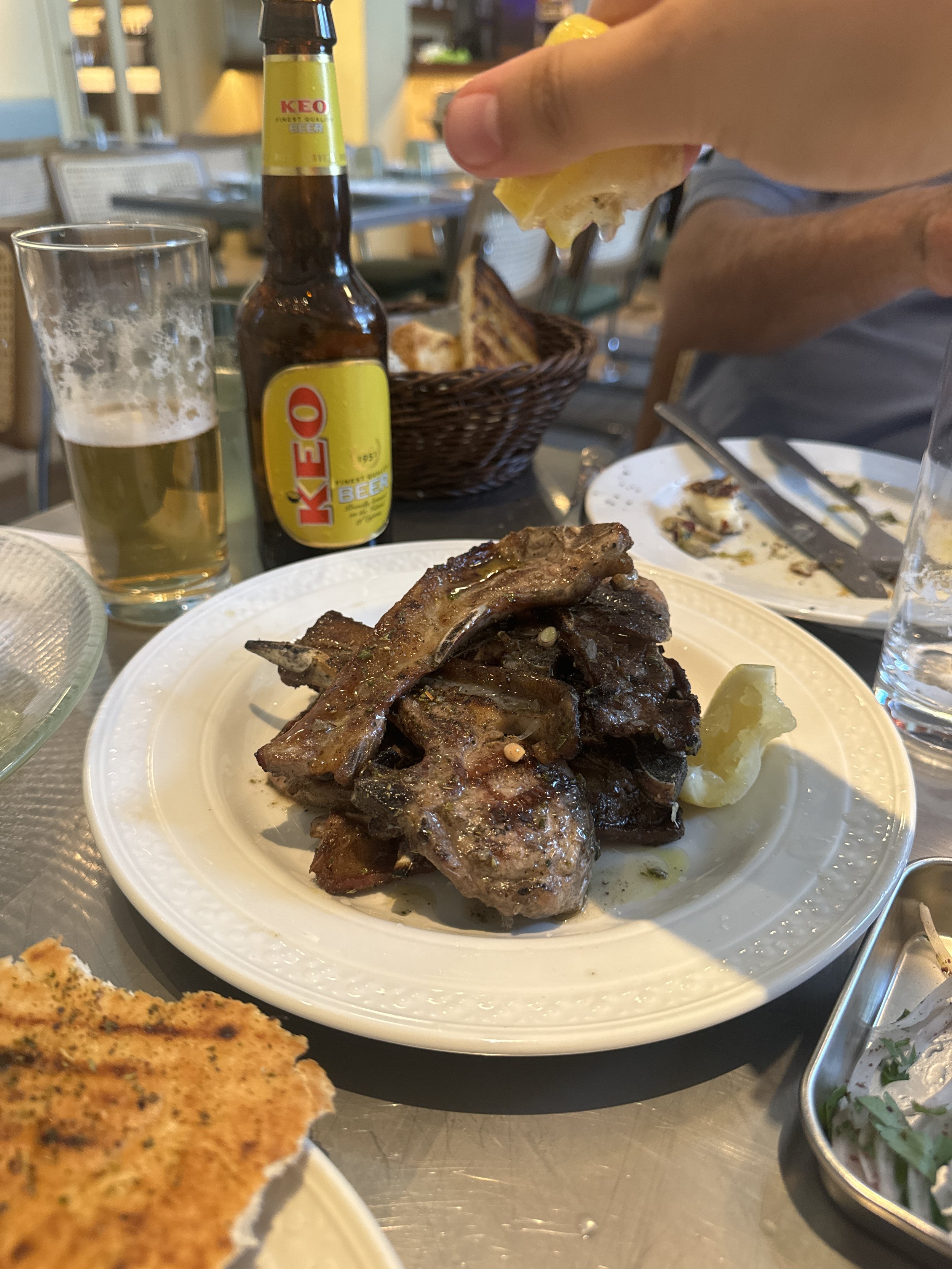
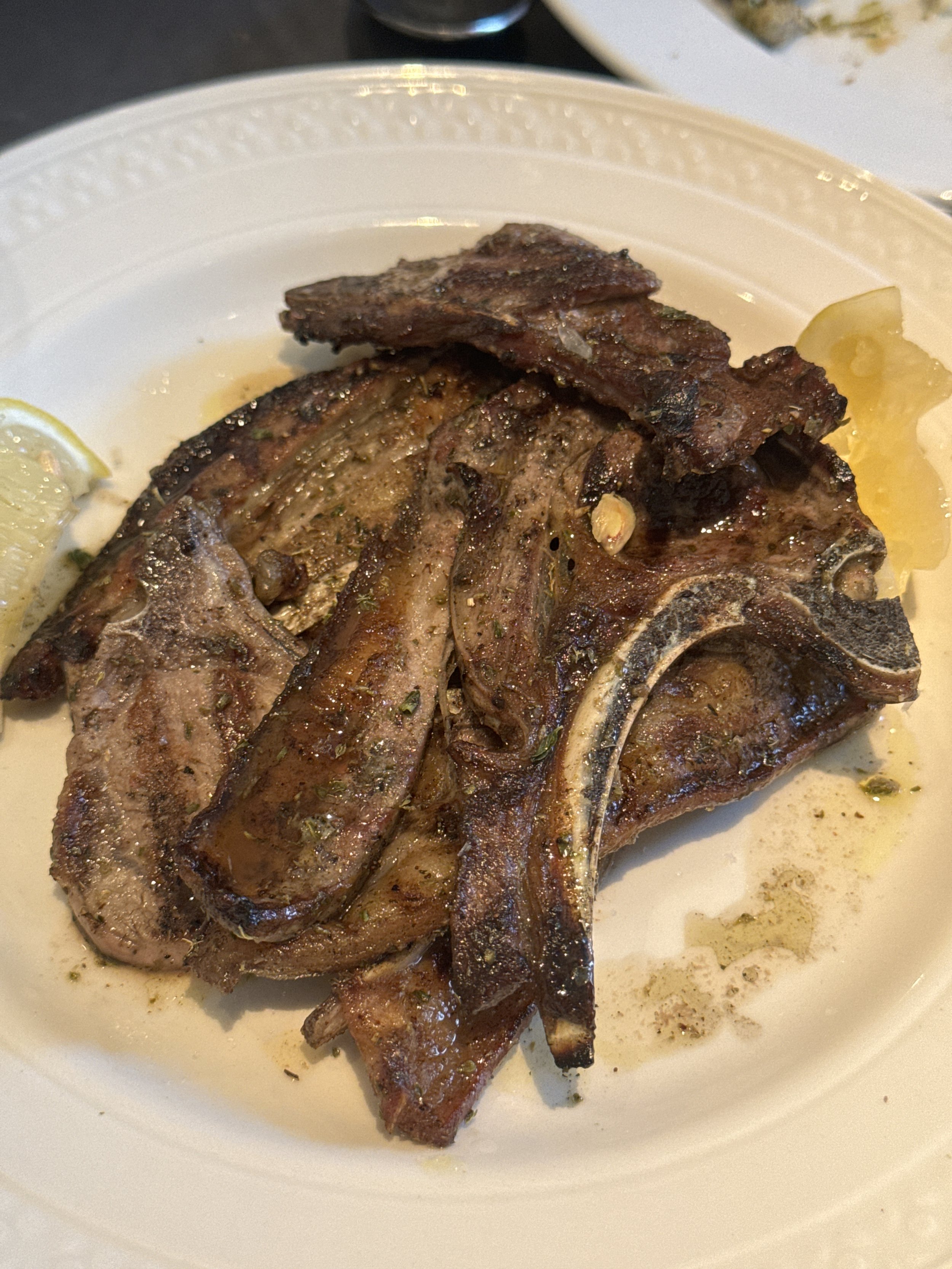
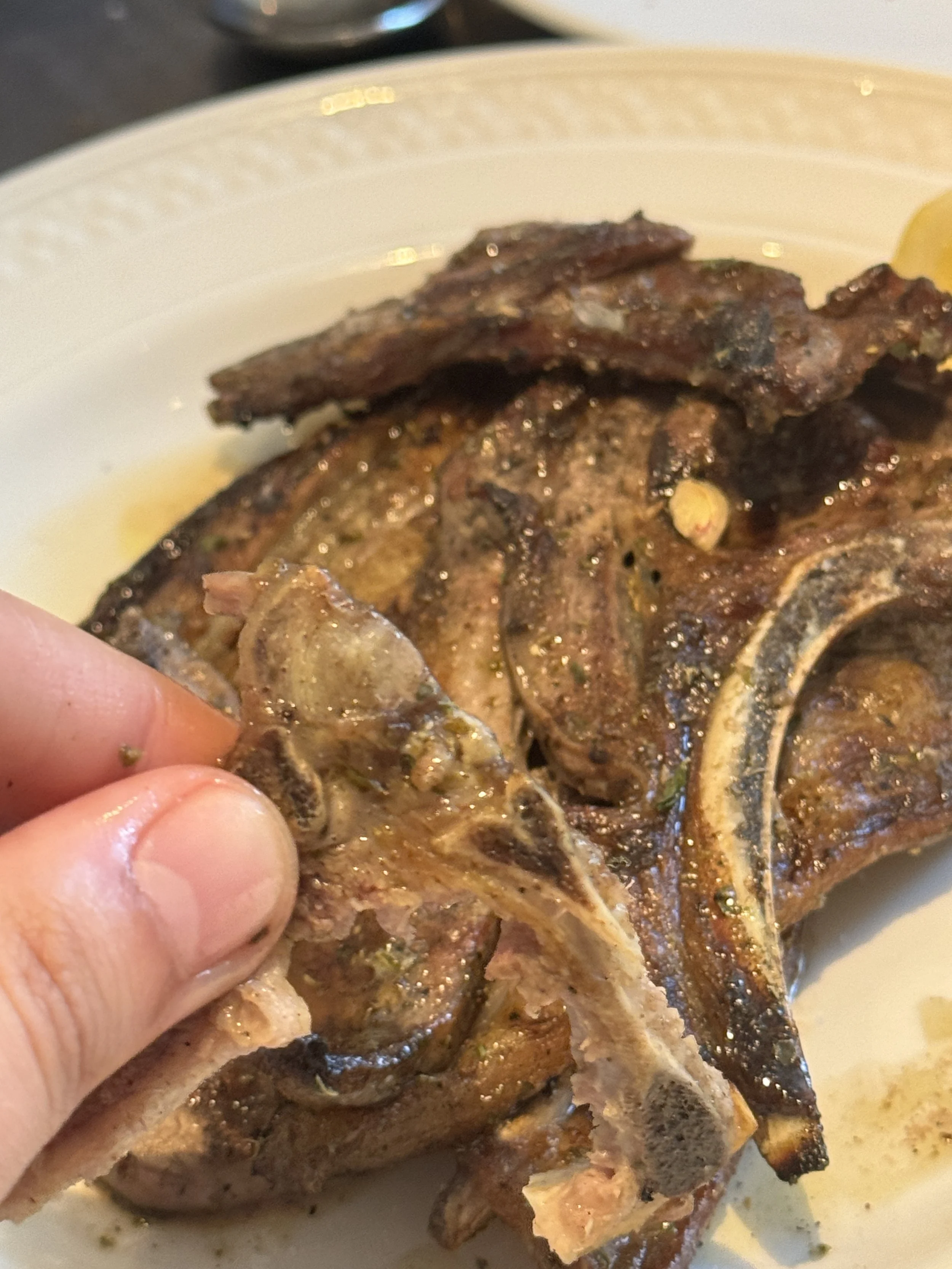
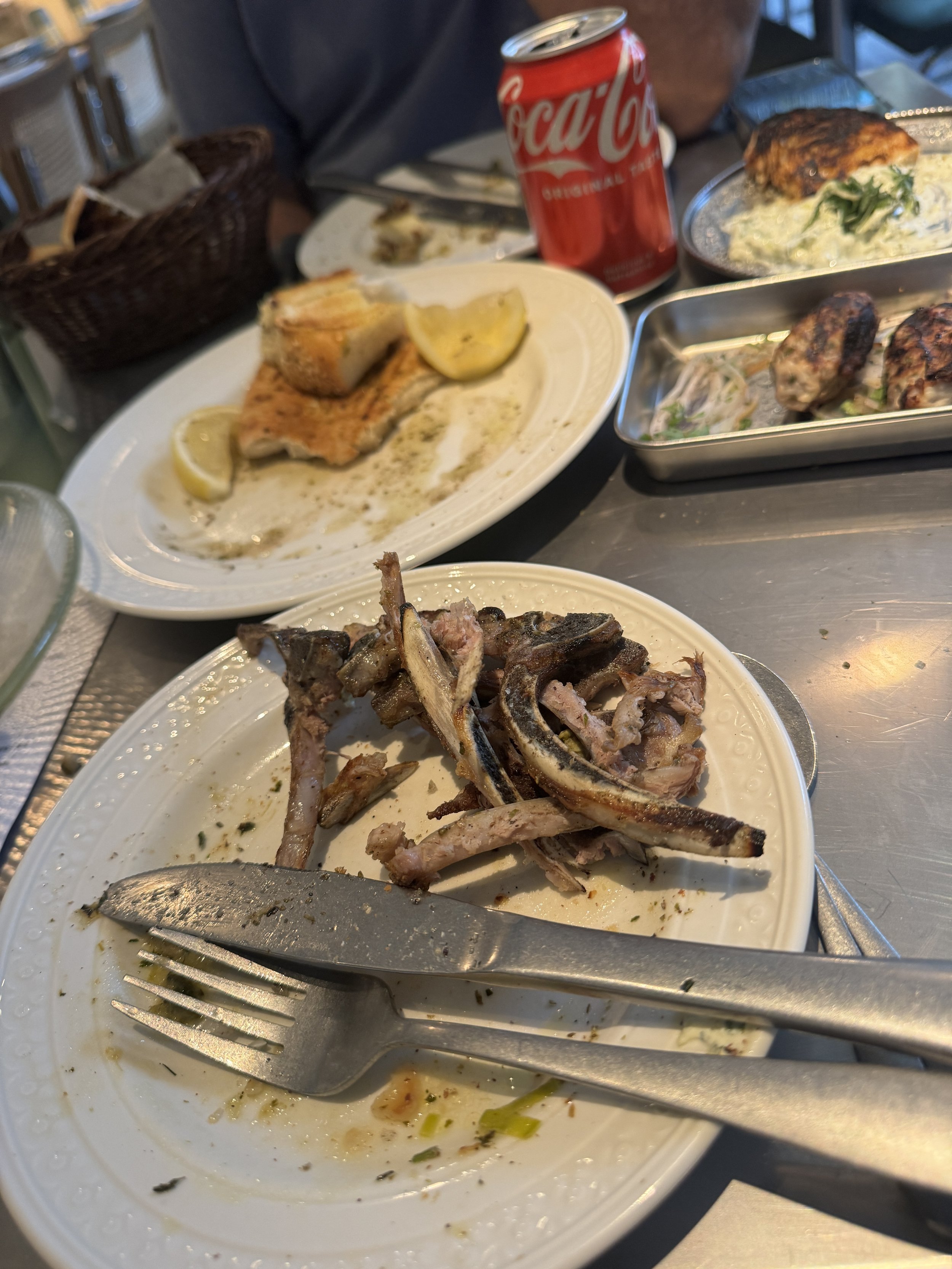
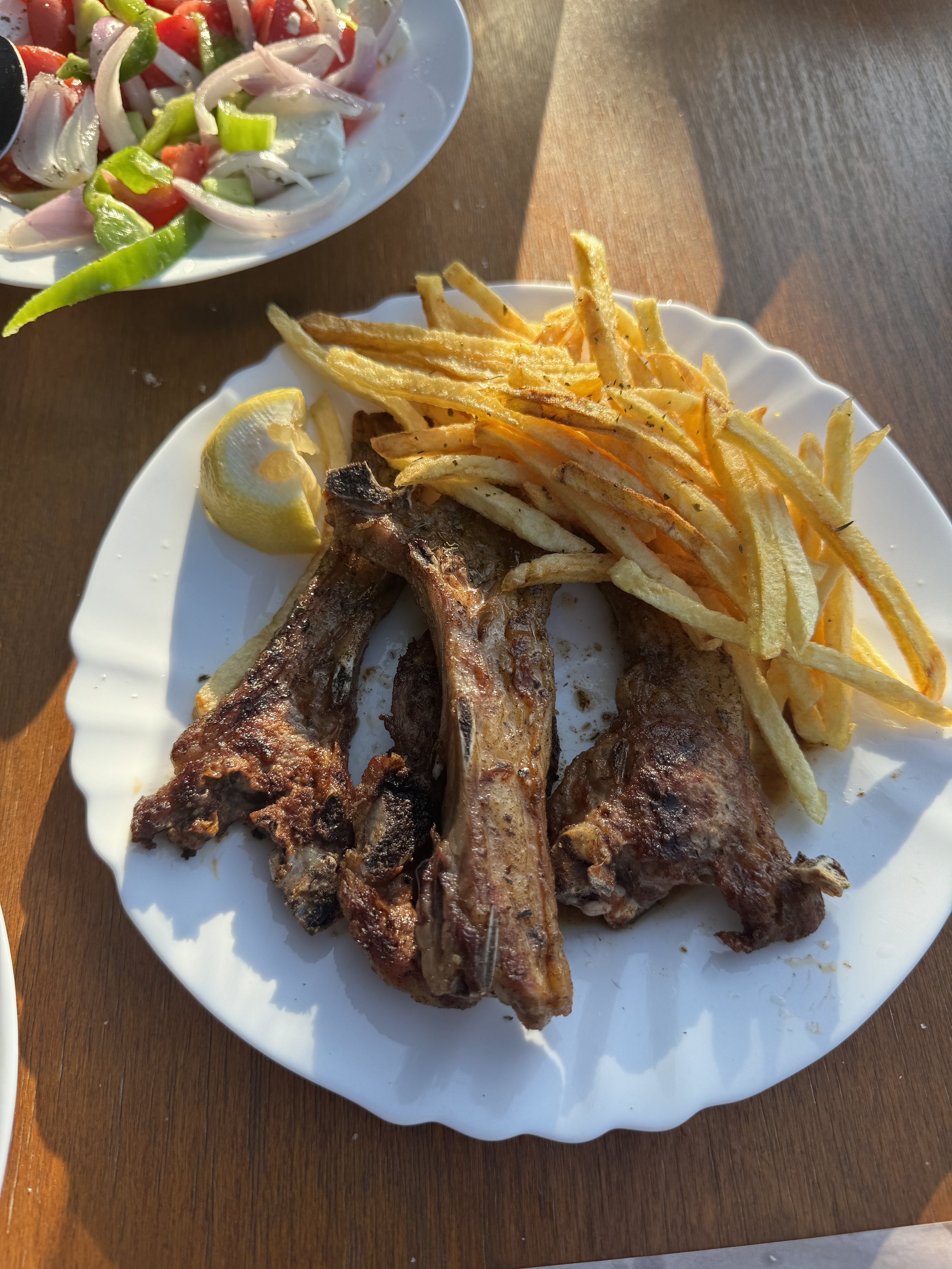
Number one is the païdakia – by far the best I’ve ever had in London. Thinly cut, grilled lamb chops the way you find them in Greece. In fact, a perfect representation of how you find them in Greece. It gives Manari, and it gives chorio (village). Well-cooked with the correct smokey char of a hot grill, but super tender inside, with a nice touch of oil, two wedges of lemon (just about enough), and the optimal touch of salt and oregano. I finish the whole portion by myself, and it’s the dish I’m going back to Zylia for whenever I’m in London. Asimakis’ païdakia were almost as good as this when Myrtos first opened, and I hope both can maintain that consistency, because there aren’t païdakia as good as this anywhere else in the UK in a Greek/Cypriot restaurant (and I say that based on a sample size of at least 100, which I’ll be synthesising into a full London guide soon).
Hear about the full guide
Add your email below to be notified via email about the most complete and informed guide to Greek food in London that anyone has ever written.
Dessert at Zylia Taverna
For dessert, finally something other than the London-cliche portokalopita or galaktoboureko (which, at Ermou, I recently discovered is actually quite disappointing relative to the rest of the menu). Instead, a relatively original (for London) ekmek politiko, i.e. pistachio-topped cream on a bed of syrup-soaked sponge or semolina cake or tsoureki (Greek brioche). In this case, it’s a brioche on the base and, overall, this is one of the best Greek desserts I’ve had in London. Perfectly balanced, with a sensible dose of sweetness from the syrup, and a beautiful dose of cardamom and cinnamon that gives it a vibrant, aromatic depth that you don’t always get. Fresh, light, creamy, with a juicy, syrupy sponge beneath. Impossible not to finish.

Greek Beer and Cypriot beer at Zylia Taverna
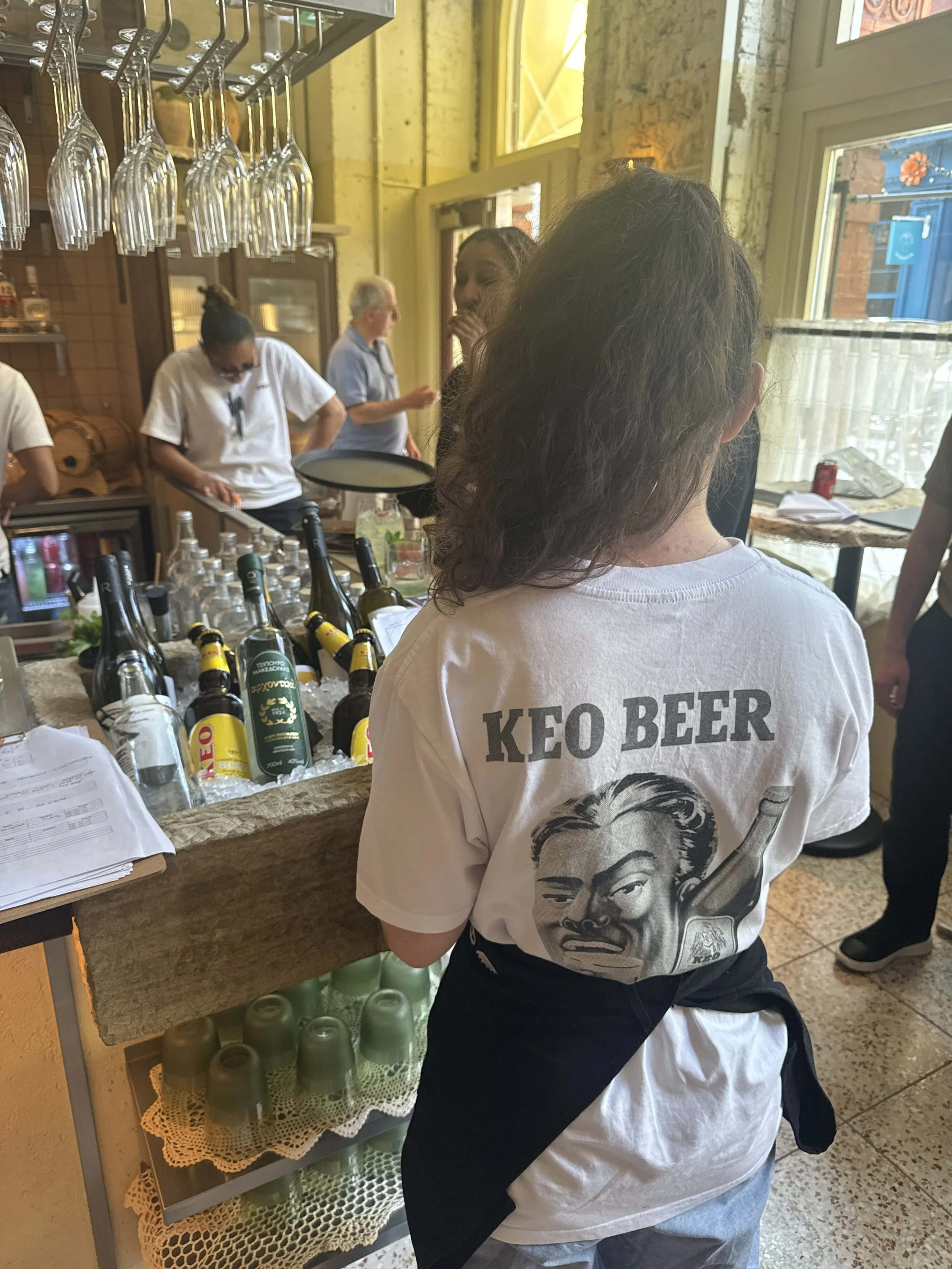
You also get good Greek and Cypriot wines (Greek Assyrtiko, Malagousia, Xinomavro and Xynisteri from Cyprus), and authentic beer options on the menu: Cypriot Keo and Greek Mamos (which is my favourite Greek beer personally – and many, including my Uncle Kosta and James Dimitri, seem to agree). A huge contrast with Oma/Agora, which show absolutely no interest in championing Greek beers, and where a waitress scowls at me for asking to have ouzo served with ice and a bit of water on the side (the way you always drink it in Greece, Cyprus, Turkey… anywhere), rather than as a shot, as it’s listed on the drinks menu. That’s how poor the standard is when it comes to representations of ‘Greek’ food or “spirit” in London, and we should be grateful to have Zylia as a much-needed, young and trendy counterweight.
Overall review of Zylia Taverna, Covent GArden
It’s a taverna that tells London’s story, one that is characteristically Cypriot, but is increasingly welcoming more and more glimpses of Greece. The menu could communicate the heritage of individual dishes more clearly as a way to educate (and diners are genuinely inquisitive and interested in that in my experience, at least in the community I’ve built), but I’m glad this isn’t just another ‘Greek’ spot with halloumi and sheftalia on the menu, and is instead one that gives Cyprus its due credit. Most importantly, the food is enjoyable, and it’s a place I would return to and take friends and family, Greek, Cypriot, or otherwise, time and again. Which is a huge statement for those of you that read my writing.







Athens’ newest traditional souvlatzidiko represents everything that makes Greece, its cuisine and its national street food an example for the rest of the western world to follow.